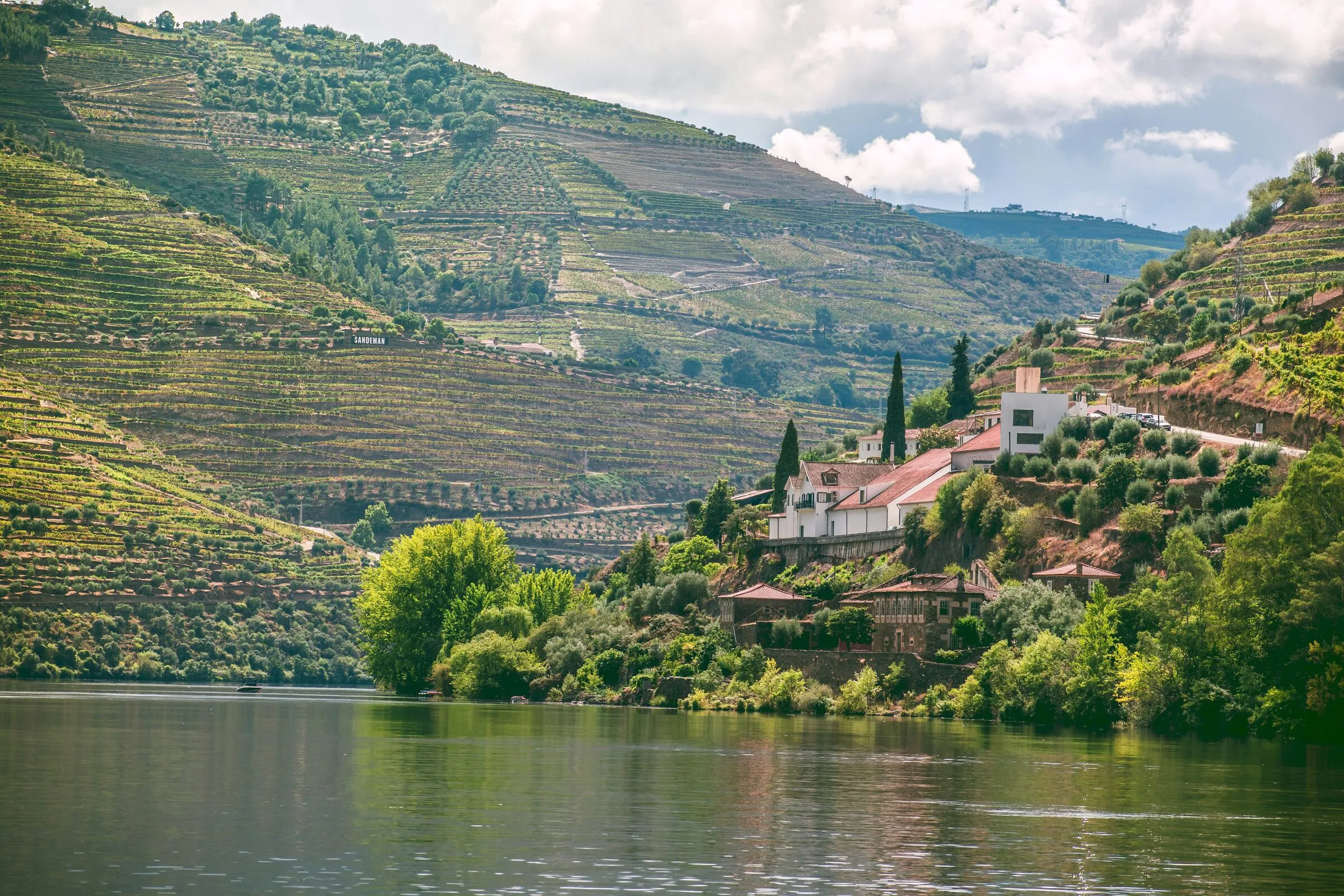
Portugal’s interior doesn’t make the travel magazine covers that Lisbon and the Algarve do. The Douro valley is inland — schist hillsides terraced for vines, quintas perched above the river at impossible angles, the water turning the color of old copper in October when the grape harvest pulls every worker in the region out into the terraces at once. It’s Europe without everyone else’s itinerary. The couples who find the Douro — usually because someone trusted the recommendation — tend to wonder why they didn’t come sooner.
At a Glance
| Best season | September–October for harvest season (the definitive Douro timing); April–May for spring bloom and cooler temperatures; summer is hot and should be approached with intention |
| Typical duration | 7 nights (cruise) + 2 nights Porto pre-cruise + 1 night post-cruise (depending on routing) |
| Classic routing | Porto →︎ Régua →︎ Pinhão →︎ Vega de Terron (Spanish border) and return, or variations; most itineraries are round-trip from Porto |
| Operator I recommend | AmaWaterways — the AmaDouro was purpose-built for the river’s narrow width and lock constraints; the winery programming is the strongest in the category |
| One thing most guides won’t tell you | The Douro has five locks, and the ship has to slow to a crawl to pass through each one. Most passengers treat this as a nuisance. It’s actually the best opportunity on the cruise to be outside with a glass of wine watching Portugal work. |
Why I Plan This River
The Douro is for a specific traveler, and I mean that as a compliment. It’s for the couple who has done Paris and Rome and Tuscany and wants something that hasn’t been smoothed over for export. The wine country on the Douro predates the port trade — this is the oldest demarcated wine region in the world (1756), and the quintas along the upper stretches have been farming this particular schist soil for centuries before the first lodge was built in Gaia.
What makes the Douro work as a river itinerary is that the ship is small — the narrow gorges and low bridges mean only purpose-built vessels can navigate the upper river — and the landscape is genuinely dramatic. The hillsides aren’t gentle. They’re steep enough to require terracing by hand, which means every vineyard you can see from the deck represents centuries of agricultural stubbornness. The Douro doesn’t offer the castle-and-cathedral density of the Danube or the Rhine. It offers something quieter: the feeling of being inside a country before it notices you’ve arrived.
I plan this river for couples celebrating something — an anniversary, a milestone birthday, a trip that’s been promised for years. The Douro delivers on that kind of expectation.
The Ship I’d Book
AmaWaterways — the AmaDouro, which was purpose-built for this river.
The Douro’s physical constraints — narrow width, five locks, two UNESCO-protected bridges in Porto — mean you can’t run a standard European river vessel here. The AmaDouro’s design accounts for those constraints, and the result is a ship that feels intimate rather than cramped: 102 passengers maximum, sun deck, pool, the wine programming that’s the real reason to be on this particular boat.
AmaWaterways’ Douro sailings include a quinta visit with a proper tasting — not the tasting room version, but the cellar version, with the winemaker present if timing allows. That’s the programming difference between a wine-country cruise and a cruise through wine country.
The Ports
Porto — Arrive two nights early. Porto is one of the best mid-size cities in Europe — the Ribeira quarter on the riverbank, the azulejo tile panels in the São Bento train station, the livraria Lello bookshop (yes, it’s crowded, but it’s also extraordinary), the wine lodges of Vila Nova de Gaia across the Dom Luís I Bridge. The bridge itself, designed by Théophile Seyrig — Eiffel’s former business partner, who also co-designed the nearby Maria Pia railway bridge — gives you the best view of the Douro as it approaches the sea. Spend an evening in a wine lodge — the tawny port flight in a lodge cellar is the proper Porto initiation.
Régua — The center of the Douro wine district, and the port where most quinta visits depart. Régua is a working town, not a tourist center, and that’s its appeal. The train station has an azulejo panel depicting the grape harvest that’s worth the stop. The surrounding hillsides from the port are the Douro that ends up in travel photography.
Pinhão — Smaller than Régua, higher in the valley, quieter. The train station here also has azulejo panels. The village is surrounded by the upper Douro’s most dramatic vineyards — the schist terraces are steeper here, the views wider. This is where I’d linger.
Quinta visits (varies by itinerary) — The included quinta excursion is the centerpiece of the Douro sailing. Different itineraries partner with different quintas — Quinta do Crasto, Quinta de la Rosa, Quinta de Vargellas are among the properties regularly featured. The details differ; the experience of sitting at a table above the river with a winemaker explaining what harvest timing means on this particular hillside does not.
Vega de Terron (Spain) / Salamanca excursion — Some itineraries reach the Spanish border and offer a day trip to Salamanca, the university city with one of the most beautiful plazas in Spain. If your itinerary offers this, take it.
Before You Board / After You Disembark
Porto arrival (recommended: 2 nights pre-cruise): Porto rewards the slow arrival. The right hotel puts you in the Ribeira or the Bonfim neighborhood — walkable, local, not the riverfront tourist block. I have a short list; the right property depends on what you want your first two days to feel like.
Post-cruise Lisbon extension: Most Douro itineraries end back in Porto, but the natural post-cruise move is the train to Lisbon — about three hours — for two nights before flying home. Lisbon and Porto together with the Douro connecting them is one of the more complete Portugal trips available. The Alfama and Belém in Lisbon, the Pastéis de Belém at the original bakery — these earn their reputation.
The Extension
Lisbon — Porto to Lisbon by train post-cruise is the clean extension. Two or three nights, the Alfama district, a fado dinner if you want it, the Museu Nacional do Azulejo. It’s a proper Portuguese trip.
Sintra and the Atlantic Coast — An easy day trip from Lisbon: the fairy-tale Romanticist palaces of Sintra in the hills above the coast, Cascais on the Atlantic, the westernmost point of continental Europe at Cabo da Roca. For travelers who want the coast alongside the wine country, this is how you get both.
The Alentejo — Portugal’s other wine region, south of Lisbon — ancient cork oak plains, medieval hilltop villages, olive oil and pork and the red wines that the Douro gets more press for but the Alentejo arguably does better in certain styles. For travelers who want to go deep on Portugal, this is the overlooked half.
What I’d Skip
The Douro in July or August. The valley is hot — genuinely, uncomfortably hot, 100°F in the upper Douro in midsummer. The harvest season timing (September–October) is the trip. If those months don’t work, spring is the alternative. Summer is available and survivable but not the version I’d plan.
Overprogramming Porto. Porto is a walking city. The best day there looks like: morning coffee, a slow walk through the Bonfim neighborhood, lunch somewhere that doesn’t have an English menu out front, afternoon in the wine lodges of Gaia, dinner in the Ribeira. No itinerary required.
Plan This River With Me
The Douro is the European river for the traveler who has seen Europe and wants more of it — not the familiar highlights, but the older, quieter version. A thirty-minute call and I can tell you the timing, the quinta to prioritize, and whether Porto or Lisbon is the better end of your trip.
Last updated: May 2026 · Guide reflects AmaWaterways AmaDouro fleet and programming as of this date. Quinta partnerships and itinerary routing vary by season.
Plan this trip with me.
A 30-minute discovery call is where it starts. No fee, no pressure.
Book a Discovery Call