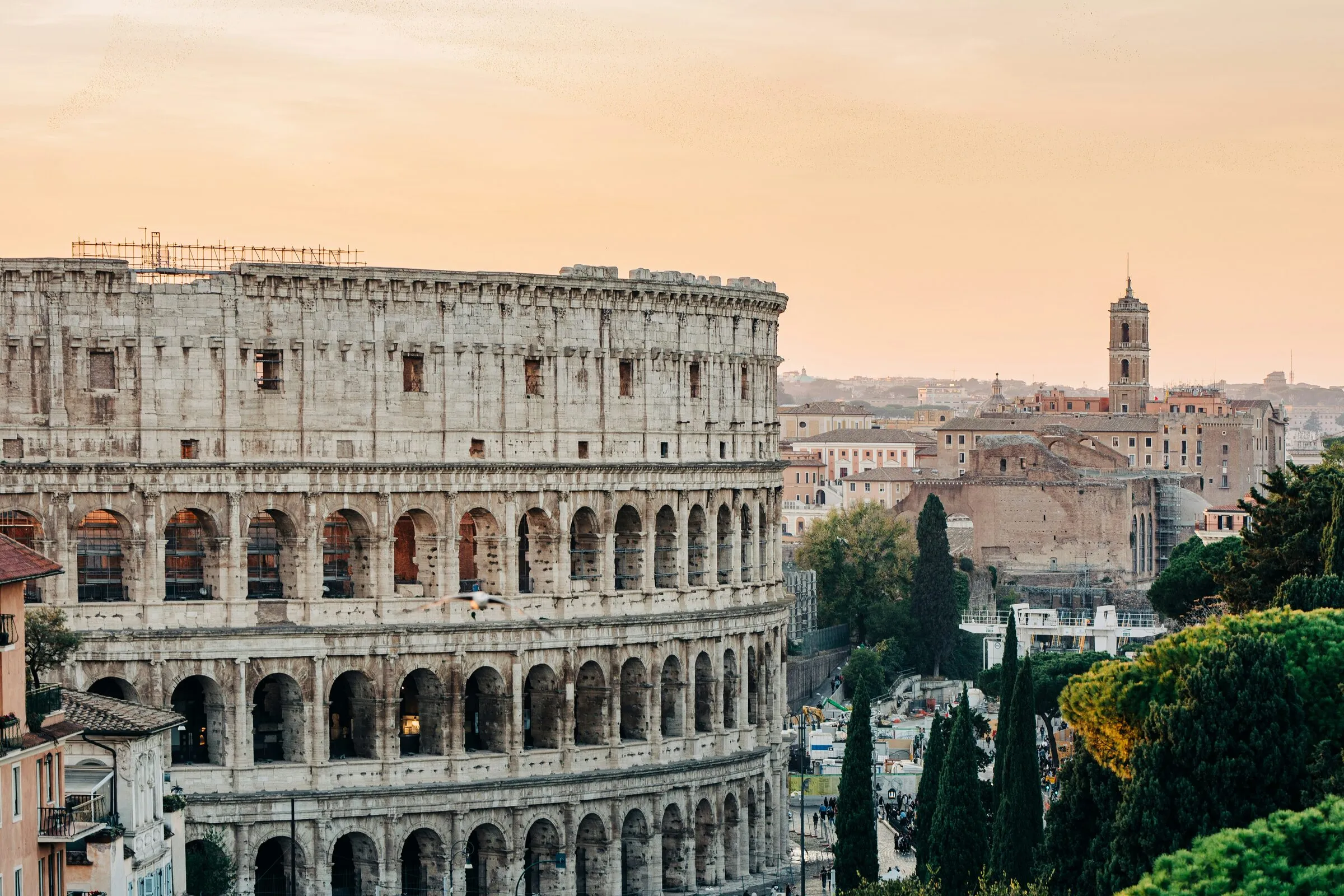
Rome is the city that most travelers try to consume rather than experience, and that’s the framing problem. The standard three-day Rome itinerary — Vatican one day, Colosseum-and-Forum the next, “everything else” on the third — turns one of the most layered places on earth into a checklist. You leave exhausted, having seen the icons but not actually been in Rome. The pictures look right. The trip didn’t land.
Done correctly, Rome is the opposite of a checklist. It’s the city where you eat a long lunch you didn’t plan, walk into a church you’d never heard of and find a Caravaggio above the altar, take a wrong turn from the Pantheon and end up at a wine bar where dinner runs three hours. The Eternal City earns the nickname not by surviving 3,000 years but by remaining, every single day, a working city — political, religious, artistic, contentious, alive. The trick is to plan for fewer monuments and more wandering. To pick a base and stay there. To eat where the Romans eat. To take Sunday seriously.
Most clients come to me asking about Rome in three contexts: as a first-time three- or four-day stay, as a second-visit slower week with the famous sites already done, or as the front half of a multi-city Italy sweep — Rome →︎ Florence →︎ Venice or Rome →︎ Amalfi. Each one rewards a different shape of itinerary. And every version benefits from the same single principle: Walk more. See less. Stay longer in fewer rooms.
Here’s how I think about it.
At a Glance
| Best time to visit | April–early June and mid-September–October. The weather is forgiving, the light is golden, and the worst of the August heat-and-emptiness is avoided. Skip mid-July through August — Romans leave the city for Ferragosto (the August 15 holiday and the surrounding weeks), which means many of the best restaurants close, and what’s left is tourist-only. |
| How long to stay | Three full days minimum, four ideal, for a first visit. Five-plus for a second visit or a slow-travel anchor. Two days minimum if Rome is part of an Italy sweep — and even then, three is better. |
| How to get there | Fiumicino (FCO) is the main airport, 30 km southwest; the Leonardo Express train runs to Termini in 32 minutes for €14. Ciampino (CIA) handles low-cost European flights. From cruise — Civitavecchia is 80 km northwest, served by the Rome Express direct train (1 hr to St. Peter’s station) and Trenitalia regional trains (40 min direct to Termini). |
| Currency / language | Euro. Italian is official; English is widely spoken in tourist-facing settings. Buongiorno, grazie, and prego will earn you small smiles; un caffè (an espresso, taken standing at the bar in 90 seconds) is the morning ritual. |
| One thing most guides won’t tell you | Italian meal hours run later than American ones. Lunch is 1–2:30 pm. Dinner is 8–10 pm. Restaurants don’t open for dinner until 7:30, and the kitchens don’t fully come on until 8. Eating at 6 marks you as a tourist; the food and the room are both better an hour later. |
Why I Send Travelers Here
Because Rome is the city that earns slow travel better than any other Western capital. The famous sights — the Vatican, the Colosseum, the Pantheon — are the thing, and they deliver. But the version of Rome that becomes the trip people remember a decade later is the version that happens between the sights: a long lunch in Trastevere, a Sunday morning walk on the Aventine, a Friday night in Testaccio where dinner doesn’t end until midnight, a chance hour in a church that turned out to have a Bernini sculpture inside.
It’s also the closing city of Rachel’s Greek-and-Italian sabbatical — the trip that’s been the most-read post on this site since it published — and it’s the city she said took the longest to leave.
I send couples here for honeymoons that include a city week before the islands or the lakes. I send slow-travel travelers who want to anchor for a week in Trastevere or near the Pantheon and let Rome reveal itself at walking pace. I send multi-city sweepers who use Rome as the south anchor of an Athens →︎ Rome arc, or as the front half of a Rome →︎ Florence →︎ Venice train trip up the spine of Italy. I send travelers following Jewish heritage to one of the oldest continuous Jewish communities in Europe, in the medieval ghetto on the bank of the Tiber.
Rome is also one of the most over-itinerated cities in Europe — the standard three-day plan is wrong about half the things that matter. Every recommendation below comes through the lens of how I plan Rome for the clients I send, the hotel relationships I rely on (with one verified hotel relationship at Villa Agrippina, called out below), and a clear point of view about which sites earn the line, which neighborhoods are worth your nights, and which restaurants are tourist tax in Pantheon-adjacent disguise.
Where I’d Anchor
Three neighborhoods cover almost any traveler’s reason for being in the city:
Centro Storico (the historic center). The dense walking-zone bordered by the Tiber, the Vatican, and the Imperial Forums. Pantheon, Piazza Navona, Campo de’ Fiori, the Trevi. Stay here on a first visit if you want to step outside your hotel and be inside Rome immediately. Trade-off: the most touristed quarter, the highest hotel prices, the most multilingual-menu restaurants on the streets between the icons. Choose a hotel whose location filters that out for you.
Trastevere & Gianicolo. Across the Tiber from the historic center, the medieval quarter that locals will tell you is the “real” Rome. Tangle of cobblestone streets, ivy on the facades, dinner outside, Santa Maria in Trastevere lit at night. The Gianicolo Hill above gives you the highest sunset view in the city. Stay here for a slower Rome — a base that walks to the centro storico when you want it but lets you out of the tourist machine when you don’t.
Aventino & the Greater Tiber Bend. The seven-hills southern crescent — the residential Aventine, the trendy Testaccio across from Trastevere, and the southern stretches of the Centro. Less iconic, more local. The pick for a second-visit traveler who’s done the Vatican-Colosseum arc and wants the version of Rome you can’t read about.
For the hotel relationship I’ve locked in for Rome, Villa Agrippina, a Gran Melià Hotel on the Gianicolo is the lead pick. The property sits on the highest residential ridge in central Rome, with views over the Tiber, Castel Sant’Angelo, and the Vatican walls; it’s a verdant urban-resort with a large outdoor pool, panoramic gardens, and a Clarins Spa — closer to a Mediterranean retreat than a city hotel, and twenty walking minutes (downhill) into Trastevere. On my rate at the property, the amenity layer is meaningful and doesn’t book direct — what applies depends on your dates and the room category, and the specifics get walked through on the discovery call. None of it appears on the public rate.
For the iconic centro-storico luxury address, Hotel de Russie, a Rocco Forte hotel on Via del Babuino is the call. Tucked between Piazza del Popolo and the Spanish Steps, the property’s tiered Secret Garden is one of the great urban gardens in any European capital; the Stravinskij Bar is among the city’s best aperitivo rooms and one of those addresses Romans actually go to. On my rate at the property, the amenity layer is real and quiet — pairing the right room category to your dates is the discovery-call conversation, and a few of the touches are designed to land at check-in rather than appear in advance. The property also runs seasonal promotions that can shift the value math meaningfully if your dates align — we’ll check what’s active for you. None of it books direct.
For the Pantheon-adjacent design-meets-history pick, Orient Express La Minerva is the most distinctive recent addition to the Rome luxury landscape. A 17th-century palazzo on Piazza della Minerva — Bernini’s marble Elephant statue is the view from the front door, and the Pantheon is sixty seconds away on foot. Architect Hugo Toro reimagined the interiors as Art Deco-meets-modern Italian; the seventh-floor rooftop is one of the best Pantheon-view rooms in the city. On my rate at the property, the amenity layer doesn’t book direct, and the specifics get walked through on the discovery call — calibrated to your dates and the room category.
Want one of these stays? Start a discovery call — I’ll pull live availability, walk through suite categories, and confirm which amenities and promotions apply to your dates. And the small extra at check-in — a welcome note from me, the kind of touch the standard amenity package doesn’t list — is part of how I deliver these stays.
What I’d Do With Three or Four Days
Adjust to taste. The four-day version is the slower one I’d write for first-timers; the three-day is the tighter version for travelers passing through.
Day One — The Centro Storico, on Foot
Don’t start with the Vatican. Start with the Centro Storico, walking. Coffee at the bar (standing, sixty seconds, no tip) at any neighborhood bar. Then to the Pantheon — timed entry required, book online ahead (€5), fifteen minutes minimum, the oculus open to the sky after two thousand years. Walk to Piazza Navona, the elongated baroque square built over a Roman stadium, and on to Campo de’ Fiori for the morning market. Lunch at a wine bar (Roscioli if you can get a reservation, Cul de Sac if you can’t). Afternoon at the Galleria Doria Pamphili — privately owned, mostly empty, includes the Velázquez portrait of Pope Innocent X that’s worth its own trip. Or the Galleria Borghese with a pre-booked timed slot (compulsory; book weeks ahead). End the day with the Trevi Fountain at dusk after the bus tours have cleared, or at 7 a.m. before they arrive — never midday.
Dinner in Trastevere. Walk over the Ponte Sisto at sunset.
Day Two — Ancient Rome, Done Smart
Up early. Be at the Colosseum before 9 a.m. with a pre-booked skip-the-line ticket — without one, you’ll lose 90 minutes of the day to the queue. The Roman Forum and Palatine Hill are included on the same ticket and worth two unhurried hours. Climb the Palatine for the view across the Forum. Lunch nearby — Monti, the gentrified-old neighborhood east of the Forum, has the right kind of casual restaurant for the day’s mood.
Afternoon at the Capitoline Museums on the Campidoglio, designed by Michelangelo, with the bronze Marcus Aurelius equestrian and the Capitoline Wolf. Or the Baths of Caracalla if you want to stand inside a Roman ruin without the crowds. End the day at Aventino — climb the hill, find the Knights of Malta keyhole for the perfectly framed dome of St. Peter’s (more on that below), and walk down through the rose gardens at golden hour.
Dinner in Testaccio, where Romans actually eat.
Day Three — Vatican City
Half a day at the Vatican Museums with a pre-booked timed entry. Without a reservation, you’ll wait two hours; with one, you walk in. Allow at least three hours for the museums, and finish in the Sistine Chapel as instructed. Then to St. Peter’s Basilica itself — go to the dome (cupola) for the climb and the view if you’ve got the legs.
Afternoon back across the river. Walk through the Castel Sant’Angelo if you have stamina, or take a long lunch in Trastevere and call the day. Either way: one major museum complex per day, not two. Rome doesn’t reward stacking.
Day Four — The Rome Most Travelers Miss
This is the day that makes it a real Rome trip. Morning at the Aventine rose gardens (April–June only — pin this if your dates work) and the keyhole. Walk down to the Jewish Ghetto for lunch on Via del Portico d’Ottavia — Nonna Betta or Bellacarne for the famous carciofi alla giudia (deep-fried artichokes the way Roman Jews invented them). Visit the Tempio Maggiore, Rome’s Great Synagogue, and the small but excellent Jewish Museum inside.
Afternoon, the Appian Way if Sunday (closed to traffic, perfect for biking past 2,000-year-old tombs and the Catacombs), or Villa Borghese any other day for the gardens, the Bioparco, the Pincio overlook of Piazza del Popolo. End at Gianicolo Hill for the highest sunset view in central Rome — and if you’re there at noon, the howitzer cannon fires daily, a Roman tradition that has continued without break since 1847.
Dinner anywhere you’ve fallen for by now. By day four, Rome makes its own recommendations.
Specific Things I’d Tell You About
The Aventine keyhole. At the Knights of Malta priory on the Aventine Hill, the doorway has a literal keyhole — bend down to look through it, and the dome of St. Peter’s Basilica appears framed perfectly at the end of a hedged garden tunnel a kilometer away. It’s one of the most photographed unmarked sights in Rome, and almost no one finds it on accident. Piazza dei Cavalieri di Malta. Free. Brings out the kid-with-a-secret in everyone who tries it.
The Roseto Comunale rose gardens. Two and a half acres on the slope of the Aventine between the Palatine and the Tiber, more than 1,200 varieties of ancient and modern roses, laid out in the shape of a candelabrum because the gardens were built on the site of an old Jewish cemetery in honor of that history. Open mid-April to mid-June only — a narrow window — and entirely free. If your dates land in those eight weeks, this is worth the Aventine climb on its own.
The Gianicolo cannon at noon. Every day at midday, a howitzer (yes, a real artillery piece) is fired from below the Garibaldi statue on the Gianicolo. The tradition started in 1847 to give the city’s bells a single time signal to synchronize against, and it has continued — through wars, through occupations, through the fall of the kingdom and the rise of the republic — without meaningful break since. Locals don’t flinch; it’s just noon. Tourists nearly always do. Worth being there for the small theater of it.
The talking statues. Romans have a centuries-old tradition of attaching anonymous notes — political satire, accusations of corruption, public complaints — to four statues around the city: the Pasquino in Piazza Pasquino (the most famous, hence the English word pasquinade), Marforio at the Capitoline Museums, Babuino on Via del Babuino, and Il Facchino on Via Lata. The practice has faded but not entirely died. If you find a fresh note tacked to Pasquino, you’re reading living political commentary in the same form Romans have been writing it since the 1500s.
AquaMadre Hammam. A real Turkish-style hammam tucked down a back street between Largo Argentina and the Great Synagogue, set in an underground grotto. Worth the basic 50 EUR entry just to spend two hours in a vaulted-stone steam room beneath central Rome. Treatments run more if you want them.
Sunday on the Appian Way. The Via Appia Antica — the ancient road south out of Rome — is closed to vehicle traffic on Sunday, which means you can bike or walk past 2,000-year-old funerary monuments, the Catacombs of San Sebastiano and San Callisto, the Circus of Maxentius, and the Tomb of Cecilia Metella in something close to silence. The bike rentals cluster near the Sede il Parco. The right Sunday morning if your dates land it.
The Vatican Scavi tour is the version of the Vatican most travelers never know exists. Twelve people per tour, guided access to the Necropolis below St. Peter’s Basilica — the early-Christian burial site directly beneath the high altar, including what the Vatican identifies as the tomb of Saint Peter himself. Booking is by request through the Ufficio Scavi office (not the standard Vatican Museums system); slots are limited, lead time is months. This is the single most distinctive Vatican experience available, and I arrange it for clients who want the one-Vatican-day-done-right version of Rome. Below the basilica is a different basilica from the one above it.
Traveling Spoon home-cooking experiences are the right honeymoon-dinner answer in Rome. Booking Patrizia or Marisa or another Roman home cook through Traveling Spoon puts you in a real Roman family kitchen for three or four hours — cacio e pepe learned at the stove, the wine that goes with it, the meal at the family table afterward. The result is the dinner most clients describe a year later as the high point of the trip. I have a small set of Roman hosts I work with consistently — pairing depends on neighborhood, dietary fit, and the night.
Pizza al taglio between sights. “Pizza by the cut” — sold by weight from a counter, eaten standing or walking. The best examples (Pizzarium Bonci near the Vatican, Pizzeria La Renella in Trastevere) are objectively worth a meal of their own. The bad examples are still better than dinner at a Pantheon-adjacent tourist trap. Great default lunch when the day is going long.
What I’d Skip
The Trevi Fountain at peak hour. The crowd between 11 a.m. and 7 p.m. is so dense you can barely see the water. Go at 7 a.m. or after 11 p.m. The lit-up fountain at midnight in an empty piazza is the version everyone hopes for and almost no one experiences — because they go at noon.
The Spanish Steps as a destination. They’re worth a five-minute pass-through. They’re not worth sitting on (no longer permitted anyway, since 2019), and the area immediately around them is a high-end shopping district, not a sightseeing zone. Walk through; don’t anchor your afternoon there.
Restaurants near the Pantheon, Trevi, or Spanish Steps with menus in five languages. Same tourist-tax pattern as Vienna, Athens, and Santorini. Long laminated menus, a host who tries to pull you in from the alley, photo-illustrated dishes, mediocre pasta. The good Pantheon-adjacent restaurants — Armando al Pantheon, for example — don’t need to advertise that hard, and they’re booked weeks out, which is the tell.
The Colosseum without a skip-the-line ticket. The general-admission queue can run 90 minutes in summer. The pre-booked timed entry is barely more expensive and saves you a third of your day. Buy it the moment your dates are confirmed.
The catacombs of San Sebastiano or San Callisto if you’re claustrophobic — or short on time. They’re interesting; they’re also a guided-tour treadmill that eats two hours and produces a single moderately-good story. Skip unless you’re specifically drawn to early Christian history.
Driving anywhere in the centro storico. The traffic pattern was last designed in the second century and hasn’t improved. Use the metro (limited but useful), buses (more extensive), taxis (cheap and fast outside the historic core), or your feet. If you’re doing a day trip — Tivoli, Castelli Romani, Ostia Antica — hire a car and driver for the day. Two hundred to three hundred euros, less stressful by an order of magnitude.
For Honeymooners
Rome is the city for a honeymoon that wants to feel like a honeymoon — long lunches with wine, slow walks back through medieval streets after dinner, a hotel garden where breakfast extends until eleven. Anchor at Villa Agrippina on the Gianicolo if you want a garden-and-pool retreat with Trastevere walking distance, Hotel de Russie if you want the iconic centro storico with the Secret Garden, or Orient Express La Minerva if you want the Pantheon as your front door.
The honeymoon dinner, in my read, is Ristorante Pierluigi in Piazza de’ Ricci or Roscioli for an extended wine-and-cheese-and-cured-meat tasting that runs three hours by design. Followed by a walk to the Trevi at midnight, which is the version of Rome you came for.
If you’re combining Rome with a Greek-isles trip, with the Amalfi Coast, or with a Florence-and-Venice train sweep — that’s exactly the kind of planning I do. Start a discovery call.
For Travelers Following Jewish Heritage
Rome’s Jewish community is one of the oldest continuous Jewish communities in Europe — older than most of the rest of the diaspora, predating even the destruction of the Second Temple. The medieval Jewish Ghetto between Via Arenula and Via del Teatro di Marcello, walled off by papal decree from 1555 to 1870, is now one of the most atmospheric quarters in the city. The Tempio Maggiore (the Great Synagogue) on the bank of the Tiber is one of the largest in Europe; the small Jewish Museum of Rome inside is excellent and largely uncrowded.
Eat lunch on Via del Portico d’Ottavia, the ghetto’s main street, at Nonna Betta or Bellacarne, for the carciofi alla giudia (deep-fried artichokes) — a Roman-Jewish dish that exists in Rome and almost nowhere else. Walk to the nearby Portico d’Ottavia ruins, where Roman Jews were forced to assemble for compulsory papal sermons in the medieval period; the layered history of the spot is in the stone if you know to look for it.
I’m currently developing a co-hosted Jewish Heritage trip for 2026, and Rome is a natural anchor for that program. Reach out if you’d like to be on the early-interest list.
For the longer thinking on how I work this thread — what makes it different from other heritage travel, what it earns, and what it doesn’t try to be — read the pillar essay: Jewish heritage travel.
For Multi-City Italy Travelers
Rome is the south anchor of the spine-of-Italy train trip. The high-speed rail to Florence is 90 minutes; Florence to Venice another two. Three cities in ten days is the well-paced version (three days Rome, three days Florence, four days Venice including a lagoon side trip), and the train takes the rental-car decision off the table entirely — Italy’s high-speed rail is some of the best in Europe.
If you’re starting in Rome and ending in Venice, plan Rome at the front when your energy is fresh — Rome demands more walking than the others, and it’s better-tolerated on the front end of a sweep. If you’re combining with the Amalfi Coast, take Rome first and finish in Positano or Ravello where the days are slower. If you’re stitching Rome to a Greek-isles trip, Rome is the closing city — the right place to land before the flight home, and the right city to want to come back to.
If you want me to design the full Italy or Italy-and-Greece sweep — train timing, hotel sequencing, day-trip logistics — that’s exactly the kind of planning I do. Start a discovery call.
Plan Rome With Me
If you’re thinking about Rome as a first visit, as the front half of an Italy sweep, or as the slow honeymoon week it deserves to be — that’s exactly the kind of planning I do. A 30-minute discovery call is where it starts. No fee, no pressure. Just the city, your timeline, and what you actually want to feel when you walk out of the hotel that first morning into the same air the Romans have been breathing for three thousand years.
Book Your Free Discovery Call →︎
Last updated: April 2026. I keep this guide current. If a hotel I recommend slips, a restaurant changes hands, or access to a site shifts, the page changes. Travel changes. The work doesn’t stop when the page goes live.
Plan this trip with me.
A 30-minute discovery call is where it starts. No fee, no pressure.
Book a Discovery Call