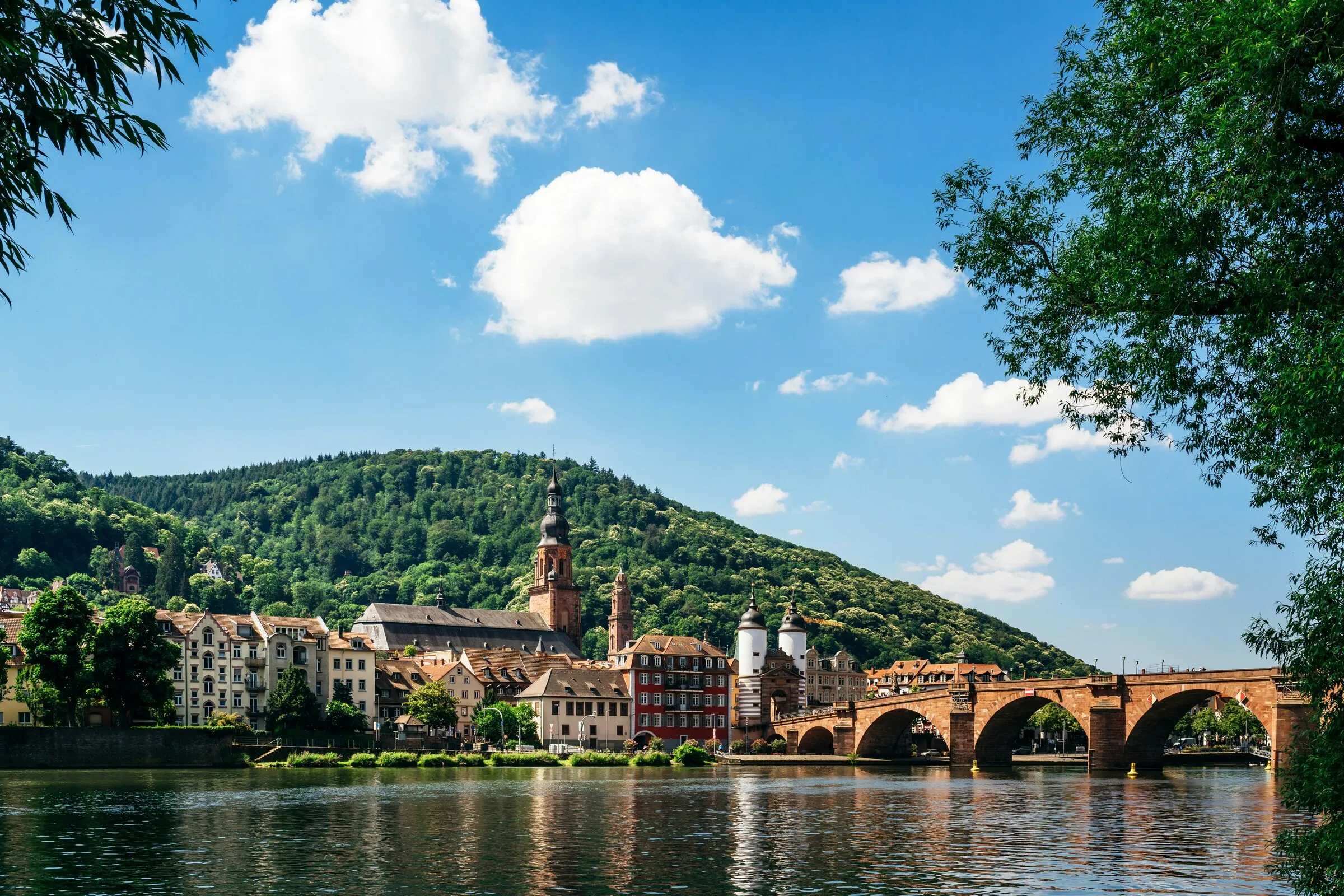
I grew up near the Rhine — grade school years on a U.S. military base in the Rhineland, enough time for the vineyard-strung hillsides to lodge somewhere permanent. I haven’t thought of it as a landscape to visit since I was eight years old. I think of it the way you think of a place that got into you before you had the vocabulary to name what was happening. The Middle Rhine valley between Bingen and Koblenz — the castle stretch, the gorge, the Lorelei, the Riesling vines running up south-facing slopes so steep it seems impractical — is one of the most objectively beautiful river passages in the world. It’s also the one I plan with the most affection.
At a Glance
| Best season | June–September for warmth and full vineyard color; October for harvest season and the Riesling festival circuit; late November–December for the Christmas markets of Cologne and Strasbourg |
| Typical duration | 7 nights (cruise) + 1–2 nights Basel pre-cruise + 1 night Amsterdam post-cruise |
| Classic routing | Basel →︎ Breisach/Colmar →︎ Strasbourg →︎ Heidelberg →︎ Rüdesheim →︎ Koblenz →︎ Cologne →︎ Amsterdam (or reverse) |
| Operator I recommend | AmaWaterways — consistent quality on this stretch, good cycling program for the vineyard stretches, reliable port call timing |
| One thing most guides won’t tell you | Rüdesheim gets the most Rhine press and draws the most Rhine crowds. Bacharach, thirty minutes south and rarely on itineraries as a main port, is quieter and gives you the medieval-walled-town experience without the souvenir shops. Ask about itineraries that stop there. |
Why I Plan This River
The Rhine explains Germany — not all of it, but the part that doesn’t make the news. The vineyard economy. The castle-building Holy Roman emperors. The trading-city architecture of Cologne and the Protestant reformers who used the river to move ideas as fast as goods. When you sail the Middle Rhine gorge at the speed a river moves, you’re in a geography that made history because it was worth controlling.
I plan this river for travelers who want Europe done properly — not the highlight reel of major capitals, but the slower, older version. The towns that take their Riesling and their market squares and their closing hours seriously. The stretch between Bingen and Koblenz is UNESCO World Heritage listed for a reason; the gorge walls, the terraced vineyards, the forty-odd castles visible from the water — it doesn’t look real from a ship deck. It looks like Germany decided to build a backdrop for a wine label.
The Rhine also pairs naturally with France. The stretch below Strasbourg crosses the border repeatedly; Alsace and Baden face each other across the water and share more than a river. Strasbourg is an underrated port stop — the old city on the Grande Île is medieval Alsatian architecture at a scale that’s still walkable and human.
The Ship I’d Book
AmaWaterways — the AmaLyra or AmaStella on this routing, depending on season and group size.
The Rhine’s cycling culture is well-matched to AmaWaterways’ onboard bikes, and the wine programming is particularly strong on this itinerary — the included shore excursions in the German wine villages go into the cellars, not just the tasting rooms. That’s the difference between a wine country cruise and a wine country experience.
For the Middle Rhine gorge specifically, the Sun Deck is where you want to be — the passage through the gorge is slow and dramatic and best watched from above. Schedule the day accordingly.
The Ports
Basel — Start here, not in Amsterdam. Basel is underrated as a pre-cruise arrival city — it’s small, clean, and takes its art seriously (Art Basel happens for a reason). The Kunstmuseum holds the kind of collection that earns its reputation, and the old city on the Rhine bend is one of the more elegant city-planning outcomes in Switzerland. One night in Basel before boarding is the right call.
Breisach / Colmar — Most Rhine itineraries use Breisach as the port for a Colmar day trip, and this is one of the cases where the day trip is worth taking. Colmar is the Alsatian half-timbered canal-town that looks like a painter made it up, except it’s real and the wine is excellent. Spend the morning here.
Strasbourg — The capital of Alsace, which has been French and German and French again depending on which century you’re asking about, and which keeps both identities in its cooking and its architecture. The Gothic cathedral has a sixteenth-century astronomical clock. The Petite France neighborhood is the canal district everyone photographs. A full morning here and an unhurried lunch in a proper winstub — the Alsatian wine tavern version of a brasserie — is exactly how this port stop should go.
Heidelberg — The castle above the old city is the most photographed ruin in Germany and earns the distinction. The Altstadt below it has a university dating to 1386 and a Hauptstraße long enough to get pleasantly lost on. The detour up to the Philosophers’ Walk on the opposite bank for the castle view across the Neckar is the one most ship excursions skip in favor of the obvious route. It’s worth the steps.
Rüdesheim / Middle Rhine Gorge — The Drosselgasse, the famous alley of wine taverns, is touristy and worth a walk for context. Then get above it — the cable car to the Niederwalddenkmal gives you the full gorge view and the beginning of the UNESCO stretch. The ship’s passage through the gorge, from Bingen down to Koblenz, is the cinematic hour of the Rhine itinerary. Be on deck.
Koblenz — Where the Moselle meets the Rhine at the Deutsches Eck, the German Corner, with its enormous equestrian monument. The Ehrenbreitstein fortress on the opposite bank — reachable by gondola — gives the best elevated view of the confluence. The old city is handsome. It’s a strong port stop.
Cologne — The Dom towers over everything. The cathedral took six hundred years to build and remains the largest Gothic church in Northern Europe; the stained glass in the south transept, including the Gerhard Richter window, is extraordinary. The old city around the cathedral is walkable and the Cologne brewpubs serve Kölsch beer in the small cylindrical glasses called Stangen by tradition. Christmas market timing here is exceptional — the market by the cathedral is one of Germany’s best.
Amsterdam — End here with at least one night after disembarking. The Rijksmuseum and the canal ring and the Jordaan neighborhood deserve time that the ship schedule doesn’t give them. Fly home from Amsterdam after a proper night in the city, not from a transfer bus.
Before You Board / After You Disembark
Basel arrival (recommended: 1–2 nights pre-cruise): The right Basel hotel puts you in the old city walkable to the river and the museum quarter. I have a short list. The right one for your trip depends on your priorities — and that’s the conversation.
Amsterdam post-cruise (recommended: 1–2 nights): There’s a specific neighborhood I’d put you in, and it’s not the tourist center. We’d talk through it on a call.
The Extension
The Moselle Valley — The Moselle joins the Rhine at Koblenz. For travelers who want deeper German wine country, the Moselle — Bernkastel-Kues, Cochem, the Riesling steep-slope vineyards above the river — is the natural extension. This is where German wine becomes something different from what the supermarket shelves suggest it is. Road trip from Koblenz post-cruise, or build a separate itinerary.
Paris — Fly Basel to Paris for a few days before or after. The train from Strasbourg to Paris Gare de l’Est runs in about two hours and puts the two cities in easy reach of each other.
The Douro — For the traveler who has done the Rhine and wants to understand what wine-country river cruising looks like at its most beautiful: the Douro is next. Same intimacy, different country, better off-season.
What I’d Skip
The Rhine cruise in high summer if crowds are a concern. July and August are peak season; the Christmas market sailings and the harvest-season October sailings give you the same river with more intentional local texture and fewer day-trippers at every port.
The easy shore excursion that doesn’t go into the valley. Any Rhine port has a comfortable bus tour. Most of them stay on the main roads. The cycling options, the wine cellar tastings, the walks that require a cable car or a steep path — those are where the river pays off.
Plan This River With Me
The Rhine is the river that explains why I got into this. Thirty minutes on a call and we figure out the timing, the cabin, the Basel hotel, and the one Riesling cellar you should sit in before you board.
Last updated: May 2026 · Guide reflects AmaWaterways fleet and itinerary availability as of this date.
Plan this trip with me.
A 30-minute discovery call is where it starts. No fee, no pressure.
Book a Discovery Call