Switzerland is one of the easiest countries in Europe to visit and one of the hardest to plan correctly. The geography looks generous on a map — a country small enough to cross by train in five hours — and the rail network is so good that travelers convince themselves they can sleep in a different town every night and still feel rested. They can’t. The country is dense, not large; the Alps make every transfer a topographic decision, not just a horizontal one; and the difference between a multi-city Swiss week that hangs together and one that feels like a slideshow comes down almost entirely to where you base. Get the hub right and the country comes to you. Get it wrong and you spend half the trip in train stations.
Most clients come to me asking about Switzerland in three contexts: as a multi-city Alpine week (the most common version — five-to-seven nights, two or three towns, the country as the trip), as a single-city honeymoon or anniversary anchor (Lake Lucerne, the Bernese Oberland, or Zermatt as the headline experience), or as the Alpine middle of a broader European trip (Italy or France or Austria on either side, with three or four nights of Switzerland in the middle as the contrast you came for).
This guide is the country-level version of that conversation. Each of the four city pages it links to — Bern, Lucerne, Zermatt, and Interlaken & the Jungfrau region — goes deeper on its own. Here’s how I think about Switzerland as a whole.
At a Glance
| Best time to visit | May–early July and September. Long days, the Alps clear of winter snow on the trails but still capped at the summits, the wildflower meadows at peak. Late November through mid-December delivers the Christmas markets along the Old Towns and the country’s quietest pre-holiday rhythm. Avoid late February through early April (in-between season — too late for skiing, too early for hiking) and the dead first half of August. |
| How long to stay | Five to seven nights for a real multi-city week. Three nights minimum for a single-anchor visit. Ten-plus nights to genuinely move at the country’s preferred pace. |
| Where to base | The unfashionable answer is Bern — central, rail-connected to the entire country in 60 to 90 minutes, the only national capital with a UNESCO Old Town, and home to the country’s federal Grand Hotel. The second base, when one is right, is Lucerne for the lake or Interlaken / Wengen / Mürren for the alpine immersion. Zermatt anchors a third base for travelers whose Switzerland is the Matterhorn. |
| How to get there | Zurich Airport (ZRH) or Geneva Airport (GVA) — both connect by direct train to every city in this guide in under three hours. Fly into either, take the train. From elsewhere in Europe — Munich (4h to Zurich by rail), Milan (3-4h via the Gotthard Pass — one of the great train rides on the continent), Paris (5h to Geneva via TGV Lyria). |
| Currency / language | Swiss Franc (CHF). German in the north and east (Zurich, Bern, Lucerne, Interlaken, Zermatt’s home canton), French in the west (Geneva, Lausanne, Montreux), Italian in the southern Ticino, Romansh in pockets of the southeast. English is universal in tourist-facing settings. Grüezi is the Swiss-German hello — using it earns immediate small smiles. |
| One thing most guides won’t tell you | Switzerland is not officially a country with a capital. The constitution doesn’t designate one. Bern is the federal city — the Bundesstadt — by tradition and political convenience. The trivia matters less than what it signals: this is a federation that takes its decentralization seriously, and the Old Towns, the regional cuisines, and the four official languages all wear it. |
Why I Send Travelers Here
Because Switzerland, planned correctly, is the European trip where the infrastructure does as much of the romance as the landscape does. Trains run to the second. Hotels expect honeymoons. Mountain restaurants at 2,000 meters serve three-course lunches with wine pairings. Cable cars are how locals commute. Rooms have views because the country tilted itself to make them. The result is a vacation where the small frustrations that wear travelers down elsewhere — late connections, indifferent service, generic dining — simply don’t appear, and what’s left is the part that matters: the Alps, the lakes, the medieval Old Towns, the table for two with the Jungfrau in the window.
I’m a traveling travel agent, in the field and in the rooms where this work happens — vendor meetings, conferences, supplier check-ins with the networks that handle Switzerland. My direct work in this country anchors in two cities: the federal Grand Hotel in Bern, and the lake-and-cliff anchors in Lucerne. From there, my Signature Travel Network access opens the door to the alpine resorts in Zermatt and the Bernese Oberland, where amenity layers and room-category strategy come through those relationships rather than a personal GM line. That distinction matters, and I’ll be straight about it on the discovery call rather than overclaim.
I send travelers here as the headline of a multi-city Alpine week — three towns, five-to-seven nights, the country as the destination — and almost always, that week hubs in Bern. I send couples for slow Swiss honeymoons that want the architectural-romance-plus-lake-views version (Bern + Lucerne or Bern + the Jungfrau region) without the chaos of the single-cell tourist resorts. I send rare clients for a Zermatt-anchored week when the Matterhorn is the whole point. And I send travelers who already know the country for single-city anniversaries — three nights at the Bellevue Palace, or four nights at Bürgenstock, or five nights at Mont Cervin Palace — when the trip is about the room and the view, not the country.
Where I’d Anchor
The Swiss multi-city question has four serious answers. Here’s the framing I’d offer for each — and the pages that go deeper on the city-by-city case.
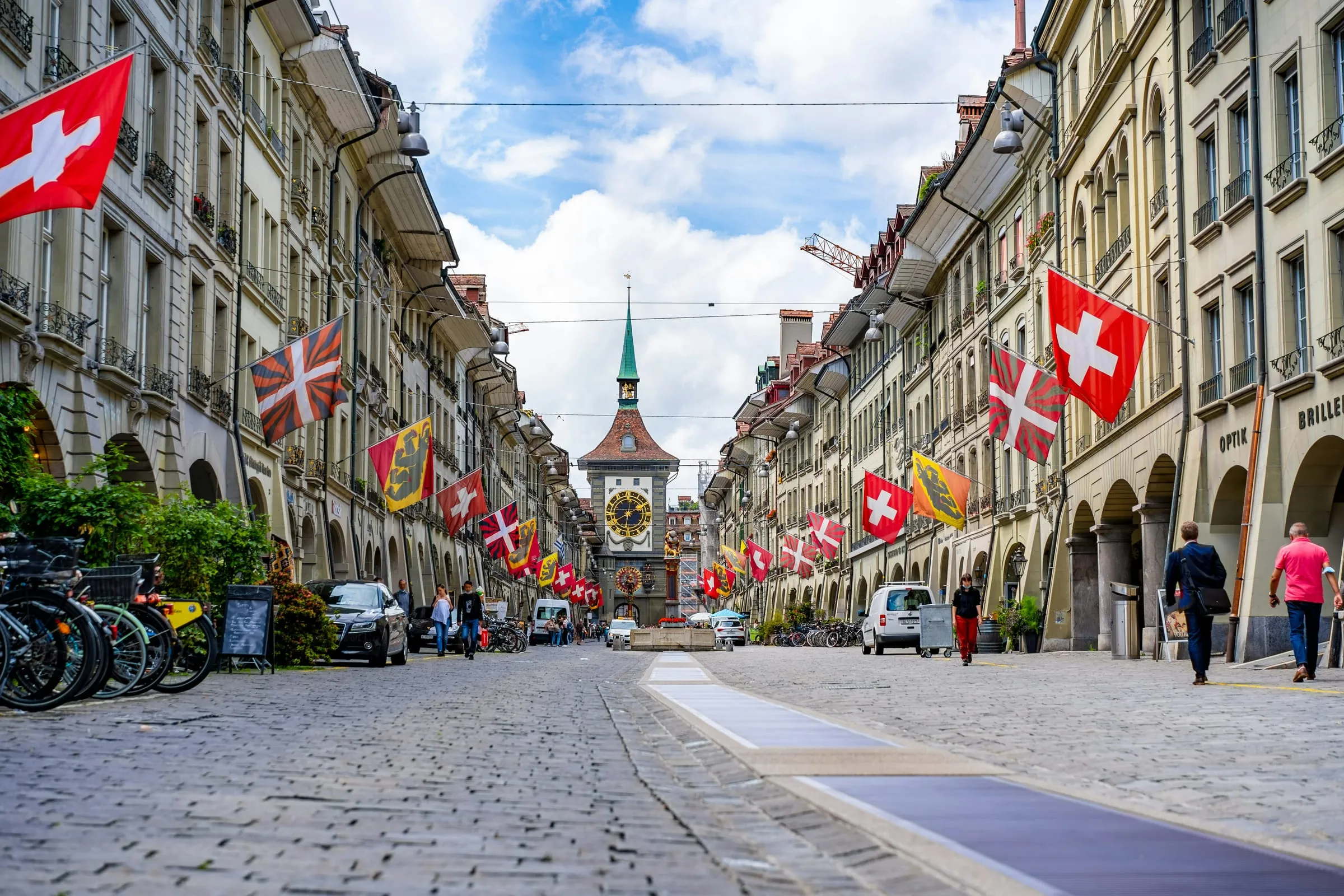
Bern — the strategic hub. Forty minutes to Interlaken, an hour to Lucerne, an hour to Zurich, an hour to Lake Geneva, an hour to Basel. The country comes to you. The whole UNESCO Old Town is walkable in twenty-five minutes. The federal Grand Hotel — the Bellevue Palace — is the official guesthouse of the Swiss Confederation and the only Grand Hotel inside the World Heritage zone. Most multi-city Switzerland trips that hang together are Bern-anchored, full stop. The Bern guide makes the long-form case.
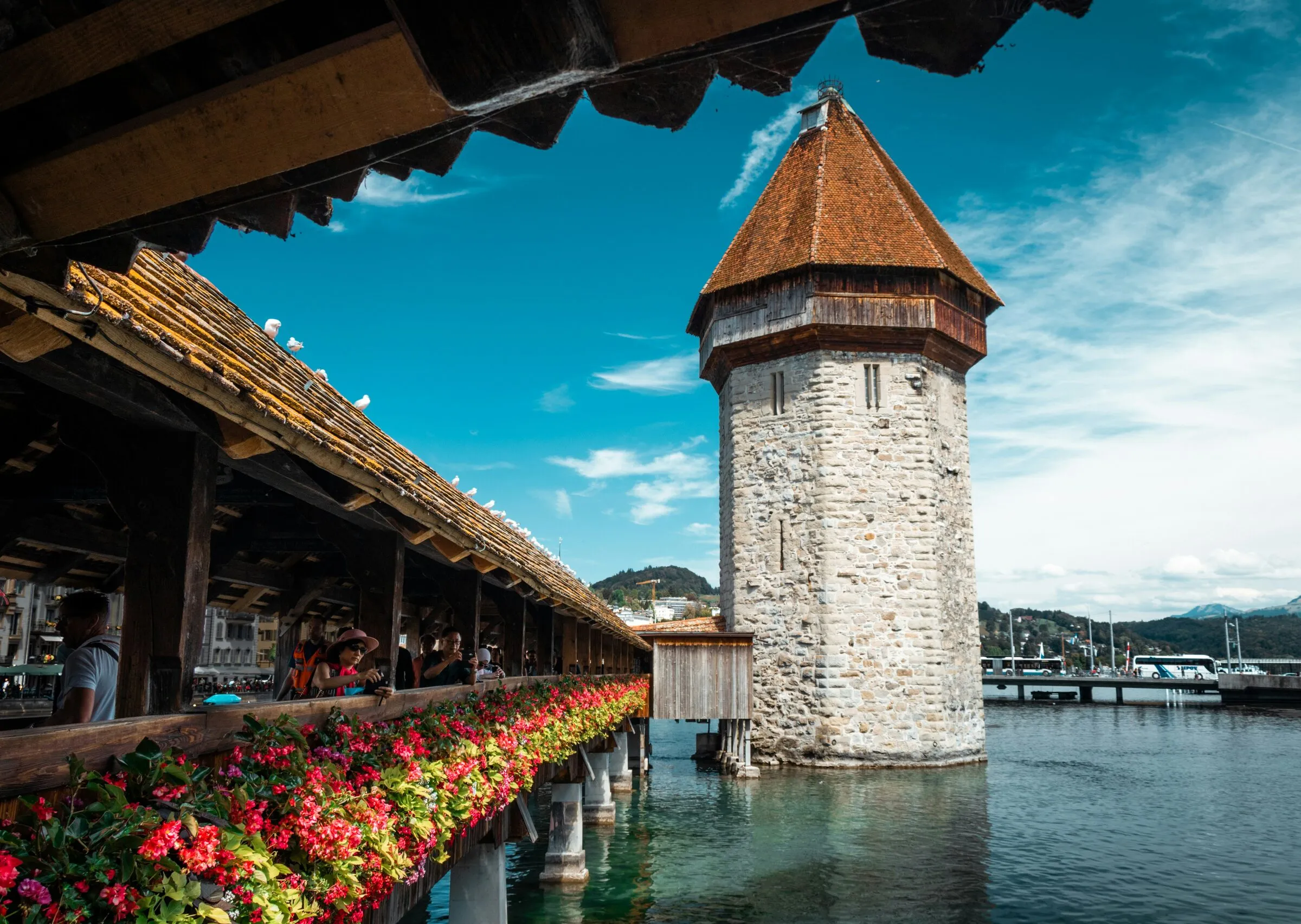
Lucerne — the lake-and-Old-Town day, or the Bürgenstock cliff anchor. A spectacular small city, the Kapellbrücke, the Lion Monument, the lake itself with the Bernese Alps to the south. As a base, Lucerne is a mistake for most travelers (it’s geographically eastern, harder to use as a hub). As a day-trip from Bern or a standalone Bürgenstock cliff-resort honeymoon, it’s one of the country’s strongest anchors. The Lucerne guide makes that pivot explicit.
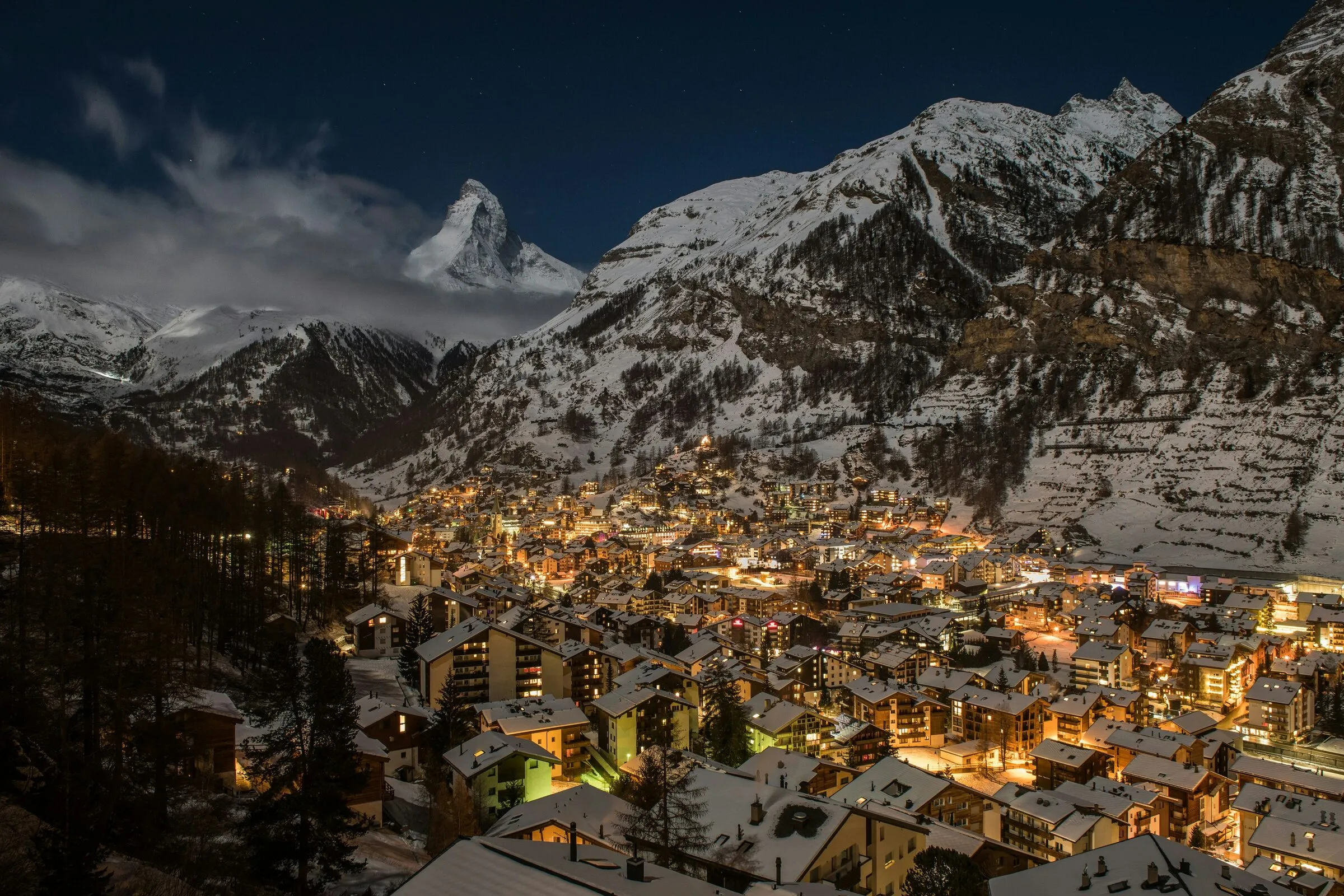
Zermatt — the Matterhorn anchor. Car-free village, alpine intensity, and a different category of trip from a Bern-based multi-city week. Travelers who book Zermatt usually book it as the trip itself, not as a stop. Three to four nights at Mont Cervin Palace or The Chedi Andermatt, the Gornergrat sunrise, mountain-restaurant lunches, the Matterhorn as the whole frame. The Zermatt guide is for travelers whose Switzerland is the mountain.
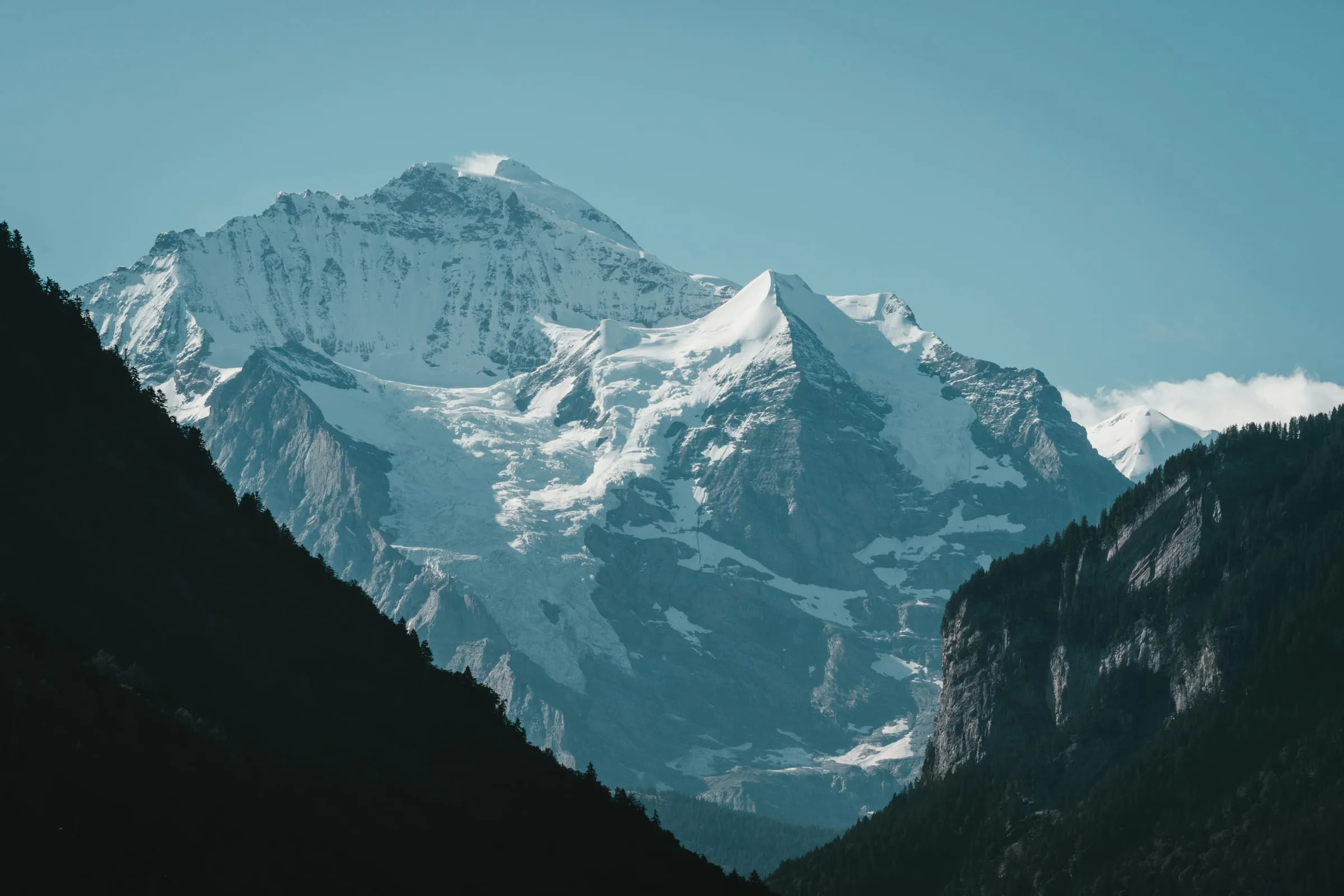
Interlaken & the Jungfrau region — the Bernese Oberland alpine cluster. Three iconic peaks (Eiger, Mönch, Jungfrau) instead of one. Glacier access by train rather than by climb. The honeymoon-with-infrastructure register that contrasts with Zermatt’s honeymoon-with-stakes register. Often a day-trip extension from a Bern base, occasionally a standalone three-to-four-night anchor at the Victoria-Jungfrau or in car-free Wengen. The Interlaken-Jungfrau guide goes deeper.
Start a discovery call — I’ll walk through which base (or pair) actually matches your trip, pull live availability at the anchor properties, and confirm which amenities apply to your dates.
What I’d Do With Five to Seven Days
The multi-city week most clients are actually building. Adjust to taste. Bern in the middle is the through-line.
Days 1–2 — Bern as the urban anchor. Fly into Zurich or Geneva, two-hour direct train to Bern. Settle into the Bellevue Palace, walk the Old Town arcades, the Zytglogge, the Münster cathedral, the Einstein House at Kramgasse 49. Day two: Bear Park, the Zentrum Paul Klee on the city’s edge (the largest single Klee collection in the world, Renzo Piano building), sunset from Gurten by funicular, late dinner in the Old Town’s lower lanes.
Day 3 — Interlaken and the Jungfrau as the alpine day. Forty-minute train from Bern to Interlaken. Cable car connections to Jungfraujoch (the “Top of Europe” — 3,454m, glacier walk, the train that burrows through the Eiger), or a softer day to Lauterbrunnen Valley with its waterfalls and cable car up to car-free Wengen. Back to Bern by dinner. The full long-form play lives in the Interlaken-Jungfrau guide.
Day 4 — Lucerne as the lake day. One hour by train. Old Town walking tour, the Kapellbrücke, lunch by the Reuss, the Lion Monument, optional Mount Pilatus afternoon. Back to Bern by dinner. (Or — for couples building a slower anniversary — overnight at the Mandarin Oriental Palace on the lake or at Bürgenstock on the cliff above. The Lucerne guide is built for that pivot.)
Day 5 — the second alpine layer or a slower Bern day. Either a second day-trip (Lake Geneva and the Lavaux terraces by train; Basel for the museums; Murten for the lakeside medieval ramparts), or a slow Bern day — the Old Town arcades you didn’t hit, the Botanical Garden along the Aare, an early dinner at the Bellevue’s Brasserie Vue with the Alps in the window.
Days 6–7 — the second anchor, if you have it. This is where the trip splits between the multi-city sweep (return through Lucerne or Zurich for the flight) and the alpine deepen (overnight in Wengen or Mürren in the Jungfrau, or the four-hour scenic train down to Zermatt for a three-night Matterhorn close, returning via the Glacier Express). The Zermatt guide is the long-form version of that close.
If your trip is shorter than five days, drop the second alpine layer first and keep Bern + one day-trip. If it’s longer than seven, the right move is almost always more nights in Bern before adding a third town — depth over breadth, every time.
Specific Things I’d Tell You About
Cable cars are infrastructure, not gimmicks. Every major mountain has one to the summit or mid-mountain. Locals use them the way New Yorkers use subways. Jungfraujoch needs two cable cars and a cogwheel train; Rigi can be done by cable car or by the historic cogwheel railway; Pilatus, Titlis, Säntis, Klein Matterhorn each open a different angle on the Alps. First-timers often book one big cable-car day and call it done. The country rewards three or four — each reveals something different about the relationship Switzerland has with vertical space.
The scenic-train routes are real. The Glacier Express (Zermatt to St. Moritz, eight hours), the Golden Pass (Lucerne to Montreux, five hours), the Bernina Express (Chur to Tirano, four hours) — these are not tourist gimmicks tacked onto regular trains. They’re purpose-built routes with panoramic-window cars and three-course meals served at your seat. First-class is worth it for the window table and the pace. If your trip can absorb one full day inside one of these trains, it should — the route is the destination.
Mountain restaurants are meals, not refueling. A sit-down, multi-course, wine-paired lunch at 2,000 meters, served by waitstaff in mountain gear, with the Matterhorn or the Jungfrau or the Eiger shifting in the afternoon light, is not a niche experience — it’s how the country eats lunch when it’s outside. The good ones get reserved a week ahead. Bring cash; not every spot at altitude takes cards.
Cheese and wine are daily, not occasional. Switzerland produces around 700 distinct cheeses (Gruyère and Emmental are the headliners; Vacherin Mont d’Or in winter is the one to ask about). The Valais — Zermatt’s home canton — produces excellent Pinot Noir and the local white Fendant. The Lavaux terraces above Lake Geneva are UNESCO-protected vineyard country. Order the house white at lunch; it will be excellent and it will not embarrass you in front of the table next to yours.
Weather is a morning decision, not a week decision. High-alpine cable cars close in wind. Hiking is impossible in altitude fog. Cloud can shroud the Matterhorn or the Jungfrau by ten in the morning after a clear sunrise. The Swiss culture around this is flexible response — your hotel’s concierge knows the daily forecast at breakfast and will tell you what’s realistic today. Plan for variable, not against it.
Costs are real and the budget pass is sometimes the move. Switzerland sits at the top of Europe’s price ladder, full stop. The Swiss Travel Pass (3-, 4-, 8-, or 15-day options) covers trains, buses, and many mountain railways flat-rate, and for a couple hitting two or three major cable cars across a week it usually pays for itself. Hotels almost always include breakfast — eat it rather than buying pastries down the street. Supermarkets (Migros, Coop) have genuinely good prepared food at a fraction of restaurant prices, perfect for picnic lunches on hikes. The savings are tactical, never dramatic.
What I’d Skip
Zurich as a base. Zurich is Switzerland’s financial capital — efficient, expensive, lacking the architectural cohesion of Bern or the texture of Lucerne. Use it for the airport. Don’t book a night unless you’re meeting someone there.
Geneva unless you have a specific reason to be in the French-speaking west. Geneva is the international-organizations city — UN, Red Cross, WTO. It’s expensive, sprawling, and architecturally less interesting than Bern. The lake is beautiful but distant from the Alps. Skip unless you’re doing a specifically French-Switzerland-and-Lavaux-wine trip, in which case the right base is Montreux on the lake, not Geneva itself.
Ski-resort towns in summer if hiking isn’t the goal. Zermatt and other ski-anchored villages can feel oddly hollow in the gap between seasons. If you’re not hiking, do those properties in winter for the snow or wait until July when the trails and mountain restaurants are fully alive.
A Jungfraujoch round-trip with no hike attached. Compressing the “Top of Europe” into a thirty-minute summit photo and a train back is theater without substance. Pair it with a two-hour glacier walk, or with an overnight at Wengen or Mürren, or skip it altogether and do First or Schynige Platte instead.
For Multi-City Travelers — Switzerland Pairs Well With
Italy — by Glacier Express or through the Gotthard Pass: Lucerne or Bern →︎ Milan or the Italian Lakes, with the train ride itself as the transition. The trip changes climate, language, and pace in a single day.
France — through Geneva or via TGV Lyria from Bern to Paris: a Swiss alpine week followed by a Lavaux-and-Burgundy wine arc on the lake’s French side, or three nights of Paris on the back end.
Austria & Bavaria — Lucerne or Interlaken connects naturally to the Voralberg, the Tyrol, or Munich — the alpine arc that runs east from the Bernese Oberland.
Iberian warmth as contrast — after Swiss precision, a Lisbon or Porto close lands as a different country and a different temperature register. The contrast is the point.
For Honeymooners
Switzerland’s honeymoon appeal is structural, not sentimental — and that’s the right framing for what couples are actually buying. Honeymoon work is one of the practice’s bread-and-butter categories: it’s an expert-execution job, not a magic-of-love job, and Switzerland is the country that delivers it most reliably. Privacy is built into the room category. Spa appointments are timed away from group bookings. Dining tables are positioned for conversation and view. Cable car rides at sunset deliver the framing your photos will keep without anyone needing to stage it. The infrastructure — the part Bern’s honeymoons specialty page makes the long-form case for — is what separates a Switzerland honeymoon from the same nights spent in a country that hasn’t designed for the trip.
The four anchor properties for the honeymoon shape are the Bellevue Palace in Bern, Mandarin Oriental Palace or Bürgenstock Hotel & Alpine Spa in the Lucerne region, Mont Cervin Palace or The Chedi Andermatt in the Zermatt region, and Victoria-Jungfrau Grand Hotel in Interlaken. The honest framing: Bellevue Palace, Mandarin Oriental, and Bürgenstock are properties I have a direct rate-and-amenity layer on; the alpine resorts in Zermatt and Interlaken come through my consortium relationships rather than a personal property line. The trip still books cleanly through me — the room categories, the preferred-rate amenities, the on-arrival escalation if anything goes sideways — and the discovery call is where we pull live availability and figure out which combination matches your dates.
Plan Switzerland With Me
Switzerland is one of the trips most worth the time and attention of someone who’s planned it more than once. The country is small, dense, and rewarding in a way that maps don’t show — the difference between a Switzerland that hangs together and one that fragments comes down to the base, the room, the train sequence, and the meal at altitude that gets reserved before you arrive. Start with a 30-minute discovery call. I’ll show you the version of Switzerland that matches who you are as a traveler, and tell you honestly when a different country is the better trip.
Last updated: April 2026. Hotel relationships and amenity layers calibrated to current consortium and direct rates as of publication; specifics walked through on the discovery call.