“When should I go to Italy?” is one of the most-asked questions I get, and it has the wrong shape. There’s no single answer because Italy isn’t a single climate. The right month for Rome is the wrong month for the Amalfi Coast. The window that works in Tuscany closes by the time the Lakes really open up. Sicily has a longer season than the rest of the country combined.
Here’s the region-by-region version of the answer — and the windows nobody tells you to avoid.
Rome: Year-Round, With Real Sweet Spots
Rome works any time of year. It’s the most weather-resilient major Italian destination because the city’s interior — the museums, the churches, the long indoor lunches — gives you somewhere to be when the weather doesn’t cooperate.
Best windows: Late September through early November is the most underrated Rome season — light is golden, crowds have thinned from summer, restaurants have opened back up after Ferragosto, and the temperature actually lets you walk all day without sweating. April through early June is the second-best window — flowers, milder heat, the Roman aperitivo culture moving outdoors.
Avoid: Mid-July and August. The heat sits hard in the stone city and most Romans leave for the coast — half the restaurants you wanted to eat at are closed for Ferragosto (the August 15 holiday, which functionally takes the back half of August with it). Tourists outnumber locals significantly. December–February is fine but cold and gray; the city is quieter, which some travelers prefer.
Florence and Tuscany: April–June and September–October
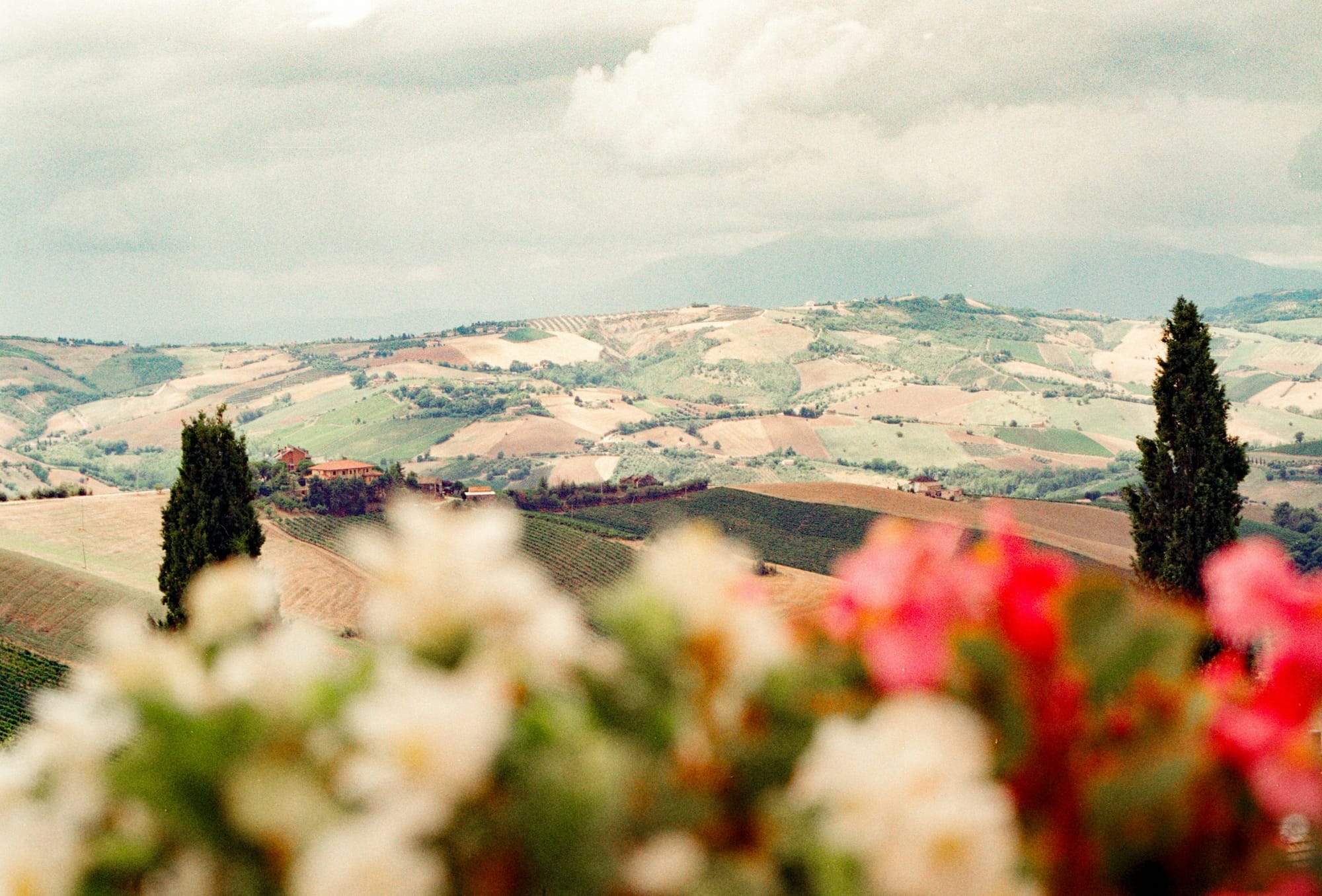
The Tuscan rhythm runs on shoulder season. Spring brings green hills, almond blossoms, and the first asparagus and artichokes hitting menus. Fall brings golden light, the olive harvest, the truffle season, and wine harvest in October. Both windows are why Tuscany has the reputation it does.
Best windows: Mid-April to mid-June for spring. Mid-September to late October for harvest. October specifically is the wine-country sweet spot if you’re going to anchor at a fattoria — you arrive during vendemmia (harvest) and stay through the start of olive-press season.
Avoid: Mid-July through August — Italians leave the cities, the heat is heavy, and the countryside is dry-grass-and-cypresses dramatic but unforgiving. December–March is the off-season; many fattorias close or run reduced operations. Florence the city stays open year-round, but Tuscany the countryside really lives April through October.
Venice: April–June and October–November (Avoid Summer)
Venice has the narrowest window of any major Italian destination, and the answer is mostly not summer.
Best windows: April through June — temperate, the canals smell like water rather than algae, the cruise-ship volume hasn’t peaked. Late October and early November — moody, atmospheric, the right Venice for travelers who like the city to feel a little melancholy. The light in November is some of the best photography light in Italy.
Avoid: July and August — heat plus crowds plus, in some recent years, low water that affects the smaller canals. November–February brings acqua alta season (high tides that can flood St. Mark’s Square); plan flexibility into the trip if you go winter.
The cruise-ship math also matters. Venice has tightened cruise-ship access in recent years, but on the days when ships do dock, the central tourist sites compress dramatically. Your advisor should know which days that’s likely to happen.
Amalfi Coast and Capri: May–October Only
The Amalfi Coast has the shortest season of the major Italian regions. Most properties — including Le Sirenuse in Positano and Belmond Hotel Caruso in Ravello — close for the winter and reopen in April. By November the coast is largely shut.
Best windows: Mid-May to late June — pre-peak, water is warming, days are long, the lemon harvest is happening. Mid-September through October — the high-season crush has passed, water is still warm, restaurants are still open, the light is exceptional.
Avoid: August — peak Italian and European holiday season, prices are highest, the coastal road is its most crowded. November through April — most of what you’d want to eat and stay at is closed.
If you can only go in summer, the back half of June or the front half of September is the working compromise. (A recent client’s Capri wedding trip ran in late May for exactly this reason — pre-peak warmth, fewer crowds, more accommodating staff.)
Trying to figure out which window fits your specific trip? Start with a 30-minute discovery call — I’ll work backward from your dates and the regions you’re combining to tell you what’s open, what’s closed, and what the math actually looks like.
Sicily: March–November (Italy’s Longest Season)
Sicily has the longest workable season in Italy because it sits south enough to extend warm-weather travel into late autumn and start it up earlier in spring. It’s also less affected by Ferragosto, since Sicilian rhythms differ from northern Italian ones.
Best windows: Mid-April to mid-June — wildflowers, mild temperatures, the lemon and orange harvests, the granita season starting up. Mid-September through October — wine harvest, fall light, the second tomato season, water still warm enough to swim.
Avoid: July and August — heat, crowds, the same Ferragosto issues that hit the rest of Italy plus the heat that makes inland Sicily genuinely difficult. December–February — coastal towns shut down, ferries reduce, the trip becomes a city-only Sicily trip rather than the full thing.
For the food traveler, Sicily in October is one of the great food months in Europe.
Lake Como and the Italian Lakes: May–September
The Lakes have a defined warm-weather season. Properties open at the beginning of May, close in October. There’s no shoulder-season-with-character on the Lakes the way there is on Amalfi — when it’s closed, it’s closed.
Best windows: Mid-May to late June — flowers, milder temperatures, crowds haven’t peaked. September — water is at its warmest from summer’s holdover, the holiday-week crowds have left, the light starts turning.
Avoid: July and August — peak European holiday season, the Lakes are at their busiest. October–April — most properties closed; the lake towns shut down.
The Dolomites: Two Seasons
The Dolomites operate on a two-season schedule that splits sharply.
Hiking season: Mid-June to late September. Trails open after snowmelt; mountain huts are operating; the long-distance walking routes (the Alta Via paths) are accessible. July and August are peak crowd; September is the quietest serious-walking month.
Ski season: Mid-December through March. The classic Italian ski experience — Cortina d’Ampezzo, Alta Badia, the Sella Ronda lift system. Christmas and February are most expensive; January is the cheapest serious-ski window.
The shoulders: Late October–early December and April–early June are largely closed seasons. Don’t plan a Dolomites trip in those windows.
Christmas Markets and December Italy
December in Italy is a separate trip type from the rest of the year. The Christmas markets — particularly in the Alpine and northern regions (Bolzano, Trento, Merano) — are some of the most atmospheric in Europe. Rome and Florence at Christmas are quietly beautiful, with smaller crowds than spring or fall and a particular cozy-stone-city quality.
The case for December Italy: Christmas markets, fewer tourists, the cozy version of cities you’ve only seen in their summer-tourist mode, Venice with the late-fall light.
The case against: Cold (genuinely cold in the north and at altitude), shorter days, the Lakes and Amalfi closed, some restaurants on reduced winter schedules.
Holiday Week Specifically (Late December)
The Christmas-to-New-Year window books out twelve months in advance for the properties worth booking. If you want Italy during this window — particularly the Dolomites for ski, Rome for cathedral-and-piazza-Christmas, or Venice for the misty-quiet version — start a year out. Three months out for this window is too late.
What This Means for Your Trip
If you’re trying to combine multiple regions, the seasonal math gets complicated quickly. A Rome-Tuscany-Amalfi trip works in May, June, September, and October — and not really in any other month. A Lakes-plus-Tuscany trip needs to be a summer trip. A Sicily-only trip can be late spring or fall.
The country pillar — Italy, the Way I’d Plan It — covers the broader country-level seasonal logic. For the planning timeline of when to start booking once you’ve picked your dates, the When to Start Planning Your Trip post walks through it.
If your dates are flexible, tell me what kind of trip you want. The dates will follow the trip, not the other way around.
Book Your Free Discovery Call →︎
Last updated: April 2026. I keep this guide current. As Italian seasonal patterns shift and property opening windows change, the page changes.
Plan your trip with me.
A 30-minute discovery call is where it starts. No fee, no pressure.
Book a Discovery Call