Italy is the country most travelers try to see, and that’s exactly where the trip starts going wrong. The standard two-week dream — Rome for three days, Florence for two, Venice for two, Tuscany for a long weekend, Amalfi for color, maybe Sicily if there’s time — turns one of the most layered countries in Europe into a sprint.
The honest version: Italy isn’t one trip. It’s at least five distinct kinds of trip wearing the same name. The first decision in planning Italy isn’t where — it’s which kind. Once you know that, the destinations follow.
Here are the five I plan most often, with the version that earns each one.
Itinerary One: The Classic Multi-City Sweep (10–14 Days)
The shape: Rome (3–4 nights) →︎ Florence (3–4 nights) →︎ Venice (3–4 nights), connected by Frecciarossa high-speed rail.
Who it’s for: First-time Italy travelers. Couples or pairs who want the iconic Italy experience without compromise. Travelers who’ve watched too many movies set in these three cities and want to stand where the camera was.
The case for it: This is the trip the rest of Italy travel is measured against. Rome carries the ancient and baroque weight. Florence is the Renaissance made stone. Venice forces slowness by its nature — no cars, everything on foot or boat. The arc moves logically: walking demands first (Rome), cultural immersion second (Florence), atmospheric finale third (Venice).
The trap: Trying to add a fourth city. The math doesn’t work. Twelve days with Rome + Florence + Venice + Tuscany at three nights each leaves you with fourteen total trip nights and three transit days. That’s three days you didn’t actually go anywhere; you packed.
The honest take: This is the right Italy trip if it’s your first. Two weeks of it, done correctly, beats four weeks of a sprawl.
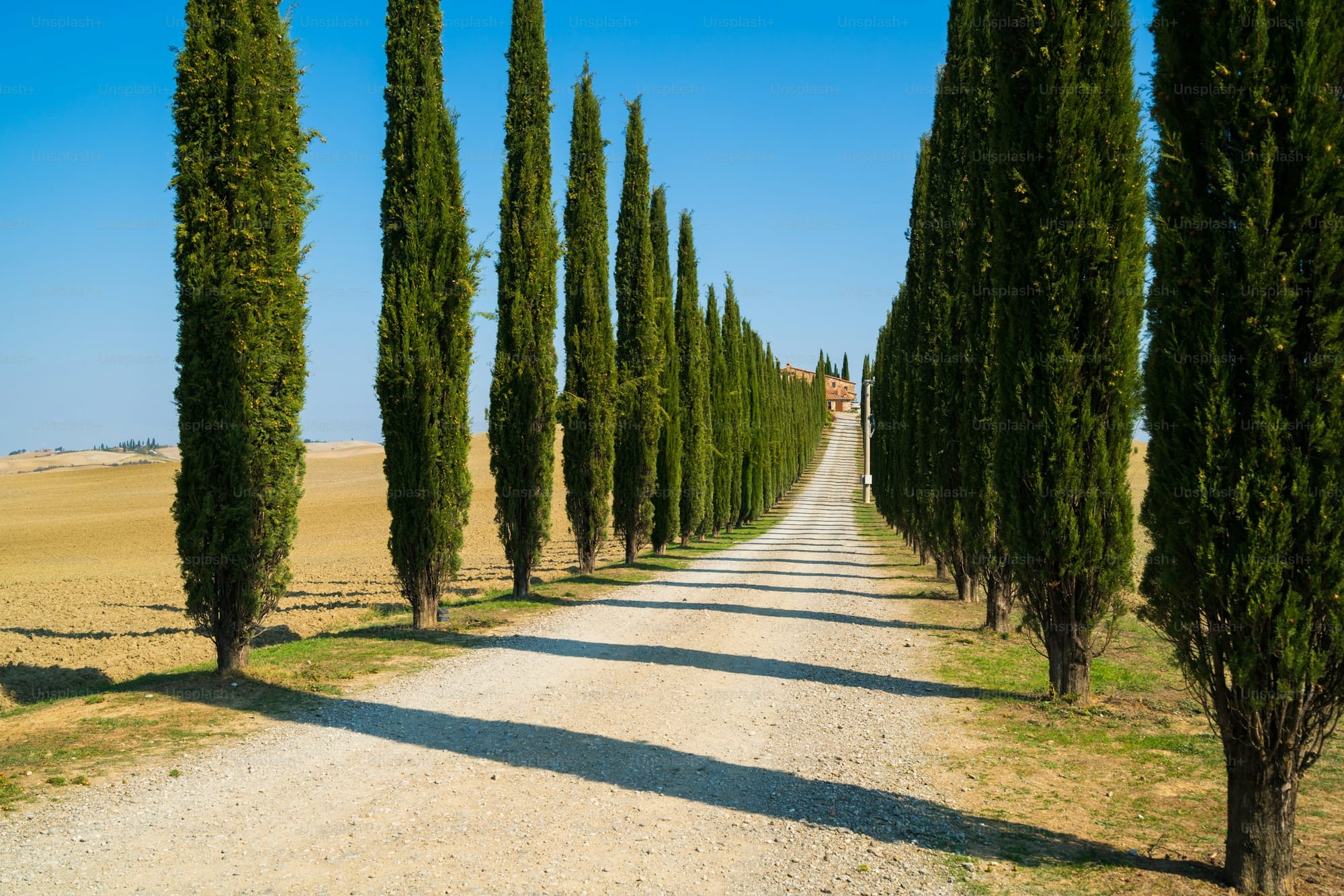
Itinerary Two: The Tuscan Deep Dive (7–10 Days)
The shape: Florence (3 nights) →︎ Tuscan countryside (3–5 nights) →︎ optional Florence return (1 night).
Who it’s for: Slow travelers. Wine-country regulars. Couples who’ve been to Italy once and now want the version that doesn’t move every 48 hours. Anyone who’s read about fattorias and decided they want to wake up in one.
The case for it: Tuscany at its best is a working wine estate with a hotel built into it — Castiglion del Bosco in Brunello, Borgo Santo Pietro in the Val d’Orcia, Castello di Casole in the Siena hills. You’re not visiting the countryside; you’re staying at it. The days are wine tastings at the property, drives to hilltowns (Montepulciano, Pienza, San Gimignano), cooking classes in farm kitchens, long lunches at the property restaurant.
The trap: Two-night stays at the fattoria. They don’t work. The rhythm Tuscany asks for needs four nights minimum to settle into. You arrive, you exhale, and on day three you finally stop checking your phone. That’s the trip.
The honest take: This is the version of Italy that’s actually about being there. The cities-version is about seeing things. The Tuscany version is about not seeing things — and that’s exactly the point.
Itinerary Three: The Slow Honeymoon (8–12 Days)
The shape: Rome (2–3 nights) →︎ either Tuscany or Lake Como (4–5 nights) →︎ optional Amalfi Coast (2–3 nights).
Who it’s for: Honeymooners who don’t want their honeymoon to feel like a sprint. Couples celebrating a milestone — anniversary, big-birthday, second-chapter wedding. Anyone who chose Italy specifically because they want the trip to feel slower than a normal vacation.
The case for it: This is the Italy honeymoon that earns the title. The city portion is short — you’re not on a museum-marathon — and the countryside or lake stay is where the actual honeymoon happens. Villa d’Este on Lake Como, Mandarin Oriental Lake Como in Tremezzo, Castiglion del Bosco in Tuscany. Spa, gardens, long lunches, sunset walks, no museum fatigue.
The trap: Frontloading too much city. A four-night Rome before the lake means you arrive at the lake exhausted, not relaxed. Two nights of Rome is plenty for honeymoon energy.
The honest take: Italy is one of the great honeymoon countries — but only when it’s planned with the slow-honeymoon shape, not the multi-city-sweep shape. (How to Plan a Honeymoon Without Losing Your Mind is the broader framework; this is the Italy-specific version.)
Trying to figure out which itinerary actually fits your trip? Start with a 30-minute discovery call — bring the dates, the budget tier, the partner, the feeling. We’ll map it together.
Itinerary Four: The Second-Visit Region Anchor (7–10 Days)
The shape: One region, one base or two, fully inhabited. Examples: a week on the Amalfi Coast (Positano + Ravello, Le Sirenuse + Belmond Hotel Caruso). A week in Sicily (Palermo + Taormina). A week on the Lakes (Como base, day trips). A week in the Dolomites (Cortina or Alta Badia base).
Who it’s for: Travelers who’ve already done the Rome-Florence-Venice arc and want the version that goes deeper. Repeat Italy travelers who treat the country as a project across multiple visits. Couples who can spend a week without moving and not feel restless.
The case for it: Italy’s regional cuisines are different countries that happen to share a flag. Sicilian food has more in common with North African and Greek traditions than with the food of Milan. Amalfi seafood and Tuscan game-and-bistecca are entirely separate worlds. A region-anchored trip lets you actually understand one of those worlds rather than skim five of them.
The trap: Treating the region as a checklist. Amalfi has more than just Positano. Sicily has more than just Taormina. Stay long enough to find the second-tier town you didn’t know existed — that’s usually where the trip earns its specificity.
The honest take: This is the Italy trip that travelers come back from saying we’d live there if we could. Not because they fell for the Instagram version. Because they actually inhabited a place long enough for it to start feeling familiar.
Itinerary Five: The Italy-Plus Pairing (12–18 Days)
The shape: Italy paired with a neighboring country — Italy + Greece (Athens + Santorini after Rome), Italy + Switzerland or Austria (Venice →︎ Salzburg or Vienna), Italy + a Mediterranean cruise leg.
Who it’s for: Travelers with two-plus weeks. Returning Italy travelers ready to combine it with a country they haven’t done yet. Couples who want the European arc rather than the Italy-only deep dive.
The case for it: Italy connects to almost everywhere worth combining it with by train. Venice to Vienna is a single-day train segment. Rome to Athens is roughly a two-hour flight. Sicily by ship to Mediterranean stops is a real itinerary type. The Italy-plus pairing extends the trip without sacrificing depth — you’re adding a destination, not subdividing an existing one.
The trap: Treating Italy as a “stop” in the longer arc. A four-day Italy stop in a fourteen-day European sweep is the worst version of any of these — too short to do Italy, too long to be a transit. If Italy is part of a pairing, give it at least seven nights.
The honest take: Italy-plus works when both halves earn their time. It doesn’t work when one half is the actual trip and Italy is the bonus.
Which One Is Yours?
If you’re picking your first Italy trip — multi-city sweep.
If you’ve been once and want to slow down — Tuscan deep dive or single-region anchor.
If you’re honeymooning, marking a milestone, or designing the trip you’ll talk about for forty years — slow honeymoon.
If you’ve been to Italy multiple times and want to combine it with the rest of Europe — Italy-plus.
If you’re a wine-country regular who wants to stop pretending the cities are why you’re going — Tuscan deep dive, every time.
These aren’t the only Italy trips that work. They’re the five I plan most often, the five where the math is most likely to land. The right one depends on what you actually want the trip to feel like — not what the brochure says you should want.
For the broader country-level frame, Italy, the Way I’d Plan It is the country pillar — it covers the shape of the country at a higher altitude.
Book Your Free Discovery Call →︎
Last updated: April 2026. I keep this guide current. As Italy properties shift and seasonal patterns change, the page changes.
Plan your trip with me.
A 30-minute discovery call is where it starts. No fee, no pressure.
Book a Discovery Call