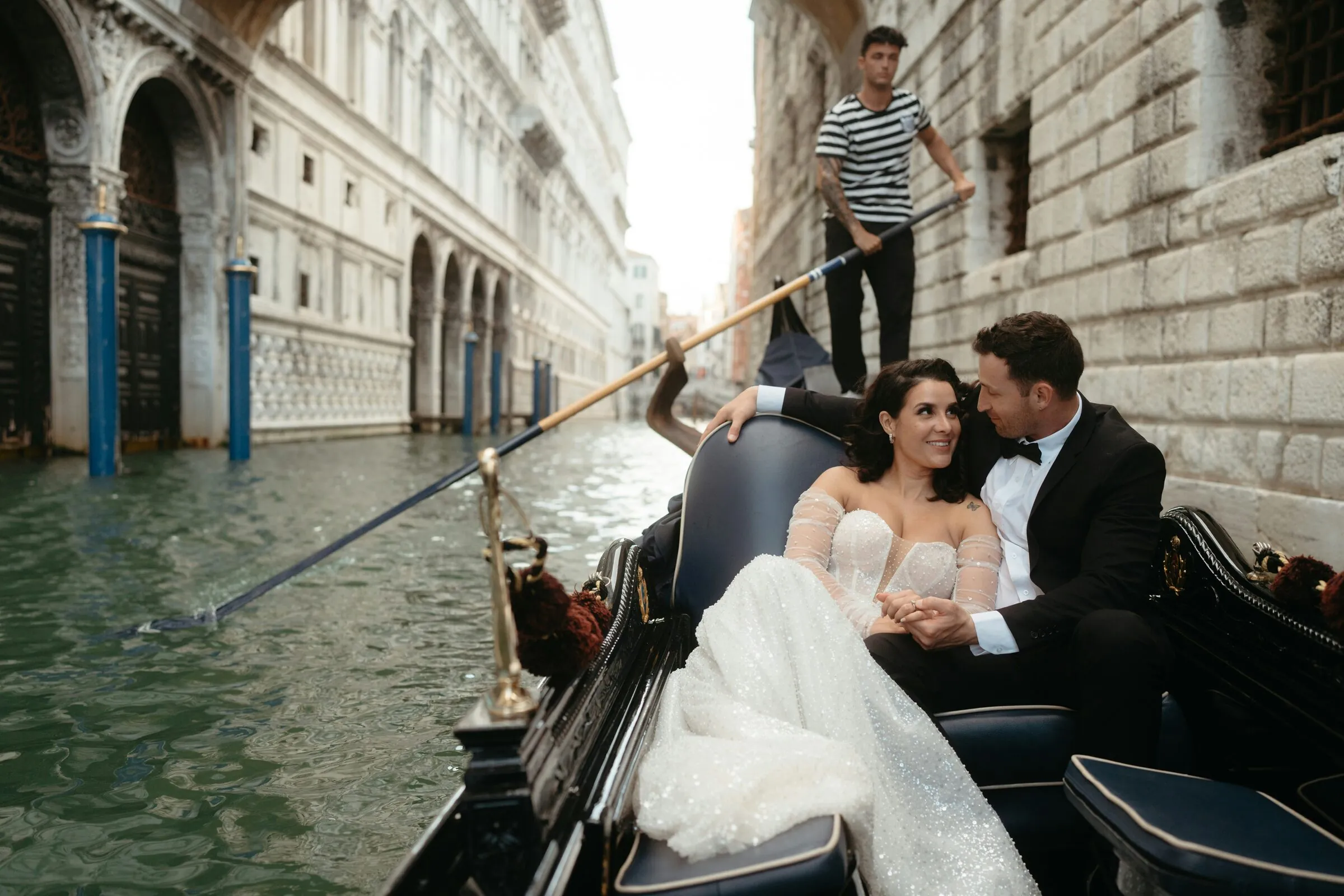
Italy for Destination Weddings (and the Honeymoons After)
I planned a destination wedding in Capri for a client, and I’ve never seen a place more made for milestone moments. Italy is the destination wedding capital of the world, and for good reason — the food is the experience, the beauty is inescapable, and even a bad day in Italy is a great story.
Here’s how to think about Italy for a wedding, and what comes after.
When it comes to specific properties: in Capri I work with Casa Mariantonia, a boutique hotel where the owner Luigi can hold a corner terrace room with sea views in two directions — one of only two on the property configured that way, and worth asking for specifically. In Sorrento, the Art Hotel Gran Paradiso for the pre-wedding days, where the views down to the bay set the tone before you’ve even arrived on the island. In Naples, De Bonart, a Curio Collection by Hilton with a rooftop that feels like an introduction to everything that comes next. The private yacht transfer from Sorrento to Capri, with Italian breakfast served on the water, is how I move clients between the two — it’s not a logistical choice, it’s the first act.
Capri is pure romance and a little bit theatrical. The island is small and walkable, and everything about it feels significant. The Blue Grotto is the most famous attraction, though honestly, it’s less about the actual grotto and more about the legend of it. The Monte Solaro chairlift lifts you to the island’s highest point, with views over the Bay of Naples and the Faraglioni. The via Camerelle is the main shopping street, lined with high-end boutiques and restaurants. The whole island has an energy of “this is a special place and you’re here for a special reason.” For a wedding, Capri is unmatched. For the post-wedding night, Capri is romantic without being obvious about it.
The Amalfi Coast is dramatic and slightly less precious than Capri. The villages cascade down the mountains — Positano, Ravello, Amalfi. The drive is terrifying and beautiful. The restaurants sit on cliff edges. The views are the kind that make you understand why people move to Italy and never leave. For a wedding, the Amalfi Coast is more sprawling than Capri — you have options, variety, escape routes if needed. For a honeymoon, it’s epic. You feel small in the best way.
Florence is for the honeymoon part, not the wedding. If you’re getting married in Capri or the Amalfi Coast, Florence is where you wind down after. It’s a city designed for walking, for sitting in plazas drinking espresso, for standing in front of paintings and just being with them. The Uffizi, the Accademia, the Duomo — these are the things you think about when you think about Italy. Florence delivers on all of it. It’s also where you can eat the best pasta you’ve ever had, at a neighborhood restaurant that doesn’t have a sign, because the cook’s mother taught her how to make it correctly and she’s been making it the same way for thirty years.
Rome is the grand finale. If Florence is the quiet, meditative part, Rome is the celebration. It’s large, it’s chaotic, it’s full of tourists — but it’s also genuinely extraordinary. The Colosseum is as impressive as you expect. The Vatican is overwhelming in scale. The Spanish Steps are where you see the whole city moving through. The food is Roman — carbonara, cacio e pepe, amatriciana — simple and perfect and completely specific to the place. After your wedding, after you’ve wound down on the Amalfi Coast, after you’ve had quiet time in Florence, Rome is where you remember that you’re on an adventure.
What makes Italy work for milestone travel.
The food is the experience. You’re not using restaurants as a place to refuel for sightseeing. The meal is the sightseeing. You sit down to lunch and you’re there for three hours because the food is worth three hours. The wine is exceptional and affordable. The coffee is a two-minute experience where someone cares about the exact temperature and the exact amount of foam. The food culture is so strong that even a casual pizza is memorable.
The beauty is inescapable. You can’t have a bad view. You can be sitting in a normal piazza eating normal food and you’re surrounded by architecture that’s centuries old and perfectly proportioned. That consistency of beauty is rare.
The people move slowly. Italians aren’t in a rush — at least not in the tourist areas. They sit for hours at cafés. They take long lunches. They close shops for siesta. The culture around taking time is infectious. You find yourself slowing down.
The infrastructure is good. Roads are navigable, trains are reliable, hotels range from rustic to absurdly luxe. You can rent a car and drive the Amalfi Coast if you’re brave. You can take trains between cities. You can book excursions from your hotel. The logistics are manageable enough that you can focus on the experience instead of the planning.
Here’s what you actually need to know about a destination wedding in Italy.
The legal framework is complex if you’re getting married there — non-Italian citizens have real paperwork to navigate, and the requirements vary by region and by where you hold citizenship. For that reason, many couples handle the legal marriage at home and let Italy be the celebration. That’s simpler and cleaner, and it’s usually what I recommend.
The timing matters — you want temperate weather (May-June or September-October). July-August are hot and crowded. April and November are chilly.
The logistics are considerable. You need a destination wedding coordinator on the ground. I can help facilitate, but you need someone there who understands Italian vendors, speaks Italian, can handle things in real-time. That person is worth every penny.
The cost is not inexpensive. Italian weddings, especially on Capri, are expensive. You’re paying for the location, the view, the infrastructure, the expertise. That said, you might be surprised how much you get for the money — all-inclusive packages are actually fairly reasonable for what they include.
For the post-wedding portion (the honeymoon part).
You don’t need to do much. Italy itself is the experience. You could spend your entire week sitting by the pool at a resort and it would be perfect. You could explore villages and museums and churches for six hours a day. You could do nothing. The beauty of Italy is that there’s no wrong answer.
The pace I recommend: spend a day or two in the place where you got married (or very nearby) just decompressing. Then move to the Amalfi Coast for two or three days — beaches, views, food, ease. Then Florence for two or three days — walking, art, culture, quiet. Then Rome for two or three days — energy, history, celebration. Then fly home.
That’s the arc that feels right.
Ready to plan a destination wedding in Italy? Tell me your vision — which region, what size, what matters to you — and let’s design something that earns its own chapter. Italy does milestone moments better than anywhere else in the world.
And if you’re already married and just want to do the Italy honeymoon part, that’s equally valid and I’m ready to design it.
Plan your trip with me.
A 30-minute discovery call is where it starts. No fee, no pressure.
Book a Discovery Call