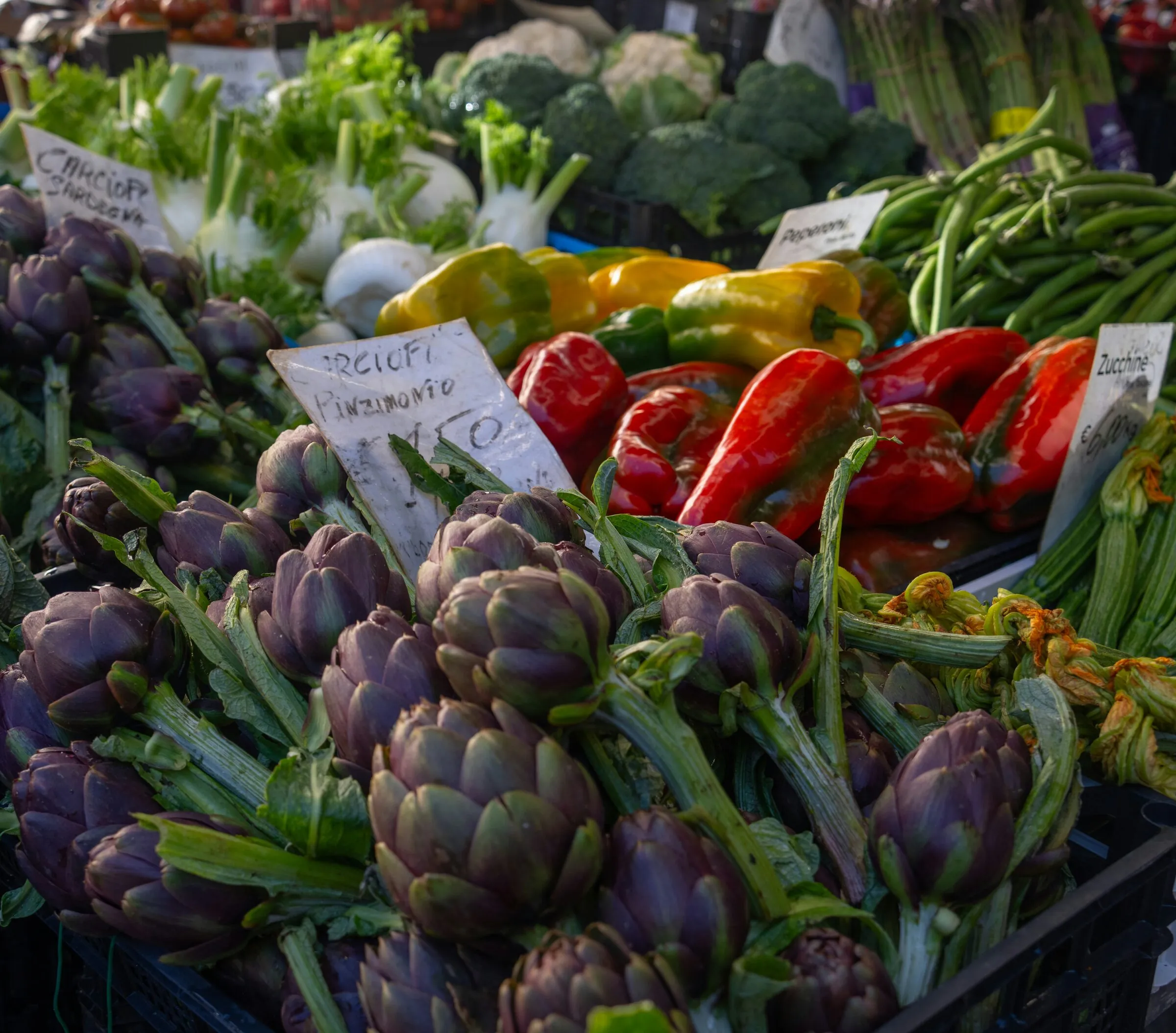
Italian cooking is not haute cuisine. It’s the food Italians eat at home.
That single sentence does more to fix a trip’s eating than any list of restaurants I could give you. The travelers who come back saying the food was incredible are almost always the ones who stopped looking for the celebrity chef and started looking for the trattoria with the handwritten menu and three things on it. The travelers who come back disappointed are the ones who went to the place with the laminated menu in five languages and the host trying to wave them in from the alley.
Here’s the version of eating Italy that actually works.
Meal Hours Matter More Than You Think
Italian meal hours are different from American ones, and the gap is not negotiable. Lunch runs 1 to 2:30 p.m. Dinner runs 8 to 10 p.m. Most restaurants don’t open for dinner until 7:30, and the kitchens don’t fully come alive until 8.
If you eat at 6 p.m., you’re marking yourself as a tourist. The room will be mostly empty. The kitchen won’t be in full swing. The food and the atmosphere are both better an hour later. Shift your schedule.
The exception is aperitivo — the early-evening drink-and-light-bite ritual that runs roughly 6 to 8 p.m. Order a Negroni or a spritz, get a small plate of olives, cured meats, or focaccia, and let dinner come later. This is how Italians bridge the long gap between lunch (which often runs past 2:30) and dinner (which doesn’t start until 8). Use it.
The Restaurant-Type Hierarchy
Italian restaurants are not interchangeable. The names are precise, and the precision tells you what to expect. Walking past the wrong category for the night you want is the most common — and most fixable — restaurant mistake travelers make.
Trattoria. Family-run, casual, regional cooking, handwritten or short menus. Lunch and dinner both, usually closed Sundays or Mondays. The default good neighborhood meal in any Italian city. If a trattoria has been there for forty years and the menu has eight things, you’re in the right place.
Osteria. Originally a place that served wine, now usually a casual restaurant with a wine focus. Slightly more rustic than a trattoria, often with shared tables, almost always with a thoughtful house wine. Look here for the regional pasta and the secondo (main course) you didn’t know existed.
Ristorante. More formal, longer wine list, dressier expectations. Multi-course dining, white tablecloths, reservations required. The right call for an anniversary, a serious dinner, or any meal where you want a primo-and-secondo full Italian sequence rather than a single plate.
Enoteca. A wine bar, often with small plates. Use one for aperitivo or a casual lunch when you want to drink seriously and eat lightly.
Pizzeria. What it sounds like. The good ones are casual and busy and have an actual pizza oven you can see. Naples is the world capital; Rome has its own thinner-crust style; Sicily has sfincione and other regional variations.
Tavola calda. Counter food, usually for lunch — the workman’s hot table. Roman suppli, Sicilian arancini, lasagna by the slice. The right call when you want a real Italian lunch but not a sit-down one.
How to Find the Good Ones
Three rules, in order of importance.
Walk three blocks deeper. The good restaurants don’t need to advertise hard. The pattern repeats in every major tourist area: Pantheon in Rome, Trevi Fountain, Piazza San Marco in Venice, Piazza della Signoria in Florence, the Spanish Steps. The restaurants on those squares are mostly mediocre and overpriced. Walk three blocks deeper into the neighborhood. The restaurants the locals actually use are the ones the brochures don’t list.
Avoid the laminated multilingual menu. This is the single most reliable indicator that a restaurant is not for locals. The menu in five languages with photographs is a tell. The menu handwritten on a chalkboard, in Italian only, with five things on it, is a different tell. Trust the second tell.
The host trying to pull you in is a no. Good Italian restaurants don’t need to recruit from the sidewalk. If someone is standing outside trying to convince you to come in, you’re being marketed to. Walk past.
A bonus rule: at lunch, look at who’s eating. A restaurant full of working Italians eating quickly is a working trattoria. A restaurant full of tourists with cameras is a tourist trap. The math is that simple.
Regional Cooking Is Actually Regional
Italy doesn’t have a national cuisine. It has a collection of regional cuisines that share a flag. The regional logic is one of the most under-appreciated parts of planning a food-driven Italy trip — and it’s why the trip is better when you anchor longer in fewer regions (the Tuscan Deep Dive or single-region anchor itineraries cover this).
A few of the regional anchors worth knowing:
Rome and Lazio: Cacio e pepe, carbonara, amatriciana, carciofi alla giudia (the Roman-Jewish artichoke), saltimbocca. Roman cooking is austere — three or four ingredients done seriously. The pasta dishes are the headline.
Florence and Tuscany: Bistecca alla fiorentina (the giant T-bone), ribollita (bread soup), pappa al pomodoro (tomato bread soup), pici cacio e pepe, cinghiale (wild boar). Tuscan cooking is hearty, bread-based, hunter-game-forward. The wine is Sangiovese-based — Chianti, Brunello, Vino Nobile.
Venice and the Veneto: Cicchetti (small bites at standing-only bars), risotto al nero di seppia (squid-ink risotto), baccalà mantecato (whipped salt cod), fegato alla veneziana (Venetian liver). Cicchetti culture is its own meal — go bar to bar, eat one or two at each, drink an ombra (small glass of wine) at each. It’s the right way to eat in Venice.
Naples and the Amalfi Coast: Pizza napoletana (the original), pasta alla genovese (slow-cooked beef and onions, the Neapolitan signature), spaghetti alle vongole, limoncello, the lemon-everything that runs through Amalfi cooking.
Sicily: A different country, food-wise. Arancini, pasta alla Norma, caponata, sarde a beccafico, cannoli, granita, pesce spada. Sicilian cooking borrows from North Africa, Greece, the Arab world. It’s the most distinctive regional cuisine in Italy and worth a trip on its own.
Planning an Italy trip and want to anchor it around the food? Start with a 30-minute discovery call — tell me how you eat, where you’ve already been, and what you’re trying to get to. The trip designs itself once we know that.
Wine: Order Like You Belong There
The wine math in Italy is the opposite of the wine math in the United States. The expensive bottle is rarely the right call; the carafe of house red is almost always exactly what you want. Italian house wines tend to be regional, simple, well-paired with the food the kitchen is serving — and a quarter of the price of the imported bottle a sommelier might steer you toward.
A few rules I’d give my own clients:
Order the regional wine. In Tuscany: Sangiovese-based — a Chianti Classico or a Rosso di Montalcino at the casual end. In Rome: a Frascati for whites, a Cesanese del Piglio for reds. In Veneto: Soave, Valpolicella, Amarone for special. In Sicily: Nero d’Avola for reds, Grillo or Catarratto for whites. The local wine is paired with the local food because they grew up together.
Ask for “vino della casa” (house wine) at lunch. Lunch is the meal where Italians drink simply. Order a half-liter (mezzo litro) or a quarter-liter (quartino) of house red or white, and don’t apologize for it. It’s how the country drinks at midday.
At dinner, ask the server. “Cosa mi consiglia?” — what would you recommend? — works at any serious restaurant. Tell them your primo and secondo, mention your budget range (or just say “qualcosa di interessante” — something interesting), and let them pair. Italian sommeliers are often working at restaurants that aren’t formally fine-dining; they take wine seriously regardless.
The wine list is regional, not global. The good Italian restaurant has fifty Italian wines and four French ones. Don’t try to order outside the region. The pairings are the regional ones for a reason.
For wine-country travel that anchors specifically around the wine itself — beyond just eating well in the cities — the Bordeaux and Douro Valley guides cover sister wine countries; in Italy, the Tuscan and Piedmontese deep dives are the ones I plan most often, and the regional guides above carry the practical detail.
Tipping in Italy
Tipping in Italy is fundamentally different from American tipping, and the over-tip is one of the more common signals of being American.
Service is included. The bill includes a coperto (cover charge, usually €1–4 per person) and sometimes a servizio (service charge, 10–15%). When servizio is included, additional tipping is unnecessary.
At a restaurant without included service: rounding up to the nearest 5 or 10 euros, or leaving 5–10% for genuinely good service, is appropriate. Twenty percent is American math; in Italy it reads as either showing off or not understanding the system.
At cafés and bars: the change you’d round up at a café is enough. There’s no expectation of tipping coffee.
At hotels: small bills for the porter, the housekeeper at end of stay, the concierge if they did serious work. Cash, in euros, ideally small denominations.
The general principle: tip when the service was personal and exceptional, not as a default. Don’t over-tip because you’re American. It marks you as American.
What I Actually Tell Clients
Eating Italy correctly is not about reservations at the famous places. It’s about understanding the rhythm of the country’s eating culture — meal times, restaurant types, regional logic, wine math, tipping math — and operating inside that rhythm rather than fighting it.
The reservations that matter are the ones at restaurants that don’t need to be famous to be excellent. Those exist in every Italian city. They’re handwritten-menu places where the chef knows what came in from the market that morning. They book up the day before, not three months in advance. Your advisor’s job is to know which ones to call, when, and what to ask for when you’re on the line.
For the broader trip framework, Italy, the Way I’d Plan It is the country pillar; for the itinerary type that fits your trip shape, Italy in Five Itineraries is the diagnostic. This post — and the seasonal logic in When to Go to Italy — are the practical ground game underneath them.
Book Your Free Discovery Call →︎
Last updated: April 2026. I keep this guide current. As regional restaurant scenes evolve and wine programs shift, the page changes.
Plan your trip with me.
A 30-minute discovery call is where it starts. No fee, no pressure.
Book a Discovery Call