The book. Everybody has read Dorian Gray. Everybody can quote the plays. The book that earns this trip is the one almost nobody reads: De Profundis — the long letter Oscar Wilde wrote from a prison cell in Reading, a page at a time, each sheet taken away as he finished it, addressed to the man who had ruined him and never really sent. The manuscript suggests the governor quietly let that rule slide, which is its own small mercy.
It is not what you expect. The wit is still there, and then it drops out from under you. He is fifty thousand words deep in accounting for his own life — what he squandered, what he was owed, what he refuses to be ashamed of — and the prose goes from champagne to something closer to scripture. Read it with The Ballad of Reading Gaol, published in 1898 under the name “C.3.3.,” his cell number, because his own name would have sunk it. Two years’ hard labour did that to the most famous conversationalist in England: it made him a great writer instead of a brilliant one.
Then he came to Paris, broke, under an assumed name — Sebastian Melmoth, borrowed from a gothic novel by his mother’s uncle by marriage, which tells you he never once stopped being a stylist. He died in a small hotel on the Left Bank on the thirtieth of November, 1900, aged forty-six. He is supposed to have said, of the décor, that he and his wallpaper were fighting a duel to the death and one of them had to go. He probably said it — some weeks earlier, and it has been improved by a century of retelling. I’m telling you the honest version because he’d have found the true one funnier.
The route. Four nights in Paris, Left Bank the whole way, no schedule after lunch.
- Sleep in the building. The Hôtel d’Alsace is now L’Hôtel — same address, 13 rue des Beaux-Arts, with a plaque on the front saying he died here. Room 16 is the Oscar Wilde Suite: a private terrace, a bathroom worth the money on its own, and framed on the walls, the hotel’s original demands for payment of his unpaid bill. It is almost certainly not the room he actually died in — that one was small and cheap and is long gone, and this one is thirty-five square metres with a terrace, which tells you everything. They redecorated it after his London house, kept the invoices he never paid, and now rent it to people who came because of him. He would be delighted, and I mean that with my full chest.
- The rest of the hotel, deliberately. It’s one of the smallest luxury houses in Paris, twenty rooms, all Jacques Garcia velvet and a circular well of a staircase, with a hammam pool down in the cellar you get to yourself for an hour when you book the suite. Don’t treat it as a place to sleep between sights. It’s the sight.
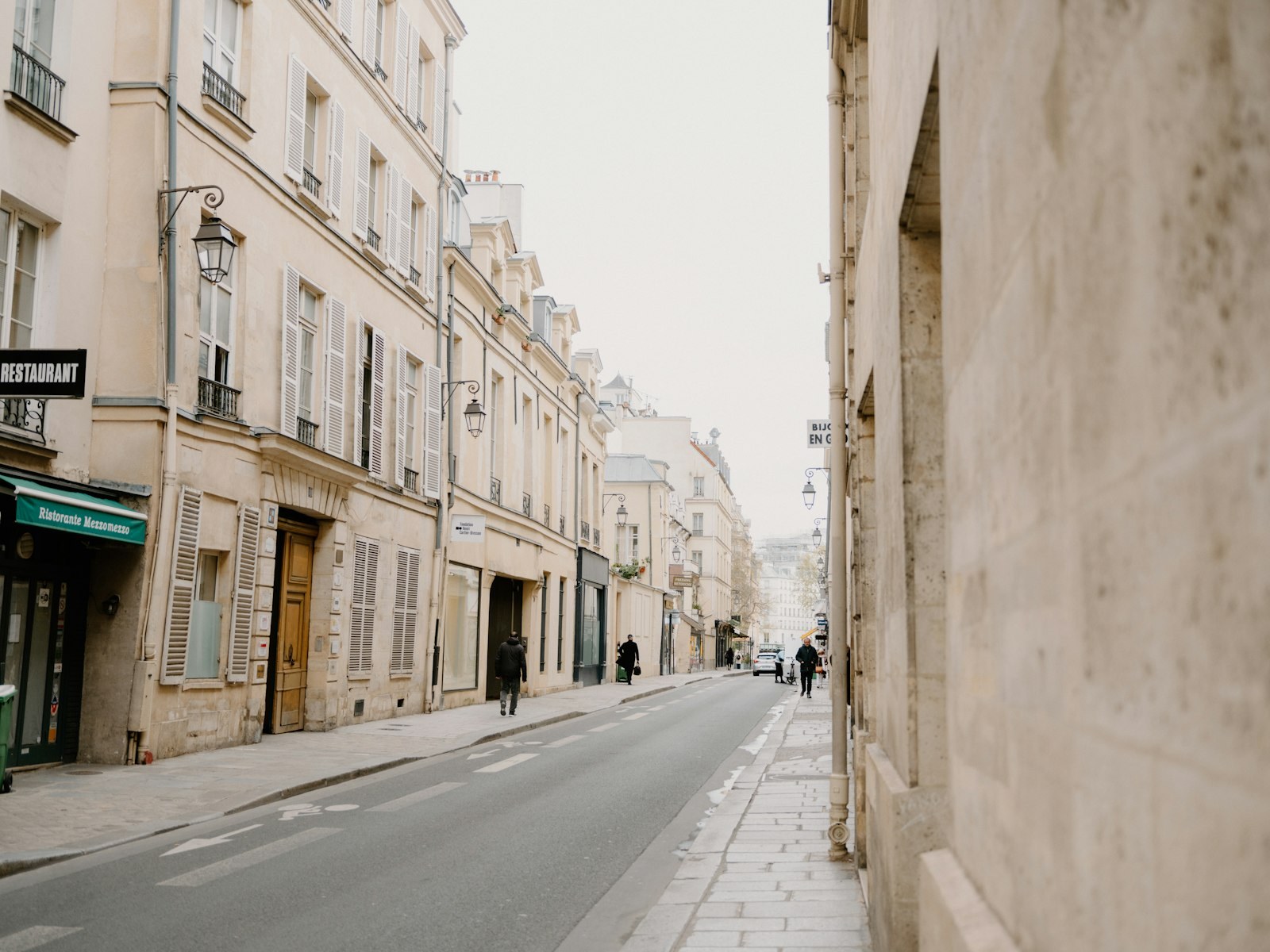
- The street outside. The École des Beaux-Arts sits at the top of the street, across rue Bonaparte — this is a road that has been full of art students for two centuries and full of galleries now, which is why it’s still good. He didn’t choose it for that. He chose it because Jean Dupoirier, who ran the place, paid off the debt at his last hotel and gave him a room on credit. Nobody puts that on a plaque. Coffee, a bookshop, the quais and the bouquinistes a few minutes north. Do nothing with intent.
- Père Lachaise, one morning. Wilde was buried in a pauper’s grave at Bagneux, and it took his friend Robbie Ross until 1909 to move him here properly. The tomb is Jacob Epstein’s — a great winged sphinx of a thing. In 2011 the Irish state paid for a glass barrier around it — the Office of Public Works treats the tomb as an Irish monument on foreign soil, which is its own kind of poetry — because decades of admirers kissing the stone in lipstick had begun to eat the limestone. People still kiss the glass. Ross is in the tomb too, at his own request, which is the part of the story that gets me.
- One long dinner, no landmark attached. Saint-Germain does this better than anywhere on earth. Book late. Order the thing that takes an hour.
- The Orsay, if you want the century he was reacting to — but honestly, on this trip, the museum is optional and the walking is not.
The glass and the bite. Absinthe, prepared properly — the slotted spoon, the sugar, the cold water poured slow until the glass goes cloudy — which takes about four minutes and is the entire point of ordering it. France repealed the last of the ban in 2011, so you can order it by name again. And Wilde described its three stages better than any drinks writer since — over a table, to Ada Leverson, who wrote it down. Then a dozen oysters at a Left Bank brasserie with a glass of something cold and flinty, eaten with no ceremony at all. At home: De Profundis is free in a dozen editions and short enough for one long evening. Pour something. Read it slowly. It was written slowly.
If you need a copy: De Profundis and Other Prison Writings — the Penguin Classics edition, edited by Colm Tóibín, which prints the full letter and pairs it with The Ballad of Reading Gaol. From Bookshop.org, whose profits go to independent bookstores. It’s an affiliate link — I earn a small commission and it costs you nothing.
The invitation. Read it together. Live it together. This is the milestone trip for the person in your life who has been the funniest one in every room for thirty years and has never once been taken seriously — a birthday with an actual argument in it. And for a book club, De Profundis and The Ballad together make one of the best single meetings you’ll ever have, because nobody can agree on whether the letter is a confession or a defence. Bring the argument to Paris. Group logistics, handled. And the one-on-one version starts here.
Plan your trip with me.
A 30-minute discovery call is where it starts. No fee, no pressure.
Book a Discovery Call