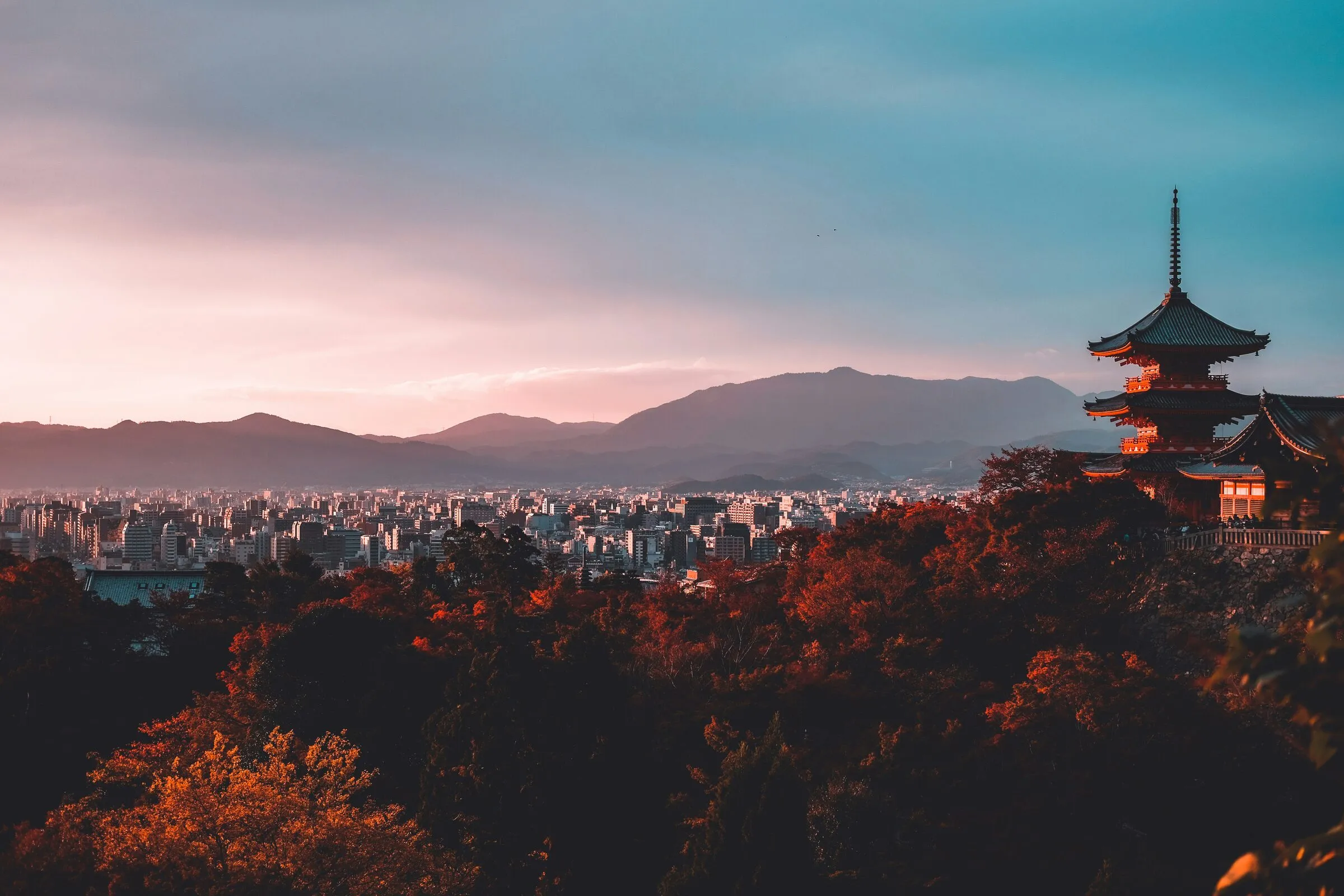
Kyoto is the city most travelers compress into 48 hours and feel they’ve missed — because they have. The standard Japan itinerary gives Tokyo four or five nights and Kyoto two or three, and the Kyoto two-or-three is structured around seeing as many temples as possible — Kinkaku-ji and Ginkaku-ji and Kiyomizu-dera and Ryoan-ji and Fushimi Inari and the Arashiyama Bamboo Grove all in 36 hours, by tour bus or rented bicycle, with a kaiseki dinner squeezed between. Done that way, Kyoto becomes a checklist of photographs. The temples blur. The gardens never get the unhurried hour they’re designed for. The geisha-district evening becomes a glance through Gion at dusk rather than the actual ritual it deserves to be. Kyoto rewards honeymooners who arrive slow — four nights minimum — and the right ryokan-or-hotel decision is the one that actually defines the trip.
Done correctly, Kyoto is the slow-travel city — the slow-travel city in Japan, and one of the genuine slow-travel destinations in Asia. The temples reward unhurried hours, not 20-minute photograph stops. The gardens are designed for seasonal-light-and-mood observation across half a day, with tea and quiet walking, not for a four-temple sprint. The geisha district at dusk is a real cultural ritual when you understand what you’re encountering. The kaiseki dinner at a serious ryotei is a 3-hour ceremony, not a meal. Four nights is the floor; five or six is the right length. And the version of Kyoto that earns the visit is the version where you pick five temples and spend two unhurried hours at each — not the version where you photograph fifteen.
Most clients come to me asking about Kyoto in three contexts: as the slow half of a Tokyo + Kyoto multi-city Japan trip (the most common — four to five nights in Kyoto after three to four in Tokyo, Shinkansen between, the right pacing for first-time Japan), as a standalone Kyoto-and-region week (Kyoto plus Nara, Osaka, or Hiroshima as day trips, or Kyoto plus a Kii peninsula extension), or as the slow-travel finale of a longer Asia trip (Bangkok, Seoul, or Shanghai as the front, Kyoto as the contemplative close).
Here’s how I think about it.
At a Glance
| Best time to visit | Late March–early April for the sakura (cherry-blossom) season — the most dramatic 7-to-10-day window in Kyoto’s calendar, with the temples and gardens at their most photogenic. Mid-November–early December for the kōyō (autumn foliage) season — many travelers prefer this to cherry-blossom because the autumn colors persist for three to four weeks rather than peaking in seven days, and the crowds are 60% as intense. Avoid August — peak heat and the Obon holiday week. Avoid late December–early January — the Shogatsu New Year holiday closes much of the city for several days. |
| How long to stay | Three nights is the floor; four or five is the right length for a real Kyoto experience; six or seven for travelers including day trips to Nara, Osaka, or Himeji. Two nights is the most-common avoidable mistake in Japan trip planning. |
| How to get there | From Tokyo — Shinkansen (bullet train) to Kyoto Station in 2h15m, the right way to do the city pair. From Kansai International Airport (KIX) in Osaka — direct Haruka train to Kyoto Station in 75 minutes. Most international travelers fly into Tokyo’s Haneda or Narita and take the Shinkansen to Kyoto rather than flying domestic; the train is faster door-to-door and the views are part of the experience. |
| Currency / language | Japanese yen (¥). Cards work at most major restaurants, hotels, and chains; carry ¥10,000–20,000 cash for smaller restaurants, taxis, temple admission, and shrine offerings. Japanese is official; English signage at major temples and tourist sites is universal, but smaller restaurants, taxis, and rural-feeling neighborhoods are more language-barrier than Tokyo. Google Translate’s camera function is genuinely good for menu work. |
| One thing most guides won’t tell you | Most temples open at 6 a.m. or earlier and the first 90 minutes are essentially empty — even at the famous photo-spots. Plan one early-morning temple visit per day rather than fighting the 10-a.m.-onward tour-bus surge. Fushimi Inari at 6:30 a.m. is a different temple than Fushimi Inari at noon; the orange torii gate corridors are nearly empty and the experience is the photograph. Do this once. |
Why I Send Travelers Here
Because Kyoto, planned correctly, is one of the great cultural-immersion cities in Asia — the imperial capital of Japan from 794 to 1869 (over a thousand years), and the city where Japan’s classical court culture, Buddhism, tea ceremony, ikebana flower arrangement, kabuki and noh theater, kaiseki haute cuisine, zen gardens, and geiko/maiko (geisha) traditions were all developed and codified. The city was deliberately spared from WWII bombing (US Secretary of War Henry L. Stimson removed Kyoto from the atomic-bomb target list because of its cultural significance), which means the surviving urban fabric is materially older and more intact than any other Japanese city.
Done right, Kyoto is the city where a traveler stops seeing Japan and starts understanding it. The version that delivers is the slow version — four nights minimum, the early-morning temple discipline, the geisha-district evening done with real time, the kaiseki dinner at a serious ryotei, the machiya (traditional townhouse) lunch, and the day where you go to one Zen garden and sit there for an hour without a phone.
I send travelers here as the slow half of a Tokyo + Kyoto trip (the dominant first-Japan structure — and the right pacing is more days in Kyoto, not fewer), for honeymoons that want a culturally-deep version of an Asian honeymoon (the ryokan-and-kaiseki version is one of the genuinely distinctive bucket-list experiences in global travel), and for slow-travel travelers building a 5-to-7-night Kyoto-and-region anchor.
Here’s how I think about Japan in particular. The trip-shaping work is mine — what kind of Kyoto, how many nights against Tokyo, where the ryokan night sits, how the kaiseki reservations get sequenced six months out, which season gets the priority. That’s the editorial work — the part where the trip earns its money. The on-the-ground execution — the local guides who explain the geisha-district protocols, the temple access at hours the public doesn’t see, the ryokan check-ins that need a layer of cultural translation, the transit threads past what the JR Pass covers — runs through a ground partner I match to the trip. My role on that side is matchmaker. The bench is curated, vetted, and sized by the trip. For travelers in the Abercrombie & Kent register — full access infrastructure, bespoke-deep, the brand’s well-known executional layer — A&K Japan is the operator I’d route you to. For the bespoke-honeymoon range below that, the bench includes specialists with deep local Japan teams who run the trip with the same care at a more accessible price-quality ratio. The structure is consistent: my strategy, executed through the partner who lives in the country.
Every recommendation below comes through the lens of how I plan Kyoto for the clients I send, the hotel relationships I rely on, and a clear point of view about which version of Kyoto earns the days you give it.
Where I’d Anchor
Three anchoring patterns cover almost any traveler’s reason for being in Kyoto:
Higashiyama (the eastern mountains). The historic temple-and-shrine cluster on Kyoto’s eastern edge — Kiyomizu-dera, Kodai-ji, Yasaka Pagoda, the Philosopher’s Path, Nanzen-ji, and Ginkaku-ji all within walking distance of each other. Stay here on a first visit if you want temples-as-front-door access — the eastern hills are the densest cultural-walking territory in the city.
Central Kyoto / Karasuma & Gion. The grid of central streets between Karasuma-dori and the Kamogawa River, with Gion (the geisha district) just across the river to the east. Walking distance to Nishiki Market, the major shopping streets (Kawaramachi, Teramachi, and Shijo-dori), and the Kamogawa River evening walks. Better for travelers who want the central-city version of Kyoto with easy access to Higashiyama and Arashiyama.
Northern Kyoto (Kita-ku). Quieter, more residential, with the famous Kinkaku-ji (Golden Pavilion), Ryoan-ji (the Zen rock garden), and the secluded forest setting that one of Japan’s most distinctive luxury hotels has built itself into. The pick for a quieter, more contemplative Kyoto base.
For the secluded forest-retreat pick — and one of the most distinctive luxury properties in all of Asia — Aman Kyoto is the call. The hotel sits in a secret garden at the heart of a 32-hectare forest on the slopes of Mount Hidari Daimonji in northern Kyoto, surrounded by moss-covered boulders that glow emerald-like in the lush undergrowth, with winding footpaths linking tranquil forest glades and small streams providing the soundtrack. The property is genuinely remote — most travelers don’t believe a place this quiet exists 20 minutes from central Kyoto — and the Aman Journeys program offers behind-the-scenes access to temples, gardens, and craftsmen normally unavailable to the public. On my rate at the property, the amenity layer is real and quiet — calibrated to your dates and the suite category, deepened materially on longer stays, and broadly applicable across the property’s dining, spa, and the Aman Cultural Journey program. The specifics get walked through on the discovery call.
For the central Kamogawa-riverside pick, The Ritz-Carlton, Kyoto is the call. The hotel is a luxurious modern retreat inspired by traditional Japanese ryokan architecture, with expansive views of the Kamogawa River and minimalist contemporary interiors with floor-to-ceiling windows. 134 accommodations; some suites offer traditional Japanese decor including futons and tatami mats — the hybrid-Japanese-luxury option for travelers who want a contemporary base with traditional textures. The hotel’s Kyoto art activities program offers customized cultural experiences (calligraphy, tea ceremony, ikebana, kimono dressing); La Locanda serves traditional Italian, Mizuki serves all-day sushi, and the bar pours the city’s best signature cocktails. On my rate at the property, the amenity layer doesn’t book direct, and the specifics — calibrated to your dates, suite category, and length of stay — get walked through on the discovery call.
For the Higashiyama traditional-temple-district pick — and the most architecturally distinctive recent Kyoto opening — Banyan Tree Higashiyama Kyoto is the alternative. The property sits on a tranquil hillside in the Higashiyama district, just moments from Kiyomizu-dera Temple, surrounded by lush bamboo forest, with 52 rooms and suites — some featuring private natural onsen (hot springs) — that blend traditional Japanese design with contemporary comfort. The award-winning Banyan Tree Spa offers hot-spring rituals harmonized with Japanese-inspired healing practices; RYOZEN Restaurant serves seasonal locally-sourced cuisine; the Bamboo Pavilion offers immersive cultural experiences connecting guests with Kyoto’s craftsmanship and traditions. On my rate at the property, the amenity layer is calibrated to your stay rather than itemized in advance — what applies depends on dates and how you split the trip between spa and F&B. The specifics are the discovery-call conversation.
A few words about price. Kyoto at this tier is unapologetically expensive — Aman Kyoto, the Ritz-Carlton, and Banyan Tree all sit at the top of the city’s hotel ladder, and the kaiseki-and-tea-ceremony version of Kyoto that earns the trip is the version that costs accordingly. For travelers with the budget to plan Japan the way the country earns to be planned, these three are the answer. The discovery call below is where we figure out if that’s you.
Want one of these stays? Start a discovery call — I’ll pull live availability, walk through suite categories, and confirm which amenities and current promotions apply to your dates. And the small extra at check-in — a welcome note from me, the kind of touch the standard amenity package doesn’t list — is part of how I deliver these stays.
Where I’d Anchor for a Honeymoon
For honeymooners, the choice depends on what the trip is supposed to feel like — and it’s the most consequential decision you’ll make:
Aman Kyoto (northern Kyoto forest retreat) — the ultimate honeymoon move. Thirty-two hectares of forest, moss-covered boulders, private forest paths, the kind of quiet and privacy that makes the city feel like it doesn’t exist outside the property gates. The Aman Cultural Journey program gives you behind-the-scenes temple access most tourists never see. This is the choice if the trip is about contemplation and being alone together.
The Ritz-Carlton, Kyoto (Kamogawa riverside) — the contemporary-luxury-with-Japanese-textures choice. Futons and tatami mats available in the suites; the hybrid play for couples who want both modern amenities and traditional intimacy. Central location with river views and the polished-service register that the Ritz supplies. This is the choice if you want luxury infrastructure with cultural texture.
Hoshinoya Kyoto (Arashiyama, boat-access ryokan) — the full-immersion option. You arrive by boat into the property; it’s the kind of ritualistic entrance that signals this place is different. Traditional ryokan style with private onsen (hot springs) and kaiseki dinners; the entire trip becomes about the property rather than about leaving it. This is the choice if the ryokan experience itself is the honeymoon.
On my rate across all three, the amenity layer is meaningful and doesn’t book direct — pairing the right property to your honeymoon’s rhythm (forest retreat vs. riverside contemporary vs. Higashiyama traditional) is the discovery-call conversation, and the specifics are calibrated property by property.
What I’d Do With Four Days
The four-day shape rewards the slow rhythm Kyoto is built for. One major site per morning, one major site per afternoon, lunch and dinner unhurried, evenings in Gion or along the Kamogawa. Four days is a different city than two days. The discipline is: be at temples at opening; use the early-morning silence to the full; avoid mid-day crowds entirely.
Day One — Higashiyama and the Temple Cluster
Up at 5:30 a.m. for Kiyomizu-dera at first light. Be at the Kiyomizu-dera gates by 6:15 a.m., the moment the temple opens (year-round). The first 90 minutes are the version of Kiyomizu the photographs are taken at — the wooden-platform overlook rising from the hillside, the Otowa Waterfall, the Jishu Shrine with the love-stones for finding romance, all essentially empty before the tour buses arrive at 10 a.m. The 6 a.m. light on the wooden stage is the version you came for. Allow 90 unhurried minutes.
Walk down slowly through the Sannenzaka and Ninenzaka — the preserved Edo-period stepped lanes leading from Kiyomizu-dera toward Kodai-ji — past traditional shops, machiya (townhouse) cafés, and the kind of Old Kyoto streetscape that earns the cliché. Ninenzaka has been a UNESCO-protected preservation district since 1976 and the surviving architecture is genuinely from the Edo period. This descent is part of the temple visit; don’t rush it.
Coffee at one of the small machiya cafés around 8 a.m. — % ARABICA Higashiyama is the famous one (the white-and-marble specialty-coffee shop near Yasaka Pagoda), but even the unnamed shops along the lanes are worthy. Walk to Kodai-ji — the temple complex built in 1606 by the widow of Toyotomi Hideyoshi, with one of Kyoto’s most beautiful Zen rock-and-pond gardens. Allow 60 minutes. Sit on the wooden veranda facing the garden for at least twenty minutes; that’s not wasted time, that’s the point of the visit.
Lunch at a machiya in the Higashiyama hills — Hyotei for the iconic 400-year-old kaiseki teahouse (3-Michelin, book months ahead) or Issen Yoshoku for casual Japanese-Western fusion at the affordable tier. Either way, eat unhurried.
Afternoon: walk the Philosopher’s Path — the 2-km canal-side stone path that connects Ginkaku-ji (the Silver Pavilion) to the southern Higashiyama cluster, named for the philosophy professor Nishida Kitaro who walked it daily for meditation. Cherry-blossom season is peak-magic here; autumn-foliage season is similarly extraordinary; even in mid-summer the walk is a quiet hour. Do not photograph indiscriminately; the walk is meditative. End at Ginkaku-ji — the 1482 Zen temple with the famous moss garden and the dry-stone “Sea of Silver Sand” karesansui arrangement. Sit on the veranda overlooking the sand garden. This is meditation, not a photograph collection.
Dinner at one of the central restaurants — the Pontocho alley along the Kamogawa River has the iconic photogenic Kyoto-evening-restaurant strip (lanterns, narrow lane, river-side platforms in summer); Honke Kikunoi if you want the 3-Michelin kaiseki anchor. Or stay in Higashiyama and eat closer to where the day happened.
Day Two — Western Kyoto: Arashiyama and the Bamboo
Early start — be at the Arashiyama Bamboo Grove by 7 a.m. The famous bamboo-corridor walk (the photograph that’s in every Japan-travel article) is genuinely empty in the first hour after dawn and visibly different once the cruise-bus groups arrive at 10 a.m. Allow 30 minutes for the bamboo walk (it’s actually short — most travelers are surprised — though the surrounding forest paths reward an additional unhurried hour).
Walk to Tenryu-ji — the 1339 Zen temple at the western edge of Arashiyama, with the Sogenchi Pond Garden that’s one of the great surviving 14th-century Japanese garden compositions. UNESCO World Heritage, allow 90 minutes.
Cross the Togetsukyo Bridge (“Moon Crossing Bridge”) over the Hozugawa River for the iconic Arashiyama photograph back at the bamboo-clad mountain. Lunch in Arashiyama proper at one of the small yudofu (tofu hot-pot) restaurants — Shoraian is one of the most atmospheric, on the river bank with a lantern-lit dining room.
Afternoon: a small Zen-temple visit in the Arashiyama hills — Saiho-ji (the famous moss-temple, requiring written-application advance permission and a meditation-and-sutra-copying ritual; not for the casual visitor but transformative for those who pre-arrange) or Jojakko-ji (smaller, less famous, materially better light in the autumn). Or take the Sagano Romantic Train through the Hozugawa Gorge for the scenic-rail experience.
Train back to central Kyoto. Dinner in Gion — the geisha district — at Gion Sasaki (3-Michelin kaiseki) or one of the smaller traditional restaurants along Hanamikoji-dori. After dinner, walk the lanterned lanes — the geisha district at dusk is a working environment, not a tourist attraction; do not photograph maiko or geiko in motion (this is a real cultural rule that was tightened with formal restrictions in 2019), but the lit lanterns and the wooden-fronted ochaya (tea houses) are part of the photograph anyway.
Day Three — Northern and Southern Kyoto
Start at Kinkaku-ji (the Golden Pavilion) — the 1397 Zen temple with the gold-leaf-clad pavilion reflected in the surrounding pond. Be there at opening (9 a.m.) to avoid the worst crowds; the temple is famous-and-iconic enough that even the early hour has some queue. Allow 45 minutes — this is one of the temples that genuinely is only a photograph; the visit is the photograph plus a short walk-and-leave.
Walk or taxi to Ryoan-ji — the most famous Zen rock garden in Japan, fifteen rocks placed in raked white gravel, designed in the late 15th century. Sit on the wooden veranda for at least 20 minutes — the garden is meant for meditation, and the visit-and-photograph version misses the point. Even tourists who don’t want to meditate find the prolonged sitting transformative.
Lunch in northern Kyoto at one of the shojin ryori (Buddhist vegetarian) restaurants near the temples, or back to central Kyoto for a machiya lunch.
Afternoon: south to Fushimi Inari Shrine — the famous Shinto shrine at the foot of Mount Inari, with the thousands of orange torii gates lining the mountain paths. Be there at 4 p.m. or later — the late-afternoon light is the magic version, the cruise-bus groups have left, and the climb up the mountain is genuinely tranquil. Allow at least two hours for the partial climb (the full summit is 4 km up and back; the senbon torii initial corridor section is the photogenic 30-minute version most travelers do).
Dinner back in central Kyoto — a machiya dinner at Giro Giro Hitoshina (the most fun kaiseki counter in the city, casual and accessible).
Day Four — Slower Kyoto, or a Day Trip
Three options:
Nara. A 45-minute train ride south of Kyoto. Tōdai-ji (one of the largest wooden buildings in the world, housing the 15-meter Daibutsu bronze Buddha cast in 752 AD), Kasuga-taisha (the orange-pillared shrine with thousands of stone lanterns), and the famous bowing deer of Nara Park (about 1,300 wild deer who have learned to bow for crackers — they’re polite, they’re aggressive when crackers come out, and they’re a UNESCO-protected national treasure). A day trip is realistic.
Slower Kyoto: tea ceremony and the geisha-district walking tour. A morning at the Tea Ceremony Experience En (the kind of pre-arranged genuine cultural experience near Daitokuji that earns the trip) or the Camellia tea ceremony for the casual-accessible introduction. Afternoon at a kimono-dressing experience, or a guided walking tour through Gion with a knowledgeable guide explaining the geisha-district history, the ochaya system, and the protocols that govern the working environment. Lokafy or specialized Kyoto guides handle this level well.
Kaiseki Cooking Class. Several of the kaiseki restaurants in the city offer half-day cooking classes — the Haru Cooking Class is the accessible English-friendly option; the Higashiyama Niomon offers a more elaborate version. Three-to-four hours, ends with the meal you’ve made.
By day four, Kyoto makes its own recommendations.
Specific Things I’d Tell You About
Most Kyoto temples open at 6 a.m. or earlier and the first 90 minutes are essentially empty. This is the single biggest planning insight for Kyoto. Kiyomizu-dera, Fushimi Inari, the Arashiyama Bamboo Grove, and most of the major temples are accessible from dawn — and the first 60-90 minutes after opening are visibly different from the cruise-bus surge that hits after 10 a.m. Plan one early-morning temple per day, even if the rest of your schedule is unhurried; the discipline pays off.
Kyoto was deliberately spared from WWII bombing. US Secretary of War Henry L. Stimson — who had visited Kyoto multiple times in the decades before — removed Kyoto from the atomic-bomb target list over the objections of military planners, specifically because of the city’s cultural significance. The bomb that was originally targeted for Kyoto fell on Nagasaki instead. The intact Edo-period and earlier urban fabric you walk in Kyoto exists because of one man’s preservation argument in 1945. Most travelers don’t realize.
Sakura season is real and the timing is brutal. Cherry-blossom peak in Kyoto runs roughly April 1–10 (later than Tokyo by about a week), with significant year-to-year variance. Hotels at peak quadruple their rates; restaurant reservations require six-month lead time; the temples are genuinely extraordinary at dawn and genuinely wall-to-wall by 9am. The autumn-foliage season (mid-November to early December) is the underrated alternative — the colors persist for three weeks rather than peaking in seven days, the crowds are 60% as intense, and Kyoto in autumn is meaningfully more accessible than Kyoto in spring.
The geisha-district photography rules are real and enforced. In 2019, Kyoto formally restricted photography in Gion’s Hanamikoji-dori with fines of ¥10,000 (about $90) for taking photos on private streets without permission. This is a serious cultural matter, not a tourist suggestion — maiko and geiko have been harassed, chased, and physically blocked by photographers in growing numbers, and the city is enforcing the rules. Photograph the streets and buildings; do not photograph people in motion, ever, in Gion. The walking tour version with a guide who explains the protocols is materially better than the wandering-with-camera version.
Kaiseki is a 3-hour ceremony, not a meal. Traditional kaiseki ryori (haute Japanese cuisine, originating in the Buddhist temple cuisine and tea ceremony traditions) is structured as 8 to 14 small courses delivered slowly over 2.5 to 3 hours, with seasonal ingredients, traditional pottery, and omotenashi (Japanese hospitality) at every transition. A serious kaiseki dinner at a ryotei is one of the most distinctive cultural experiences in global travel — and it’s not a meal you eat quickly. Reserve months ahead for the major rooms (Hyotei, Kikunoi, Roan Kikunoi, Nakahigashi); the casual-accessible-counter versions like Giro Giro are easier to book and still represent the form.
The Ryoan-ji rock garden has fifteen stones and you can see only fourteen at a time. From any single viewing angle on the wooden veranda, one stone is always hidden behind the others. The arrangement was deliberate; no one knows quite why. The interpretive consensus is that the garden teaches the limits of perception — that complete understanding is unavailable from any one perspective. Sit there for at least 20 minutes and it begins to make sense.
What I’d Skip
Trying to see fifteen temples in two days. The most common avoidable mistake in Japan trip planning. The temples blur, the gardens never get the unhurried hour they’re designed for, and the city becomes a checklist instead of an experience. Pick five temples and visit them properly — that’s the version of Kyoto that earns the trip.
Restaurants on Shijo-dori or Kawaramachi with multilingual menus and pushy hosts. Same tourist-tax pattern as every European city in this library. Walk into Pontocho alley along the Kamogawa, into Gion proper, or into the smaller central streets two blocks back from the main thoroughfares.
The Fushimi Inari “thousands of torii” hike at noon. The shrine is genuinely beautiful and the orange torii gate corridors are iconic — but at noon in summer, the climb is hot, packed, and the photograph is impossible. Go at 4 p.m. or later (or, even better, at 6:30 a.m. for the early version).
Photographing maiko or geiko in motion in Gion. Real fines. Real enforcement. Do not stop walking maiko on the street to photograph them; do not crowd them at the ochaya doors. The walking-tour version with a guide is the right way to encounter the geisha district.
Driving anywhere in Kyoto. The trains, subway, and bus system cover everything; the streets are narrow and parking is genuinely difficult. Use the city bus and subway, take taxis when needed, and don’t even consider a rental car within the city.
For Tokyo + Kyoto Multi-City Travelers
Kyoto is the slow half of the Tokyo + Kyoto multi-city Japan trip. The right pacing matters. Three or four nights in Tokyo, four or five nights in Kyoto is the floor; seven or eight nights total is the right length for first-time Japan travelers, and the days should tilt toward Kyoto rather than Tokyo — Tokyo rewards energy and breadth, Kyoto rewards depth and time.
The classic 8-night Japan trip: four nights in Tokyo, four nights in Kyoto, Shinkansen between (2h15m, train ride past Mount Fuji on a clear day). The 10-night version adds two nights at a Hakone ryokan (between the cities — onsen-and-Mount-Fuji centerpiece) or two nights in Osaka after Kyoto. The 12-night version adds Hiroshima + Miyajima for a southwestern extension.
If you want me to design the full Japan multi-city trip — train timing, ryokan bookings, kaiseki reservations months ahead, the seasonal-window navigation, the Aman Cultural Journey integration if your dates include Aman Kyoto — that’s exactly the kind of planning I do. Start a discovery call.
For Honeymooners
Kyoto is one of the great Asian honeymoon cities — the ryokan-and-kaiseki version is one of the genuinely distinctive bucket-list experiences in global travel, and the city’s rhythm rewards the slow-travel pace honeymoons benefit from. Anchor at Aman Kyoto for the secluded forest-retreat experience (the 32-hectare forest, the moss-covered boulders, the Aman Cultural Journey program with behind-the-scenes temple access), at The Ritz-Carlton Kyoto for the Kamogawa-riverside luxury with the futons-and-tatami-suite hybrid option, or at Banyan Tree Higashiyama for the bamboo-forest hillside with the private-onsen suites.
The honeymoon evening, in my read, is dinner at one of Kyoto’s serious kaiseki counters (book six months ahead — seriously; the better rooms book that far) followed by a slow walk through the lit lanterns of Pontocho or Gion at 9 p.m. with the city emptying out. The setup does the work.
If you want me to design the full Japan honeymoon — Tokyo plus Kyoto plus optional Hakone ryokan days plus optional onsen-island finale (Naoshima, Setouchi, or Kii peninsula) — that’s exactly the kind of planning I do. Start a discovery call.
Honeymoon Planning — Couples-Specific Notes
Three rituals that distinguish a honeymoon Kyoto from a regular Kyoto:
The 6 a.m. temple hour. Wake early, go to Kiyomizu-dera or Fushimi Inari the moment the gates open — 5:30 a.m. arrival for a 6 a.m. opening. For the first 90 minutes, the temples are essentially yours. No crowds. No noise. The wooden platform at Kiyomizu with the valley spread beneath you, or the torii gate corridors at Fushimi in the first light — this is the version of Kyoto that earns “romantic.” Couples who do this together get the temple experience most travelers never encounter.
A private tea ceremony. Book this before you arrive — it’s the centerpiece couples-specific experience Kyoto offers. A professional chajin (tea master) teaches you the ritual, you make the tea together, you sit in a quiet room for an hour. It’s meditative, it’s collaborative, and it’s one of the most intimate cultural experiences the city supplies. The En-Kyoto school or the Camellia tea ceremony are the entry points.
The kaiseki dinner as honeymoon infrastructure. Dinner at one of the serious ryotei rooms (Kikunoi, Hyotei, Roan Kikunoi — book six months ahead, seriously) is not a meal, it’s a 3-hour ceremony. The progression of 8–14 small courses, the pottery, the unhurried pace, the omotenashi hospitality at every transition. A real kaiseki dinner is the structure that lets you be together without having to do anything. This is the version of “romantic dinner” that actually is.
For Slow-Travel Travelers
Kyoto is the slow-travel anchor in Japan — and one of the genuine slow-travel destinations in Asia. The version that delivers is the version where you stay five to seven nights, anchor in one of the three featured properties, and let the city reveal itself in the unhurried rhythm it was designed for. One major site per morning, one major site per afternoon, lunch and dinner unhurried, evenings in Gion or along the Kamogawa.
Day-trip options from a Kyoto base: Nara (45 minutes south), Osaka (15 minutes by Shinkansen, the food capital), Himeji (1 hour west, the iconic white castle), Kobe (45 minutes west, the beef plus the harbor), Hiroshima + Miyajima (90 minutes by Shinkansen, the floating torii gate plus the Peace Memorial Museum). A 7-night Kyoto-and-region anchor lets you do four of these as day trips and still have unhurried Kyoto time.
If you want me to design the full Kyoto-and-region slow-travel week, that’s exactly the kind of planning I do. Start a discovery call.
Plan Kyoto With Me
If you’re thinking about Kyoto as the slow half of a Japan multi-city trip, as a standalone Kyoto-and-region week, or as the contemplative finale of a longer Asia arc — that’s exactly the kind of planning I do. A 30-minute discovery call is where it starts. No fee, no pressure. Just the city, your timeline, and what you actually want to feel when you sit on the wooden veranda at Ryoan-ji and look at fifteen stones you can never see all of at once.
Book Your Free Discovery Call →︎
Last updated: April 2026. I keep this guide current. If a hotel I recommend slips, a restaurant changes hands, or access to a site shifts, the page changes. Travel changes. The work doesn’t stop when the page goes live.
Plan this trip with me.
A 30-minute discovery call is where it starts. No fee, no pressure.
Book a Discovery Call