The book. Gabriel García Márquez won the Nobel in 1982 and then, three years later, wrote the book I’d hand to anyone who thinks they don’t like him. Love in the Time of Cholera is not a magic-realist puzzle. It’s a love story built out of his own parents’ courtship — the letters, the interfering father, the girl sent away to break the thing up — stretched across fifty-one years, nine months and four days, which is how long Florentino Ariza waits for Fermina Daza. It is patient, funny, filthy in places, and completely unsentimental about what time does to a body.
It is also, structurally, a travel novel, and nobody ever says so. The city is never named — it’s Cartagena wearing Barranquilla’s coat — and the river running out behind it is the Magdalena, Colombia’s spine, the artery that carried everything and everyone for three centuries. García Márquez knew both intimately; he’d been a young reporter in Cartagena in the late forties, and part of his ashes are in the cloisters of the university there now. The rest stayed in Mexico, which he’d probably have found about right.
And then there’s the ending, which is the finest thing any writer has ever done with a boat. Two people in their seventies board a riverboat and can’t face going back to shore, so they order the yellow cholera flag run up the mast — the signal that means plague aboard, no one may board, no one may land. The captain asks how long they think they can keep going up and down the river like this. Forever, says Florentino. That’s the last word of the book. I am not able to arrange the cholera flag. I have tried to think of a workaround and there isn’t one.
The route. The walled city first, the river second — ten days, and take the heat seriously.
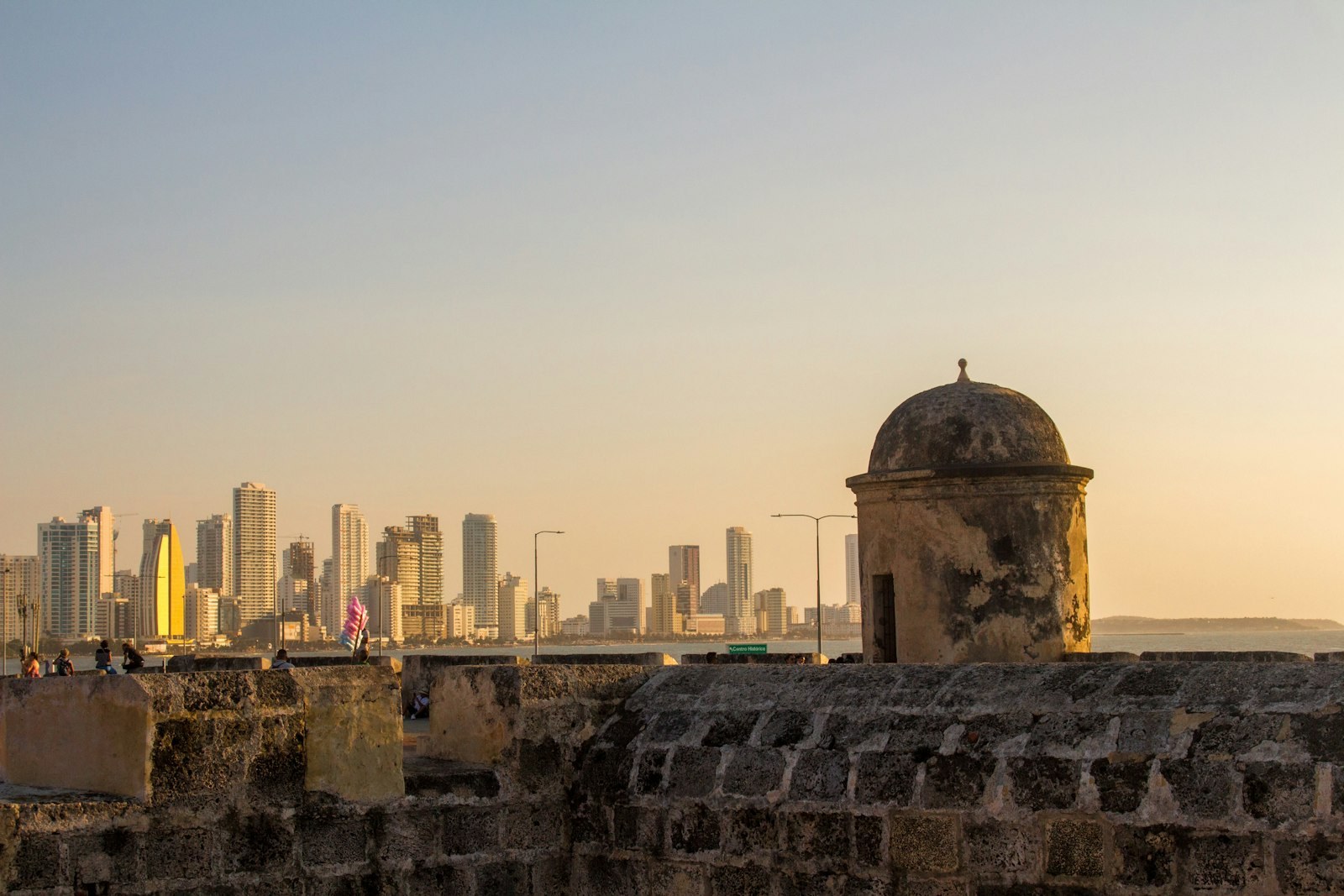
- Cartagena, four nights inside the walls. The historic centre is UNESCO-listed and it earns it: ramparts you can walk at sunset, balconies dripping with bougainvillea, a whole city the colour of sherbet. Go out at seven in the evening, not two in the afternoon. The afternoon belongs to the city, not to you.
- Getsemaní, one full evening. Still inside the ramparts but a world away from Centro — the old artisans’ and slaves’ quarter, across what used to be the moat, now murals and street food and music that starts when the tourists have gone to dinner. This is where the book’s texture actually lives — not in the pretty part.
- The García Márquez addresses. His Cartagena house is a private home, so it’s a look-from-the-street pilgrimage, which is the correct kind. Then the Claustro de la Merced, where his ashes are — a working university building, so the hours are its own and I’ll check them for you before you go. Bring the book. If you get the courtyard to yourself, read a page there. That’s the whole activity and it’s enough.
- Onto the Magdalena. Here’s the news most travellers haven’t caught up with: there are small ships running this river again — sixty-odd guests apiece, a week between Cartagena and Barranquilla in either direction, and a single line running all of it. The first arrived in 2025 and a second joined it this year, which tells you what the operator thinks is coming. The Magdalena went quiet for decades for reasons Colombia has spent a generation putting behind it. Very few people have gone. That combination has a short shelf life, and I’d rather you were early than sorry.
- Mompox. UNESCO-listed since 1995, stranded in the river marshes, a colonial town that was left behind when the water changed course and the money went with it — which is exactly why it survived as it was. Filigree silver, heat, silence. If any place on earth is the physical form of García Márquez’s prose, it’s this one.
- Barranquilla or Cartagena to close — whichever end you didn’t start at, plus one last night on the ramparts.
One honest note, because you’ll go looking for it and I’d rather you heard it from me: Colombia sits at a State Department Level 3 as I write this in August 2026, and Cartagena and the river corridor are not the reason why. The advisory is real, it is regional, and walking you through exactly what it does and doesn’t cover is part of what I’m for.
The glass and the bite. A dark Colombian rum over one big cube — Cartagena has aged and blended its own for a century, and it does not need mixing with anything. And an arepa de huevo from a street cart: a corn arepa fried, split, an egg dropped inside, fried again, eaten too hot, standing on the pavement at whatever hour you’re hungry. At home: rum, ice, a fan, and the last thirty pages read in one sitting. You will want to be alone for them.
If you need a copy: Love in the Time of Cholera — from Bookshop.org, whose profits go to independent bookstores. It’s an affiliate link — I earn a small commission and it costs you nothing.
The invitation. Read it together. Live it together. This is a book club’s book — everyone arrives with an opinion about whether Florentino is romantic or appalling, and the argument is good. It’s also a trip that works beautifully for a group of adults who have known each other a long time: a walled city that seats eight at one table without ceremony, and a small ship where your people are most of the manifest. How the group version works, in detail. And when you want to talk about a season — because the season matters enormously here — that’s the call.
Plan your trip with me.
A 30-minute discovery call is where it starts. No fee, no pressure.
Book a Discovery Call