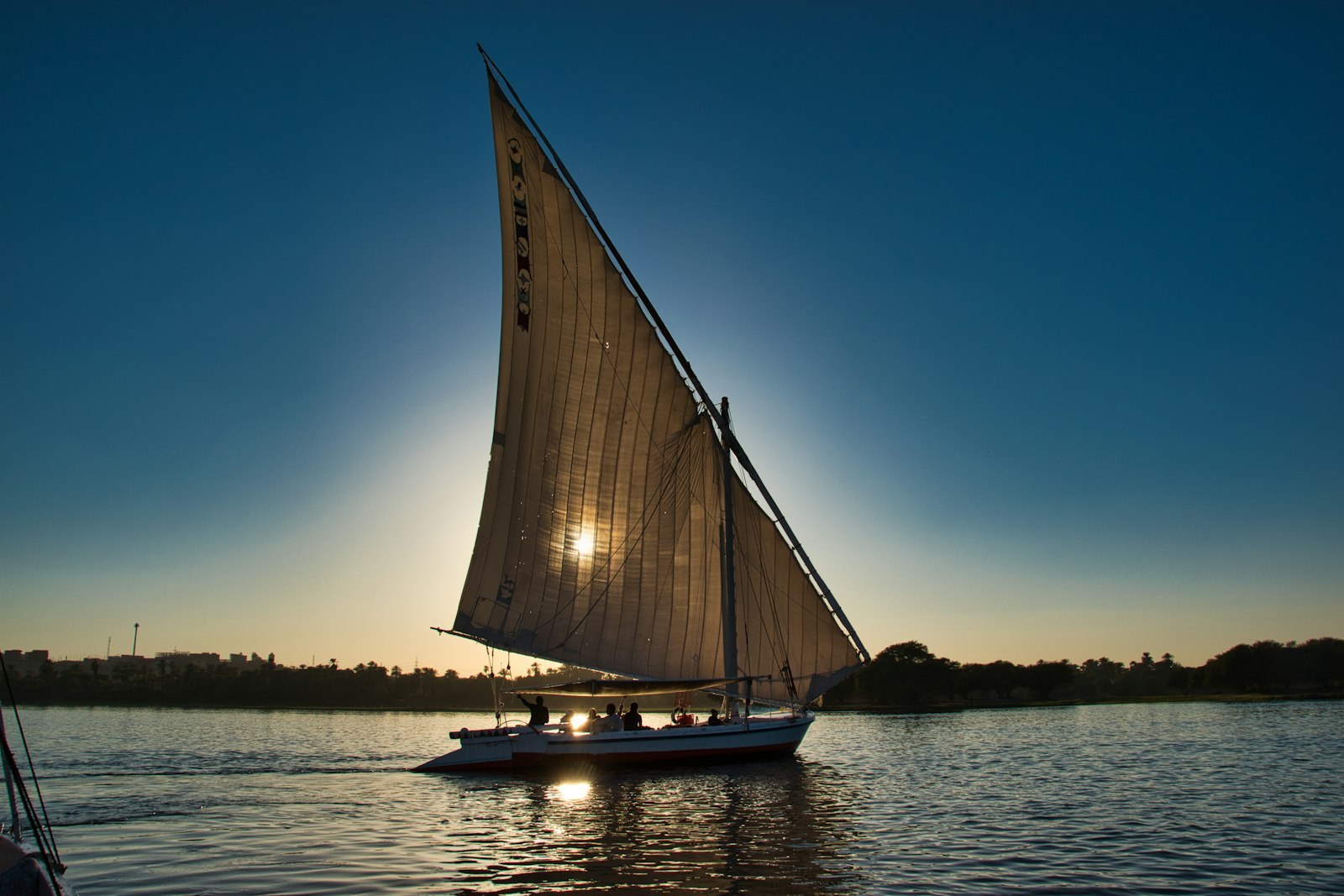
The book. Agatha Christie went to Egypt in the 1930s with her second husband, the archaeologist Max Mallowan, and sailed the Nile in 1933 aboard one of Thomas Cook’s old paddle steamers. She came home and wrote Death on the Nile, published in 1937, and in doing so invented a genre that has never stopped paying: a closed circle of people, a beautiful place, and nowhere for the murderer to go.
It’s the best of the Poirot novels and it’s not close. The trick is that the boat does the work a country house usually does — the suspects can’t leave, the setting keeps handing you distractions, and Christie is quietly running a second book underneath the first, about money and beauty and what people believe they’re owed. Linnet Ridgeway has everything. That’s the crime the book is actually investigating.
It also does something no other detective novel manages: it makes you want to go. Most murder mysteries make a place look dangerous. This one makes the Nile look like the most civilised way anyone has ever travelled, which — annoyingly, expensively, correctly — it still is.
The route. Ten or eleven days, Cairo at one end, the river in the middle, and the sailing booked before anything else because the good boats are small.
- Cairo, three nights — and the museum is new. The Grand Egyptian Museum opened at the end of 2025 and is now fully open at Giza: the main galleries, the Khufu boats, and the Tutankhamun rooms showing more than five thousand objects from the tomb together for the first time since Howard Carter dug them out in 1922. That last fact is not marketing. It genuinely has not been possible before. Give it a full day — and know that tickets are single-entry, so a second morning means a second ticket. Wednesdays and Saturdays the galleries stay open late, which is the best-value visit in Egypt.
- Luxor, two nights. Karnak at opening, the Valley of the Kings before the heat, and one afternoon doing nothing at all. One thing to know before you build a picture in your head: the Winter Palace — the Victorian pile on the corniche where Howard Carter announced he’d found Tutankhamun — is shut. It closed in early 2026 for a full restoration and is not due back until 2027. You can walk past it and feel the century coming off the façade; you cannot have a drink on that terrace, whatever the internet still tells you. And the old story that Christie wrote the novel under its roof, or under the Old Cataract’s? Neither house actually claims that any more. Both say she drew inspiration there — a more honest word, and probably the true one.
- The sailing, five nights, Luxor to Aswan. The steamer the whole story hangs on — eighteen cabins and six suites over three decks, the last survivor of Thomas Cook’s Nile fleet, Belle Époque down to the door handles — still runs this exact stretch, in both directions, six days a side. It isn’t the biggest boat, the newest boat, or the cheapest boat. It’s the right boat, and it books out a long way ahead. Two things the brochures bury: she takes nobody under six, and between late November and mid-February the river runs too low north of Luxor, so winter sailings run an altered route. Failing that, a dahabiya: a small sailing barge, half a dozen cabins, under sail where the wind allows, moored at night against a bank where you can hear the village.
- Edfu and Kom Ombo on the way, which are better than they sound and best at the hours the big ships aren’t there.
- Aswan, two nights. Philae — which isn’t on its own island any more, incidentally; it was cut into pieces and moved to Agilkia ahead of the rising water, and it remains one of the great acts of rescue in the history of anything. Then the Nubian villages, and feluccas on the water at the exact hour the light goes gold. The Old Cataract terrace, on its pink granite cliff above Elephantine Island, is still the most famous sundowner in Egypt and still worth every piastre. One planning note I’d rather give you now than let you discover: the house left Sofitel in May 2026 and is being run by Mandarin Oriental while it’s rebuilt around the guests. The historic Palace is open and taking bookings — thirty-five rooms and suites, the terrace, the pool over the river. The Nile Wing is a building site into 2027, the room count is a fraction of what it was, and the rooms still selling are not the ones with the view. Sit on that terrace by all means. Just let me find out what’s actually sellable before you fall in love with a particular window.
- Abu Simbel, by air, early. Colossal, absurd, worth the alarm clock — and moved stone by stone in the sixties for the same reason Philae was.
The glass and the bite. Karkadé — hibiscus calyces steeped and served over ice, dark red, tart, faintly floral — which is what Aswan drinks all day and what gets put in front of you before anything else is discussed. And ta’ameya, Egypt’s falafel, made from fava beans rather than chickpeas and green inside from the parsley and coriander ground in with them — lighter than any version you’ve had, eaten from paper, hot, with bread and pickles. At home: hibiscus tea from any shop, over ice, and the first four chapters — Christie spends them introducing every single passenger, which feels leisurely until you realise she’s dealing you a hand.
If you need a copy: Death on the Nile — from Bookshop.org, whose profits go to independent bookstores. It’s an affiliate link — I earn a small commission and it costs you nothing.
The invitation. Read it together. Live it together. A small ship on the Nile is a book club’s natural habitat: a fixed cast, long afternoons, and a shared text everyone’s actually finished for once. It is also the trip that works for a mixed group of ages — one of the very few places where a fourteen-year-old and a seventy-four-year-old are equally amazed, all day, for a week. One piece of advice particular to this pairing: learn everyone’s name on the first evening. It’ll matter later. Here’s how hosting your own works. And because the right boat is a booking-ahead problem rather than a budget problem, start the conversation early.
Plan your trip with me.
A 30-minute discovery call is where it starts. No fee, no pressure.
Book a Discovery Call