Two Valleys, One Harvest: The Douro or Bordeaux by River
One river line sails both of Europe’s great wine valleys. This fall of 2027, we’re pointing the ship at one of them — together. Here’s the honest case for each, so the valley you pick is the one that was actually yours.
Here is the thing most people don’t realize about wine-country river cruising: the two rivers worth building a trip around — the Douro in northern Portugal and the Garonne in Bordeaux — are both sailed by the same line. AmaWaterways runs the Douro out of Porto and the Garonne out of Bordeaux, seven nights each, roundtrip, harvest season on both. So the real question was never which river line. It was always which valley.
That’s the question I want to put in front of you now, because it’s the one the September Dispatch is asking the whole list to weigh in on. This fall of 2027, I’m hosting a wine-country week on one of these two rivers, and the valley isn’t settled yet — it’s a genuine choice, and yours counts. So this is less a sales page than a fair trial. Two closing arguments. You’re the jury.
Why harvest, why a river, why this line
I’ll keep this part short, because I’ve made the longer case elsewhere and I’d rather spend the words on the valleys themselves.
Why harvest. September and October are when a wine region stops being scenery and becomes work. The grapes come off the vines at dawn. The presses run. The menus turn to game and new produce, the light goes gold, and the August crowds have gone home. Spring wine travel is tourism; autumn wine travel is witness. I made the full seasonal case in Fall Wine Country River Cruising — the short version is that this is the one window where the trip and the vintage are the same event.
Why a river. On a wine-country river cruise you wake somewhere new each morning, the wineries are within reach of the dock, and you never touch a suitcase or a steering wheel between the first glass and the last. The ship is the hotel; the hotel moves at night. If river cruising is new to you, here’s what it actually is.
Why AmaWaterways. I sailed Ama on the Danube in November of 2024 — the AmaReina, Budapest to Nuremberg — and I came home a convert. Not because of the marketing. Because of the ship: the crew that knew my name by the second morning, the table that took a dietary note seriously, the bikes lashed to the deck for villages the ship would never reach. I have not sailed the Douro or the Garonne — but the things that made that Danube week are crew-and-culture things, and they travel to whichever river the ship is on. The full reason I keep recommending them is here; it’s a family-owned line, and I’ve sat across a conference table from co-founder Kristin Karst, so I’ll vouch for the culture behind the name. On both of these rivers you get the same architecture: an included Chef’s Table tasting dinner, the daily Sip & Sail cocktail hour, complimentary bicycles off the dock, and shore excursions offered at three activity levels — gentle, regular, and active — so a couple who don’t travel at the same pace can still travel together.
Same line. Same rhythm. Two very different valleys. Here’s how I’d help you choose.
The case for the Douro
The trip is called Enticing Douro — seven nights, roundtrip from Porto, aboard AmaWaterways’ Douro-built ships, the AmaDouro and the newer AmaSintra. It is, to my eye, the more dramatic of the two valleys, and the more remote.
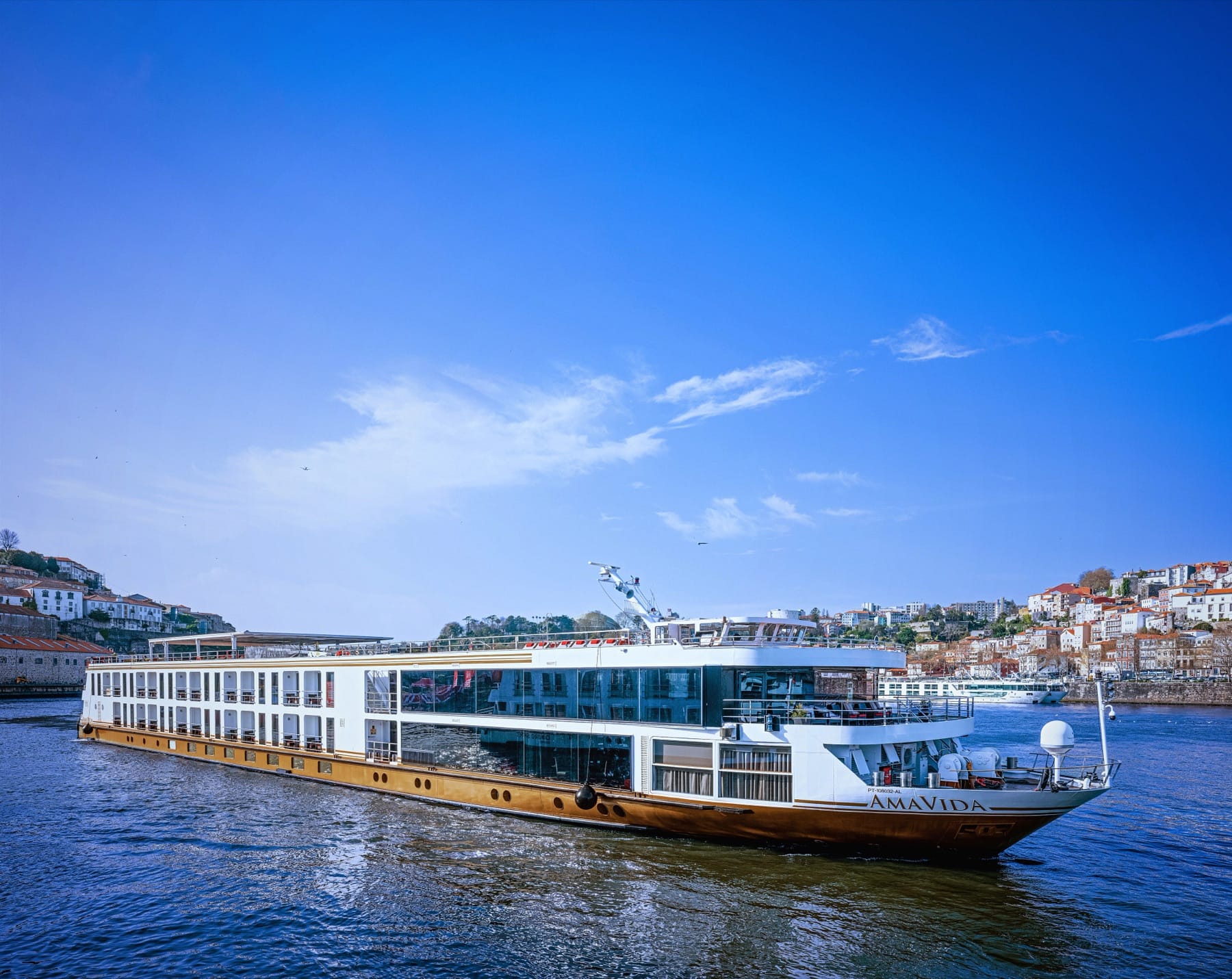
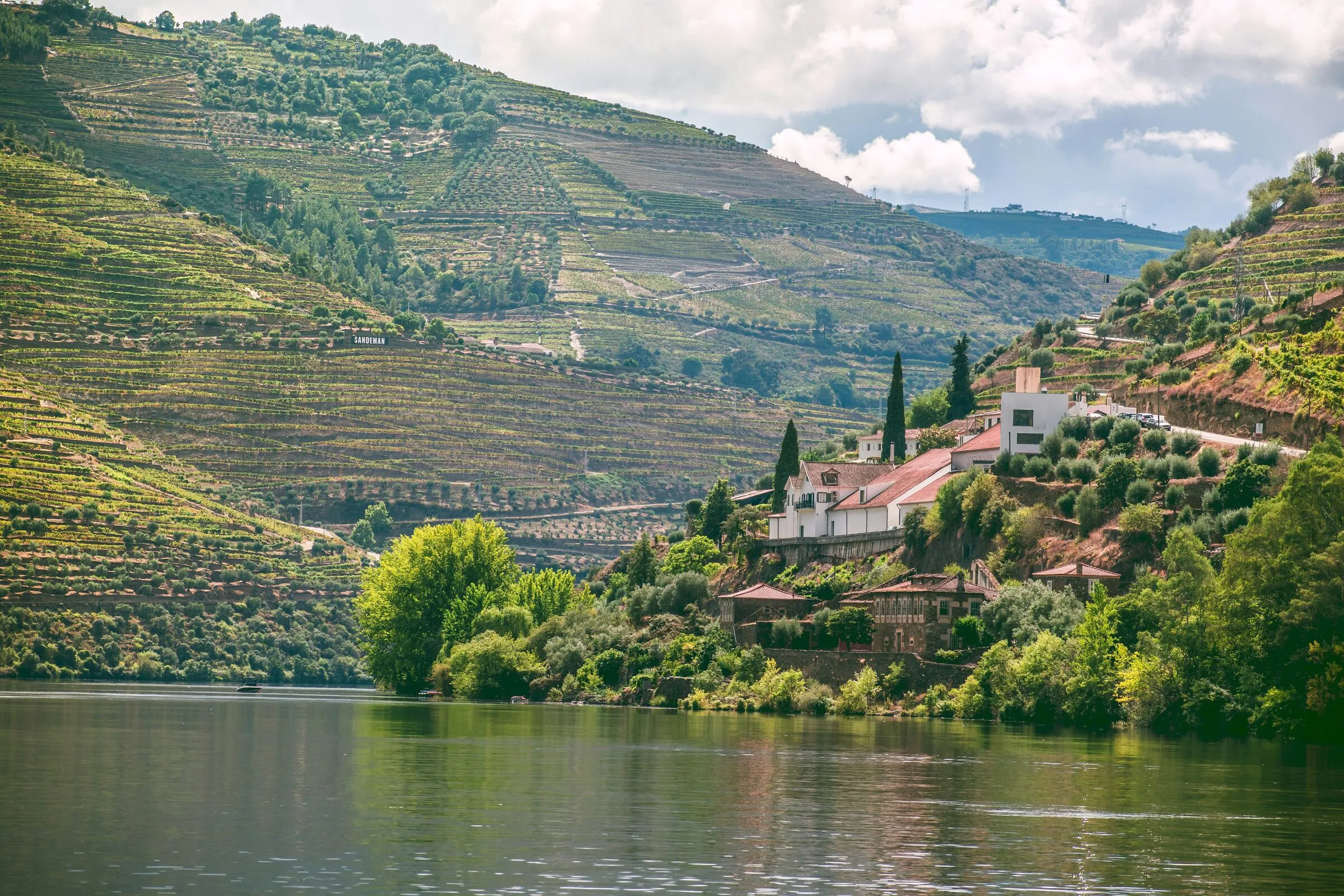
The Douro is the oldest demarcated wine region in the world, and it looks it. The vineyards aren’t rolling — they’re terraced, cut by hand into schist mountainsides that fall almost vertically to the water, so the ship spends its days threading a gorge with green stripes climbing the walls on either side. This is Port country. At the smaller quintas — the wine estates — you can still catch the old foot-treading, workers crushing grapes in stone lagares the way it’s been done for centuries. September is peak vindima, the harvest, and Peso da Régua throws its harvest festival right in the middle of the sailing window.
The week itself has a lovely, unhurried shape. You board in Porto and spend the first days climbing into the valley — a stop at Régua, and a run up to Lamego and its tiled pilgrimage staircase of nearly 700 steps (the active travelers hike it; everyone else admires it from the bottom). The ship crosses briefly into Spain at Vega de Terrón, from which there’s a full day inland to Salamanca, a golden-sandstone university city and UNESCO site — a genuinely surprising cultural detour in the middle of a wine week. Then the heart of it: Pinhão, where you tour a working quinta’s cellars and sit down to an exclusive dinner at a historic estate in the middle of the terraces. A last day back in Porto — the azulejo-tiled São Bento station, a Port tasting, and an illuminated evening cruise past the city lights on the water.
Who I’d send here: the traveler who wants the landscape to be the headline, who likes the idea of a wine region that still feels a little wild and hand-built, and who’s happy to fly a bit farther for it. The Douro is the more scenic week. It’s also, in my experience, the one people don’t expect to love as much as they do.
The case for Bordeaux
The trip is called Taste of Bordeaux — seven nights, roundtrip from the city of Bordeaux itself, aboard the AmaDolce. If the Douro is drama, Bordeaux is depth. This is the most decorated wine region on earth, and the week is built to taste your way across its two banks.
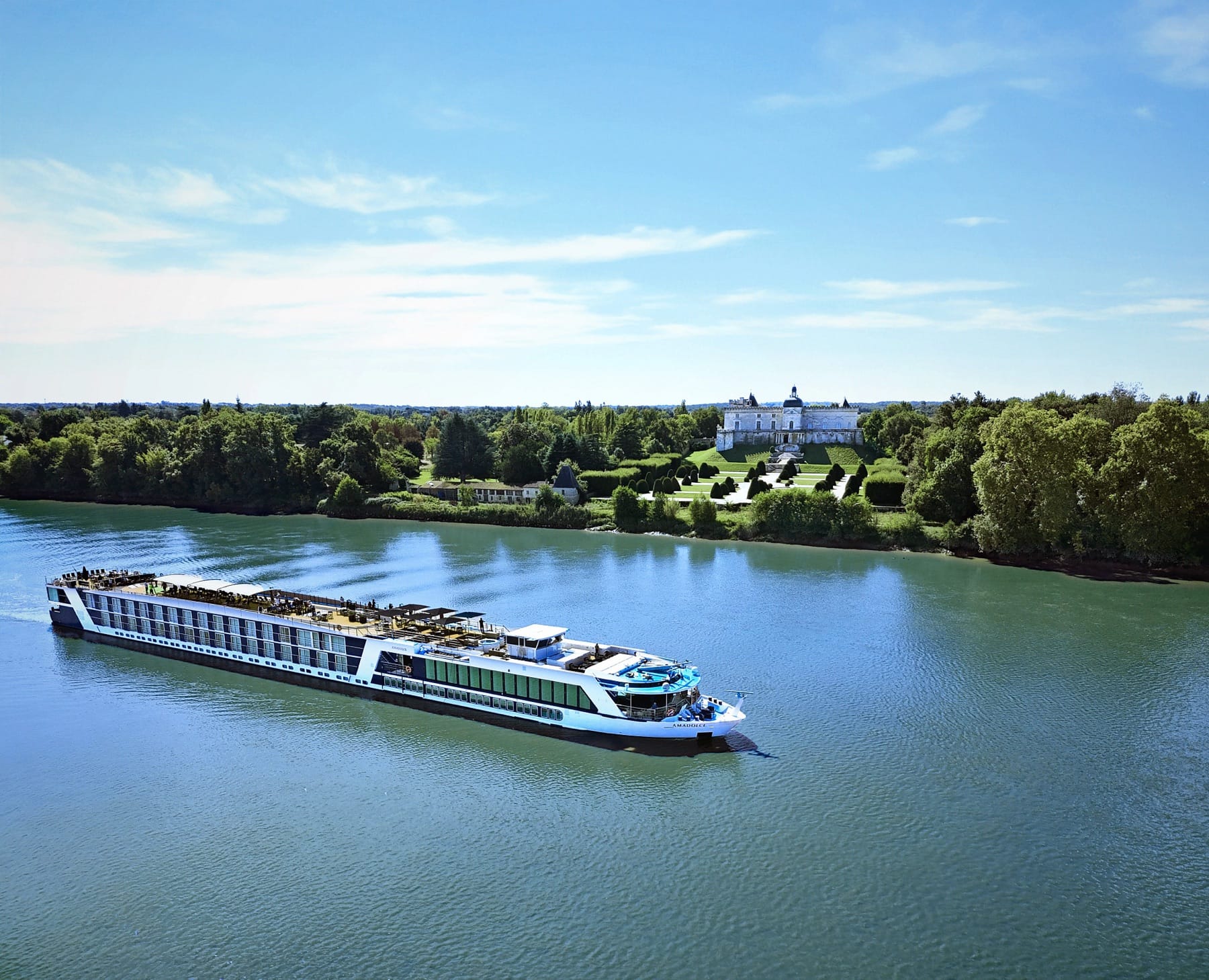
Bordeaux’s rivers are tidal, which changes the character of the trip: the ship spends more time at the dock and less underway, so the week feels less like passing through a landscape and more like settling into a series of villages and châteaux. And what villages. The second day takes you to Saint-Émilion, a UNESCO-listed medieval town of honey-colored limestone, with a monolithic church carved downward into the rock the village stands on — the day most travelers tell me afterward was the one they remember. There’s a day at Blaye, with its 17th-century Vauban citadel, paired with the medieval village of Bourg and — this is the detail I love — an exclusive evening wine festival where you meet the local growers over their own bottles, with French music and dancing. A day in the Médoc at Cussac-Fort-Médoc, home ground of Bordeaux’s most famous red estates. A day at Cadillac, castle country on the edge of the sweet-wine Sauternes region. And a final day back in Bordeaux — a “City of Art and History,” the Cité du Vin wine museum, and the Bassins des Lumières light show inside a former submarine base.
The wine tells a story across the week: the structured Cabernet-led reds of the Médoc’s left bank on one day, the softer Merlot-led wines of Saint-Émilion’s right bank on another, and the honeyed Sauternes near Cadillac — so by the last night you’ve actually tasted the argument between Bordeaux’s two banks, which is the thing serious wine people come here to understand. I wrote a much deeper piece on the rhythm of a Garonne week — port by port, château by château — in Bordeaux River Cruising if you want to sink further in.
Who I’d send here: the traveler who cares about the wine first and the view second, who likes medieval stone and a name they already half-know, and who wants the shorter flight into a single, deep, one-region week.
So how do you actually choose?
I won’t tell you one is better — they aren’t, and anyone who says so is selling you their own taste. But they’re genuinely different weeks, and the choice comes down to temperament more than research:
- You want the landscape to move you →︎ the Douro. Terraced gorges, a remote valley, the more scenic week on the water. Portugal, plus a surprise day in Spain.
- You want the wine to school you →︎ Bordeaux. Two banks, grands crus names, medieval stone, and a shorter flight into one deep region of France.
- You’re a first-time river cruiser →︎ either, honestly. Both are seven nights, both roundtrip, both on a small ship built for comfort. If you’re still choosing between rivers more broadly, my Douro vs. Rhine vs. Danube comparison sets the wider table.
- The cabin matters most to you →︎ let’s talk categories. On either ship the room you pick shapes the week; I broke down how to read the stateroom categories here.
A few honest practicalities, so nothing catches you off guard. A fall harvest week on either river runs, cruise-only, in the mid-$5,000s per person for an entry-level stateroom — but treat any number I give you as a quote until it’s confirmed; nothing is held until a deposit is placed, and the September harvest dates are the peak of the year, so they’re the first to fill and the last to discount. If you’re traveling solo, worth knowing: AmaWaterways runs Solo Traveler Specials — a reduced or sometimes fully waived single supplement — on select sailings, so the math for one can work far better than you’d expect on the right date. And if you’d rather bookend the trip, both cruises pair with lovely land extensions — Lisbon or Santiago de Compostela on the Douro, Paris or San Sebastián on the Bordeaux.
Cast your vote
Here’s the part that’s genuinely up to you. This fall of 2027, one of these two valleys becomes a hosted week — and I’d love your voice in which one. Cast your vote on the wine-country page: add your name to the valley you’d pick, and you’ll be first to know the moment the hosted week is real. Not on the list yet? Voting puts you on it — the easiest fix of the day.
Cast your vote — Douro or Bordeaux →︎
And if you already know this is your kind of trip — either valley — the next step is the same one it always is: a 30-minute discovery call, no fee, no pressure. Just the river, your timeline, and the version of the week that fits the traveler you actually are.
Last updated: September 2026. Sailing dates, ship assignments, pricing, and current offers change — the version of this week I’d plan for you today reflects the AmaWaterways programs as they stand the week of publish.
Plan your trip with me.
A 30-minute discovery call is where it starts. No fee, no pressure.
Book a Discovery Call