The Best Time for a European River Cruise, Month by Month and River by River
“When should we go?” is the first question on almost every river cruise call I take, and it has two halves. The month decides what’s happening on shore — tulips, harvest, Christmas markets. The river decides what the water is likely to be doing while you’re there. Most advice answers the first half and skips the second, which is how people end up on a motorcoach looking at the Rhine instead of sailing it.
My own footing: I sailed AmaWaterways’ AmaReina from Budapest to Nuremberg in November 2024, the Christmas Markets week, so that month I can describe from the deck. The rest of this calendar is what I work with every time I book one of these weeks — the line’s own program calendar, the wine regions’ harvest, and what the rivers have actually done in recent years.
The short version
If wine is the point, go September into October and choose the river by the grape. If Christmas markets are the point, go between late November and December 23. If tulips are the point, go in April out of Amsterdam. And if you’re sailing the Rhine or the Danube in late summer, go with good insurance and a line that has the ships to work around low water — because in some years it comes.
Month by month
January and February. The European season is mostly asleep. AmaWaterways’ Christmas Day and New Year’s sailings run from December 23 into the first days of January, and then the river program goes quiet until spring. If your only window is February, we’re talking about a different kind of trip.
March. The season wakes up. AmaWaterways’ Tulip Time sailings run roundtrip from Amsterdam from March through May, and Easter Delights sails the Danube in March and April. One calibration: Keukenhof, the garden most tulip itineraries are built around, opened on March 19 in 2026 — so the first weeks of March can mean a tulip cruise that arrives before the tulips. If flowers are the reason you’re going, I’d point you later.
April. The tulip month I’d hand most people: Keukenhof is open, the Dutch waterways are at the center of the calendar, and Easter sailings are running on the Danube. The river program is fully awake, and the summer school-holiday crowd hasn’t arrived.
May and June. The longest days of the year, every program running, and Keukenhof closing early in May (May 10 in 2026). For a first-timer with no fixed reason — no harvest, no markets, no tulips — this is the window I’d steer toward. One thing no month buys you is immunity from high water: Danube flooding is a rain story, not a calendar story, and the record it’s measured against dates to 2013.
July and August. Peak demand, school holidays on both sides of the Atlantic, and the months I watch the water most closely. The Rhine’s chokepoint is at Kaub, in the gorge between Mainz and Koblenz, and in dry summers it is the first place to fail. In August 2026 navigable depth there fell to 10 centimeters and shipping stopped; the previous record, 25 centimeters, was set in 2018. Lines cancelled sailings and swapped ships. On the Danube, the stretch between Regensburg and Passau is the one that runs shallow in a dry summer. I still book summer river cruises — families often can’t go any other time — but I book them with insurance in place and with a line whose fleet on that river is deep enough to swap guests between ships rather than cancel.
September. Harvest, and my favorite month on paper. In the Douro, September is the vindima — the grape harvest the whole valley turns toward. In Bordeaux, white grapes can come in from late August and the first Merlot from around the third week of September. AmaWaterways runs its Celebration of Wine sailings, with dedicated Wine Hosts aboard, through the wine regions. It’s also the month that reminds me the water doesn’t read the calendar: in late September 2024, Storm Boris pushed the Danube close to its 2013 record and Austria closed its stretch of the river to shipping. AmaWaterways worked around it with alternative docks and ship swaps and cancelled nothing — which is the behavior I want from a line, not a guarantee I can make on its behalf.
October. Harvest’s second act. In Bordeaux, the Cabernets are typically picked by mid-October and Sauternes can run late October into November, when the botrytis is ready. The Douro season runs later than people assume — AmaWaterways extended its Portugal sailings through December in 2022 and 2023 on demand alone. October is the month I’d hand the wine traveler who’d rather trade a little warmth for a quieter quay.
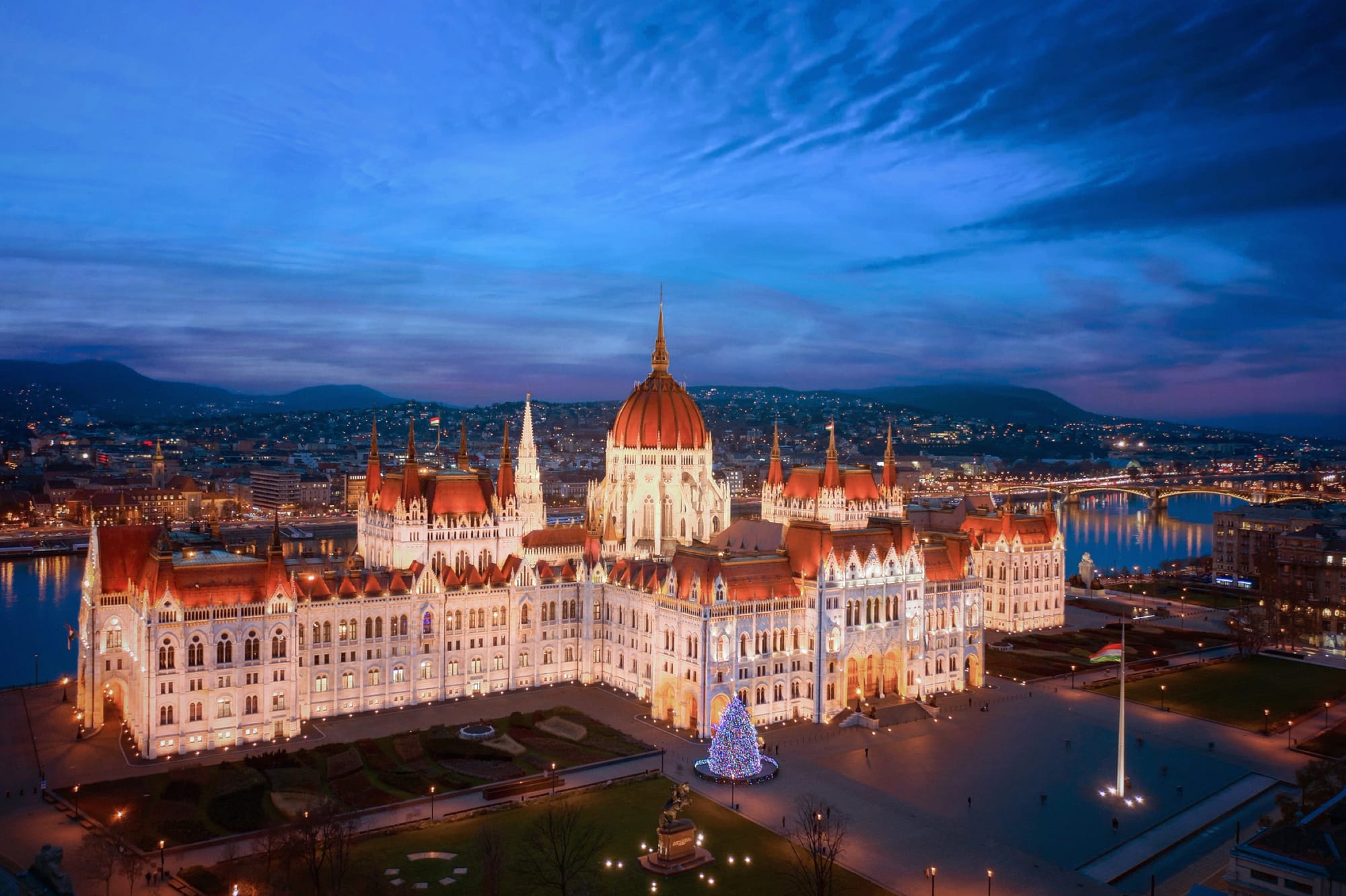
November. Christmas Markets season begins in the second half of the month. Nuremberg’s Christkindlesmarkt — where my own sailing ended — opens every year on the Friday before the first Sunday of Advent, and AmaWaterways’ Christmas Markets cruises run from late November through December 23. This is the month I know from the deck. I spent my mornings on AmaReina’s upper deck watching the Danube unfold, and in Passau we walked off the ship into a market of maybe fifty stalls, local families buying bread and ornaments — not a cruise-port version of Christmas. One mechanical truth about market season: the docks are busy, and ships tie up alongside each other. Getting ashore on my sailing meant walking through the Viking Longships rafted next to us. The conversion was complete by day three anyway. The full market-season planning guide is here.
December. Markets through December 23 on the cruise calendar; Nuremberg itself closes at 2pm on Christmas Eve. Then the Christmas Day and New Year’s sailings take the river into January. These are the weeks I tell people to book first: the window is short and fixed, and every line is selling into it at once.
River by river
The Danube. The river I’ve sailed, and the one with the widest calendar: Easter in spring, long summer days, harvest season in autumn, and the Christmas Markets route from Budapest through Vienna and Passau to Nuremberg. Its water risk runs in both directions — floods after heavy rain (2013, September 2024) and shallows between Regensburg and Passau in a dry summer. If I could pick only one window, it would be the one I sailed. The Danube on AmaWaterways has the ships and the routes.
The Rhine, with the Main and the Moselle. Castles, the Middle Rhine gorge, the Rheingau’s vineyards, and a Christmas Markets season of its own. The Rhine is the river where I’m most careful about late summer, because Kaub is where low water bites first, and it has set a new record twice in eight years. Spring and September are where I’d lean. The Rhine on AmaWaterways.
The Douro. A different water story: five dams between Porto and the Spanish border turned the river into a calmer 208-kilometer channel, and the ships climb through locks — at Carrapatelo the river drops 35 meters from one side of the dam to the other. The calendar here is about the vines. September is the harvest, and the season runs deep into the autumn. I haven’t sailed the Douro yet, and that’s about to change: readers chose it for my own 2027 sailing, seven nights roundtrip from Porto on AmaWaterways. I’m booking my own cabin and would love company — the dates go to the short list first. The Douro on AmaWaterways has the ships and the route up the valley.
Bordeaux — the Garonne and the Dordogne. Harvest is the reason to go, and it runs long: whites from late August, reds into October, Sauternes after that. AmaWaterways sails it on AmaDolce, one of four ships in the European fleet built around French balconies instead of twin balconies — and those four are the only ones with purpose-built single staterooms, which matters for the solo wine traveler. If you’re weighing it against the Douro, I laid out both closing arguments here.
The Dutch and Belgian waterways. A spring river. The calendar is the bulb season, and the bulb season is Keukenhof: mid-March to early May, with April as the safe middle.
Matching the month to the traveler
Wine travelers: September or October, Douro or Bordeaux. Pick the valley by temperament — the Douro is drama, Bordeaux is depth — and then pick the week. The fall wine-country case is here.
Christmas people: late November or the first three weeks of December, on the Danube or the Rhine. Book these first.
First-timers with flexible dates: May, June, or September. Long light, every program running, and if it’s September, the harvest as a bonus.
Families on school calendars: July and August, on a line with depth on the river you choose, with insurance bought the day you book.
Anyone who hates crowds: the edges — April and October — over the middle of summer.
If I had to choose one month for myself, I’d go back in November. If I had to choose one for someone I’d never met, I’d say September and ask what they like to drink. The reason I recommend AmaWaterways for most of these weeks is the reason the calendar matters at all: the river changes by the month, and you want a crew that’s good at every one of them.
Tell me the month you can travel and what you want to see when you step off the ship, and I’ll tell you which river is at its best then — and which one I’d keep an eye on.
Plan your trip with me.
A 30-minute discovery call is where it starts. No fee, no pressure.
Book a Discovery Call