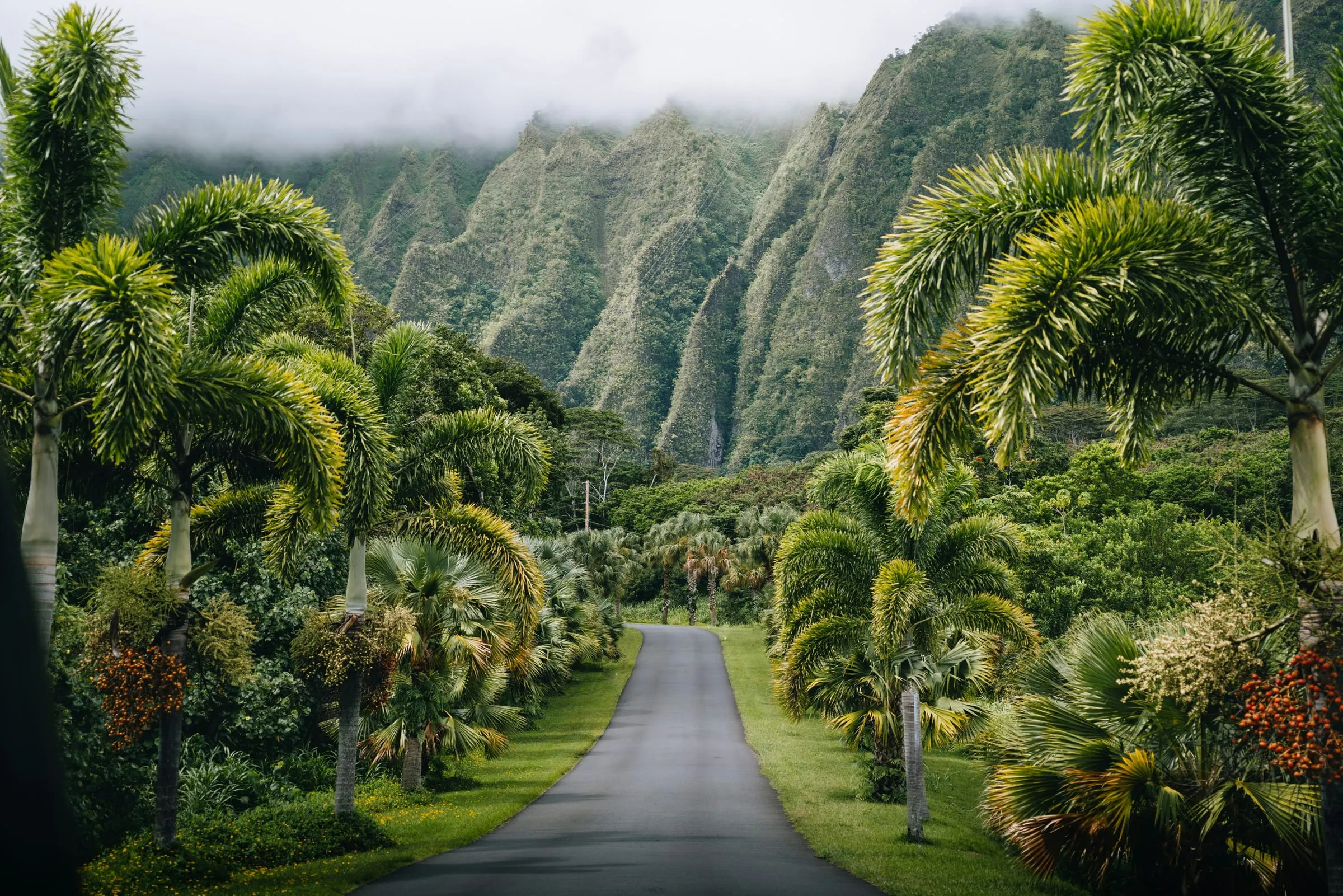
Hawaii is the destination most American travelers think they understand and often plan wrong on the first try. The state has eight major islands, of which six are inhabited and four anchor most luxury travel — and travelers who arrive with a generic “Hawaii honeymoon” framing in mind almost always pick the wrong island, the wrong base within that island, and the wrong number of nights. The correction is the work of this guide. The state is not a single destination; it’s a grouping of four genuinely distinct islands plus Oahu as the gateway, and the difference between a Hawaii trip that lands and one that misses comes down almost entirely to the island-and-base decision before any other planning starts.
Done correctly, Hawaii is one of the most rewarding US-domestic luxury destinations and one of the strongest reliable honeymoon answers anywhere in the world. The infrastructure is excellent (my preferred-partner program covers thirty-four Hawaiian properties, the Four Seasons portfolio anchors the high end, and the consortium reach is comprehensive). The flight access is straightforward (every major US west-coast city has direct service to Honolulu, Kahului, Kona, and Lihue). The cultural context is genuine and unique to the state. The natural variety across the islands is greater than most travelers expect. And the honeymoon-grade resorts deliver the canonical Pacific honeymoon experience at a quality level that few non-US destinations match — particularly when the base-property choice is right.
Most clients come to me asking about Hawaii in three contexts: as a single-island five-or-seven-night honeymoon or anniversary trip (the most common — one island chosen well, the resort doing most of the work), as a multi-island week (two islands across seven-to-nine nights, with sister-island pairings that play different registers off each other), or as a returning-traveler’s “Hawaii we missed” visit (couples who already know one island and want the version of the state they didn’t experience the first time).
This guide is the state-level version of that conversation. Each of the four island pages it links to — Big Island, Maui, Kauai, and Lanai — goes deeper on its own. Here’s how I think about Hawaii as a whole.
At a Glance
| Best time to visit | Late April through early June and mid-September through early December — lower humidity, fewer crowds, and the in-water visibility on the calm-water snorkel sites is at its best. Late December through early April is the trade-off period: peak crowds, peak prices, but also the humpback-whale season (December through April) which delivers some of the most reliable whale-watching in the world. Avoid late August through mid-September when humidity peaks and trade winds slacken. |
| How long to stay | Five nights minimum on a single island. Seven to nine nights for a real two-island trip with a mid-trip transfer. Ten-plus nights for travelers who already know Hawaii and want a deeper-on-one-island anchor. The “Hawaii sampler” five-night-three-island sprint is consistently the worst version of the trip and I’d talk you out of it on the discovery call. |
| Where to base | The single most consequential decision. Big Island for geological drama (Volcanoes National Park, Mauna Kea, the Kohala Coast resort spine). Maui for the canonical complete-Hawaii experience (Wailea or Kapalua resort base, Haleakala, Road to Hana, whale watching). Kauai for nature-led trips (Na Pali Coast, Waimea Canyon, Hanalei Bay). Lanai for the privacy close (small private island, two Four Seasons properties, marine preserve). For most multi-island trips, the right pairing is Maui-and-Lanai. |
| How to get there | Most US west-coast cities have direct service to Honolulu (HNL) on Oahu, Kahului (OGG) on Maui, Kona (KOA) on the Big Island, and Lihue (LIH) on Kauai. Mainland-east-coast travelers typically connect through Honolulu or Los Angeles. Inter-island connections via Hawaiian Airlines, Southwest, and Mokulele are 35-45 minutes between any two main airports. The Expeditions Ferry between Maui (Lahaina) and Lanai is the only commercial inter-island ferry — 45 minutes, the most atmospheric transfer in the state. |
| Currency / language | US Dollar. English is universal. The Hawaiian language is increasingly visible in signage and place names; learning aloha (hello / love / spirit) and mahalo (thank you) carries you a long way. Local pronunciation of place names matters — Haleakala is hah-leh-AH-kah-lah, Kauai is kah-WAH-ee, Lanai is lah-NAH-ee. Locals notice and appreciate the effort. |
| One thing most guides won’t tell you | The four islands are genuinely different climates, not just different destinations. Kauai’s north shore receives 80 inches of rain a year; Wailea on Maui receives 12. The Big Island contains eleven of the world’s thirteen climate zones across its single landmass. Travelers who pick an island based on the postcard image rather than the actual climate-and-geography fit consistently get the trip wrong. The right pick depends on what you want to feel, not what you’ve seen photographed. |
Why I Send Travelers Here
Because Hawaii, planned correctly, is the US-domestic luxury destination that delivers the most complete honeymoon-grade experience without the international logistics, jet lag math, or visa concerns that complicate equivalent Asian or Indian Ocean trips. The flight from the US west coast is six hours; English is the operating language; the US Dollar is the currency; the medical and emergency infrastructure is American-standard; and the resort program at the high end (Four Seasons, Auberge, Ritz-Carlton, Andaz, Mandarin Oriental, 1 Hotel, the major Signature anchors) delivers a Pacific honeymoon at a quality level that requires real trade-off comparison against Bora Bora, the Maldives, or Bali to find equivalent luxury elsewhere. For couples who want the canonical Pacific-island honeymoon feeling without the international travel layer, Hawaii is almost always the right answer.
The island variety is what makes the state work as more than a single-destination trip. The Big Island delivers geological drama (active volcanoes, Mauna Kea summit observatories, eleven climate zones in one landmass). Maui delivers the standard complete-Hawaii experience (resort districts, Haleakala, Road to Hana, whale watching, the most variety per single island). Kauai delivers the most dramatic natural scenery (Na Pali Coast, Waimea Canyon, the Bali-Hai-postcard frame). Lanai delivers genuine privacy (small private island, three thousand residents, two resorts, no traffic). The four islands are different enough that which one you pick matters more than nearly any other planning decision in Hawaiian travel.
I’m a traveling travel agent — in motion, in the rooms where this work happens. My Hawaiian credential is concentrated through the annual Lanai trade show, my preferred-partner channel covering thirty-four Hawaiian luxury properties across the four islands, and the Four Seasons / Marriott / Hyatt supplier relationships that anchor the major resort districts. The amenity layers at the Hawaiian luxury anchors come through these channels rather than direct GM-level lines, and I’ll be straight about that distinction on the discovery call rather than overclaim a relationship I don’t have.
I send travelers here for single-island honeymoons when the brief is concentrated and the right base is clear (most often Wailea on Maui, the Kohala Coast on the Big Island, or Hanalei on Kauai). I send couples for two-island multi-week trips when the brief is broader (most often Maui-and-Lanai, Big Island-and-Maui, or Kauai-and-Maui pairs). I send returning travelers for the island they missed the first time when their first Hawaii trip surfaced an interest the original itinerary didn’t satisfy. And I send winter travelers for the whale-watching anchor when the December-through-April humpback season is specifically the brief.
Where I’d Anchor
Hawaii’s anchoring decision has four serious answers, and the right one depends on the trip’s character.
Big Island — geological drama as the spine. The Hawaiian island for travelers whose brief includes active volcano, world’s tallest mountain (measured from base), eleven climate zones, the most varied-landscape Hawaiian island. Anchor on the Kohala Coast (Mauna Lani Auberge, Fairmont Orchid, Mauna Kea Beach, Westin Hapuna) and day-trip Volcanoes National Park, Mauna Kea, and the Kona-and-coffee region. Five nights minimum; seven is the natural length. The deeper case lives in the Big Island guide.
Maui — the canonical complete-Hawaii experience. The Hawaiian island for travelers whose brief is the standard luxury Hawaiian honeymoon the brochures keep promising — the resort program plus the natural drama plus the variety, all in one island. Anchor in Wailea (south coast — Andaz, Grand Wailea Waldorf Astoria, Fairmont Kea Lani) for the contemporary-luxury default, or Kapalua (northwest — Ritz-Carlton Maui Kapalua) for the slightly-cooler dramatic alternative. Five-to-seven nights as a standalone trip; the strongest single-island Hawaiian default. The deeper case lives in the Maui guide. (Note: the 2023 Lahaina wildfire context is real for any 2026 Maui visit — the West Maui resort districts of Ka’anapali and Kapalua are operating normally; the historic Lahaina town is in active rebuilding.)
Kauai — the scenery-led nature trip. The Hawaiian island for travelers whose brief is we want green, water, dramatic scenery, and the time to be in it. Anchor on the north shore at 1 Hotel Hanalei Bay in Princeville (the dramatic-and-quieter shore), or on the south shore at Grand Hyatt Kauai or Ko’a Kea Resort in Poipu (the sunnier-and-more-amenity-rich shore), or split between the two. The Na Pali Coast helicopter or boat day, the Waimea Canyon drive, and the slower beach mornings carry the trip. The deeper case lives in the Kauai guide.
Lanai — the privacy close. The Hawaiian island for travelers whose brief is we want quiet, small, private, and the kind of pace the more famous islands gave up. Two Four Seasons properties (Manele Bay beachfront, Sensei Lanai uplands wellness), three thousand residents, three paved roads, one stop sign, a marine preserve at Hulopoe Bay. Three-to-five nights as a standalone honeymoon, or as the privacy close on a Maui-and-Lanai pair. The deeper case lives in the Lanai guide.
Multi-island pairings — the pattern most travelers don’t realize works. Most US honeymooners default to single-island Hawaii because they assume inter-island travel is logistically heavy. It isn’t — the inter-island flights are 35-45 minutes, the Maui-Lanai ferry is 45 minutes, and the resorts arrange the transfers. The pairings that work consistently:
- Maui-and-Lanai (the most common — three or four nights at Wailea or Kapalua for the variety, three or four nights on Lanai for the privacy close, ferry between)
- Big Island-and-Maui (Big Island for the geological drama, Maui for the resort-and-beach finish — the most dramatic-then-soft arc)
- Kauai-and-Maui (Kauai for the scenery, Maui for the resort variety — the most-natural-plus-most-amenity pair)
- Big Island-and-Kauai (the deepest natural-Hawaii pair, for travelers who already know Maui and want the version of the state with less resort density)
Start a discovery call — I’ll walk through which island (or pair) actually matches your trip, pull live availability across the anchor properties, and confirm which amenities apply to your dates.
What I’d Do With Seven Days — A Multi-Island Frame
The multi-island week most clients are actually building. Adjust to taste; the through-line is one resort-rich island and one quieter island.
Days 1–4 — Maui as the resort-and-variety anchor. Fly into Kahului. Settle at Wailea or Kapalua. Day 2: the Haleakala sunrise (or sunset alternative). Day 3: the Road to Hana as a full-day east-coast scenic drive. Day 4: a slow Maui day — the upcountry food-and-farm circuit, the Wailea Coastal Walk, the snorkel half-day at Molokini Crater, or the December-through-April whale watching morning. Multi-resort district, full amenity program, the canonical complete-Hawaii experience.
Day 5 — Transfer to Lanai (or to a sister island). The Expeditions ferry from Lahaina to Lanai is 45 minutes, runs five times daily, and is the most atmospheric transfer in the state. Or the inter-island flight to Kauai (35 minutes from Kahului to Lihue) or the Big Island (40 minutes to Kona) for those pairings. The transfer day is short — settle into the second base by mid-afternoon.
Days 5–7 — The second island as the close. Three nights on Lanai (Hulopoe Bay, the Garden of the Gods drive, Nobu Lanai dinner, the marine-preserve diving), or three nights on Kauai (the Na Pali helicopter day, Hanalei Bay morning, Waimea Canyon drive), or three nights on the Big Island (Volcanoes National Park, Mauna Kea evening, Kona half-day). The second island delivers the contrast that makes the trip’s whole arc work.
Day 7 — Departure. Direct flights from Lihue, Kahului, or Kona back to the US west coast leave in the late morning or early afternoon. Most travelers fly home directly; some break the return through Honolulu.
For longer trips: nine nights allows four-and-five splits between the two islands; ten-plus allows three-island trips for travelers who already know Hawaii and want the deepest version. For shorter trips, drop the second island entirely and put the time into the single-island anchor — five nights well-paced on Maui or the Big Island is genuinely better than two-and-three on a sprint.
Specific Things I’d Tell You About
The Hawaiian inter-island infrastructure is genuinely good and travelers underestimate it. Hawaiian Airlines, Southwest, Mokulele, and Hawaiian Airlines’s regional operator each run frequent inter-island service. The flights are 35-45 minutes airport-to-airport, the security lines are short (the inter-island terminals are smaller than the international ones), and the resorts handle the transfers on both ends. The temptation to compress a multi-island trip because “the inter-island flight is a hassle” is mostly wrong — the flight itself is shorter than most domestic taxi rides, and the experience-variety it unlocks is significant.
Volcanoes National Park’s eruption status changes the trip in real time. The Big Island’s Kīlauea has been more or less continuously active since 1983, but the visible eruption shifts on monthly and weekly cycles. The Hawaii Volcano Observatory (USGS) maintains a daily eruption-status page that’s the right pre-trip check. The park rewards the visit regardless of vent status; any active glow is a bonus.
Whale season (December through April) is one of the world’s best whale-watching destinations. The Maui-Molokai-Lanai channels host one of the densest wintering humpback populations anywhere. The boat tours from Maui (Ma’alaea Harbor or Lahaina Harbor) and from the Big Island Kona Coast deliver high-reliability sightings, with most operators running multiple tours per day during the peak weeks (mid-February through mid-March). Travelers planning around the whale window should book 60-90 days out.
The Lahaina rebuild context is real for any 2026 Maui visit. The August 2023 Lahaina wildfire destroyed most of the historic whaling town. The West Maui resort districts of Ka’anapali and Kapalua were not directly affected and are operating normally. The Lahaina-specific shopping, dining, and historic-site experiences are in transition. Plan around the active state, support the rebuilding by visiting respectfully, and don’t expect the pre-fire Lahaina experience for several more years.
Most luxury Hawaiian resorts run promotions that materially change the booking math. Fourth-night-free, fifth-night-free, kids-eat-free, and resort-credit promotions cycle through the major Signature properties throughout the year. Travelers who book direct miss most of these — they’re consortium-and-advisor channel benefits. Booking through an advisor matters more in Hawaii than in many destinations specifically because of how meaningful the promotional layer is on a 7-or-9-night Hawaiian stay. Discovery-call conversation when this is specifically relevant.
What I’d Skip
The five-night-three-island Hawaii sprint. This is the single most common Hawaii planning mistake. Two nights per island means one resort day, one excursion day, and a transfer day each time — and travelers leave feeling like they’ve seen everything and experienced nothing. Either commit to a single island for five-plus nights, or split nine-plus across two islands.
Honolulu as a multi-night base when the rest of the trip is on a different island. Oahu has its own legitimate appeal (Pearl Harbor, the North Shore surf culture, the urban Honolulu food scene, Waikiki), but it’s a different trip from a Big Island, Maui, Kauai, or Lanai trip. Combining Honolulu with another island as a 2-night-add-on almost always shortchanges both. Either give Oahu its own full visit, or skip it and fly directly to your main island.
Hawaii in late August through mid-September if you want comfortable conditions. The summer humidity peaks, the trade winds slacken, and the resort days become harder than they need to be. Spring and fall windows are materially better; the only reasons to visit during this window are price (some shoulder pricing during the back-to-school weeks) or specific schedule constraints.
Trying to do Hawaii from a cruise ship as the primary visit. Cruise visits to Hawaii deliver port-day exposure to multiple islands, but the math doesn’t work for travelers who want to actually be in Hawaii. Each port stop is six-to-ten hours, mostly absorbed by transit and a single excursion. Cruise visits work as previews ahead of a future land-based trip; they don’t substitute for one.
For Honeymooners
Hawaii honeymoons are one of the practice’s bread-and-butter trip types and they’re some of the most reliably delivered honeymoons in the world. This is honeymoon work in the pragmatic register — expert execution of a known playbook, not magic-of-love copy. The state delivers the canonical Pacific honeymoon experience at quality and reliability levels that few non-US destinations match. The four anchor islands each deliver a different honeymoon shape:
- Maui is the default answer for complete-Hawaii honeymoons — Wailea or Kapalua base, the Haleakala-and-Hana days, the resort program carrying the rhythm.
- Big Island is the answer for experience-led honeymoons — Kohala Coast base, Volcanoes National Park, Mauna Kea evening, the geological-drama trip.
- Kauai is the answer for nature-led honeymoons — Hanalei or Poipu base, the Na Pali day, the dramatic-scenery trip.
- Lanai is the answer for privacy-led honeymoons — small private island, two Four Seasons properties, the genuinely-quiet trip most other Hawaiian islands no longer deliver.
The Honeymoons specialty page makes the long-form case across all the practice’s anchor destinations; for the Hawaii-specific honeymoon brief, the discovery call is where we figure out which island (or pair) matches who you are as a traveler. For most couples, the answer is Maui as the standalone or Maui-and-Lanai as the pair. For specific traveler types, the Big Island, Kauai, or Lanai standalone is the better answer.
Pairing Hawaii With the Rest of a Trip
Hawaii pairs naturally with other Pacific or US-west-coast destinations for travelers extending beyond a single Hawaii visit.
With a US west-coast city as a pre-or-post anchor — San Francisco, Los Angeles, San Diego, Portland, Seattle as a 2-night opening or close for travelers flying from the east coast or international gateways. Useful when the flight math benefits from a mainland overnight before or after the Hawaii leg.
With Tahiti, Fiji, or French Polynesia for a longer Pacific trip — Honolulu connects to Papeete (Tahiti) and Nadi (Fiji) on direct service; the Polynesian extension delivers a different cultural register and a more genuinely-tropical feel. Less common but works when the brief is bigger Pacific trip rather than Hawaii alone.
As a closing leg of a longer Asia trip — Tokyo or Seoul to Honolulu is a manageable redirect for travelers who want a Pacific decompression between Asia and the mainland. Less common but works when the trip’s overall arc benefits from the slower close.
Plan Hawaii With Me
Hawaii is the destination most American travelers think they understand — and the destination where the difference between a trip that lands and one that misses comes down almost entirely to the which island, which base, how many nights decisions before any other planning starts. The state rewards the right early choice; it punishes the rushed sampler. Start with a 30-minute discovery call — I’ll walk through which island (or pair) actually matches who you are as a traveler, sequence the multi-island shape if it fits, and tell you honestly when a different US-domestic or Pacific destination is the better answer for what you’re describing.
Last updated: May 2026. Hotel relationships and amenity layers calibrated to current Signature consortium and Four Seasons / Marriott / Hyatt preferred-partner rates as of publication; specifics walked through on the discovery call. The post-2023 Lahaina rebuilding context is current as of publication and evolves continuously.
Plan this trip with me.
A 30-minute discovery call is where it starts. No fee, no pressure.
Book a Discovery Call