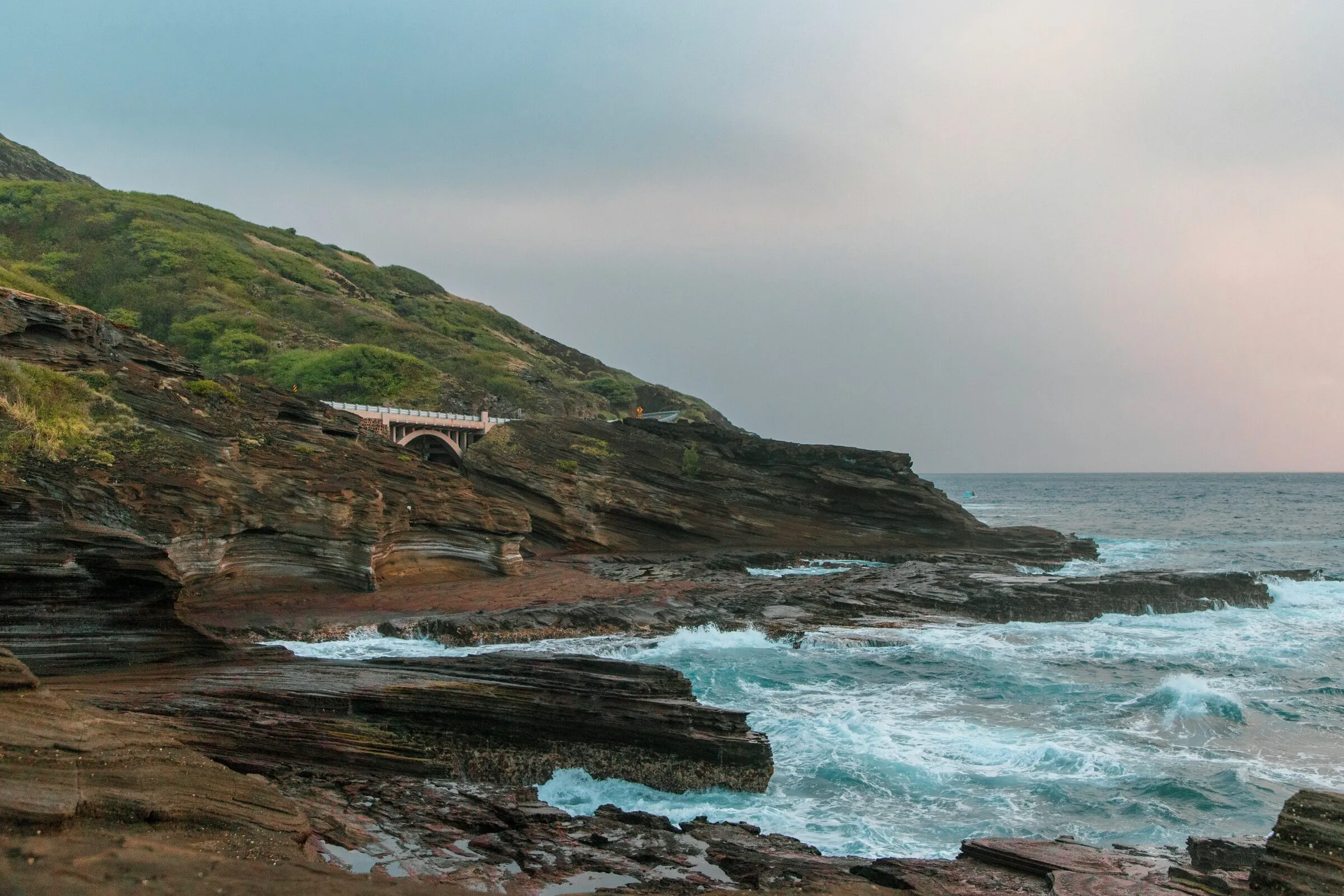
Lanai is the Hawaiian island most travelers don’t realize is the answer to the question they’re asking. The standard Hawaii mental model goes Maui or the Big Island for the resort, Kauai for the nature, Oahu for Honolulu and Pearl Harbor — and Lanai, the eighteen-mile-long private island sitting nine miles off the southwest coast of Maui, gets quietly dropped from the conversation entirely. It’s a planning blind spot, not a strategic one. The island has three paved roads, one stop sign, three thousand residents, two world-class resorts, a marine preserve that ranks with anywhere in the Pacific for diving and snorkeling, and the kind of slow rhythm that the more famous Hawaiian islands gave up about thirty years ago when their resort footprints scaled.
Done correctly, Lanai is the Hawaiian island where the quiet is the experience. Privately owned (98% by Larry Ellison, the Oracle co-founder, since 2012), the island runs on tourism and a local population that mostly works at the two Four Seasons resorts — Four Seasons Resort Lanai at Manele Bay (oceanfront, on the cliff above Hulopoe) and Sensei Lanai, a Four Seasons Resort (uplands, formerly the Lodge at Koele, now reimagined as a wellness-led adults-only retreat, the Sensei well-being concept created by Larry Ellison and Dr. David Agus). Two resorts. No competing footprints. No shopping mall. No nightlife district. Just the marine preserve, the two championship golf courses, the Garden of the Gods up north, and a pace that makes Maui feel busy by comparison.
Most clients come to me asking about Lanai in three contexts: as a three-or-four-night honeymoon anchor (the most common — privacy is the brief, the Four Seasons properties deliver, the rest of the island is the texture), as the slow second half of a Maui-and-Lanai pair (Maui for the variety, Lanai for the quiet — Hawaii’s best two-island combination if it fits the trip), or as a standalone milestone or anniversary anchor for couples who already know Hawaii and want the version of the state most travelers never reach.
Here’s how I think about it.
At a Glance
| Best time to visit | Mid-April through early June and mid-September through mid-November. Lower humidity, fewer crowds at the resorts (Lanai’s “crowds” are a relative term), and the marine-preserve diving conditions are at their best. Avoid mid-December through early January unless Christmas-and-New-Year on Lanai is specifically the brief — peak holiday rates double, and the resorts run at full bookings. |
| How long to stay | Three nights is the minimum to feel the island’s pace. Four to five nights is where Lanai actually rewards the trip — long enough to do Hulopoe diving, the Garden of the Gods drive, both golf courses if you play, and one full unscheduled day. Longer than seven without expanding to a Maui pairing tips into diminishing returns. |
| How to get there | Two paths. By air: Lanai Airport (LNY) takes ~30-minute hops via Mokulele or Hawaiian via Honolulu, or direct from Maui’s Kahului. By sea: the Expeditions Lanai Ferry from Lahaina, Maui — 45 minutes, runs five times daily, the more atmospheric arrival. Many couples flying in from the mainland connect through Honolulu or Maui’s Kahului and then take the ferry across. |
| Currency / language | US Dollar. English is universal; Japanese, Korean, and Tagalog are also spoken at the resorts. |
| One thing most guides won’t tell you | The Hulopoe Bay tide pools at low tide are one of the best free natural experiences in Hawaii — anemones, urchins, crabs, the occasional turtle, all visible at ankle depth. The pools sit just below the Four Seasons at Manele Bay, accessible by a five-minute walk from the lobby. Most guests don’t know to look. The hotel concierge will give you the tide table on arrival if you ask. |
Why I Send Travelers Here
Because Lanai, planned correctly, is the Hawaiian island that delivers what travelers actually want when they say “I want a quiet Hawaiian honeymoon.” The fantasy on a beach commercial is almost never what a Wailea or Kapalua resort actually delivers — those are large multi-resort districts with traffic, beach crowds, and the kind of casual buzz that makes the trip feel like a vacation but not like a retreat. Lanai is the version where the pace genuinely changes. There is no traffic because there are essentially no cars outside the two resort fleets. There is no beach crowd at Hulopoe because the island has 3,000 total residents and the only real beach access is from the Four Seasons property. The morning walks are quiet because the trail network was built around resort guests rather than around shuttling tour buses. The evenings end early because the dining program is hotel-based, the village is one street long, and there’s nowhere else to go.
The property pair is what makes the trip work. Four Seasons Resort Lanai at Manele Bay sits directly above Hulopoe Bay on the southern cliff, with the kind of beachfront-resort program — pool, spa, beach, dining — that travelers expect from a five-star Hawaiian property, plus the privacy benefit of being the only resort on this side of the island. Sensei Lanai, a Four Seasons Resort — the upland property in Koele — is the wellness-and-quiet alternative: adults-only, designed around a guided wellness program (movement, mindfulness, nutrition coaching), with a different aesthetic register that suits couples whose honeymoon brief is “we want to come back changed” rather than “we want to come back rested.” Some couples split a week across both properties. That’s the play I’d lean toward when the brief allows it.
I attend the Lanai trade show every year — Tourism Lanai’s annual destination-training program for travel advisors. The relationships I keep on Lanai are concentrated through that channel, plus my Four Seasons Preferred Partners access, which covers both Manele Bay and Sensei. I’m a traveling travel agent — in motion, in the rooms where this work happens. The amenity layers on both Lanai properties come through those preferred-partner channels rather than direct GM-level lines, and I’ll be straight about that distinction on the discovery call.
I send travelers here as a Hawaiian honeymoon anchor when the brief is privacy, slow rhythm, and a property that actually carries the trip. I send couples for the Maui-Lanai pair when the brief wants Hawaiian variety on the front and Hawaiian quiet on the close — three nights at Wailea or Kapalua, then four nights on Lanai, with the ferry crossing as the transition. I send rare clients for a standalone four-or-five-night anniversary when they already know Hawaii and want the version they missed. And occasionally for a wellness-led trip when Sensei is genuinely the brief — couples coming off a hard year, milestone-decade birthdays, the trip that’s about resetting rather than seeing.
Where I’d Anchor
There are essentially two anchoring shapes on Lanai, and the right one depends on the trip you’re building.
Four Seasons Resort Lanai at Manele Bay — the beachfront pick. On the cliff directly above Hulopoe Bay (the marine preserve), with cliff-edge rooms and suites looking down onto the half-moon white-sand beach. The Manele Bay property runs the standard five-star Hawaiian-resort program — beachfront pool, spa with ocean-view treatment rooms, three dining concepts including the cliff-edge Views and the casual Malibu Farm beachside, plus the championship Challenge at Manele golf course on the property’s eastern edge (Jack Nicklaus design, three holes that play across ocean inlets, one of the most photographed courses in the Pacific). This is the anchor for travelers whose Lanai is beach-and-water-led — diving and snorkeling at Hulopoe, the tide pools at low tide, sunset on the cliff, the canonical Hawaiian honeymoon shape with the privacy benefit Lanai uniquely delivers.
Sensei Lanai, a Four Seasons Resort — the uplands wellness pick. The upland property in the cool higher elevation of Koele, restructured around the Sensei wellness program (David Agus, MD’s evidence-based health-and-longevity protocols translated into a guided resort experience). Adults-only. One-on-one wellness guides assigned per stay. A movement studio, a nutrition program, sleep-science protocols, and the kind of programming that makes the trip feel less like a vacation and more like a reset. Different aesthetic register from the beachfront — pine-and-gardens rather than ocean-and-sand, with cooler temperatures, softer light, and a quieter sound profile. This is the anchor when the honeymoon brief is transformation, not just relaxation.
The split-stay play — both properties across one week. For couples with five-to-seven nights and the budget to absorb two check-ins, splitting between the beachfront Manele and the uplands Sensei is the version of Lanai that delivers the most complete experience. Three nights beachfront for the diving and the cliff-side resort program, then three nights at Sensei for the wellness program and the uplands quiet. The two properties are owned-and-operated by the same group, so the transfer between them is straightforward and bag-handling is internal. This is the play I’d lean toward when the brief allows for it.
I’ll be straight on the relationship layer: Four Seasons Resort Lanai and Sensei Lanai are anchors I plan through my Four Seasons Preferred Partners channel and the relationships I’ve built through the annual Lanai trade show. The room categories and amenity strategy come through those channels rather than a personal GM-level line at either property. The trip still books cleanly — preferred-rate amenities, room-category strategy, on-arrival escalation if anything goes sideways — and the discovery call is where we pull live availability and walk through which one (or which split) matches your dates.
Start a discovery call — I’ll pull live availability at both properties, walk through suite categories, and confirm which amenities apply to your dates.
What I’d Do With Four Days
Adjust to taste. The four-day version is the standalone-Lanai brief; the seven-day version splits between the two resorts and adds the Maui pairing.
Day One — Arrival and Hulopoe Bay
Arrive by ferry or short flight. Settle into the Manele property by mid-afternoon and do not over-schedule the first day. Hulopoe Bay is a five-minute walk down from the lobby — go down. The bay is a marine preserve with no commercial use beyond resort guest access, which means the snorkeling conditions are some of the cleanest you’ll find in Hawaii. Spinner dolphins routinely visit the bay in the morning hours; by afternoon the water settles to the kind of glass-clear visibility that makes a one-hour snorkel feel like a documentary. Dinner at Views (the cliff-edge restaurant on the resort) or the casual Malibu Farm beachside.
Day Two — The Diving (or the snorkel-deepen) Day
Hulopoe at depth, if you dive. The bay’s marine preserve status means the reefs are healthy in a way that most of Hawaii’s high-traffic reefs no longer are. Lanai Ocean Sports runs single-tank guided dives from the resort beach; First Wind Diving (in Lanai City) runs more serious two-tank trips out to the wrecks and reef walls beyond the bay. If you don’t dive, the snorkel-to-the-east-end of Hulopoe (toward Sweetheart Rock) is the under-utilized half of the bay — fewer guests, the same fish, the rock formation as a postcard frame. Lunch at the resort. Late afternoon: the spa, or the hotel’s tide-pool walk at low tide. Dinner at One Forty (the steakhouse) or back to Views.
Day Three — The Garden of the Gods Drive
The 4WD-required drive up to Keahiakawelo (Garden of the Gods) — the multicolored barren volcanic area at the north tip of the island, often described as a miniature version of Arizona’s Painted Desert. The road is unpaved, unmarked, and requires the resort’s hotel-arranged Jeep or shuttle. The site is genuinely otherworldly, especially in the afternoon light when the colors deepen. Polihua Beach is the natural pairing — a wide, isolated beach beyond the Garden, often empty even at peak times, with currents too strong for swimming but views worth the drive. Pack a picnic lunch from the resort’s deli option; this is a half-day excursion. Back to the resort by mid-afternoon. Dinner at the resort’s casual oceanfront option, or — if you’ve moved to Sensei for nights three and four — at Nobu Lanai (one of the longest-running Nobu locations outside Japan, and one of the rare Pacific outposts that genuinely delivers the brand’s standard).
Day Four — The Free Day or the Departure Morning
The unscheduled day is where Lanai earns the visit. Sleep in. Walk the resort’s coastal path. Linger at breakfast. The temptation on a four-day Lanai trip is to compress everything into the first three days and then leave the fourth for travel; the better play is to plan three structured days, then leave day four open to wander. The island is small enough that you’ve already seen the main sights; the unstructured rhythm of an empty Lanai morning is part of what you came for.
If you’re extending: ferry over to Maui for a Maui-and-Lanai pair (the Maui guide covers the deeper version), or fly back to Honolulu for the Oahu close.
Specific Things I’d Tell You About
Lanai is one stop sign, three paved roads, and zero traffic. This isn’t a tourism-board talking point — it’s a literal fact. The island has one stop sign in Lanai City. The drive from Manele Bay (south coast) to Lanai City (center) to Sensei Lanai (uplands) is twenty minutes total, and you will encounter exactly one traffic device on the trip. That changes the trip’s whole tempo in ways travelers don’t anticipate until they’ve spent a day in it.
Hulopoe Bay’s status as a marine preserve is the real asset. Most of Hawaii’s high-traffic reefs have been damaged by sunscreen runoff, anchor scarring, and the accumulated friction of millions of annual snorkel visits. Hulopoe is one of the few Hawaiian reefs that have been explicitly protected from those pressures since the 1990s. The result is a reef that reads like a photograph from twenty years ago — the staghorn corals are intact, the fish populations are dense, and the visibility is consistently in the eighty-foot range. Honeymoon couples who dive find this unusually moving; couples who don’t dive but snorkel find their first Hulopoe morning becomes one of the trip’s defining mornings.
The two championship golf courses are a real draw if you play. Challenge at Manele (Jack Nicklaus, oceanfront, three holes that play across Pacific inlets) is the headline course. The Experience at Koele (Greg Norman and Ted Robinson, mountain, played up at higher elevation through old pineapple fields and forest) is the contrast — currently part of the Sensei property programming when the property is open to non-staying golfers. If you play, plan one round on each. The two are the most different pair of courses you’ll find in such close geographic proximity anywhere in the Pacific.
Nobu Lanai is one of the genuinely good Nobu outposts. The brand has expanded enough globally that quality varies; the Lanai outpost at Manele Bay has been operating since 2009 and has the longevity-and-staffing depth most newer Nobu locations can’t match. Reservations open thirty days out and the tasting menu is the right play. Couples looking for a dinner on the trip should prioritize this over the resort’s other restaurants — at least one night of the stay.
Lanai Cat Sanctuary is the small surprise. A nonprofit cat rescue at the edge of Lanai City that houses around 800 rescued cats in a series of large outdoor enclosures. Free admission. Forty-five minutes of wandering around with cats climbing onto your lap is one of those small experiences couples don’t expect to enjoy and consistently rate as one of the trip’s best mornings. Bring sunscreen and water.
What I’d Skip
Lanai in shoulder months without checking the resort calendar. The two Four Seasons properties run staggered renovation and program schedules that occasionally close meaningful programming for two-to-four-week windows in November and February. Verify both properties are running their full programs before booking those months — the resort is the trip on Lanai, and a closed restaurant or spa changes the math.
The Munro Trail without serious hiking experience. The twelve-mile Munro Trail across the island’s spine is genuinely beautiful, but it’s also genuinely difficult — exposed sections, no cell coverage, sustained elevation gain, and minimal water until you reach Lanaihale (the high point). Most Lanai-curious couples who attempt it overestimate their fitness and underestimate the conditions. The shorter scenic walks from the resorts cover similar terrain at a fraction of the difficulty.
Trying to do Lanai as a day trip from Maui. The day-trip-from-Maui version of Lanai is the worst version of the island. The ferry from Lahaina takes 45 minutes each way, which leaves about six hours on Lanai itself, most of which goes to sorting out the rental Jeep and figuring out how to fit in the Garden of the Gods drive plus a Hulopoe lunch. The island doesn’t reward the rushed visit. Either book three-plus nights at one of the resorts, or skip Lanai for this trip and put it on the next one.
Renting a non-4WD vehicle. Most of the island’s interesting drives are unpaved, unmarked, and require a four-wheel-drive Jeep. The resorts arrange these on request; renting a sedan from the airport rental booth is a recipe for getting stuck or for cancelling half your planned excursions because the roads aren’t accessible.
For Honeymooners
Lanai honeymoons are the privacy-led version of Hawaii — the trip where the quiet itself is the experience, the kind of trip couples take when they want the wedding-week intensity to genuinely subside rather than relocate. This is honeymoon work in the pragmatic register the practice handles it in: the property pair (Four Seasons Manele Bay + Sensei Lanai) carries the trip; the marine preserve at Hulopoe carries the morning rhythm; the absence of traffic, crowds, and shopping carries the pace. The Honeymoons specialty page makes the long-form case across all the practice’s anchor destinations; for the Hawaii-specific honeymoon brief, Lanai is the version most travelers haven’t considered until I describe it, and it’s almost always the right answer when the brief is “we want quiet, and we want the trip to actually feel like a reset.”
The contrast worth flagging: travelers choosing between Lanai and the Maui Wailea district are choosing between honeymoon-as-retreat (Lanai’s privacy-led shape) and honeymoon-as-resort-stay (Wailea’s broader-amenity, more-active shape). Both are valid. The discovery call is where we figure out which one is yours.
Multi-Island Hawaii Pairing
Lanai pairs cleanly with the other Hawaiian islands when the sequencing is right.
With Maui as the primary island base — three nights Wailea or Kapalua, four nights Lanai, ferry between. This is the strongest two-island Hawaii combination most travelers don’t know exists. The Maui side carries the variety (volcano drive, road to Hana, hiking, multiple beaches, dining range); the Lanai side carries the quiet close. The full long-form play lives in the Hawaii state hub.
With the Big Island as the alpine-and-volcanic counterpoint — three nights on the Kohala Coast (Mauna Lani Auberge, Fairmont Orchid, Mauna Kea Beach), the Volcanoes National Park day, then four nights on Lanai for the close. This is the version when Hawaiian geological drama is the spine and the quiet beach close is the relief.
Standalone four-or-five nights — the right play when Lanai is specifically the brief. The island earns the focused visit, and the absence of other-island travel days means more nights actually on Lanai.
Plan Lanai With Me
Lanai is the Hawaiian island where the difference between a trip that lands and one that misses comes down almost entirely to property choice (Manele vs. Sensei vs. split), season, and how the unstructured days are paced. The island rewards intention — it punishes the rushed and the over-scheduled. Start with a 30-minute discovery call — I’ll walk through which property pair (or split) actually matches your trip, pull live availability, and tell you honestly when a different Hawaiian island is the better answer for what you’re describing.
Last updated: May 2026. Hotel relationships and amenity layers calibrated to current Four Seasons Preferred Partners and consortium rates as of publication; specifics walked through on the discovery call.
Plan this trip with me.
A 30-minute discovery call is where it starts. No fee, no pressure.
Book a Discovery Call