The book. Quoyle is a large, damp, unloved man who fails at everything, loses a wife he was miserable with, and takes his two daughters to the Newfoundland rock his family came from, where he gets a job writing up car wrecks and shipping notices for a local paper. That’s it. That’s the plot. Annie Proulx won the National Book Award for The Shipping News in 1993 and the Pulitzer the year after, and thirty years on it remains the best novel I know about the specific dignity of being no good at things.
The prose is what gets you. Proulx writes in fragments — half-sentences, weather, knots, headlines — and it should be exhausting and instead it reads like someone talking over a wind. She built a whole vocabulary out of that coast: the food, the boats, the way a community talks about a person it has decided to keep. And she’s honest about what was happening to it. The cod were gone. The outports were emptying. The book is set in the wreckage of an entire way of living, and it is somehow, against everything, a comedy about a man learning to be happy.
The places are invented — Killick-Claw and Quoyle’s Point aren’t on any chart, and Proulx’s own anchor was the Great Northern Peninsula, a long way from where this post is going to send you. But the coast is real, and there’s one island out there where the story of the book and the story of the island have gone on to rhyme in a way that still stops me.
The route. Six or seven nights, fly into Gander, and don’t try to stack a second destination on top of it.
- The drive out, and the ferry. Gander to Farewell is about ninety minutes, then forty-five on the water. This is not an inconvenience to be minimised — it’s the part that puts you in the right frame of mind. But go in knowing the truth of it: the ferry takes no reservations, it is first-come first-served, and it answers to weather and to mechanical luck. A vessel failed this very month and the province had to send a relief ship to clear the backlog. Arrive early, build the buffer day, and treat a missed sailing as part of the story. There is a chauffeured run from Gander and there is an airstrip on the island if a client genuinely can’t absorb the risk — but the correct posture is the buffer day.
- Where you stay, and why it’s the whole point. The inn on Fogo Island exists because Zita Cobb, an eighth-generation islander who left after the cod collapsed and made a fortune in technology, came home and decided the island needed an economy rather than a subsidy. She and two of her brothers founded a charitable organisation, and the inn is its engine — twenty-nine rooms and suites on stilts at the ocean’s edge, built over roughly eight years with local carpenters and quilters and boatbuilders, designed by an architect who took his cue from the traditional fishing stages that stand on the same kind of legs. A hundred percent of operating surpluses go back into the island. It is the most convincing answer I’ve seen anywhere to the question of what a hotel is for.
- A community host, one full day. This is the thing nobody expects, and it’s already in the rate — you arrange it once you’re there rather than booking it ahead. A Fogo Islander takes you out: a long hike on the barrens, the heritage village, a boatbuilding shed, wherever the day suggests. It is not a tour. It’s a person showing you their island, and it is worth more than every guided experience I could otherwise sell you.
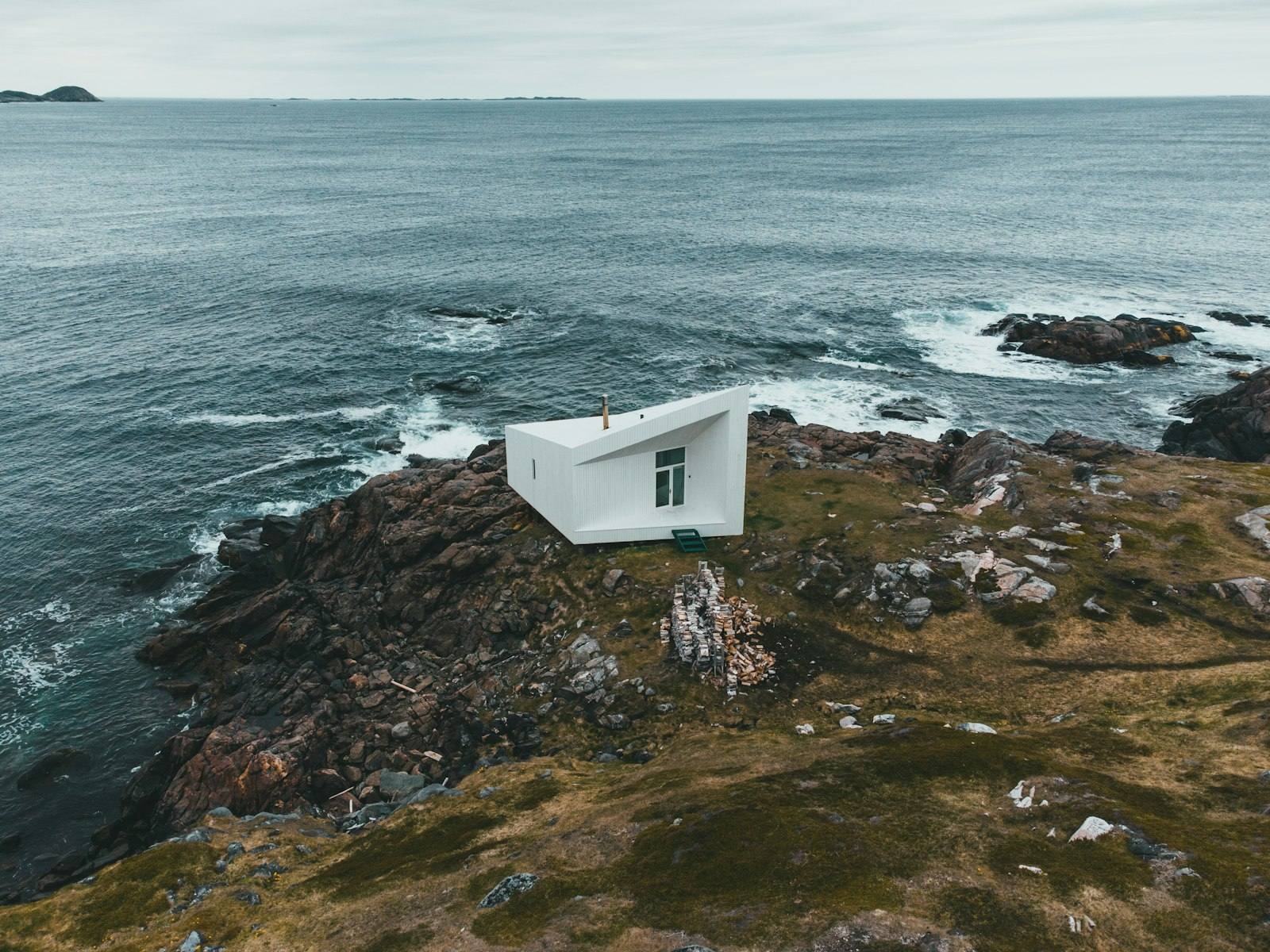
- The studios. Artists in residence work in stark little buildings set out alone on the rocks — you can walk to several of them, though whether you get inside depends on an artist being there and being willing. Architecture as punctuation on an empty coast.
- Icebergs, if the season is right. This coast is called Iceberg Alley for a reason. April through June is the window, with late May and early June usually the best of it — earlier and the bergs are often still locked in sea ice. Nobody can promise you one, and no photograph prepares you for the ones that come.
- The rest of the day: nothing. The inn has a library, a cinema and a gallery, and the correct itinerary here involves using at least one of them badly, for a long time, in bad weather. The island keeps its own calendar — the inn counts seven seasons rather than four, with names like Pack Ice and Trap Berth and Berry, which tells you everything about how closely people here watch the water.
- Trinity or Bonavista on the way back. This is where they actually filmed the thing in 2001 — Trinity and New Bonaventure, on the Bonavista Peninsula, a good five hours’ driving from Fogo, which tells you how freely everyone has always treated this coast as one place. A second helping of outport Newfoundland before the flight home, and the only bit of the story with a real address.
The glass and the bite. Screech — the dark rum the Newfoundland liquor board has been bottling since 1957, Jamaican in origin and entirely Newfoundland in meaning — taken neat and cold, ideally somewhere with a stove going. There’s a ceremony that comes with it in which visitors are invited to kiss a cod; it was invented in the twentieth century and everybody knows it, which somehow makes performing it better rather than worse. Participation is technically optional and socially not. And cod tongues if the day produces them — they follow the summer food fishery and they’re on the menu or they aren’t — floured and fried with scrunchions, crisped cubes of rendered salt pork scattered over the top, exactly as good as they sound and considerably better than they read. At home: dark rum, a storm if one’s available, and the first chapter, which is one of the great opening chapters in American fiction.
If you need a copy: The Shipping News — from Bookshop.org, whose profits go to independent bookstores. It’s an affiliate link — I earn a small commission and it costs you nothing.
The invitation. Read it together. Live it together. Here’s the honest brief: this is not a trip for a group that wants a lot of options. It’s a trip for six or eight people who like each other enough to be weathered in together — which is, come to think of it, an exact description of a book club that has lasted more than three years. The reading is short, the arguing is good, and the place does something to people that a warm-weather trip cannot. Here’s how the group version works. Season is everything on this one: the inn opens in April and closes at the start of November, and inside that window the island hands you three entirely different holidays — icebergs in late spring, the long light of summer, and the berry barrens turning in September. There are twenty-nine rooms and a three-night minimum, and the good weeks go, so let’s talk about which one you actually want.
Plan your trip with me.
A 30-minute discovery call is where it starts. No fee, no pressure.
Book a Discovery Call