The book. One morning in the late summer of 1951 or 1952 — she told it one way and her biographer tells it another — Patricia Highsmith woke early in a room above the beach at Positano and saw a young man walking alone: shorts, sandals, a towel over one shoulder, moving right to left in the empty light. Those details are hers, set down thirty-seven years later. She never saw him again, and she never wrote a word about him at the time.
The tidy version says the image came back months later and became a novel. What she actually said is stranger and better — she wasn’t sure the man was even in her mind while she was writing, and only recognised him as Ripley’s origin years afterwards, when journalists kept asking where Tom came from.
The Talented Mr. Ripley, 1955. A young American of no particular means is sent to Italy to bring a rich man’s son home, and instead discovers he’d rather be the rich man’s son. What makes it a great book rather than a good thriller is that Highsmith declines, absolutely, to punish him. You spend the novel appalled and complicit, rooting for a murderer to make his train, and by the last page you have learned something about yourself that you’d rather not have.
It’s also one of the great books about wanting a life rather than a thing — and the life Tom wants is a European one: the coffee, the tailoring, the light, the sense of being someone in a place where nobody knows what you were. Every traveller has a two-percent solution of Tom Ripley in them. That’s the queasy pleasure of it.
Here’s the part that makes the trip fun. Mongibello, the village where the whole thing starts, is invented — and she named it beautifully, because Mongibello is the old Italian name for Mount Etna, and in Arthurian romance it’s the otherworld castle sited inside that volcano. She called her paradise after a mountain that periodically destroys everything near it. Three screen versions went looking for it anyway, and here is the lovely part: not one of them filmed in Positano. Alain Delon’s Plein Soleil in 1960 and Matt Damon’s in 1999 both went out to the islands in the Bay of Naples — Ischia and Procida, many of the same streets, deliberately. Only the 2024 series broke ranks and came to Atrani, on the coast proper. So the pilgrimage has three addresses, and the one place with the best claim of all is the one no camera ever chose.
The route. Naples in, seven or eight nights, and a deliberate refusal to rush the coast.
- Naples, two nights first. Ripley passes through and so should you, unhurried. It’s the least polished and most alive city in Italy, and it will recalibrate your palate before you go anywhere prettier. It also has the Farnese marbles — though check the museum’s own closed-rooms page before you go, because the sculpture galleries have been part-shut through 2026 and the Hercules is not guaranteed.
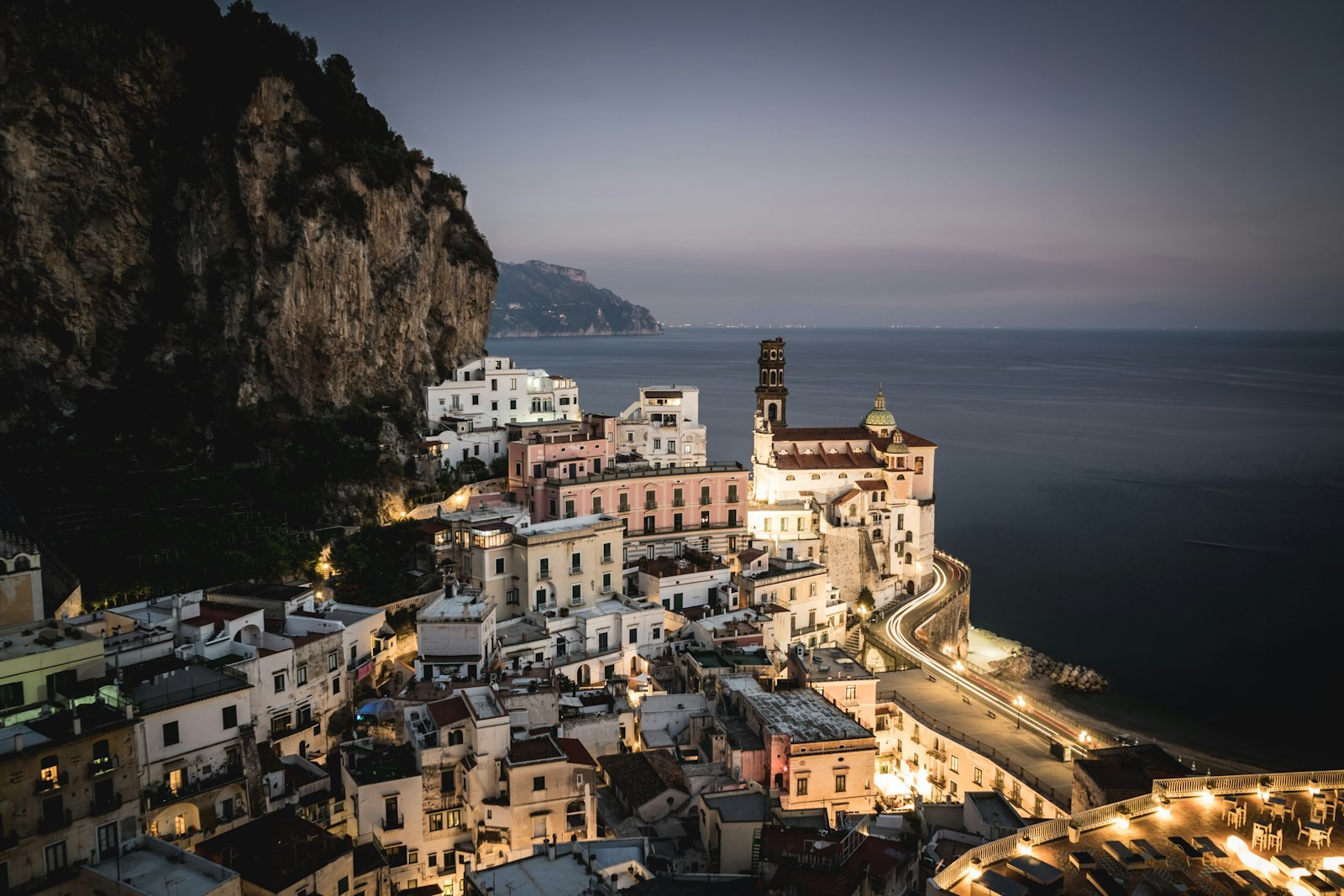
- Atrani, the current Mongibello. The 2024 series shot here, and the choice was inspired: Atrani is the smallest town in Italy by area — about twelve hectares of stacked pastel houses folded into a cliff, one piazza, and almost none of the crowd that swamps its famous neighbour a kilometre up the road. Stay in Amalfi and walk down into it in the evening; from Ravello it’s a long stepped descent or a drive, not a stroll.
- Positano, at dawn, once. This is the actual origin — Highsmith’s window, Highsmith’s beach. Go at six in the morning when the town belongs to the people who live in it, walk the sand right to left, and then get out before the day boats arrive. One hour, correctly timed, beats a whole day badly timed.
- Ravello for the height, because the coast needs to be looked down on at least once, and because the gardens there are the one genuinely restful thing on this stretch.
- Ischia, three nights, and this is the part I’d fight for. The 1999 film used it as Mongibello and then almost everyone forgot it existed, which is why it is still an island where Italians go and foreigners mostly don’t. Thermal water everywhere — the Romans knew about it, and left votive reliefs at Nitrodi to prove it — a castle on its own rock at Ischia Ponte, and Sant’Angelo, a fishing village that is pedestrian in every way that matters. It is the Amalfi Coast’s antidote.
- The crossing, which I’d plan rather than wing. There is one boat a day from Amalfi and Positano to Ischia, around thirty-seven euros, weekends from spring and daily through the summer. Out of season there’s no direct boat at all: you go overland to Naples and sail from Beverello, which is the twenty-euro crossing everyone quotes online and a completely different journey. Miss the afternoon return and you are staying the night.
- Procida, a day trip, if the mood holds. Corricella harbour in that impossible sherbet palette — though the quay has been a phased building site since 2024, so check before you build a morning around it. Half a day is exactly right.
- Rome or Venice as a coda, if you want to follow Tom rather than Dickie — the novel goes both places, and both endings of the trip are good ones.
The glass and the bite. A cold glass of Biancolella, grown on Ischia’s volcanic terraces — the appellation actually requires the volcanic soil — tasting of salt and stone and costing almost nothing where it’s made. It travels further than the island likes to admit: it’s written into the wines across the water on the Amalfi Coast, and nineteenth-century Ischians carried it to Ponza, where it took. Drink it here anyway. And coniglio all’ischitana: rabbit with a whole unpeeled head of garlic, cherry tomatoes, white wine, chilli and piperna — the wild thyme off these hillsides — cooked down together in an earthenware pot. The rabbits are reared in pits dug into the tuff, a practice old enough and odd enough to have earned its own Slow Food Presidium. It’s served all year, and it reliably astonishes people who came to an island expecting fish. At home: a dry Italian white, something tomato-and-herb on the stove, and the first hundred pages — the ones before anything happens, where he’s simply enjoying himself. Those are the frightening ones.
If you need a copy: The Talented Mr. Ripley — from Bookshop.org, whose profits go to independent bookstores. It’s an affiliate link — I earn a small commission and it costs you nothing.
The invitation. Read it together. Live it together. This is a superb book-club book precisely because it splits the room — half the group thinks Tom is a monster, half of them quietly liked him, and everyone wants to relitigate it over dinner. It’s also a very good trip for a group that wants two moods in one week: three days of the famous coast for the photographs, three days on Ischia for the actual holiday. How to host your own is here. One caution before you go: do not let Tom pick the hotels. I’ll do that.
Plan your trip with me.
A 30-minute discovery call is where it starts. No fee, no pressure.
Book a Discovery Call