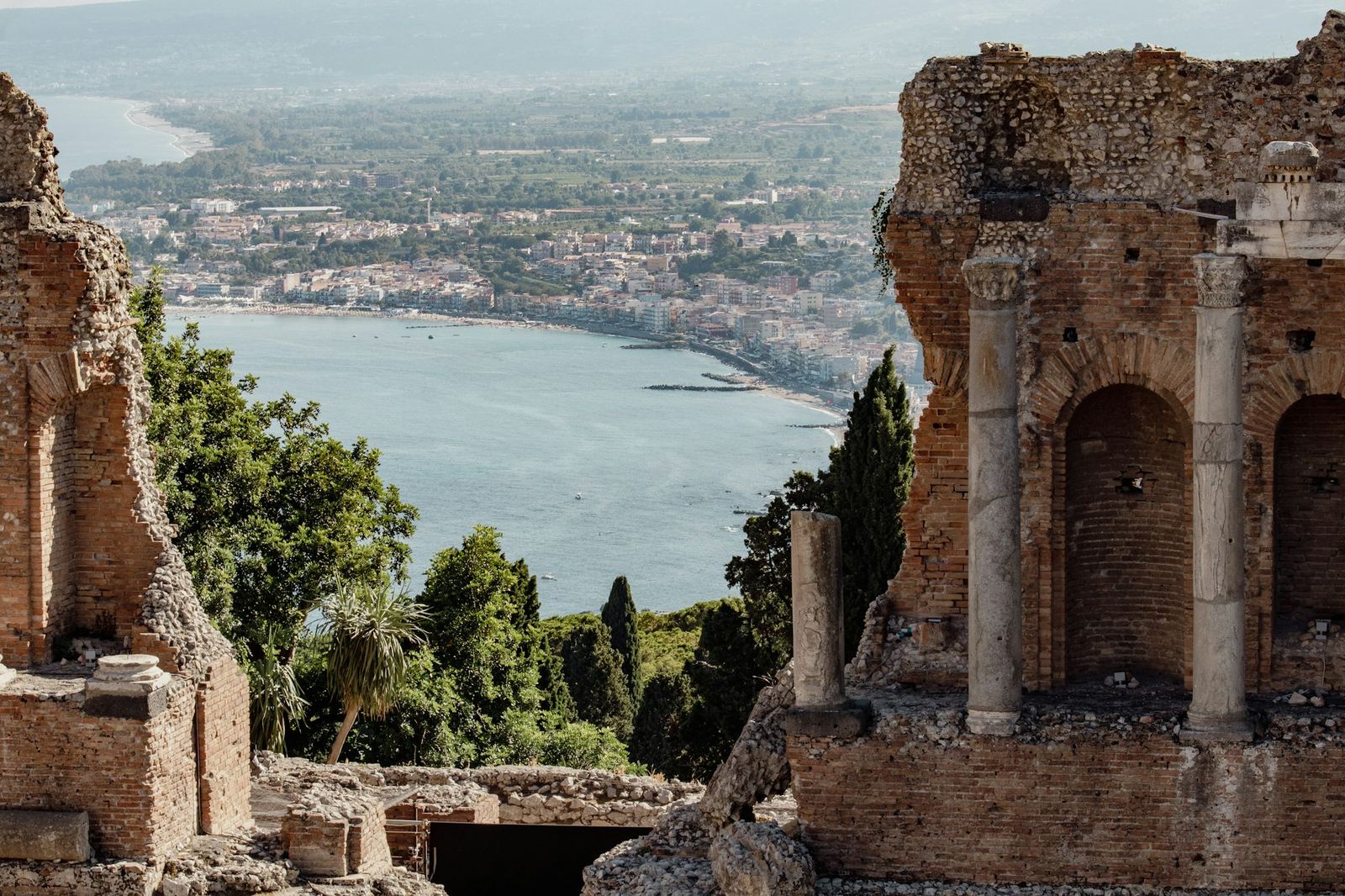
The book. In the spring of 1950, Truman Capote — twenty-five, famous, and tired of being looked at — left New York for Taormina and rented Fontana Vecchia, a centuries-old villa on the hillside above the sea that D.H. Lawrence had lived in thirty years earlier. He stayed nearly two years and did the best quiet work of his early life there: The Grass Harp, that tender, un-cynical novel about people who climb into a tree house rather than live by other people’s rules, plus the essays and stories of his Sicilian stretch. His essay “Fontana Vecchia” is the keeper — Capote at his least performative, writing about market days, the mountain, the sea in the window, what it costs to fill a kitchen in Taormina. A writer nobody could shut up, gone happily quiet.
Read The Grass Harp with the essay as a chaser and you understand what Sicily was for him — the place where he could stop being “Truman Capote” for a while. Everyone I’ve ever sent to Sicily is chasing some version of that same trade.
The route. Taormina as the anchor, the east coast as the arc — six nights, golden hour treated as a scheduled activity.
- Taormina, four nights. The Greek theatre early, before the day-trippers, with Etna smoking behind the stage — the single best-sited ruin in Italy, and I will not be argued with. Walk up Via Fontana Vecchia to see Capote’s villa from the road (it’s a private home — the pilgrimage is the point, the view is the reward). Aperitivo in Piazza IX Aprile when the light goes honey-colored.
- The anchor property. San Domenico Palace — the converted convent above the sea that a certain television series made world-famous — is the milestone-trip move here: cloister, pool, that view. One practical thing nobody mentions: it closes for the winter and reopens in early spring, so this is a trip with a season attached rather than one you can take whenever the mood strikes. There are also quieter boutique perches on the same hillside for couples who’d rather spend the difference on dinners; matching you to the right one — and to the right month — is exactly my kind of conversation.
- Etna, one day. Up the mountain in the morning — lunar black slopes, then vineyards growing out of old lava. The wines off this volcano are some of Italy’s most exciting right now; taste them where they’re made.
- Siracusa and Ortigia, overnight if you can. The market Capote’s housekeeper would recognize, the duomo built inside a Greek temple, dinner at a table close enough to the water to hear it.
The glass and the bite. An amaro — Averna, born in Sicily — over one big ice cube at golden hour. And the island’s own breakfast-of-geniuses: granita con brioche, almond or coffee granita with a warm brioche for tearing and dunking. At home: the amaro is findable anywhere; the granita is an excuse to buy an espresso pitcher and crushed ice. Read “Fontana Vecchia” first — it’s short — then start the novel.
If you need a copy: The Grass Harp — from Bookshop.org, whose profits go to independent bookstores. It’s an affiliate link — I earn a small commission and it costs you nothing.
The invitation. Read it together. Live it together. Capote went to Taormina to disappear beautifully for a while, which makes this the milestone trip for whoever in your life most needs to stop performing — a big birthday, a decade survived, a retirement. And Sicily seats a book club at one long table better than almost anywhere. How the group version works — and where the one-on-one version starts.
Plan your trip with me.
A 30-minute discovery call is where it starts. No fee, no pressure.
Book a Discovery Call