People find UnCruise Adventures one of two ways. Either they’ve spent years on large ships and something finally tips them toward looking for an alternative — or they’ve never cruised at all, and someone they trust told them this is the one to start with.
In either case, they find their way to me asking the same question: Is it worth it?
I’m a certified UnCruise Adventurist — which means I’ve been trained and tested on the product by the people who run it. I know the fleet, the itineraries, the pricing structure, and the guest experience at the level you need for real trip planning decisions, not brochure-reading. Here’s what I actually tell my clients.
The Short Version
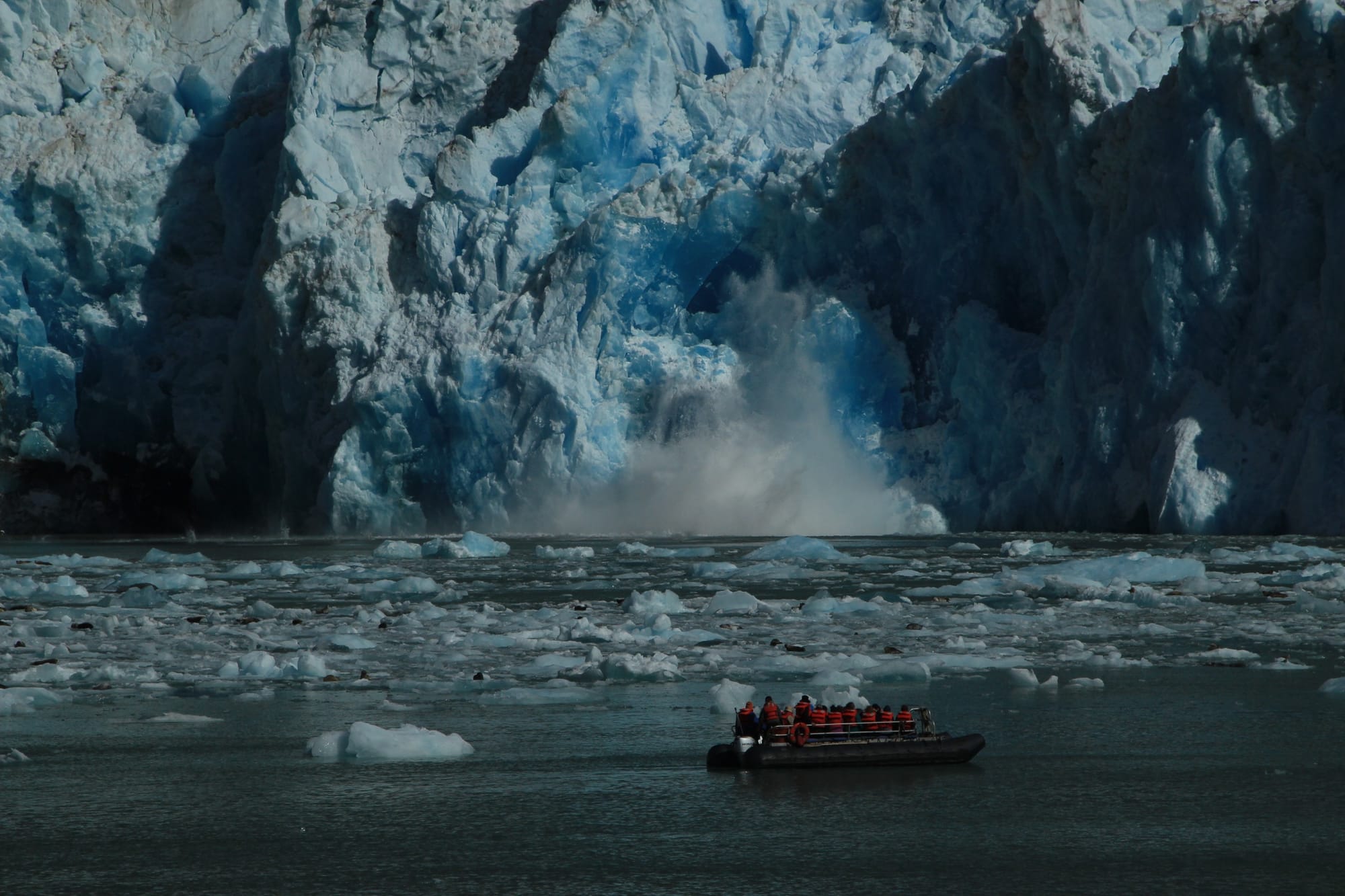
UnCruise Adventures is worth it for a specific kind of traveler: someone who wants to be in a place, not passing through it. If your idea of a great day involves standing on a lido deck watching a glacier from half a mile away, this is not your ship. If your idea of a great day involves paddling a kayak toward that glacier until you can read the century-old compression layers in the blue ice — this is exactly your ship.
Who They Are
UnCruise Adventures was founded in 1996 in Juneau, Alaska by Captain Dan Blanchard. He still runs it. He still sails select departures himself — what the company calls Captain’s Cruises — and his 2025 speech accepting the Expedition Cruise Network’s Lifetime Achievement Award (the highest honor in the expedition cruising industry, presented in London with Tower Bridge raised behind him) was about his crew, not himself. That tells you something about the culture of the company.
Cruise Critic has called them the “Undisputed Leader in the Region.” USA Today readers voted their Hawaiian Seascapes itinerary the #1 Best Hawaii Cruise in 2025. They’ve been recognized by Newsweek, Condé Nast Traveler, and the Seattle Times. They are not an underdog finding its footing; they are a thirty-year-old company that has built its reputation doing one specific thing exceptionally well.
That thing: small ships, in wild places, with the time to actually be there.
The Fleet and What It Means
UnCruise operates nine vessels, all U.S.-flagged, ranging from 22 to 86 guests. The smallest — Safari Quest — carries 22 people. The flagship for Hawaii — Safari Explorer — carries 36. The largest Alaska ships carry 76 to 86.
The size matters for reasons that go beyond atmosphere. In Glacier Bay, the National Park Service strictly limits vessel traffic. Most of the permit quota goes to large cruise ships on day passes — nine to ten hours inside the park, passengers never disembark, rangers board the ship rather than the other way around. UnCruise holds overnight anchoring permits. They spend two full days inside the park. Guests kayak, hike ashore, and go out in skiffs along the glacier face. No other cruise line operates in this category.
The U.S.-flag matters for a different reason: the Passenger Vessel Services Act requires foreign-flagged ships to call at a Canadian port between U.S. stops. That’s why Alaska cruises from Seattle or Vancouver spend three days crossing open water and include a port call in Victoria or Prince Rupert. UnCruise ships don’t have that constraint. Their Alaska itineraries are 100% within Alaskan waters, which means every hour of the trip is where you came to be.
What’s Included (and Why It Matters)
Everything except airfare and gratuities is included: all meals, all beverages (including alcohol), all excursions, all gear, wetsuit rental. This is not a cruise where you’re constantly calculating whether the whale watch costs extra. The excursions are part of the trip.
The captains can change course to follow wildlife. There are no fixed port schedules to honor. If a humpback is feeding off the starboard bow, the ship slows down and stays. If the weather opens up an anchorage that wasn’t on the plan, they take it. That flexibility is not an incidental feature — it’s a core operating principle, and it’s what separates this from any itinerary you can map out in advance.
What It Costs
Alaska itineraries run roughly $3,800–$8,400 for seven to twelve nights, all-inclusive. Hawaii (Molokai, Lanai, Maui, Big Island) runs approximately $5,000–$8,000. Galápagos (Ecuador, aboard La Pinta) ranges from $5,500–$11,600.
For context: those prices include every excursion. A typical large-ship Alaska cruise in that same price range does not include the whale-watching tour, the glacier helicopter, the kayak rental, or most of the guided hikes. The all-inclusive model changes the math considerably when you add it up honestly.
Solo traveler supplements run regularly at 50% off on select departures — worth asking about if you’re traveling alone.
The Destinations Worth Knowing
Alaska is where UnCruise built its name and where their operational advantage is sharpest. Inside Passage itineraries, Glacier Bay, Prince William Sound, the Aleutian Islands — these are wilderness routes designed for guests who want wildlife and ice, not shopping and nightlife.
Hawaii is underrated in their lineup. The 36-guest Safari Explorer runs the Hawaiian Seascapes route, which includes anchoring on Molokai’s north shore — home to the tallest sea cliffs on earth, inaccessible by road, reachable only by water. The evening feast on Molokai is hosted by local community members. The manta ray night snorkel happens near the Big Island. This is Hawaii that most travelers who’ve been to Maui have never seen.
Galápagos is a natural extension for clients already drawn to island wildlife at scale. La Pinta carries 48 guests and operates out of Ecuador. It sits in a different category from the Ecuador boats most operators use.
Baja California and the Sea of Cortez runs aboard Safari Voyager and has a following among clients who want winter warmth without a resort. Jacques Cousteau called it “the aquarium of the world.” The marine life density in the Sea of Cortez — whale sharks, whale watching, sea lions at play — is what draws people back.
Costa Rica returns in October 2026 after a hiatus, aboard Safari Voyager. The route runs from Liberia through Murciélago Bay, Corcovado, Golfo Dulce, and Isla San Lucas. Worth knowing early if you have clients eyeing that region.
The Things That Surprise People
A few things clients consistently mention after they get back:
The silence at anchor. When the ship cuts engines inside Glacier Bay, there’s no generator hum, no background music, no crowd noise. Just the sound of ice — popping, creaking, the occasional distant calving. People who’ve been on large ships often say they didn’t know it was possible to hear a glacier.
The open bridge. Guests can stand on the bridge while the ship navigates through ice. They can ask the captain questions. The expedition team doesn’t exist to manage guest experience — they’re genuinely there because they know the place and want to show it to people.
The crew ratio. On most ships, UnCruise operates at nearly 2:1 guests-to-crew. On a 36-guest ship, you know the crew. They know you. It’s a different social register than a 3,000-passenger vessel.
The Wi-Fi rule. Wi-Fi is available on select ships — but intentionally shuts off inside national parks and remote wildlife zones. This is framed as a feature, not a failure, and for the right traveler, it is. The clients who are nervous about disconnecting find it useful to know they can stay reachable in port and genuinely unplug when it matters.
Who It’s Not For
I’ll be direct about this because it saves everyone time. UnCruise is not the right fit for clients who need a casino, a production show, a specialty dining reservation, or a pool. It is not the right fit for travelers who are primarily interested in visiting ports and shopping. There are no art auctions. The dress code is “bring layers.” The demographic skews active, curious, and experienced — not because the trips are physically demanding (they aren’t, necessarily) but because the experience rewards attention.
If that sounds like a mismatch for your client, it probably is, and I’ll tell you so before we spend more time on it.
The Booking Logistics
As a certified UnCruise Adventurist, I have a direct relationship with the team and access to the full booking system, current specials, and tested product knowledge. I keep up with departures, pricing changes, and the occasional sold-out caveat — some Alaska departures sell out months in advance.
If you’re curious about whether a specific itinerary, ship, or cabin class makes sense for what you’re trying to build, that’s a thirty-minute conversation.
The Bottom Line
UnCruise Adventures has been running these routes for thirty years. Captain Dan Blanchard received the highest honor in the expedition cruising industry in 2025. USA Today readers voted their Hawaii product #1. They operate in places most operators can’t access, at a scale that changes what access means.
Worth it? For the right traveler, consistently yes. The question is whether you’re that traveler — and that’s the conversation worth having.
This reflects my professional knowledge of UnCruise Adventures through the Adventurist certification program, BDM relationship, and ongoing research — updated May 2026.
Plan your trip with me.
A 30-minute discovery call is where it starts. No fee, no pressure.
Book a Discovery Call