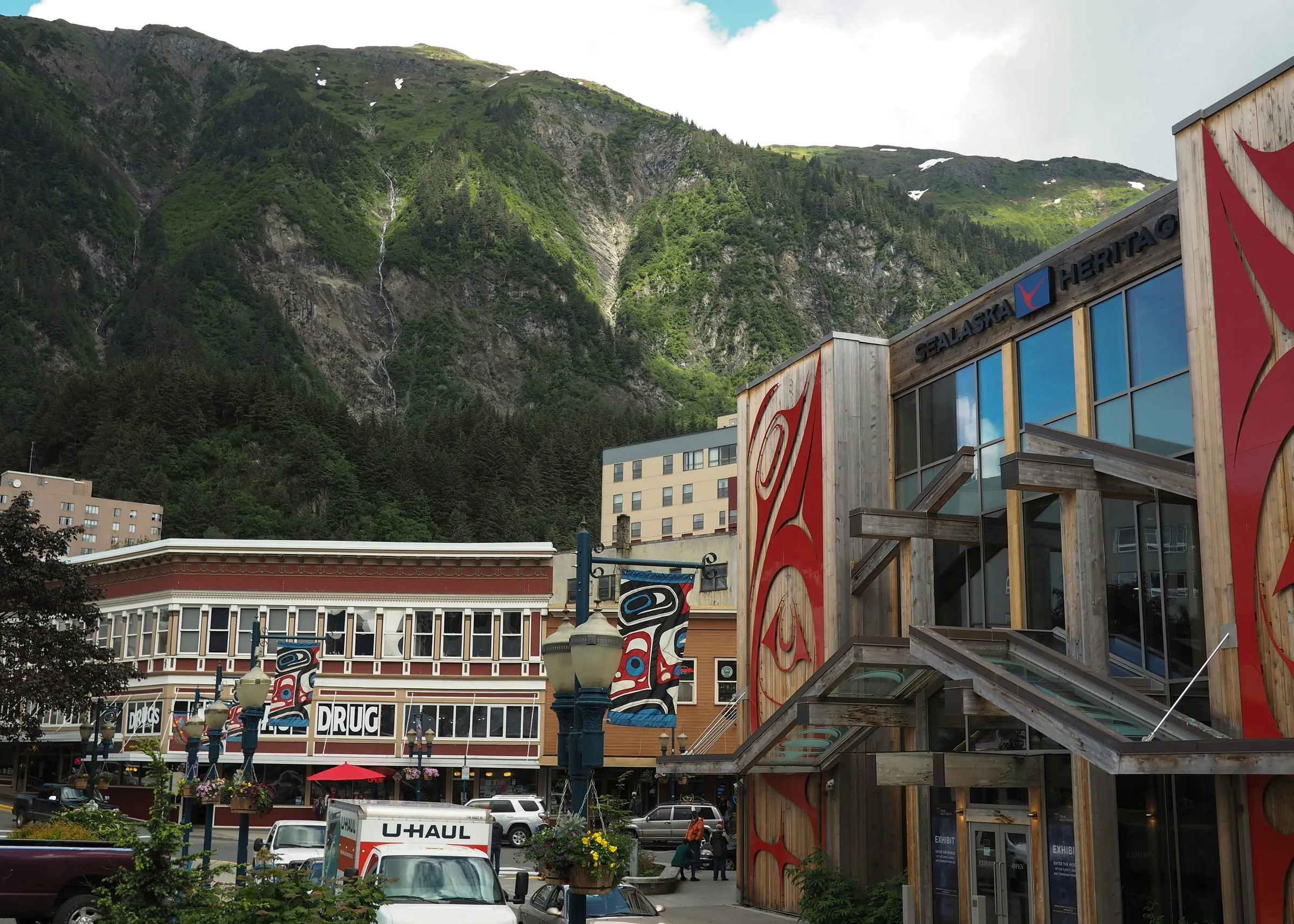
Juneau is one of the strategic anchors of the Inside Passage — Alaska’s panhandle capital, the seat of the state legislature, a working city built on mining and fishing, and the gateway to the Juneau Icefield’s vast expanse of glacial ice. Most travelers encounter it as a cruise port (nearly every Inside Passage itinerary on ships from Princess, Holland America, Royal Caribbean, or smaller lines like UnCruise touch Juneau), and the version of the city most travelers see in a port day is shaped entirely by how much time and planning went into the visit.
Done with a plan, Juneau in eight to ten hours delivers the glacier view, a downtown walk, and the kind of working-Alaska character that the more touristy Ketchikan misses. Done without one — which is the default for most cruise passengers — it becomes a jewelry-store-and-salmon-gift-shop blur. The difference is the difference between experiencing a place and transiting through one.
Here’s how I think about Juneau.
At a Glance
| Setting | A narrow fjord surrounded by mountains and glaciers, with the Juneau Icefield as the dramatic backdrop to the east. Working waterfront mixed with downtown shops and restaurants. The city feels more like a operational hub than a cruise destination, which is part of what makes it interesting. |
| Best season for cruising | May–September for Inside Passage sailings. Peak crowds June–August. Late May through mid-June offers the sweet spot — longer days, manageable temperatures, full operator availability, lower crowds than peak summer. |
| Typical port day length | Most cruise itineraries allot 8–10 hours in port, usually a morning arrival and afternoon departure. This is enough time for the classic Juneau experience. |
| How to get there (overnight) | Float-plane service from Anchorage (45 minutes), or the Alaska Marine Highway ferry system connects Juneau to other Inside Passage towns. Most visitors come via cruise ship. |
| One thing most guides won’t tell you | Juneau has no road access to the rest of Alaska — the city is accessible only by water or air. This isolation is part of what keeps it genuinely Alaskan and less commercialized than some other cruise ports. |
Why I Send Travelers Here
Because Juneau is the Inside Passage port that actually earns the time you give it. Unlike Ketchikan, which leans into the cruise-passenger experience, Juneau is a real city first — the state capital, a working fishing and tourism economy, and the gateway to glacier viewing that most travelers come to Alaska for in the first place.
The Mendenhall Glacier is the city’s draw — a tidewater glacier at the end of a scenic road, visitable on a port day for travelers with decent time-management, and genuinely impressive (massive, actively calving, close enough to see details without needing serious mountaineering). The downtown is walkable, the local restaurants are real (not the Red Mill Salmon Bake version of Alaska tourism), and the Alaska State Capitol and the State Museum are the kind of cultural stops that remind you this is a functioning city, not a cruise-ship set.
I send travelers here as part of the Inside Passage extension — the canonical Alaska summer experience for travelers coming off the March aurora trip, or as part of a bespoke small-ship Alaska itinerary. For first-time Alaska visitors doing the Inside Passage, Juneau is one of the two or three ports (along with Sitka) that reward a real plan.
For Cruisers: Port Day Planning
If you’re seeing Juneau as a cruise-day port stop, here’s the rhythm:
Morning arrival (typically 8–9 a.m.) →︎ Shore excursion decision point.
The classic split: guided excursion vs. independent exploration.
Guided option: Most cruise lines offer Mendenhall Glacier tours (bus ride, glacier viewing, return to ship) as a standard shore excursion — about 4–5 hours, ~$120–180 per person. This is the safest bet if you want the glacier view without the logistics work. The downside is the tour-bus rhythm and the compressed glacier time.
Independent option (my preference for travelers with port-day confidence): Rent a car or take a taxi directly to Mendenhall Glacier Road (about 13 miles from downtown, 20-minute drive) and spend 90 minutes at the glacier visitor center and hiking trails. Return downtown by mid-afternoon for a lunch and a walk through the historic district. This gives you the glacier and the city, with flexibility.
Logistics to know:
- Mendenhall Glacier Visitor Center is free to enter; glacier-viewing trails range from short paved walks to moderate hikes.
- Downtown Juneau is walkable from the cruise dock in about 15 minutes, or take the shuttle.
- The Alaska State Capitol is a 30-minute walk or short cab ride from the port — small, interesting, less crowded than the tourism setup suggests.
- Deckhand Brewing or Heritage Dock are better lunch stops than the seafood-tour venues near the pier.
Timing: Plan to be back at the ship 30 minutes before posted departure — cruise lines are strict about this.
For Overnight Travelers
If you’re staying overnight in Juneau (pre-cruise or post-cruise add-on, or part of a small-ship itinerary), you have time for a proper visit.
Where to Anchor:
Westmark Baranof Hotel (downtown, waterfront, 78 rooms) — the anchor for downtown-based stays. Walking distance to restaurants, shops, and the downtown core. Basic but functional, operated by the Westmark chain that dominates Alaska’s working-city hotels.
Four Points by Sheraton Juneau (Gold Ridge Drive, 19 km north of downtown) — a newer property on a ridge overlooking the city, with better views and more contemporary rooms. About a 20-minute taxi ride from downtown; less walkable but more hotel-resort feeling.
Either works depending on whether you prioritize downtown walkability or property amenities.
What I’d Do With a Day in Port
Morning — Mendenhall Glacier
Leave early (7–8 a.m. if possible) for the Mendenhall Glacier Road, which forks from the main highway about 13 miles from downtown. The road is scenic, the visitor center is free, and the trails range from a 20-minute paved walk to longer moderate hikes to glacial viewpoints. Early arrival beats the afternoon tour buses by hours. Spend 90 minutes to two hours here.
Mid-Morning / Lunch — Downtown & Local Eating
Return to downtown Juneau for a late breakfast or early lunch. Breakwater Inn or Deckhand Brewing are real local spots (not the tourist-facing Red Mill or the Salmon Bake). Walk the Juneau-Douglas Historical Walk if you want the gold-rush history — short self-guided interpretive trail with views of the old mining claims.
Afternoon — Culture & Shopping
Spend an hour at the Alaska State Museum (small, strong collection of Alaska Native art, local history, worth an hour). Walk the downtown historic district — the Goldbelt Hotel, the old colonial-era houses, the waterfront. Browse the local galleries and shops on Franklin Street that cater to actual Alaskans, not just cruise passengers.
Late Afternoon — Viewpoint or Relaxation
If energy remains, the Macaulay Salmon Hatchery is a 20-minute drive north (working facility, where you can watch returning salmon in season — May–September). Or simply find a café with a view, watch the water traffic, and wind down before dinner.
Dinner
Deckhand Brewing for burgers and local beer, Taku Smokeries for smoked salmon (take-out or sit-down overlooking the water), or Fiddlehead Restaurant & Bakery for elevated casual American. All are real local places that don’t feel built for cruise passengers.
What I’d Do With Two or More Days
Add a full-day glacier exploration (book a glacier-trekking or kayaking tour with an operator like Tall Trees Adventures), spend a morning at the Macaulay Salmon Hatchery, and take a local float-plane charter to one of the surrounding glaciers or wildlife areas (pricey but genuinely the view). The longer you stay, the more Juneau opens up as an actual place rather than a port-day checkpoint.
Specific Things I’d Tell You About
Mendenhall Glacier is a tidewater glacier, which means it actively calves into the water. Watching chunks of ice break off and fall into the fjord is the main event — bring binoculars, bring patience, bring time. The glacier recedes noticeably year to year (climate change is visible here in real time), so the viewing experience shifts.
Juneau is Alaska’s state capital, and the State Capitol building is genuinely worth 30 minutes. It’s small, it’s humble, and it’s the legislative heart of the state. Less visited than you’d think.
The Alaska State Museum is one of Alaska’s better small museums. The Alaska Native art collection is strong, and the storytelling around the Russian-American colonial period is presented with historical seriousness rather than tourist sentimentality.
The Juneau area has serious gold-mining history. The Treadwell Mines (now abandoned across the channel) were among the world’s largest gold operations in the early 1900s. The Juneau-Douglas Historical Walk touches on this history if you’re interested in the economic foundation of the city.
Float-plane charters are the Juneau experience most travelers skip. A 30–45 minute scenic flight over the Juneau Icefield, landing on a remote glacier or lake, costs $350–500 per person but is genuinely one of the great Inside Passage experiences.
What I’d Skip
The cruise-ship guided tours that spend most of the time on the bus. If you’re independent enough to do Juneau on your own, you’ll see more in the same time.
The “Gold Panning Experience” tourist setups near the cruise dock. Not worth the time or the markup from a real gold-panning operation.
The Red Mill Salmon Bake and similar tourist restaurants. They’re built for cruise passengers on limited time. The local restaurants are better and less expensive.
Trying to do multiple day trips (Mendenhall Glacier + Macaulay Hatchery + downtown) in a single 8-hour port day. Pick the glacier or pick the city. Trying both leaves you exhausted and shortchanged on both.
For Cruisers — The Ship vs. Independent Decision
What I’d recommend: If your cruise line’s Mendenhall Glacier tour is reasonably priced (~$120–150 per person) and you have limited port experience, the guided excursion is the safe choice — you’ll see the glacier without the logistics work. If you’re comfortable renting a car or taking a taxi, and you have 8+ hours in port, the independent version (glacier first, downtown second) lets you see both the glacier and the actual city.
Most travelers regret doing the excursion-and-shop version because it misses what makes Juneau interesting: the working Alaska character, the real restaurants, the city underneath the cruise-passenger experience.
From the Journal
- Extending Your Alaska Trip: Inside Passage and Denali — the framework for making Juneau part of a bigger Alaska story
- Anchorage Travel Guide — the soft-entry city for Alaska trips
- Skagway Travel Guide — the sister Inside Passage gold-rush port
- Sitka Travel Guide — the sister Inside Passage Russian-influenced port
Plan With Me
If Juneau belongs in your trip — whether as a cruise-port stop, a small-ship itinerary port, or an overnight add-on before or after sailing — I plan the logistics. The discovery call is where we figure out which version of Juneau you’re doing and how to make those hours count.
Book your free discovery call →︎
Last updated: April 2026. I keep this guide current. If a restaurant closes, a glacier shifts, or port operations change, the page changes. Travel changes. The work doesn’t stop when the page goes live.
Plan this trip with me.
A 30-minute discovery call is where it starts. No fee, no pressure.
Book a Discovery Call