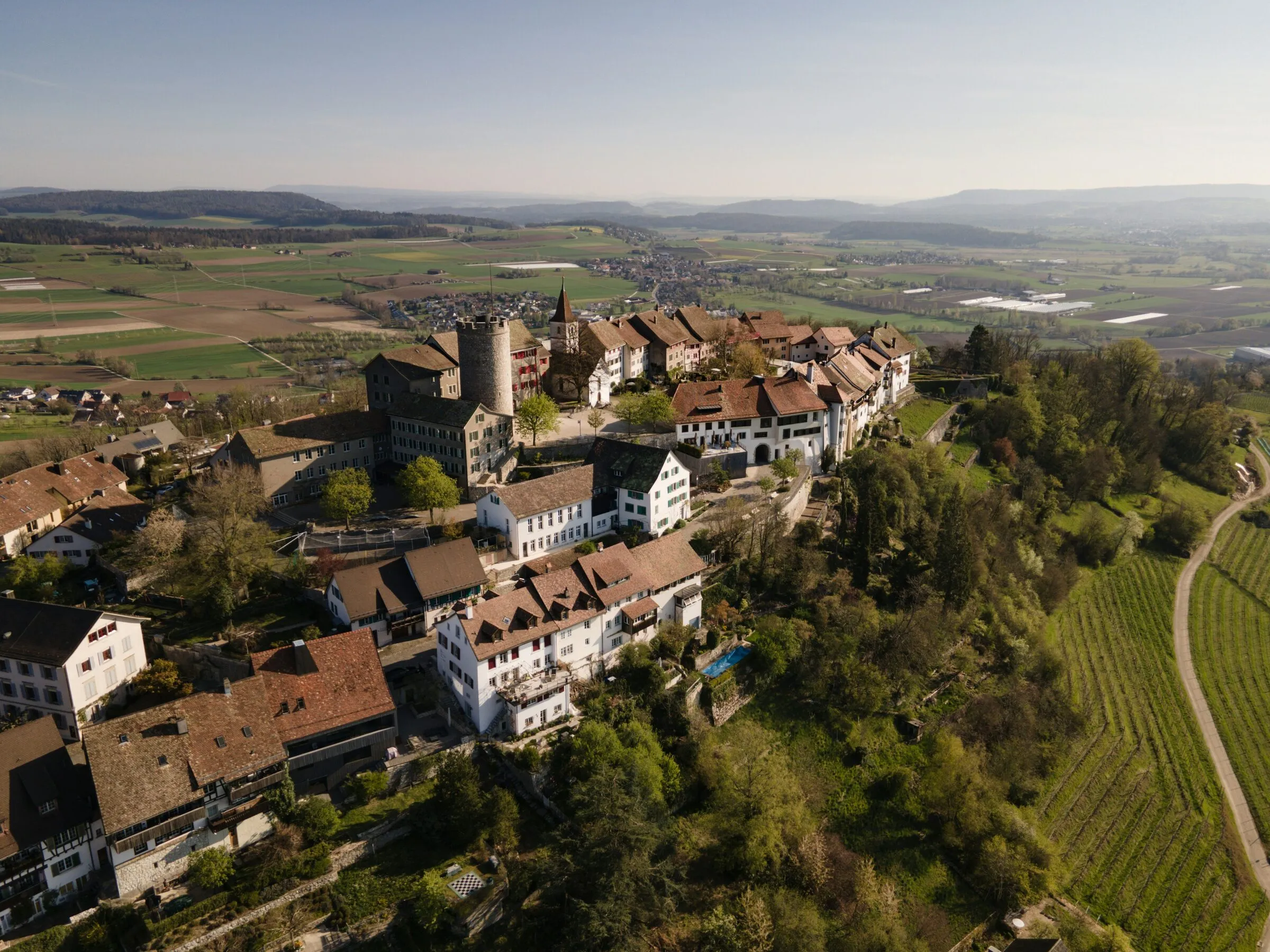
Regensburg is the Danube port-of-call that quietly punches above its weight. The city has the densest concentration of intact medieval architecture of any city on the river — the Old Town largely escaped WWII bombing — and the entire medieval core has been UNESCO World Heritage-listed since 2006. The 12th-century Stone Bridge across the Danube, the Gothic Dom St. Peter cathedral, the patrician Geschlechtertürme (family-tower houses) lining the small streets, and the Old Town Hall that hosted the Holy Roman Empire’s Imperial Diet continuously from 1663 until Napoleon dissolved the Empire in 1806 — Regensburg’s history is layered into the buildings in a way that few European cities can match. The astronomer Johannes Kepler’s house at Keplerstrasse 5 is now a small museum. Near the train station, the Thurn and Taxis Palace (a former Benedictine monastery) is one of Europe’s largest privately-owned palaces.
Most clients arrive here on a Danube river cruise — Regensburg is a standard port on Nuremberg-Passau-Vienna sailings, with most ships docking at the Stone Bridge itself, which puts you at the city’s most photographed landmark within a thirty-second walk of the gangplank. The standard port-day routine: morning walking tour of the Old Town, lunch in town, optional afternoon excursion to Kloster Weltenburg monastery for the famous beer garden, back to the ship by dinner. Done well, this is the most-rewarding-per-hour Bavarian port on the Danube.
Here’s how I think about it.
At a Glance
| How most travelers arrive | Danube river cruise — Regensburg is a standard port on most east-west itineraries, particularly the Nuremberg-Passau-Vienna sailings. |
| How long in port | 5–8 hours, often a full daylight stretch. Some itineraries include an overnight. |
| Best time to visit | May–September for the best beer-garden weather (Kloster Weltenburg, Spitalgarten in town). Late November–December has a small but well-edited Christmas market along the Stone Bridge with the cathedral as backdrop. |
| Currency / language | Euro. German is official; English is widely spoken in tourist-facing settings. Bavarian dialect colors the local German. |
| One thing most guides won’t tell you | Most cruise lines offer Kloster Weltenburg (the world’s oldest monastery brewery) as an optional afternoon excursion. Take it if it fits your schedule. The brewery’s been running since around 1050, the beer is still produced on-site, and the riverside beer garden along the Danube Gorge is the kind of afternoon hour clients describe months later. The included Old Town walking tour is fine; the optional Weltenburg add-on is the differentiator. |
Why Travelers Stop Here
Because Regensburg, in practical terms, is the best-preserved medieval Bavarian city any river-cruise itinerary will deliver — denser, older, more architecturally cohesive than Passau or Nuremberg, and with a UNESCO designation that earns its weight. Walking the Old Town is genuinely walking through a 12th- and 13th-century streetscape with very little post-medieval intrusion. Most travelers don’t expect that level of intactness from a port-day stop.
It’s also where Erik’s Danube journal post — the AmaReina trip report — describes the Stone Bridge afternoon as one of the standout port-hour moments of the sailing. The walk across the bridge with the Old Town and the cathedral spread on the south bank is the iconic Regensburg image, and it earns the cliché.
I send Danube cruisers here happily; for travelers building a Bavarian week, Regensburg is 100 km north of Munich and accessible by direct rail in 90 minutes — viable as a day trip from a Munich base, or as a one-night stop on a Munich-Nuremberg-Prague Bavarian-and-Czech sweep.
What I’d Do With Your Day in Port
The compact UNESCO Old Town makes for a tight, satisfying walking day:
Morning: cross the Stone Bridge and into the Old Town. The 12th-century Steinerne Brücke is the centerpiece — when it opened around 1146, it was an engineering marvel that influenced bridge construction across Europe (Charles Bridge in Prague was modeled on it 200 years later). Walk it in the early morning before the cruise-bus tours arrive; the south-bank view back across the bridge with the cathedral towers behind it is the photograph.
Late morning: Dom St. Peter and the Old Town Hall. The Gothic cathedral is a 13th-century French-style construction with a famously austere interior and one of the best stained-glass collections in Bavaria. Allow 30–45 minutes. Walk to the Old Town Hall (Altes Rathaus) for a tour of the Imperial Hall (Reichssaal) where the Holy Roman Empire’s Imperial Diet sat continuously from 1663 to 1806 — the room where the political shape of central Europe was decided for 143 years.
Lunch in the Old Town. Wurstkuchl (the Historische Wurstkuchl) at the south end of the Stone Bridge is the heritage choice — the oldest continuously-operating sausage kitchen in the world, in business since around 1146 (yes, it opened with the bridge), serving the same Regensburger sausages with sauerkraut and house mustard for nine centuries. Grilled outdoors over a beechwood fire, eaten standing or at small outdoor tables. It’s the meal that most clients describe later as the lunch they didn’t expect.
Afternoon: pick one.
-
Kloster Weltenburg — many cruise lines offer the optional afternoon excursion to this Benedictine monastery 30 km upstream, accessible by riverboat through the dramatic Donaudurchbruch (Danube Gorge) cliffs. The monastery brewery has been running since around 1050 — the world’s oldest monastery brewery still in operation — and the beer garden along the Danube is one of the most picturesque outdoor-drinking settings in Bavaria. If your itinerary offers this, take it.
-
Old Town walking, deeper. If Weltenburg isn’t on offer or doesn’t fit, spend the afternoon walking the smaller streets — the Goliath House with its 1573 Goliath fresco, the Schottenkirche St. Jakob with its bizarre Romanesque portal, the Kepler-Memorial-Haus at Keplerstrasse 5 (the astronomer lived here when he died in 1630), and the Thurn and Taxis Palace at St. Emmeram for an afternoon tour of one of Europe’s largest privately-owned palaces.
-
A quiet beer-garden hour. The Spitalgarten beer garden across the Danube (north bank) has been running since 1542 and serves the local Spital brewery’s beer in a leafy riverside setting. Twenty-minute walk from the dock and one of Regensburg’s quieter local hours.
Back on the ship by dinner.
Specific Things I’d Tell You About
The Wurstkuchl is older than most cathedrals in Europe. Continuously cooking sausages over a beechwood grill at the south end of the Stone Bridge since approximately 1146 — eight hundred and seventy-nine years. The same recipe, same location, same simple six-sausages-with-sauerkraut-and-mustard menu. Do this lunch. It’s the kind of food experience that exists only here.
Kloster Weltenburg is the world’s oldest monastery brewery still in operation. Founded around 1050 by Benedictine monks who were already brewing beer when the Domesday Book was being compiled in England. The riverside beer garden, accessible by boat through the Danube Gorge (which is itself one of the most scenic stretches on the entire river), is a destination on its own. Most cruise lines offer this as an optional afternoon excursion; some itineraries skip Weltenburg entirely. Ask before you book.
Regensburg’s Stone Bridge influenced Charles Bridge in Prague. When the Steinerne Brücke opened around 1146, it was the longest stone bridge in Europe and one of the engineering wonders of the age. Two hundred years later, Charles IV used it as the structural model for the Charles Bridge in Prague. Standing on the Regensburg bridge, you’re standing on the prototype.
Johannes Kepler died in Regensburg in 1630. The astronomer who first articulated that planetary orbits are elliptical (rather than circular) lived in the small house at Keplerstrasse 5 during his last years. The house is now a small museum. Twenty minutes, modest fee, free if your cruise includes the Regensburg Welcome Card. The kind of stop that rewards travelers with a science-history interest.
The Holy Roman Empire’s Imperial Diet sat in the Old Town Hall for 143 years. From 1663 until Napoleon dissolved the Empire in 1806, every Imperial Diet convened in the Reichssaal of Regensburg’s Old Town Hall — making this room the literal location where 18th-century Central European politics happened. Tour visits include the Reichssaal and the lower-level torture chambers (genuinely, complete with the original instruments).
What I’d Skip
Skipping the Wurstkuchl because “it looks touristy.” It does look touristy. It’s been the same line of cruise-day passengers for longer than the United States has existed as a country, and the sausages are the same as the ones served to medieval merchants and Holy Roman Diet delegates. Eat there anyway.
Trying to do both Weltenburg and a deep Old Town afternoon in the same port-day. Pick one. The Weltenburg excursion is 4+ hours round-trip including the boat ride; the deep Old Town walk takes 3–4 hours unhurried. One or the other within the typical port window.
Driving anywhere in the medieval Old Town. The UNESCO core is essentially closed to cars, and parking on the periphery costs more than the walk in is worth. The dock-to-Old-Town distance is genuinely a 30-second walk.
For Travelers With an Overnight or Pre/Post Cruise Stop
Some Danube itineraries include a Regensburg overnight; some Bavaria-Austria travelers extend pre- or post-cruise to spend a night here. Hotel Goliath (in a restored 13th-century patrician house) or Hotel Bischofshof am Dom (cathedral-side, family-owned heritage) are the convenient walkable options. Neither is in my hotel program — for travelers who want a Grand Hotel base for the Bavaria-Danube area, anchor in Munich and day-trip to Regensburg via direct rail (90 minutes).
The deeper conversation about Danube cruise itineraries that include Regensburg — and whether the optional Weltenburg excursion is on offer — lives on the Rivers & Small Ships specialty page.
Plan Your Danube With Me
If you’re thinking about a Danube river cruise that includes Regensburg, a Bavarian week that pairs Munich with the Bavarian Danube cities, or a Munich-Regensburg-Prague Central European arc, that’s exactly the kind of planning I do. A 30-minute discovery call is where it starts. No fee, no pressure. Just the river, your timeline, and the version of Regensburg most travelers don’t know to plan around.
Book Your Free Discovery Call →︎
Last updated: April 2026. I keep this guide current. If access to a site shifts or a cruise-line itinerary changes, the page changes. Travel changes. The work doesn’t stop when the page goes live.
Plan this trip with me.
A 30-minute discovery call is where it starts. No fee, no pressure.
Book a Discovery Call