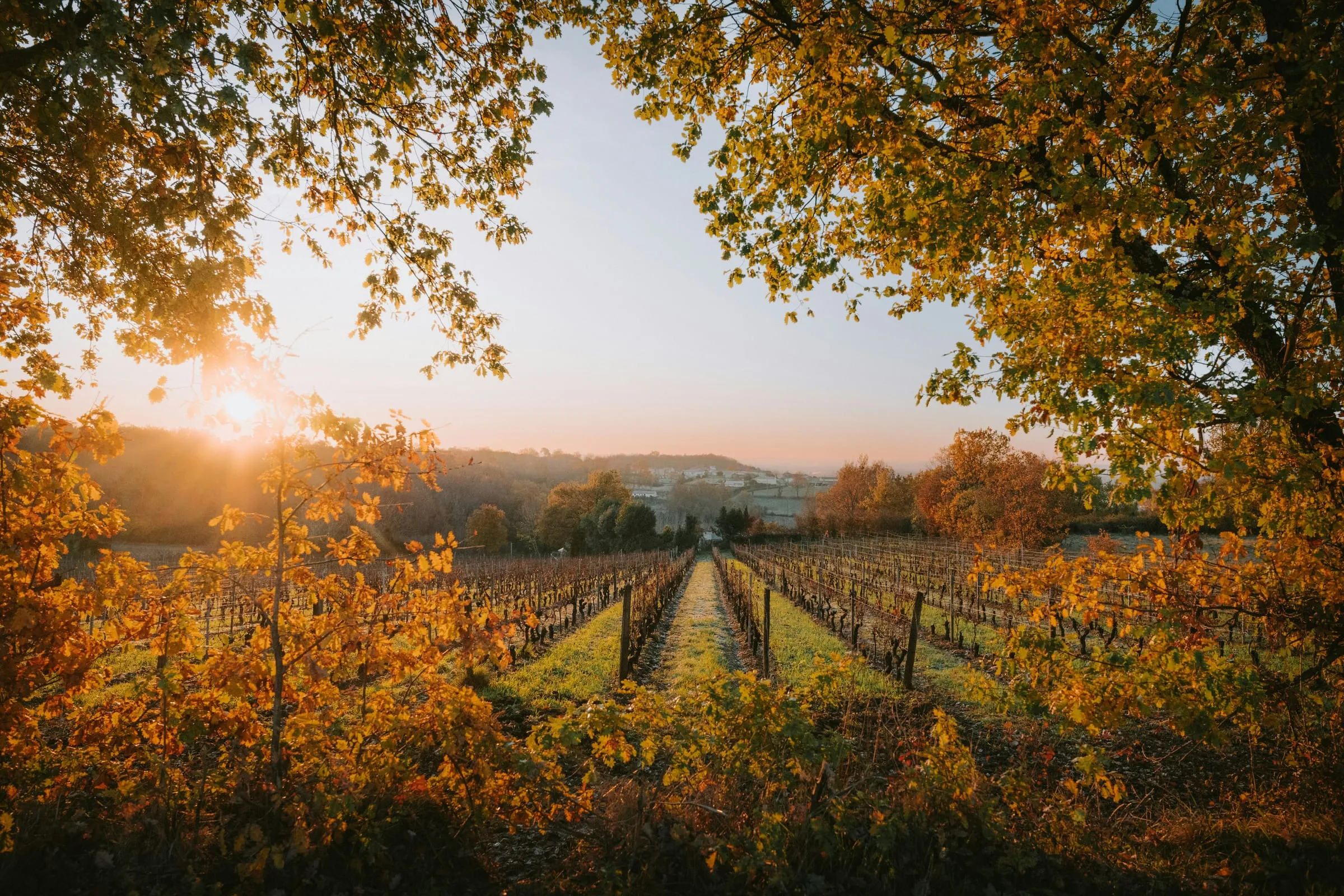
Bordeaux is the city most American wine-interested travelers haven’t quite gotten to yet, and that’s the strategic opportunity. The standard French wine-country mental model tilts toward Burgundy (smaller, harder to navigate, more cult-and-collector-oriented) and Champagne (region-as-day-trip-from-Paris); Bordeaux — the world’s most famous classified-wine region, the largest fine-wine appellation system on earth, the city whose 18th-century stone-fronted UNESCO architecture rivals Paris’s at a fraction of the visitor density — sits one TGV stop from Paris and is genuinely undercovered by U.S. advisor-led travel content. That’s changing fast: the city’s renaissance since 2003 has been real, the Cité du Vin wine-and-civilization museum (opened 2016) is one of Europe’s most distinctive recent cultural openings, and the Garonne River cruise itineraries originating here have grown into one of the strongest specialty-river-cruise programs in Europe alongside the Danube and the Douro.
Done correctly, Bordeaux is the most architecturally complete French city outside Paris — the entire historic center is UNESCO-listed (designated 2007, the largest urban-area UNESCO inscription in Europe at the time), with the Place de la Bourse and its famous Miroir d’eau reflecting pool, the Grand Théâtre, the rebuilt Garonne-quay promenade that transformed the riverside from working port to public space, and a 24-block walkable historic core that compresses 18th-century French elegance into a manageable walking radius. Add the Médoc grands crus a short drive north, Saint-Émilion’s UNESCO-listed medieval village an hour east, Sauternes’ dessert-wine châteaux 45 minutes south, and the oyster-and-pine-forest pleasures of Arcachon an hour west, and Bordeaux earns its reputation as the wine capital that anchors a serious France wine week.
Most clients come to me asking about Bordeaux in three contexts: as the embarkation city of a Garonne river cruise (AmaWaterways, Uniworld, Viking, and Scenic all run Bordeaux-based programs through the surrounding wine regions, typically 7-night sailings), as the front of a France multi-city wine arc (Paris →︎ Bordeaux →︎ optional Provence or Loire continuation, 8 to 11 days), or as a standalone Bordeaux-and-region wine week with day trips into the Médoc, Saint-Émilion, Sauternes, and Arcachon.
Here’s how I think about it.
At a Glance
| Best time to visit | May–June and September–early October. Spring brings the Atlantic-tempered French climate at its most forgiving and the vineyards in their early-summer green. September is the vendanges (grape harvest) in the surrounding wine regions — one of the most distinctive months for visiting if your dates align. Avoid July–August at the wineries themselves (many are closed for staff holiday); avoid mid-November through February for general visits (cold, gray, many vineyard cellars closed to walk-in tours). |
| How long to stay | Two full nights minimum if Bordeaux is a pre- or post-cruise pause, three or four nights for a real city visit, five-plus if you’re combining with serious vineyard-region days (Médoc, Saint-Émilion, Sauternes). |
| How to get there | Bordeaux–Mérignac Airport (BOD) is 12 km west of the city; the Liane 1 tram runs to the city center in 30 minutes for €1.80, or a fixed-rate taxi runs €40 day / €50 night. From Paris — the TGV runs Paris-Montparnasse to Bordeaux Saint-Jean in 2h05m; the train is meaningfully better than flying once you count airports. Direct U.S. service to Bordeaux is limited; most American travelers route through Paris or London-Heathrow with a TGV final leg. |
| Currency / language | Euro. French is official; English is widely spoken at major hotels and Cité du Vin, less so at smaller restaurants and at the wineries themselves where the conversation will more naturally be in French (the major châteaux often have English-speaking guides on request — book the visit ahead and request English when relevant). Bonjour on entering any shop or restaurant is the bare minimum and earns immediate small smiles; skipping it is the fastest way to get the rude-Bordeaux-waiter treatment travelers complain about. |
| One thing most guides won’t tell you | The vineyard-day experience benefits enormously from a private driver. Wine tasting plus driving is a French legal-and-physical hazard you don’t want; group bus tours sacrifice the deep-dive for the headline tour. Hire a car and driver for any day that includes more than one winery visit; the cost difference vs. a rental car is meaningfully smaller than first-time visitors expect, and the experience is fundamentally different. I work with the same drivers consistently across the Bordeaux region — pairing the right driver to your traveler-type and language is part of the discovery call. |
Why I Send Travelers Here
Because Bordeaux, planned correctly, is the most rewarding wine-and-city-and-river trip in France — and one of the genuinely undercovered destinations in U.S. advisor-led travel content. The historic center is the largest urban-area UNESCO inscription in Europe at the time of its 2007 designation; the wine regions (Médoc, Saint-Émilion, Pomerol, Pessac-Léognan, Sauternes) cluster within an hour of the city in every direction; the Cité du Vin wine-and-civilization museum is one of Europe’s most distinctive recent cultural buildings (designed by XTU Architects, opened 2016, with a permanent exhibition that genuinely earns its space and a top-floor wine-tasting room with panoramic city views); and the Garonne River cruise itineraries originating here pair with the Douro cluster as the two great European fortified-and-classical-wine river-cruise origins.
It’s also one of the strongest honeymoon answers I plan in France — a city-and-vineyard-and-architecture week with the kind of slow-pace French wine-country experience that delivers the romantic-France version most travelers think they’re getting from a Provence trip. The Saint-Émilion medieval village (UNESCO-listed since 1999, the only village in France whose entire jurisdiction was inscribed as cultural heritage) anchors the most photogenic of the regional day trips; Les Sources de Caudalie in Pessac-Léognan invented vinothérapie spa treatments in 1999 and remains the international reference point for wine-based spa programs.
I send travelers here as the embarkation city of a Garonne river cruise, as the south-west anchor of a France multi-city arc (Paris →︎ Bordeaux is the high-speed-rail spine of any first-time France-with-wine-country trip), for honeymoons that want the wine-country-and-architecture French week, and for multi-city European wine clients building a Porto →︎ Bordeaux Iberian-and-French wine continuum.
Every recommendation below comes through the lens of how I plan Bordeaux for the clients I send and a clear point of view about which version of the city earns your time.
Where I’d Anchor
Two neighborhoods cover almost any traveler’s reason for being in central Bordeaux:
Triangle d’Or (the historic center). The 24-block walkable historic core bounded by the Cours du Chapeau Rouge, the Cours Clemenceau, and the Cours de l’Intendance — the Golden Triangle of high-end shopping, restaurants, and the city’s flagship hotel. Walking distance to the Place de la Bourse, the Grand Théâtre, and the Cathédrale Saint-André. Stay here on a first visit — almost everything you’ll do in the city itself is within fifteen walking minutes.
Chartrons. The 18th-century wine-merchant district north of the historic core, with restored stone-fronted hôtels particuliers (private mansions) along the Garonne quays, the Sunday Quai des Chartrons antique-and-flea market, and a quieter, more residential feel. Better for a second visit or for travelers who want their Bordeaux to feel less like a tourist set.
There is one Grand Hotel in central Bordeaux with the program. It is the InterContinental Bordeaux - Le Grand Hôtel at 2-5 Place de la Comédie, directly opposite the Grand Théâtre in the heart of the Triangle d’Or. The 18th-century building underwent a complete restoration without losing its original beauty and character; the 130 rooms and suites (85 rooms, 45 suites) feature interiors specially designed by Jacques Garcia — fabrics, upholstery, and carpets created for the hotel as a single 18th-century-inspired aesthetic envelope. The dining program is anchored by Le Pressoir d’Argent by Gordon Ramsay (Michelin-starred, gastronomic, the city’s most-celebrated dining room) plus the casual brasserie Le Bordeaux, Bar l’Orangerie, and a rooftop bar; the Bains de Léa spa on the top floors is a 1,000-square-meter Roman-bath-inspired Guerlain Spa with a panoramic Jacuzzi recreating the atmosphere of Arcachon Bay — literally a beach on the rooftops overlooking the Bordeaux Opera House. The hotel also operates a Wine Concierge Service that arranges private tastings and exclusive access to the grand cru wineries the city is famous for — the kind of in-house specialty resource that solves the vineyard-day planning problem at the source.
On my rate at the property, the amenity layer is real and quiet — calibrated to your dates and the suite category, deepened materially on the higher suite tiers and on longer stays, applicable broadly across the casual brasserie, the rooftop bar, and the Guerlain Spa. Most distinctively: on stays of seven nights or more, the property includes structural transfer support that meaningfully changes the math for slow-week travelers combining the city with a serious vineyard-region program. The specifics get walked through on the discovery call.
A few words about price. Bordeaux at this tier is unapologetically expensive — France’s top regional hotels sit at the very top of the European luxury hotel ladder, and the InterContinental Bordeaux Le Grand Hôtel is the singular flagship property in a city whose surviving 18th-century stone-fronted architecture rivals Paris at one-third the visitor density. For travelers with the budget to plan French wine-country travel the way the region earns to be planned, this is the answer. The discovery call below is where we figure out if that’s you.
Want this stay? Start a discovery call — I’ll pull live availability, walk through the suite categories (the Wine Bar and Prestige tiers add the bottle-of-wine perk, the Royal Suite adds the Champagne), and confirm which amenities apply to your dates. And the small extra at check-in — a welcome note from me, the kind of touch the standard amenity package doesn’t list — is part of how I deliver these stays.
What I’d Do With Three or Four Days
The rhythm shifts at the three-day mark from port-day compression to real immersion. The three-day version is city-anchored with one vineyard day; the four-day version pairs two vineyard days with the Bordeaux core. Either delivers the wine-and-architecture Bordeaux that earns the trip.
Day One — The Triangle d’Or, the Miroir d’eau, and Garonne Arrival
Start early at Place de la Bourse before the river-tour groups arrive — the morning light hits the 18th-century stone façades at the best angle, and the Miroir d’eau (Water Mirror) on a morning cycle is genuinely the photograph. Walk it slowly: the pool fills, reflects, mists, dries, repeats on a 23-minute cycle. Catch one full cycle — most travelers catch the mid-cycle reflection moment and miss the architectural concept the mirror is working with.
Breakfast at one of the Triangle d’Or specialty cafés — % Arabica or Brûlerie Java for third-wave coffee, or the heritage-French Café des Arts. Walk the streets behind the square: the Rue Esprit des Lois, the Cours de l’Intendance (the city’s refined shopping spine), and the small Renaissance courtyards hidden between the facades. This is where you see Bordeaux’s wealth concentrated in stone.
Mid-morning to Cité du Vin — take the Garonne quay walk north along the rebuilt riverfront promenade, past the wine-merchant district’s hôtels particuliers (the 18th-century merchant mansions being restored block by block), to the architecturally distinctive XTU-designed building shaped like a wine decanter. Allow 2.5–3 hours for the permanent exhibition (L’expérience permanente: 6,000 years of wine civilization, interactive, the kind of museum design that earns its architectural presence). The top-floor Le Belvédère wine-tasting room with city views is the included tasting at visit-end.
Lunch back in the Triangle d’Or, deliberately informal — La Brasserie Bordelaise for casual Bordelais (steak frites, oysters, the comfort version) or Fleur de Sel for bistro-serious. Afternoon: slow walk through the Place de la Comédie, the Grand Théâtre (1780, the architectural template for Paris’s Palais Garnier), the hidden courtyards behind the Théâtre, and the small galleries along the streets leading to the Cathédrale Saint-André (the wedding church of Eleanor of Aquitaine, 1137 — the point-of-origin moment for much of Bordeaux’s story).
Sunset at the Schweizerhof embankment or a riverside café. Dinner at La Tupina for the Bordelais classics (foie gras, tournedos Rossini, the architectural menu of the region), or Le Pavillon des Boulevards (1-Michelin, contemporary in a 19th-century townhouse) if you want the refined version.
Day Two — Médoc, Saint-Émilion, or Pessac-Léognan Spa (Pick One)
The wine-region day is the trip’s centerpiece. Pick one region and commit; trying to do two in a day is the version where the wine blurs, the châteaux blur, and you arrive back in the city tired without memory of the experience.
Médoc (the Atlantic-coast left-bank route). Home to the classified grands crus of the 1855 rankings — Châteaux Lafite, Latour, Margaux, Haut-Brion, Mouton Rothschild. The famous five are not casually open to tours (you need a wine-trade reference and advance written permission). Plan instead for two quatrième- or cinquième-cru châteaux — Château Pichon Baron (the dramatic 19th-century château visible from the road, serious Cabernet, excellent tour program), Château Beychevelle (the fairy-tale riverfront estate, similarly accessible), or Château d’Issan (smaller, fewer tourists, genuinely good wines). Pair with a winemakers’ lunch at a regional restaurant — Relais de Margaux or La Grand Maison are the anchors. 8 a.m. departure, 6 p.m. return — the full-day rhythm that earns the experience.
Saint-Émilion (the right-bank Merlot route). An hour east of Bordeaux, the UNESCO-listed medieval village is the most photogenic wine-country day. The monolithic underground church (the largest in Europe, carved from the bedrock, the engineering is the experience — 30 minutes by guided tour). The Sannenzaka and Ruelle du Chapitre (the preserved medieval lanes climbing the hillside), and two château visits in the surrounding Saint-Émilion Grand Cru appellation — Château Arroazes or Château Pavie Macquin for serious visitors, Château Tertre Roteboeuf for a smaller, family-run alternative. Lunch at Hostellerie de Plaisance (1-Michelin, in the village, book ahead). The wine here is softer than Médoc’s Cabinet-dominant grip — Merlot-led, more voluptuous — and serious wine travelers notice the difference immediately.
Pessac-Léognan and Les Sources de Caudalie (the spa-and-dessert-wine route). For travelers who want the wine experience paired with something different. Château Smith Haut Lafitte’s Les Sources de Caudalie is the world-famous wine-based spa (vinothérapie pioneer, book the morning treatment ahead). Lunch at the property’s La Grand’Vigne (2-Michelin, wine-country elegance). Afternoon drive south to Château d’Yquem in the Sauternes region — the only premier cru supérieur in the Sauternes classification, the world-famous sweet-wine benchmark. Appointment-only tours, allow 90 minutes, the wines are expensive and the experience is museum-level serious.
Return to Bordeaux for dinner. The vineyard-day rhythm earns an early-evening meal back in the city; by 9 p.m., the day’s tastings catch up.
Day Three — A Second Vineyard Region, or Slower Bordeaux City
If you have the time and the wine-country appetite: a second region. Médoc and Saint-Émilion are genuinely different — left-bank structure vs. right-bank softness — and serious wine travelers doing both say afterward they’re two different wines entirely.
Slower Bordeaux alternative: Morning at the Musée d’Aquitaine (the honest regional-history museum with strong sections on the wine industry’s 18th-century rise and the colonial-commerce wealth that built the surviving architecture — addressed with historical seriousness). Lunch in Chartrons (the wine-merchant district with the Sunday flea market and the quiet café feel). Afternoon at Marché des Capucins (the historic central market with serious oyster bars, real Bordelaise food at the ringing counters), then back to the water for a final Garonne-quay walk as the light begins to soften.
Day Four (if you have it): A second wine-region day, or Arcachon — the Atlantic Bay an hour west with the Dune du Pilat (Europe’s largest sand dune), the Cap Ferret peninsula oyster bars (one of France’s three great oyster traditions), and the drive back through the pine forests is itself the experience.
By day three (or four), the city and the wine make their own recommendations.
Specific Things I’d Tell You About
The Place de la Bourse Miroir d’eau is the largest reflecting pool in the world. 3,450 square meters of black-granite tile flooring along the Garonne quays, designed by Pierre Gangnet and opened 2006. The pool fills with a thin sheet of water on a 23-minute cycle (water, mist, dry), and the mid-cycle reflection of the 18th-century stone façade behind it is genuinely one of the great urban-photograph images of any French city. Be there for the full cycle — the mist phase is the version most travelers don’t realize is part of the design.
Saint-Émilion’s monolithic church is the largest underground church in Europe. Carved directly from the limestone rock the town sits on, between the 9th and 12th centuries — not built underground, carved underground, with the surviving rock left as the church’s structural columns. Tours include the catacombs below and the Trinity Chapel above. The medieval engineering is the experience; the visit is brief but materially distinctive. 30 minutes, by guided tour only.
The 1855 Bordeaux Classification ranks the Médoc châteaux into five tiers, and it has barely changed since. Napoleon III’s commissioned ranking of the Médoc and Sauternes wines for the 1855 Exposition Universelle in Paris produced a five-tier classification system that — with one promotion in 1973 (Mouton Rothschild from second to first growth) — has remained essentially unchanged for 170 years. The classification dictates pricing and prestige to this day; a premier cru (first growth) bottle from a strong vintage routinely sells for thousands of dollars at auction. Understanding the 1855 system is part of understanding why the Médoc trip is structured the way it is.
Bordeaux’s cannelés are the city’s iconic pastry. Caramelized-on-the-outside, custard-soft-on-the-inside small fluted pastries flavored with rum and vanilla, originally developed in Bordeaux’s convents as a way to use the egg whites that bordelais winemakers used for fining their wines (the yolks went to the convent kitchens). Buy them at Baillardran (the heritage-Bordelais cannelé chain — multiple locations across the city), at La Toque Cuivrée (the heritage competitor), or at any of the small neighborhood pâtisseries. Eat them warm.
Les Sources de Caudalie invented vinothérapie in 1999. The vineyard-spa concept of using grape-vine-based treatments (grape-seed scrubs, wine-cask baths, polyphenol facials) was pioneered at the Cathiard family’s Château Smith Haut Lafitte estate in Pessac-Léognan and has since spread globally — the Caudalie product line (sold worldwide) is the consumer-facing version of the same research, and the on-property spa remains the international reference point for wine-based wellness programs. The day-spa visit is realistic even if you’re not staying at the property.
The Cité du Vin building is shaped like a wine decanter’s swirl. XTU Architects designed the 2016 wine-and-civilization museum building as a deliberately abstract reference to the swirl of wine in a glass — the curving, asymmetric, glass-and-aluminum structure has been variously compared to a decanter stopper, a wine cellar’s twisted columns, and a flowing river. Look at the building from across the Garonne to see the full silhouette; the outside is as much of the architectural experience as the interior exhibition.
What I’d Skip
Trying to visit a premier cru Médoc château without a wine-trade introduction. The famous five first-growth châteaux do not run public tours, and the version of the Médoc day that involves trying to walk up to Château Margaux or Château Lafite is the version that ends with a polite security-gate refusal. Plan visits to quatrième- or cinquième-cru properties, all of which run excellent tour programs — the wine is meaningfully comparable, the access is real, and the experience is the experience. Discovery-call conversation if you have a serious wine-trade contact who could open premier cru doors; otherwise, plan around them.
Restaurants on the Place de la Comédie or near the Grand Théâtre with English-only menus. Same tourist-tax pattern as every European city in this library. Walk three blocks deeper into the Triangle d’Or, into Chartrons, or across the Pont de Pierre into the Bastide quarter on the right bank.
Driving to vineyards yourself if you plan to taste wine. Don’t. French éthylotest (breathalyzer) enforcement is real; the legal limit (0.5 g/L) is meaningfully lower than U.S. limits (0.8 g/L); and the rural wine-region roads are not the place to test your sober-driving navigation. Hire a car and driver for any vineyard day; the cost is worth the freedom to actually taste at the cellars.
Trying to do Bordeaux in a single transit-night between Paris and Provence. The most common avoidable mistake on a France itinerary. Bordeaux earns at minimum two nights, three is better, and four is the right pace for a real city-plus-vineyard week. One transit night skips the trip.
Skipping the right-bank Saint-Émilion side because of “left-bank prestige.” The Médoc has the famous classified châteaux; Saint-Émilion has the photogenic medieval village, the underground church, and a softer-Merlot wine character that travelers visiting both regions almost always describe as the more enjoyable of the two days. Do both if you have the time, or pick Saint-Émilion if you have to pick one.
For Garonne River Cruisers
If your Bordeaux trip is the embarkation or disembarkation city of a Garonne River cruise — AmaWaterways, Uniworld, Viking, Scenic, and CroisiEurope all run Bordeaux-based programs through the Garonne and Dordogne valleys, typically 7-night sailings — the most important call you’ll make is adding a real Bordeaux stay before or after the sailing, not treating the city as a transfer-day pause. The Garonne cruise itineraries sail through Saint-Émilion, Cadillac, Blaye, Bourg, and Pauillac (Médoc) — the cities Bordeaux is famous for — and the version of the cruise that includes 2–3 pre- or post-cruise nights in Bordeaux is the version I plan for clients. One night as the cruise embarkation pause is the most common avoidable mistake on a Garonne itinerary.
The Garonne is meaningfully different from the Danube, the Rhine, or the Douro — a single concentrated wine-region focus, fewer ports per day, more time at the châteaux themselves rather than in city stops, and an exclusively-French itinerary rather than the multi-country European arc. The Bordeaux/Garonne and Porto/Douro pair as the two great European wine-river-cruise origins; serious wine-river-cruise clients often build a year-long arc combining both.
The deeper conversation about Garonne cruise selection — and whether your dates and traveler-fit work for the various operators’ programs — lives on the Rivers & Small Ships specialty page.
For Multi-City France Travelers
Bordeaux is the southwest anchor of a France multi-city arc — the high-speed TGV connects Paris to Bordeaux Saint-Jean station in 2h05m and is the right way to do the city pair. Three nights each is the floor; four is the right pace if you’re folding in a Sintra-equivalent day-trip from each (Versailles or Giverny from Paris, Saint-Émilion or Médoc from Bordeaux).
The classic 8-night France trip: four nights Paris (city plus a Versailles or Giverny day), four nights Bordeaux (city plus two vineyard days). The 11-night version adds three nights in Provence (Aix-en-Provence base with day trips to the Luberon villages, Avignon, the Camargue) — Bordeaux to Marseille is a 6h TGV route through the south of France. The 14-night version adds the Loire Valley (between Paris and Bordeaux, the château circuit) for a complete France-and-wine arc.
If you want me to design the full France multi-city trip — TGV timing, hotel sequencing, vineyard-day driver coordination, the Michelin-restaurant booking calendar — that’s exactly the kind of planning I do. Start a discovery call.
For Honeymooners
Bordeaux is the underrated honeymoon city — the wine-and-architecture-and-spa version of a French honeymoon that delivers the romantic France week without the Paris crowd or the Provence-Riviera price ceiling. Anchor at the InterContinental Bordeaux - Le Grand Hôtel for the Place de la Comédie flagship experience: the Jacques Garcia interiors, the Bains de Léa rooftop spa with the Arcachon-Bay-inspired Jacuzzi panorama, the Wine Concierge Service that turns the vineyard-day from logistics problem into hotel-arranged ritual, and Le Pressoir d’Argent — Gordon Ramsay’s Michelin-starred dining room — three floors below your suite.
The honeymoon evening, in my read, is dinner at Le Pressoir d’Argent (the Gordon Ramsay tasting room, in the hotel itself — book six to eight weeks ahead) followed by a nightcap at the rooftop bar with the lit Grand Théâtre across the square below. The setup does the work — and the next morning, the Wine Concierge has your private vineyard-day driver waiting in the lobby.
If you want me to design the full France-and-wine honeymoon — Bordeaux plus optional Paris plus optional Provence finale plus optional Porto extension for the wine-river-cruise pair — that’s exactly the kind of planning I do. Start a discovery call.
Plan Bordeaux With Me
If you’re thinking about Bordeaux as the embarkation city of a Garonne river cruise, as the southwest anchor of a France multi-city trip, or as the standalone Bordeaux-and-region wine week it deserves to be — that’s exactly the kind of planning I do. A 30-minute discovery call is where it starts. No fee, no pressure. Just the city, your timeline, and what you actually want to feel when you stand at the Place de la Bourse with the Miroir d’eau filling at your feet and the 18th-century stone façade reflecting back at you.
Book Your Free Discovery Call →︎
Last updated: April 2026. I keep this guide current. If a hotel I recommend slips, a restaurant changes hands, or access to a site shifts, the page changes. Travel changes. The work doesn’t stop when the page goes live.
Plan this trip with me.
A 30-minute discovery call is where it starts. No fee, no pressure.
Book a Discovery Call