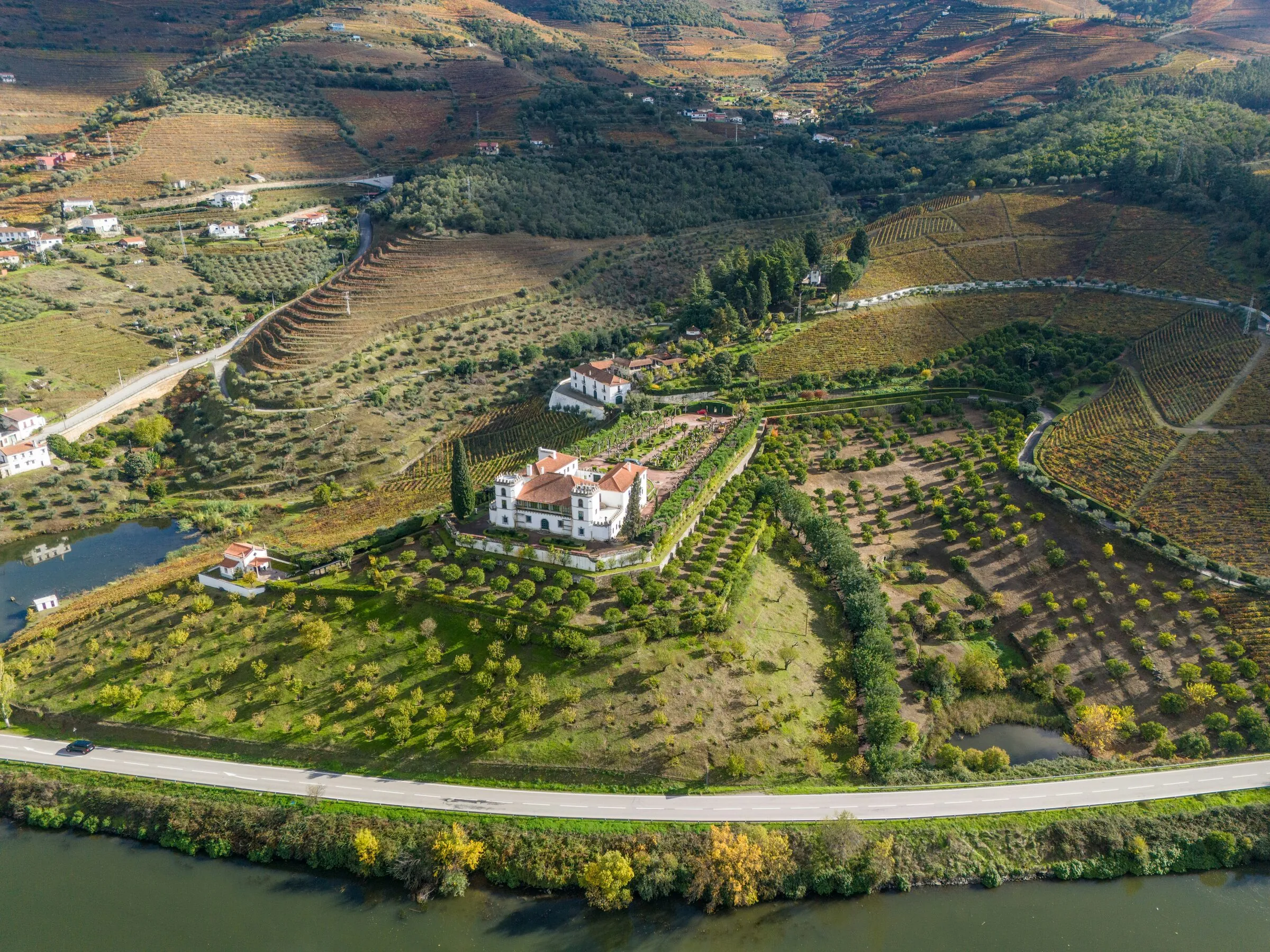
Fall in Wine Country: Douro, Rhône, Burgundy, Piedmont
September and October are harvest season across Europe’s great wine regions, and if you understand that, you understand why autumn is when to visit wine country. The grapes are being picked, crushed, and turned into wine. The vineyards are alive with activity. The restaurants feature menus built around harvest — game, new produce, the flavors of the region at their peak. The light is golden. The crowds have evaporated. This is the season for wine travel.
The Douro Valley, Portugal. The Douro is Portugal’s most famous wine region — Port wine country — and September-October is when the region transforms. You’ll see the harvest: grapes being picked from the terraced vineyards that have been carved into the mountainside. The quintas (wine estates) are open, and at some of the smaller, traditional quintas, you can still see foot-crushing — workers literally stomping grapes to release the juice. It’s ancient and unchanged. The Douro River flows through this region, and a river cruise is the best way to see it. You wake up in a new village each morning, and each village has wineries within walking distance. The wine is phenomenal — the quality-to-price ratio is the best of any major wine region in the world.
The Rhône Valley, France. The Rhône splits into two zones — the Northern Rhône (Côte-Rôtie, Condrieu, Hermitage) and the Southern Rhône (Châteauneuf-du-Pape, Côtes du Rhône, Côtes du Rhône Villages). The Northern Rhône is steeper, more dramatic, more prestigious. The Southern Rhône is broader, more varied, more approachable. A river cruise through the Rhône in September takes you through both. The wine is exceptional — Syrah from the north, Grenache-Syrah blends from the south. The villages are beautiful (Avignon, Arles). The food is southern French (olive oil, tomatoes, herbs, fresh fish). The harvest is happening. This is quintessential European wine travel.
Burgundy, France. Burgundy is smaller and less dramatic than the Rhône, but it’s the most prestigious. Pinot Noir and Chardonnay — the world’s most sought-after grape varieties — come from a narrow strip of land in eastern France. Harvest season in September-October means the vineyards are active, the winemakers are focused, and the region is humming with purpose. Burgundy is best explored by car or small group, not by river cruise, but if you’re in the region (or pairing a Burgundy wine trip with a river cruise elsewhere), September is the month. The landscape is golden. The restaurants are phenomenal. The wine is, objectively, the best in the world — which is why a bottle of good Burgundy costs three times what a comparable Rhône wine costs.
Piedmont, Italy. Piedmont means “foot of the mountain” — it’s the region at the base of the Alps in northwestern Italy. It’s the home of Barolo and Barbaresco, two of the world’s most important red wines, made from the Nebbiolo grape. September-October is harvest season, and it’s also truffle season — white truffles from Alba are the most expensive food item in the world, shaved onto pasta and risotto at roughly $3.50 to $8 per gram (that’s €3,500–4,000 a kilo in a good year). The light in fall Piedmont is extraordinary. The wine is earthy and powerful. The food is rich — butter, cream, meat, mushrooms, truffles. The villages are intimate and medieval. This is not a river cruise region — it’s a car-based exploration — but if you’re planning fall wine travel in Europe, Piedmont is essential.
How to do this well. The river cruise approach works for the Douro and the Rhône — you wake up each morning at a new village, you have access to wineries, you’re moving at the pace of the river, you’re not managing logistics. For Burgundy and Piedmont, you’re better off renting a car or joining a small group wine tour. You need flexibility to explore the small villages and vineyards that don’t appear in cruise itineraries.
What to expect from a wine country cruise. You’ll do wine tastings — usually included in the itinerary — but they’re often at the biggest, most commercialized wineries because they have the infrastructure to handle large groups. It’s not a bad experience, but it’s not the same as visiting a small family winery. The food will be excellent, usually featuring local wines. The pace is slow, which is the whole point. You’re not checking off sights — you’re soaking in atmosphere.
What to bring. Good walking shoes because you’ll be exploring villages. A jacket because September evenings cool down. A willingness to eat rich food — fall harvest food is butter and cream and meat, not light summer fare. And a couple of empty bottles in your suitcase, because you’ll want to bring home wine.
Why fall is better than spring. Spring is when the vineyards look best — green buds, fresh growth, blooming flowers. But spring wine region travel is tourism. Fall wine region travel is witness to something real — the harvest, the work, the transformation of grapes into wine. The tourism is secondary.
The honest thing about harvest season wine travel is that you’re going to taste a lot of wine and eat a lot of food. If that sounds like your idea of perfect, this is for you. If you’re looking to optimize your time or check off activities, this isn’t what you need.
Ready to explore a wine region during harvest? Tell me which region calls to you and how you want to experience it — cruise, road trip, small group — and let’s design it.
Plan your trip with me.
A 30-minute discovery call is where it starts. No fee, no pressure.
Book a Discovery Call