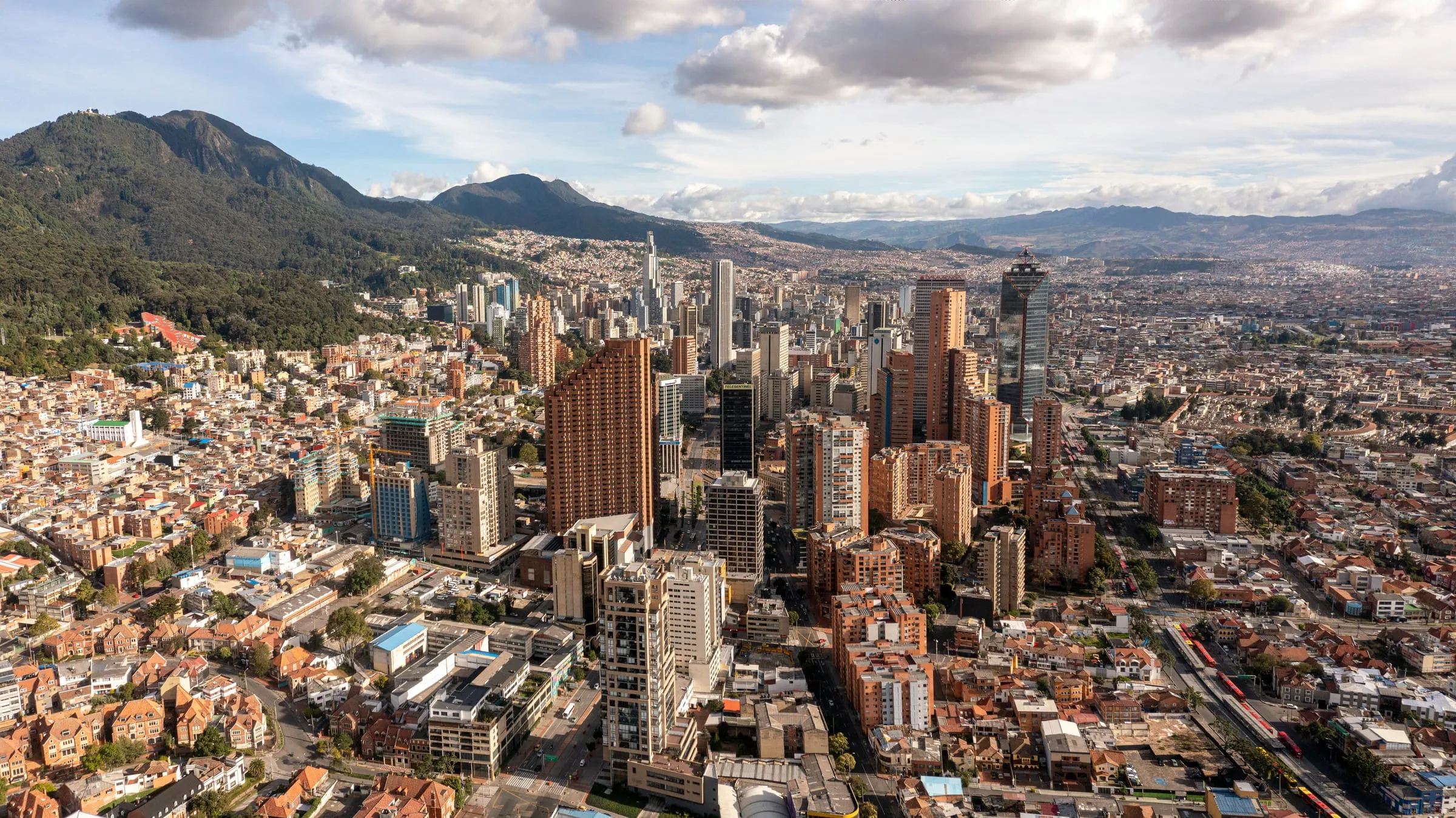
Bogotá is the city most American travelers underrate before they arrive and overcorrect about afterward. The pre-trip mental model — high-altitude, dense, security-conscious, the not the fun part of Colombia version — is a 15-to-20-year-old picture, and it persists in U.S. travel media long past its expiration date. The contemporary Bogotá that visitors encounter is a different city: the Museo del Oro (Gold Museum) is one of the great single-collection museums in the Western Hemisphere, with over 55,000 pieces of pre-Columbian gold work and the world’s most important collection of tumbaga and Muisca-civilization metalwork; the Botero Museum holds the largest collection of Fernando Botero’s own work in the world (208 pieces, donated by the artist himself, free admission); the La Candelaria historic quarter is one of the most architecturally complete Spanish-colonial old towns in South America; and the Zona G (gourmet zone) restaurant scene is one of the strongest in Latin America, with multiple Latin-50-Best restaurants and a generation of chefs working with Andean ingredients in genuinely innovative ways.
Done correctly, Bogotá is the cultural-depth anchor for a serious Colombia trip — it’s not the fun part of Colombia; it’s the part that makes the rest of Colombia legible. The Gold Museum and the Botero Museum alone justify the trip; the Monserrate funicular up to the 3,152-meter peak with the city laid out beneath you is one of the great urban panoramas in South America; and the food and coffee culture in Zona G and Usaquén delivers the contemporary version of a Latin-American capital that the Caribbean coast and the eternal-spring Medellín climate don’t.
Most clients come to me asking about Bogotá in three contexts: as the Andean middle of a multi-city Colombia trip (Cartagena →︎ Bogotá →︎ Medellín, the spine-of-Colombia arc, three nights here), as a standalone Bogotá-and-region visit (rare, sophisticated, the version with day trips to Zipaquirá’s salt cathedral or the Coffee Triangle), or as a transit pause between international flights and onward connections (Bogotá’s Avianca hub status makes it the major Colombian airport for U.S.-South-America connections, and a 1-night layover converts to a 2-night cultural visit easily).
Here’s how I think about it.
At a Glance
| Best time to visit | December–March for the dry season — Bogotá’s altitude (2,640 meters above sea level) means the climate runs cool year-round (12–20°C / 54–68°F daily), with the dry season offering more reliably sunny mornings. Avoid April and October–November unless you don’t mind afternoon rain showers. The city has no real “summer” or “winter” — it’s eternal-spring at altitude, just with wetter and drier windows. |
| How long to stay | Two full nights minimum for the major cultural sites (Gold Museum + Botero Museum + La Candelaria walking + Monserrate); three nights is the right length for a real Bogotá visit including a Zipaquirá salt cathedral or Andean-mountain day trip; four-plus for travelers including a Coffee Triangle extension. |
| How to get there | El Dorado International Airport (BOG) is 15 km west of the city center; Bogotá is one of the major Latin American hubs for Avianca with extensive direct U.S. connections (Miami, Atlanta, JFK, IAH, LAX, MCO). From Cartagena — domestic flight, 1h30m. From Medellín — domestic flight, 1h. Plan a day for altitude adjustment if your itinerary includes hiking or strenuous activities — 2,640 meters is high enough to affect cardiovascular performance for the first 24-36 hours. |
| Currency / language | Colombian peso (COP). The dollar is widely accepted at major hotels but you’ll get materially better value paying in pesos; ATMs throughout central and northern Bogotá are reliable. Spanish is essential — meaningfully more so than in Cartagena, where the cruise tourist economy supports more English. Google Translate’s camera function handles menu work well; basic Buenos días, gracias, cuánto cuesta go a long way. |
| One thing most guides won’t tell you | Bogotá’s altitude takes 24-36 hours to adjust to. Don’t schedule strenuous activity, alcohol-heavy dinners, or the Monserrate climb on your arrival day. The first night is for resting, hydrating, and a light dinner. The second day is when the city opens up. Travelers who skip the altitude buffer day routinely report feeling worse than they expected on day two; travelers who plan around the altitude almost universally feel fine by morning of day three. |
Why I Send Travelers Here
Because Bogotá, planned correctly, is the cultural-depth anchor for any serious Colombia trip — and the city most travelers underestimate before arriving. The Museo del Oro is one of the great collection museums in the Western Hemisphere; the Museo Botero holds 208 works donated by the artist personally and is genuinely one of the strongest single-artist museum collections in Latin America; the La Candelaria historic quarter has more surviving 16th-and-17th-century Spanish colonial architecture than Cartagena’s more famous walled city; and the food culture is the most innovative in Colombia by a wide margin — the Latin America’s 50 Best Restaurants list reliably places multiple Bogotá rooms in the regional top 20.
It’s the Andean middle of the Cartagena →︎ Bogotá →︎ Medellín Colombia spine — and the leg most travelers compress to two nights and regret. Three nights is the floor; the city earns the time it asks for. Bogotá is also the natural launching point for Coffee Triangle extensions (Salento, Manizales, Armenia — the UNESCO-listed coffee-cultural-landscape) and for Zipaquirá day trips (the salt cathedral, 50 km north, an hour’s drive).
I send travelers here as the cultural-depth pause between Cartagena’s Caribbean-coast colonial and Medellín’s eternal-spring urban-innovation register, for honeymoons that want a Latin-American honeymoon with serious cultural-content layering, and for multi-city Colombia clients who understand that a real Colombia trip needs the Andean leg.
Every recommendation below comes through the lens of how I plan Bogotá for the clients I send and a clear point of view about which version of the city earns your time.
Where I’d Anchor
Two anchoring patterns cover almost any traveler’s reason for being in Bogotá:
Zona G & Chapinero (north-central Bogotá). The “Gourmet Zone” running through the Chapinero district — the densest restaurant cluster in the city, with most of the major luxury hotels concentrated within a six-block radius. Stay here on a first visit — the restaurant scene, the boutique shopping, and the easy Uber-or-taxi access to La Candelaria and the museums make it the right base for the standard Bogotá trip.
La Candelaria (historic center). The 1538-founded colonial Old Town in central Bogotá — surviving 16th-and-17th-century Spanish architecture, the museums (Gold Museum, Botero, the National Museum, the Banco de la República cultural complex), the Plaza de Bolívar, and the bohemian-and-academic ambiance the contemporary university crowd brings. Better for a second visit or for travelers who want to wake up in the historic core. Smaller boutique-hotel inventory; the safety perception around La Candelaria has improved substantially in the past decade but the after-dark walking is still less casual than in northern Bogotá.
For Bogotá hotels, the city’s hotel program inventory is meaningfully smaller than Cartagena — the major luxury properties I work with for Bogotá include Four Seasons Bogotá Casa Medina (heritage-mansion property in the Zona G, the heritage-luxury pick), Four Seasons Bogotá (the modern flagship in the Zona Rosa, with floor-to-ceiling-windows views across the city), Sofitel Bogotá Victoria Regia (the elegant Centro Internacional alternative), and The Click Clack Hotel (design-forward boutique in the Zona G, the hipper-modern pick). Specific amenity packages and current promotions vary by property and dates — pairing the right Bogotá property to the right traveler is the discovery-call conversation, since the program here is materially less standardized than the Cartagena hotel inventory.
Want help selecting a Bogotá hotel? Start a discovery call — I’ll walk through the property options, confirm current program inclusions, and pair the right room to your trip. And the small extra at check-in — a welcome note from me, the kind of touch the standard amenity package doesn’t list — is part of how I deliver these stays.
What I’d Do With Three Days
The three-day version respects altitude adjustment and the city’s two distinct centers (La Candelaria for the cultural sites, Zona G/Usaquén for restaurants and contemporary life).
Day One — Arrival, Slow Pace, La Candelaria Light
Don’t push the first day. Arrive into BOG in the morning if possible, check into the hotel, take 90 minutes to acclimatize, and start with a light afternoon walk through La Candelaria — the visit, not the deep-dive. Walk Plaza de Bolívar (the central square, anchored by the Catedral Primada, the Capitol, and the Palacio de Justicia), the Calle del Embudo (the funnel-narrow medieval alley off Plaza Chorro de Quevedo, where the city was founded in 1538), and the Casa Museo Quinta de Bolívar (Simón Bolívar’s residence-and-now-museum, the relic-and-period-furniture version of the Liberation hero’s house).
Have an early dinner — somewhere relaxed, with light Andean cuisine that respects altitude-adjustment dietary advice (don’t pile up on heavy meat or alcohol the first night). Mistura Restaurante in the Zona G is a strong contemporary-Andean option; Andrés Carne de Res in Chía (the iconic cosmopolitan-Colombian dinner-and-show institution) is for travelers who want the higher-energy Bogotá version on day two or three rather than night one. Bed early; the altitude does the rest.
Day Two — The Museums and Monserrate
Coffee at the hotel and breakfast slowly. Mid-morning, taxi to Museo del Oro (Gold Museum) at the Banco de la República cultural complex — one of the great collection museums in the Western Hemisphere. Allow at least 2.5 hours. The collection covers pre-Columbian goldwork from across Colombia, with the Muisca civilization Salt-and-Gold Room, the El Dorado raft (the small votive piece that anchors the entire myth-of-El-Dorado historical narrative), and the room-by-room cultural-context exhibition that earns the museum’s international reputation.
Lunch nearby in central Bogotá — Casa Vieja (heritage Colombian ajiaco house, the iconic Andean three-potato chicken stew) or La Puerta Falsa (the 200-year-old in-business casual tamales and hot-chocolate-with-cheese spot, around the corner from Plaza de Bolívar — Anthony Bourdain ate here).
Afternoon at the Museo Botero in the Banco de la República complex — the 208 works the artist donated personally, plus a curated selection of European modernist works (Picasso, Dalí, Monet, Renoir, Chagall) from Botero’s personal collection. Free admission. Allow 90 minutes. The collection is large enough that you’ll start recognizing the Botero visual language by the time you leave; this prepares you for Medellín, where the Botero Plaza outdoor sculpture installation is the city’s central monument.
Late afternoon: Monserrate funicular. The cable car or funicular up to the 3,152-meter peak with the Monserrate Sanctuary at the top and the panoramic Bogotá-laid-out-beneath-you view. Go for sunset — the city lights coming up beneath the peak is one of the iconic Bogotá hours. Allow 90 minutes round trip; pack layers (the peak is meaningfully colder than the city below).
Dinner back in the city. Leo Restaurant (Chef Leonor Espinosa’s Latin-50-Best dining room, one of the most culturally serious tasting rooms in South America), El Chato (modern Andean tasting menu, Latin-50-Best alumni), or Mini-Mal (casual contemporary Andean — the tasting room of the same chef behind some of the city’s serious cooking).
Day Three — Usaquén, Zipaquirá, or a Slower City Day
Three options:
Zipaquirá Salt Cathedral. A day trip to the Catedral de Sal at Zipaquirá, 50 km north of Bogotá. The cathedral is built into a working salt mine — a 200-meter-deep underground cathedral cut into salt rock, with three naves, fourteen Stations of the Cross illuminated in colored light, and the kind of only-in-Colombia engineering-and-religious-architecture combination most travelers have never heard of. Half-day excursion with private driver; full day if combined with Andean countryside lunch.
Usaquén. The northern-Bogotá historic-village-now-absorbed-into-the-city quarter — Sunday flea market (Mercado de las Pulgas in the Plazoleta de Usaquén, every Sunday, the best Bogotá Sunday hour), restored colonial architecture, the boutique design-and-art shops, and dinner at one of the small restaurants tucked into the historic streets. A slow-walking afternoon with shopping and sunset cocktails.
A slower city day. Morning at the Museo Nacional de Colombia (the national museum, 23,000 pieces, in a former 19th-century prison building), lunch in Chapinero, afternoon at the Botanical Garden or in one of the smaller museums (Museo del Banco de la República, Museo de Bogotá, Casa de Moneda), dinner at a chef’s-counter spot you’ve been wanting to try.
By day three, Bogotá makes its own recommendations.
Specific Things I’d Tell You About
The Museo del Oro is one of the great collection museums in the Western Hemisphere. Over 55,000 pieces of pre-Columbian goldwork; the Muisca civilization material (the indigenous people whose offerings to Lake Guatavita inspired the El Dorado myth); the El Dorado raft itself (the small votive piece, 19.5 cm long, depicting the gilded chief on a ceremonial raft — the literal physical object that anchors centuries of European obsession with American gold); and a contemporary curatorial program that genuinely earns the museum’s international standing. Allow 2.5 hours minimum. This is the museum that justifies the Bogotá trip.
The Botero Museum is free and holds 208 of the artist’s own works. Fernando Botero — Colombia’s most internationally recognized 20th-century artist (born 1932 in Medellín, died 2023, lived in Paris, Pietrasanta, and New York) — donated the 208-work collection to Bogotá personally, with the explicit condition that admission would be permanently free. The collection covers Botero’s signature gordos (the rotund figures that defined his visual language) plus a remarkable curated selection of European modernist works from his personal collection (Picasso, Dalí, Monet, Renoir, Chagall). Free, 90 minutes, in the Banco de la República cultural complex two blocks from the Gold Museum. The two museums together are a 5-hour cultural day that ranks among the best museum-doublings in Latin America.
Bogotá’s altitude is 2,640 meters and it does affect arrival travelers. This is high enough to noticeably impact cardiovascular performance for the first 24-36 hours. Don’t push the first day; hydrate aggressively; skip alcohol the first night; eat lighter than usual. The city flattens by morning of day three for almost everyone. The travelers who feel worst on day two are the ones who scheduled the Monserrate climb and a tasting-menu dinner the night they landed.
Zipaquirá Salt Cathedral is a 200-meter-deep cathedral cut into a working salt mine. Built originally in 1954 by miners who carved a sanctuary into one of the underground tunnels, expanded into the contemporary three-nave cathedral with fourteen Stations of the Cross in 1995. The architecture is the experience — the colored lights, the salt-textured walls, the underground acoustics. Most international travelers have never heard of it; once you’ve seen the pictures, the day-trip-from-Bogotá decision makes itself.
La Puerta Falsa has been serving the same menu for 200 years. Founded 1816 (eight years before Colombia became independent from Spain), the small tamales and chocolate completo (hot chocolate served with cheese, traditional bread, and a sweet) restaurant is around the corner from Plaza de Bolívar in La Candelaria, has approximately 12 small tables, and serves what’s been described as the most consistent meal in Colombia. The hot-chocolate-with-cheese tradition — you melt the cheese into the chocolate — is genuinely one of the country’s most distinctive culinary moments. Anthony Bourdain ate here. You should too.
Leonor Espinosa’s Leo Restaurant is one of the most serious tasting rooms in Latin America. Chef Espinosa works with Indigenous and Afro-Colombian ingredients and culinary traditions, sourcing directly from rural communities, and the menu changes seasonally to reflect what those communities are harvesting. The restaurant has appeared multiple times on the Latin America’s 50 Best Restaurants list; Espinosa was named the World’s Best Female Chef by the same organization in 2022. Reservations are essential and book months ahead for tasting-menu slots.
What I’d Skip
Restaurants on the Plaza de Bolívar with English menus and pushy hosts. Same tourist-tax pattern as every European city in this library. Walk three blocks deeper into La Candelaria, or take a taxi to the Zona G for a real meal.
The “Pablo Escobar” / narco-history tours. I won’t sell these — see the Cartagena and Medellín guides for the same framing. The contemporary Colombian tourism establishment is actively trying to redirect international visitor interest away from this category, and the more rewarding version of Bogotá’s late-20th-century-history conversation is the constitutional-and-urban-renewal arc — Bogotá’s TransMilenio bus rapid transit (the model copied across Latin America), Mayor Antanas Mockus’s civic-experimentation period (the famous “mime traffic enforcement” project that became a global urban-planning case study), and the deliberate post-1991-constitution civic-recovery work. Discovery-call conversation if you have specific interest.
Driving anywhere in central Bogotá. Traffic is genuinely punishing, parking is difficult, and Uber, taxis, and the TransMilenio rapid-bus system cover everything. Hire a car and driver only for the Zipaquirá salt cathedral or a Coffee Triangle airport-and-onward day; don’t rent.
Trying to do La Candelaria after dark unaccompanied. The historic center is meaningfully safer than its 2005 reputation suggests, and the major museum-and-restaurant strip is fine for daytime walking. The after-dark walking experience is still less casual than Zona G or Usaquén, and most clients prefer to either eat in the historic center early and taxi back to the hotel, or to skip La Candelaria evening dinners entirely. Stay in the Zona G, eat in the Zona G, and the question doesn’t arise.
Skipping altitude adjustment. If your trip schedules Bogotá →︎ Medellín or Bogotá →︎ Cartagena flights at 6 a.m. on day two of arrival, you’ve designed in the altitude problem. Plan a buffer day.
For Multi-City Colombia Travelers
Bogotá is the Andean middle of the Cartagena →︎ Bogotá →︎ Medellín Colombia spine — and the leg most travelers compress to two nights and regret. Three nights is the floor; four is the right pace if you want to fold in either the Zipaquirá salt cathedral or a Coffee Triangle preview day.
The classic 9-night Colombia trip: three nights Cartagena (Caribbean colonial), three nights Bogotá (Andean cultural depth), three nights Medellín (eternal-spring urban innovation). The 11-night version adds two nights in the Coffee Triangle (between Bogotá and Medellín — UNESCO-listed coffee-cultural-landscape with traditional fincas) or two beach-day nights on the Caribbean coast.
Bogotá is also the major Colombian airport hub for international connections. Travelers flying Bogotá →︎ Lima, Bogotá →︎ Quito, Bogotá →︎ Buenos Aires for longer South American arcs use it as the natural pivot. If you want me to design the full multi-country South American trip — Colombia plus Peru plus Ecuador, or Colombia plus Argentina, or Colombia plus the Galápagos — that’s exactly the kind of planning I do. Start a discovery call.
For Honeymooners
Bogotá is the cultural-depth half of a Latin-American honeymoon — the Andean-altitude pause between Cartagena’s Caribbean colonial and Medellín’s eternal-spring climate, with the museums, the Monserrate sunset, the serious-restaurant scene, and the kind of slow-pace cultural week most honeymoons benefit from. Anchor at the Four Seasons Bogotá Casa Medina for the heritage-mansion experience (a 1946 Casa Medina building converted into the Four Seasons heritage flagship, with the city’s most distinctive courtyard restaurant and one of Bogotá’s quietest evening-walks neighborhoods).
The honeymoon evening, in my read, is dinner at Leo (Chef Leonor Espinosa’s tasting room, the deep-Andean-Indigenous-Afro-Colombian ingredients) followed by the Monserrate funicular up after dinner — the city laid out beneath you with the Andes behind, the cathedral lit up at night. The setup does the work.
If you want me to design the full Latin American honeymoon — Bogotá plus Cartagena plus optional Medellín plus optional Coffee Triangle finale — that’s exactly the kind of planning I do. Start a discovery call.
Plan Bogotá With Me
If you’re thinking about Bogotá as the Andean middle of a multi-city Colombia trip, as a standalone Bogotá-and-region cultural week, or as the launching point for a longer South American arc — that’s exactly the kind of planning I do. A 30-minute discovery call is where it starts. No fee, no pressure. Just the city, your timeline, and what you actually want to feel when you stand at the top of Monserrate at sunset and watch the lights come up across the Andean basin beneath you.
Book Your Free Discovery Call →︎
Last updated: April 2026. I keep this guide current. If a hotel I recommend slips, a restaurant changes hands, or access to a site shifts, the page changes. Travel changes. The work doesn’t stop when the page goes live.
Plan this trip with me.
A 30-minute discovery call is where it starts. No fee, no pressure.
Book a Discovery Call