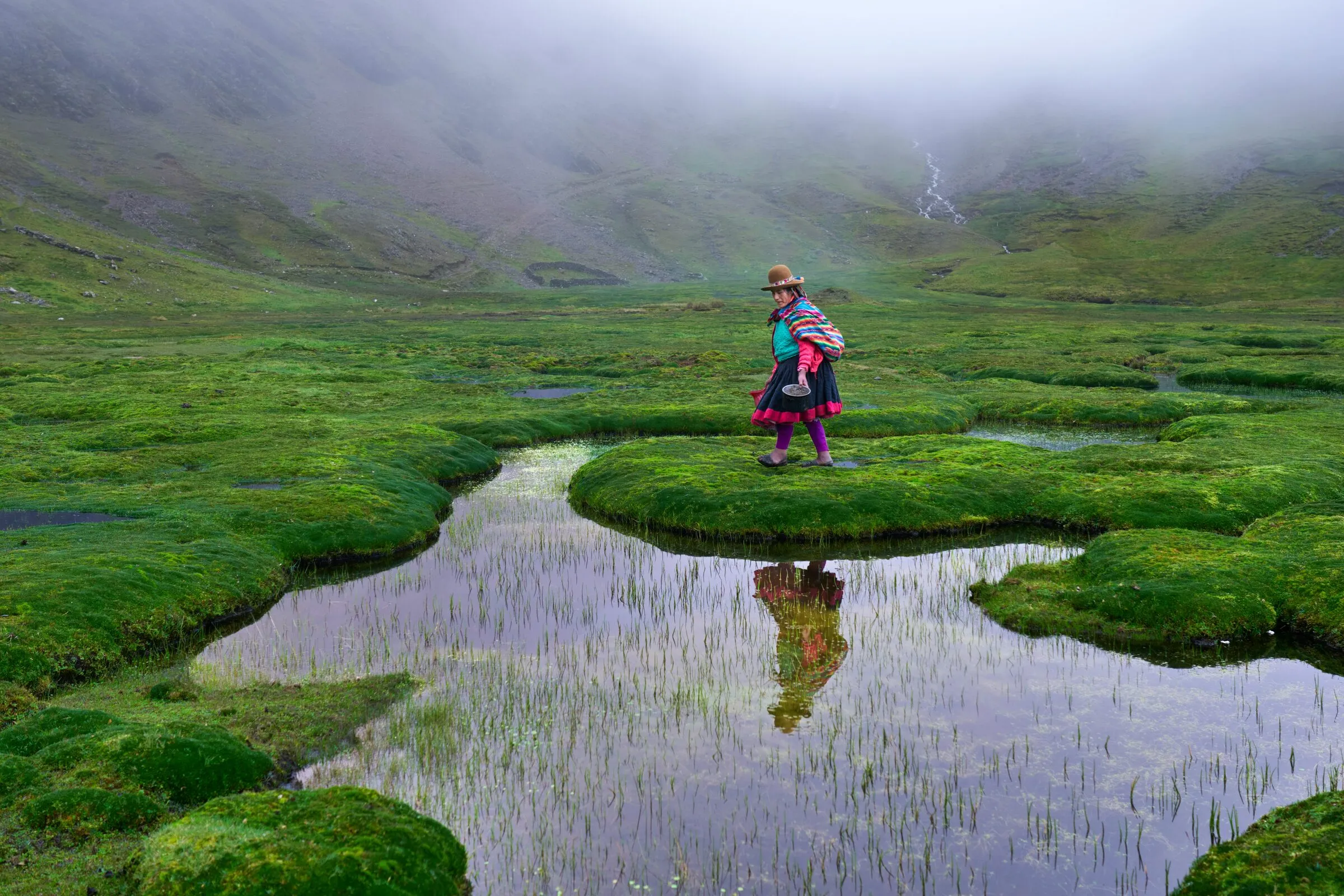
Most people plan Peru halfway. They book the flights and the Machu Picchu train and spend the rest of the research time on the wrong questions — which hotel in Aguas Calientes, which tour company for the Inca Trail. The result is a trip that delivers the photograph and misses the depth.
Done correctly, Peru is one of the richest destination combinations available to a North American traveler: a coastal capital with a legitimate claim on the world’s best food scene, a mountain circuit that contextualizes the most sophisticated pre-Columbian civilization in the Americas, and a river cruise departure point for the Amazon that most advisors treat as an entirely separate trip category — but that fits naturally into the same two weeks if you know how to sequence it.
The half-planned version gives you Machu Picchu. The full version gives you Peru.
At a Glance
| Best time to visit | May–September (dry season) for the Inca circuit and Machu Picchu — clearest views, most reliable hiking conditions; October–April has lush green Sacred Valley and fewer visitors, but afternoon rain on the ruins is common. Lima is year-round; the coastal climate is mild and the food scene doesn’t close for weather |
| How long to stay | Ten days minimum for Lima + Sacred Valley + Machu Picchu done properly; fourteen to eighteen days for the version that adds the Amazon river cruise (the trip I’d recommend building toward) |
| How to get there | Lima’s Jorge Chávez International Airport (LIM) is the entry point — direct flights from Miami, Atlanta, Houston, Dallas, New York, and Los Angeles; Cusco is a domestic connection from Lima (roughly 1h15m), not a direct international arrival |
| Altitude | Cusco sits at 3,400 meters — high enough to meaningfully affect cardiovascular performance. The strategy: arrive in Cusco, spend the first night only, and base yourself in the Sacred Valley (2,000–2,800m) for the first two nights. Your body acclimatizes down there; Machu Picchu at 2,400m is then comfortable; you return to Cusco for exploration only after the adjustment window. This sequencing is arguably the single most impactful planning decision on a Peru trip |
| Currency | Peruvian sol (PEN). Major hotels accept dollars; restaurants and markets work better in soles. ATMs in Miraflores and Cusco’s centro are reliable |
| One thing most guides won’t tell you | The altitude strategy above is the difference between a Sacred Valley trip and a trip where you spend the first two days in Cusco feeling headachy and slow. Most package itineraries land you in Cusco and give you the afternoon to “acclimatize” — which means you push through the worst altitude window rather than sleeping below it. Plan the Sacred Valley first. Cusco second. Machu Picchu as the climax. |
Why I Send Travelers Here
Because Peru is the destination that consistently produces the kind of trip people describe for years afterward — and it’s still under-planned by most of the advisors who book it.
Lima’s food scene is one of the great contemporary culinary arguments: Central, Maido, and Kjolle consistently place in the top twenty restaurants worldwide; the ceviche at La Mar is the category-defining version; the Barranco arts district in the evening is what happens when a coastal city figures out what it actually wants to be. Most clients arrive in Lima thinking it’s the transit hub before the real trip. They leave planning a return to Lima specifically.
The Inca circuit — the Sacred Valley, Ollantaytambo, Machu Picchu — is one of the great archaeological sequences in the world. Not for the photographs, though the photographs are extraordinary. For the comprehension: the scale of what the Inca built, the engineering logic of the terracing at Pisac and Moray, the stones at Sacsayhuamán that moved from quarries forty kilometers away with no wheel and no iron, the view from the Sun Gate above Machu Picchu when the cloud burns off at mid-morning. You understand something there that the textbooks didn’t transmit.
And then there’s the Amazon. Aqua Expeditions runs expedition programs out of Iquitos — a flight from Lima — on boutique vessels that carry twenty passengers maximum into reserve tributaries the big ships can’t reach. Most advisors treat the Amazon as a separate South America trip. I build it into the Peru sequence, because the contrast between the high-Andes civilization and the lowland rainforest ecosystem — within the same country, within the same two weeks — is the kind of juxtaposition that makes both places more comprehensible, not less.
The full Peru trip is a fourteen-to-eighteen-day experience. It’s also one of the most logistically satisfying builds I do — the pieces fit.
Where I’d Anchor
Lima — Miraflores
For a first visit, anchor in Miraflores — the Pacific-cliff neighborhood with the best hotel concentration, the safest street-level navigation, the Larcomar mall on the cliff edge, and the malecón walking path above the ocean that runs between neighborhoods. It’s walkable in a way that central Lima isn’t, and it puts you within ten minutes (by Uber) of the Larco Museum and thirty minutes from Barranco.
Barranco is where you go for dinner, not where you sleep on a first trip. The bohemian arts-district neighborhood south of Miraflores has the restaurant-and-bar culture that’s generating Lima’s contemporary food energy — it’s the city’s right answer to “where do the locals go.”
The property I’d put in front of most clients: Miraflores Park Belmond — an all-suite property on the cliff edge above the Pacific, with the kind of location that reminds you every morning why you chose Miraflores. The program includes daily full buffet breakfast at the Observatory Restaurant, a food-and-beverage credit toward dinner or cocktails, and access to pisco sour masterclasses and chef-guided market tours that turn the Lima arrival days into something more than orientation. The early check-in and late checkout flexibility matters when you’re syncing with the overnight Cusco connection. The specifics of what’s included in the program — and which suite orientation earns the ocean view worth having — is the discovery-call conversation.
Sacred Valley — before Cusco
Sleep in the Sacred Valley the first two nights after arriving from Lima. The valley sits between 2,000 and 2,800 meters — below the altitude threshold where most travelers feel effects — and the hotel properties here are some of the strongest in Peru.
Explora Valle Sagrado is the property I reach for first: an all-inclusive adventure-architecture stay where the room rate covers accommodation, all meals and beverages, round-trip transfers, and access to more than forty exclusive guided explorations of the valley and surrounding highlands — Inca sites, artisan workshops, highland communities, routes that aren’t on any public trail map. The model means you don’t spend the first two days figuring out the valley; you spend them moving through it with guides who know it specifically. There’s a massage included per stay. The intellectual seriousness of the exploration program is the differentiator — the property is built around what the guest learns, not just what the guest photographs.
For the traveler who wants a more atmospheric property at a slightly more intimate scale: Belmond Rio Sagrado in Urubamba (a small luxury property on the Urubamba River, the kind of place that makes the Sacred Valley feel like the destination rather than the transit) and Inkaterra Hacienda Urubamba (the garden-and-cloud-forest property that earns its reputation for exactly the kind of slow, Valle Sagrado pace you want after the Lima intensity) are the two alternatives I’d put in front of you, depending on who’s traveling and what you want from those first two days.
Aguas Calientes — brief, strategic
You stay in Aguas Calientes exactly one night — the night before the early-morning Machu Picchu visit — and then you leave. The town exists to service Machu Picchu arrivals and it executes that function competently. It is not a destination. The right hotel here is the cleanest, quietest option closest to the bus terminal. The meal you need is a solid pre-dawn breakfast before the 5am bus. Beyond that, Aguas Calientes is logistics.
The exception: Belmond Sanctuary Lodge sits directly at the entrance to Machu Picchu — the only hotel at the site itself. For travelers for whom the luxury of arriving at the ruins before the day-trip crowds is worth the cost premium, this is the conversation. Sanctuary Lodge guests can walk to the entrance in three minutes at 6am while the bus queue is still forming. That access is genuinely different from anything else available at Machu Picchu.
Cusco — after the valley
After Machu Picchu, return to Cusco for two nights of the city at altitude — by then, you’ve spent three or four days in the Sacred Valley and the adjustment is done. Two properties anchor the Cusco conversation:
Belmond Monasterio — a converted 16th-century seminary on the Plaza de Armas, with one of the most remarkable courtyard architectural environments in South America. The detail most guests remember first: the guestrooms are oxygen-enriched overnight, which takes meaningful edge off the 3,400-meter altitude while you sleep. The property includes a food-and-beverage credit and daily breakfast; the colonial art collection lining the corridors is the kind of museum you happen to sleep inside. For travelers who want to be at the center of Cusco — steps from the cathedral, steps from the plaza, inside a building that predates most of what’s around it — Monasterio is the answer.
Palacio del Inka, a Luxury Collection Hotel — directly across from the Qorikancha (the Temple of the Sun, the most sacred Inca structure in Cusco), in a position that puts Inca stonework in your sightline from the entrance. The program includes a hotel credit applicable toward the spa, the Rumi Bar, or certain cultural experiences; roundtrip airport transfers are included. For travelers who want slightly more residential quiet than the Monasterio’s plaza-facing position provides, or who want the Qorikancha directly in view, Palacio del Inka is where the conversation goes instead.
Full program details, room category specifics, and the property match to your travel style — that’s the discovery call.
What I’d Do With Ten Days
The ten-day structure covers Lima + Sacred Valley + Machu Picchu + Cusco without the Amazon add. The fourteen-to-eighteen-day structure folds in Iquitos and the Amazon river cruise — see the extension section.
Days 1–2 — Lima
Arrive at Jorge Chávez. Transfer to Miraflores (45 minutes, depending on traffic). Check in and rest.
Day 1: The Larco Museum in the afternoon — Museo Larco on Avenida Bolívar in the Pueblo Libre district is a 17th-century viceregal mansion housing Peru’s most comprehensive private pre-Columbian collection: 45,000 pieces, the gold-and-silver vault, and the erotic pottery collection that the museum has the institutional composure to display in scholarly context. It’s one of the great afternoon museums in South America. Allow two hours. Dinner in Barranco — Central if you’ve booked months ahead and want the full Virgilio Martínez tasting menu experience (altitude-by-altitude Andean ingredients, ranked consistently in the world top five); La Mar in Miraflores if you want the definitive Lima ceviche in a room that’s animated rather than hushed.
Day 2: Slow morning on the Miraflores malecón — the cliff-edge walking path above the Pacific, with paragliders launching from the cliffs and the ocean below and Lima spread out along the coast. Huaca Pucllana — the pre-Inca adobe pyramid in the middle of Miraflores (the kind of ancient site that exists in the middle of a modern city only in Lima) — for the morning archaeological visit. Afternoon at leisure. Pre-flight dinner at Maido (Chef Mitsuharu Tsumura’s Nikkei tasting menu, Peruvian-Japanese fusion at its most precise) or Kjolle (Chef Pia León’s room, intimate and ingredient-obsessed, the most technically interesting cooking in Lima not at Central). Then overnight flight to Cusco.
Days 3–4 — Sacred Valley
Arrive Cusco airport and transfer immediately to the Sacred Valley — do not linger in Cusco yet. The altitude adjustment starts the moment you descend into the valley.
Day 3: Pisac Market and Ruins. The Thursday and Sunday market at Pisac is the most authentic weekly market in the Sacred Valley — textiles, ceramics, agricultural goods, the real version rather than the souvenir-curated version. The ruins above the village — the Pisac citadel on the ridge above the market — are a moderate uphill climb with views across the valley floor that justify every step. Lunch at the valley hotel. Afternoon rest.
Day 4: Moray and Maras Salt Ponds. Moray is the Inca agricultural research station — a series of circular terraced depressions in the plateau above the valley, each level precisely engineered to a different microclimate, used to test which crops would grow at which altitude. No other structure like it exists anywhere. The Maras salt ponds, a short drive away, are an active salt-extraction operation in use since pre-Inca times — three thousand terraced salt pools on a hillside, pink-white in the afternoon light, actively evaporating. Ollantaytambo in the afternoon — the best-preserved Inca town in the Americas, still organized on its original Inca grid, with the unfinished Temple of the Sun on the hillside above. The stones are enormous. The precision is disorienting.
Day 5 — Machu Picchu
Train from Ollantaytambo to Aguas Calientes on the Vistadome (panoramic windows, river valley descent, the most scenic train ride in Peru) or the Hiram Bingham (the Belmond Orient-Express equivalent — white-tablecloth brunch on the train, cocktails on the return, the full theatrical version). Check into the hotel. Afternoon rest and the town.
Day 6 — The Ruins
Bus at 5:30am to the entrance. Arrive as the site opens, before the Cusco day-trip buses. The first hour at Machu Picchu — before the crowds arrive and the mist clears — is the hour that earns the trip. Walk to the Sun Gate (Intipunku) for the view back down over the site from above, about 45 minutes uphill from the main entrance. The classic view of Machu Picchu — the one everyone has seen — is from the Sun Gate, not from the terrace below it.
The Huayna Picchu peak climb (the steep mountain above the site, accessible with a separate ticket) is for travelers in strong physical condition who don’t mind vertical. The views from the top are genuinely different from anything at ground level. Book the ticket months ahead — it sells out.
Return to Aguas Calientes by early afternoon. Train back to Cusco. Check into the Cusco hotel.
Days 7–8 — Cusco
Day 7: Cusco at altitude — the city earns the time. The Cathedral of Cusco on the Plaza de Armas (built over the palace of Inca Viracocha, with 400 paintings from the Cusco School of religious art including the famous Marcos Zapata Last Supper with guinea pig on the table). The Sacsayhuamán fortress above the city — the megalithic walls where some stones weigh over 200 tons, fitting together without mortar at tolerances that modern engineering can’t fully explain. The San Blas artisan quarter for the afternoon — the colonial bohemian hill neighborhood with the workshops and the view and the chocolate and coffee shops that punctuate the narrow streets. Dinner at MAP Café (the restaurant inside the Pre-Columbian Art Museum, modern Novo Andino cuisine in a glass pavilion inside a colonial courtyard).
Day 8: Slower Cusco day. The Qorikancha (the Temple of the Sun — the most sacred Inca structure, its curved wall now the foundation of the Convent of Santo Domingo, with the extraordinary archaeological visible at the join between Inca stonework and Spanish colonial construction). The San Pedro Market for the morning — the non-tourist version of the market, where the Cusqueña women sell dried herbs and fresh grains and the juice stalls serve whatever the season offers. Chocolate Cusco for the afternoon — the artisanal chocolate-making culture in Cusco is a genuine and specific thing; the small production shops in San Blas do tastings and the quality is the real Amazonian-cacao version.
Days 9–10 — Lima for departure
Return flight to Lima. One or two final nights, depending on international connection. The malecón in Barranco in the evening. The one restaurant you didn’t get to. The flight home.
Specific Things I’d Tell You About
The Lima food scene is the real thing. Central ranks in the global top five by most consistent measures and earned its position through genuine culinary innovation — the altitude-by-altitude tasting menu (serving ingredients from ocean depth to high Andes, in sequence) is a concept with intellectual force, not just marketing. La Mar for ceviche does the category justice in a way that explains why ceviche is a serious category. Maido’s Nikkei cuisine is a 120-year-old cultural synthesis (Japanese immigration to Peru in the early 20th century) that produces something neither Japanese nor Peruvian alone. Book Central and Maido months in advance; they fill at pace with the world’s best food travelers.
The Larco Museum holds 45,000 pre-Columbian pieces. The gold and silver vault is the reason most travelers visit; the systematic collection of ceramics tracing Andean civilization from 1250 BCE through the Inca period is the reason the museum earned its scholarly reputation. The building itself — a 17th-century viceregal mansion with a blooming garden — is part of the experience. Allow two hours and plan the first Lima afternoon here rather than trying to compress it.
The Hiram Bingham train is a specific experience, not just a conveyance. Belmond’s Orient-Express-style train service between Cusco and Aguas Calientes includes brunch service, live Andean music, cocktails on the return leg, and the most intentionally theatrical version of a train journey that exists in South America. For travelers for whom the journey is part of the event — honeymooners, milestone travelers, anyone who has always wanted the white-tablecloth train ride — this is the one to book. The Vistadome is excellent and half the price; the Hiram Bingham is the full production.
Moray will change how you think about the Inca. The standard Machu Picchu visit produces awe at scale and mystery at method — the stones, the precision, the weight. Moray produces something different: a recognizable scientific intelligence. The agricultural terraces are a controlled experiment, each circular level a different altitude microclimate, the whole system oriented to understand which crops would thrive where. The Inca were running agricultural research programs in the 15th century at a scale and sophistication that most European kingdoms weren’t attempting. Moray makes that concrete.
Altitude is not negotiable. Cusco at 3,400 meters is higher than the peak of Mont Blanc’s usual tourist approaches. The symptoms — headache, fatigue, shortness of breath, disrupted sleep — affect the majority of travelers on arrival to some degree. The Sacred-Valley-first strategy (sleep lower, explore higher) is the structural fix. For travelers with pre-existing cardiovascular conditions or those who want pharmaceutical backup: Acetazolamide (Diamox) taken 24 hours before arrival is the standard altitude medication, available on prescription. A conversation for the discovery call.
What I’d Skip
The Inca Trail lottery. The classic four-day Inca Trail trek to Machu Picchu requires a permit that sells out in January for the full year. If you’re reading this guide in March planning a September trip, the trail permit is gone. The alternative — the Salkantay Trek — is a genuinely extraordinary five-day route via the 4,600-meter Salkantay Pass that arrives at Machu Picchu from a different direction and is available with much less lead time. For serious hikers, the Salkantay is the better trek anyway.
The large-group day tours from Cusco to Machu Picchu. The forty-passenger tour bus, the guide shouting into an earpiece, the crowd moving through the ruins in a queue — this is the version of Machu Picchu that produces the disappointment stories. Small-group or private guiding, booked through an advisor who knows the site timing, is the version that produces the hour-at-the-Sun-Gate stories. The site itself is the same; the experience is not.
Overprogramming Lima. Lima is a city for slow mornings, long restaurant lunches, and evening walks on the cliff. Two full days is the right amount before Cusco. Three nights is fine if your international routing requires it; don’t compress Lima to a single airport-adjacent night to “save time” for Machu Picchu. The food scene alone justifies the Lima time.
The airport hotels in Callao. Lima’s airport is in the Callao district, which is not where you want to be — the Miraflores neighborhood is forty-five minutes away by Uber and represents the entire difference between arriving in Lima and arriving somewhere adjacent to Lima. The taxi ride is worth every minute.
The Amazon Add — The Trip Within the Trip
This is the section most Peru guides don’t include, because most advisors treat the Amazon as a separate South America trip. I build it into the Peru sequence for travelers who have the time and the appetite.
Aqua Expeditions runs expedition programs out of Iquitos — accessible by a 90-minute flight from Lima — on boutique vessels with twenty passengers maximum. The Pacaya-Samiria National Reserve, accessible only to a limited number of licensed operators, is the destination: interior tributaries with wildlife density that the unprotected river doesn’t offer, caiman spotting from skiffs after dark, pink river dolphins at dawn, naturalist-guided canopy walks.
The sequencing I’d build: Lima (2 nights) →︎ Iquitos + Amazon river cruise (4–7 nights) →︎ fly back to Lima →︎ fly to Cusco →︎ Sacred Valley (2 nights) →︎ Machu Picchu (2 nights) →︎ Cusco (2 nights) →︎ Lima departure. Total trip: fourteen to eighteen days.
The juxtaposition is the point. The rainforest civilization of the Amazon basin and the mountain civilization of the Inca are both Peru — separated by the Andes, entirely distinct in ecology and culture, comprehensible together in a way that neither is alone. Travelers who do both come back describing the Amazon as the part they didn’t know they needed.
→︎ Read the full Amazon river cruise guide
For River Cruisers
The Peru trip is the natural land extension for the Amazon river cruise — and the Amazon river cruise is the upgrade that most Peru itineraries are missing. If you’re planning the Inca circuit and you have the time to add Iquitos, the Amazon fits the itinerary cleanly and pays off in a category of experience that Machu Picchu, extraordinary as it is, doesn’t provide.
Conversely: if you’re coming to me primarily about the Amazon river cruise, I’d build Lima and Cusco into the trip. The two-week Peru journey — expedition rainforest and high-altitude mountain civilization, back to back — is the version of this trip that earns the distance.
→︎ Explore river cruising with me
For Honeymooners
Peru is an underused honeymoon destination in the North American market, and that underuse is the opportunity. The Sacred Valley hotel properties — Belmond Rio Sagrado, Inkaterra Hacienda Urubamba — are among the most romantic small-property experiences in South America: the mountain backdrop, the Urubamba River below, the altitude solitude, the kind of evening where you eat dinner at a table above the river with no ambient noise except the water. Machu Picchu as a honeymoon centerpiece earns its reputation. Lima for arrival, the Hiram Bingham train as the theatrical transit, Sanctuary Lodge at the ruins — the full honeymoon architecture is one of the more specific and satisfying builds I do.
Plan Peru With Me
Peru is the trip that rewards being planned properly. Thirty minutes on a call and we figure out the sequencing, the altitude strategy, the Sacred Valley hotel that fits your travel style, whether the Amazon is the extension that makes this the trip of the decade, and whether the Hiram Bingham train is where you want to spend the moment.
The Sacred Valley lodges sit in a category I plan widely; Wild Places & Luxury Lodges is the longer view.
Last updated: May 2026 · Guide reflects current property and operator availability. Inca Trail permits, Huayna Picchu tickets, and Central/Maido restaurant reservations book out months in advance — confirm lead times on a discovery call before finalizing dates.
Plan this trip with me.
A 30-minute discovery call is where it starts. No fee, no pressure.
Book a Discovery Call