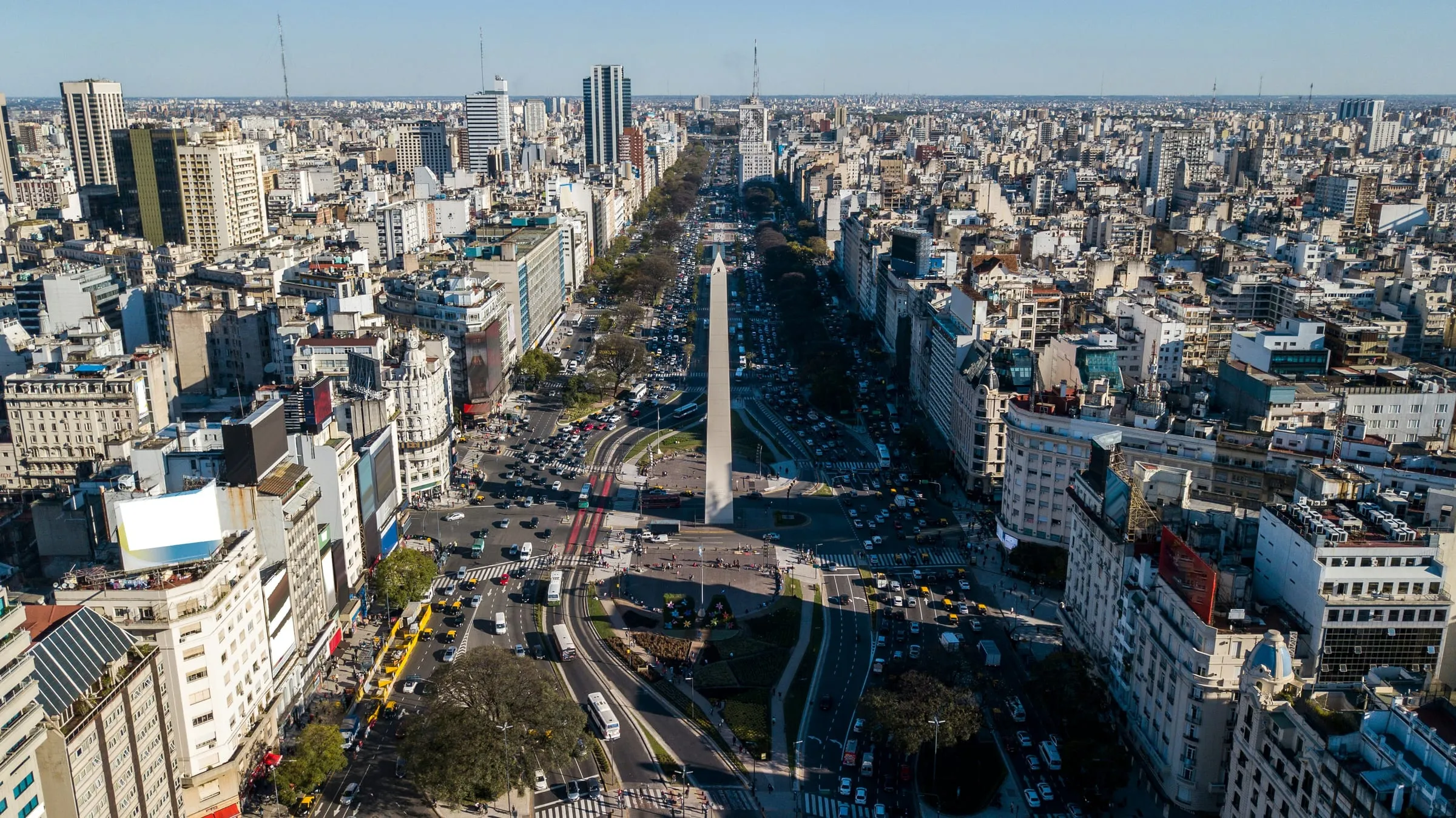
Buenos Aires is the city that keeps surprising people who thought they knew what to expect. The brochure version is real — tango, steak, European architecture, a world-class wine culture that starts at dinner and runs until 2 a.m. — and most travelers leave after four nights having scratched that surface and not much else. The better Buenos Aires is in a neighborhood bookstore that’s also a café, in a Sunday market at San Telmo that actually has good antiques buried in the stalls, in a parrilla that doesn’t appear in any guidebook but the taxi driver and the hotel concierge both say the same name when you ask. It’s a city that rewards arrival assumptions left at home.
For most of my clients, Buenos Aires arrives in one of two contexts: as a destination in its own right — a long-weekend-to-ten-day trip that calls for good food, slow walks, and the particular energy of a city that refuses to take anything at half-speed — or as the gateway to Patagonia, to an expedition sailing around Cape Horn, to the glaciers of the far south. In both cases, the city deserves more than a transit night. In both cases, most itineraries underestimate it.
Here’s how I’d plan it.
At a Glance
| Best time to visit | October–November (Southern Hemisphere spring) and March–April (fall) are the sweet spots — mild temperatures, fewer crowds than the January-February summer peak, and the city fully operational. Avoid December–February if heat and crowds bother you; this is when Buenos Aires is hottest and when South American summer tourism peaks. June–August is winter — cool, occasionally gray, and the city functions at its most local, which has its own appeal. |
| How long to stay | Four full days as a standalone trip. Two nights if you’re using it as a Patagonia gateway — though in that case, I’ll push you to three. Buenos Aires does not reward being rushed, and a city this good feels like a waste when it’s only a jet-lag recovery stop. |
| How to get there | Buenos Aires Ministro Pistarini International Airport (EZE) handles all international arrivals — it’s about 45 minutes from the city by remis (pre-booked private car) or taxi. The airport isn’t one to wander through; book your ground transfer ahead. Jorge Newbery (AEP) handles domestic flights within Argentina — relevant if you’re connecting onward to Ushuaia, Mendoza, or Iguazú Falls. |
| Currency / language | Argentine Peso (ARS). Spanish is official; English is widely spoken in hotels, restaurants, and tourism-facing settings in the neighborhoods travelers spend time in. Argentina unified its exchange rates in 2025 under Milei’s economic reforms — credit cards and ATMs now operate at rates close to the official rate, and the complicated parallel-market cash situation that defined the previous decade has largely resolved. That said, carrying some US dollars still has practical advantages for smaller purchases and neighborhood transactions. I’ll include a plain-language currency primer in your pre-trip packet with whatever the current reality is when we book. |
| One thing most guides won’t tell you | Buenos Aires runs late in a way that isn’t a stereotype — it’s a structural fact. Dinner before 9 p.m. is for tourists and families with children. The kitchen hits its stride at 10 p.m. Showing up to a parrilla at 7:30 and finding it empty is not a problem with the restaurant. Adjust your schedule to the city’s rhythm and the whole experience shifts. |
Why I Send Travelers Here
Because Buenos Aires is one of the most underestimated cities in the world for a certain kind of traveler — the one who loves Paris but wants somewhere less scripted, who loves food and architecture and history and a city that takes its cultural life seriously and stays up discussing it. Because the parrillas serve some of the best beef on earth and the wine that arrives at the table is genuinely excellent and costs less than you expect. Because the neighborhoods — San Telmo, Recoleta, Palermo — each have a distinct character and a distinct reason for being, and three days of walking between them feels like three days in three different cities.
I also send travelers here as the entry point for trips where the endgame is the south. Ushuaia, the Beagle Channel, a Drake Passage crossing, Torres del Paine, the Southern Patagonian Ice Field — these are some of the most dramatic landscapes on the planet, and Buenos Aires is the natural hub before and after. A good expedition sailing starts and ends here. A good Patagonia overland trip starts and ends here. Giving the city its due — three or four nights rather than one — is the difference between Buenos Aires as an obligation and Buenos Aires as a destination.
For honeymoons, I tend to pair Buenos Aires with wine country (Mendoza is two hours by plane; the Uco Valley wines are extraordinary) or with a Patagonia extension that anchors the trip in the wild. For slower travelers who want a city base with day-trip possibilities, Buenos Aires and Iguazú Falls is a pairing that consistently over-delivers.
Where I’d Anchor
San Telmo is the oldest barrio in the city — cobblestoned, slightly crumbling in the best possible way, dense with antique shops and milonga halls and corner cafés with mirrored walls and marble counters. It sits just south of the center, easy walking distance to the waterfront. Good for the traveler who wants to feel like they’re actually in Buenos Aires rather than in the tourist-facing version of it. The Sunday San Telmo Market on Plaza Dorrego — which spreads street vendors and antique stalls and tango dancers across several blocks — is the thing to plan your schedule around.
Recoleta is the city’s most European neighborhood — wide Haussmann-style boulevards, the French-styled cemetery that is its own architectural world, the Museum of Fine Arts, the high-end shopping streets. It’s also where the city’s best traditional hotels concentrate. The Alvear Palace is the address — grand-dame, formally correct, the kind of lobby that asks you to slow down. If you want old Buenos Aires glamour without irony, this is it.
Palermo splits into sub-neighborhoods that each have their own personality. Palermo Soho (small boutiques, weekend markets, restaurants that feel discovered rather than recommended) and Palermo Hollywood (the nightlife and dining spine, where the tables don’t fill until 11 p.m.) are the two poles. For travelers who want a modern, design-forward Buenos Aires, this is where to anchor. Casa Cavia — a converted mansion with a bookstore-gallery downstairs and restaurant that’s quietly one of the best in the city — is the best single reason to make Palermo your base.
Puerto Madero is the redeveloped waterfront district — glass towers, the Ecological Reserve just across the pedestrian bridges, a stretch of steak restaurants along the old docks that are very good and very well-trafficked by tourists. I’d eat in Puerto Madero once (the views are real) and sleep in San Telmo or Palermo.
For honeymoons and milestone trips, my default starting conversation is the Palacio Duhau – Park Hyatt Buenos Aires in Recoleta — a Beaux-Arts palace connected by underground passage to a modernist tower, with the most grown-up hotel garden in the city. The Duhau Restaurant, on the palace side, is one of the serious meals Buenos Aires offers. The amenity layer I bring through Signature is meaningful here, and the specifics — suite category, timing, what I can layer in — are the discovery-call conversation.
Want this stay? Start a discovery call — I quote rates and walk through what applies to your specific dates.
What I’d Do With Four Days
This is the version I’d send you if you asked me to plan it tomorrow. Adjust to taste.
Day One — Land, Settle, Walk San Telmo
Flight from the US arrives in the morning. Remis to the hotel, check in early if possible or leave the bags. Lunch at a neighborhood spot without any pressure — San Telmo’s cafés handle this well. Walk the neighborhood in the afternoon: the San Telmo Market building on Defensa Street (permanent market, open daily, not the Sunday street version — browse the dealers, find the thing you’ll regret not buying), the colonial streets east toward the waterfront, the Plaza de Mayo if you want the civic center context. Dinner at a proper parrilla — La Brigada in San Telmo is the one I’d send you to on Night One. Get the ribeye. Don’t arrive before 9 p.m.
Day Two — Recoleta + MALBA
Morning walk to the Recoleta Cemetery — not a somber experience, actually one of the more remarkable things Buenos Aires offers. Streets of above-ground family mausoleums, 6,400 of them, ranging from austere marble to ornate baroque to art-deco glass. Evita Perón’s tomb is here and is the obvious draw, but the cemetery deserves an hour even without it. The scale and the detail are extraordinary. Lunch at Café de los Angelitos or anywhere around the cemetery grounds that looks right. Afternoon at the MALBA (Museum of Latin American Art of Buenos Aires) — the permanent collection (Frida Kahlo, Wifredo Lam, Jorge de la Vega) is strong; the temporary exhibitions are consistently worth the trip. Dinner in Palermo — El Baqueano if you want the modern Argentine tasting menu; Don Julio in Palermo Hollywood if you want the parrilla considered by many the best in the city, arrived at with a reservation and patience.
Day Three — Palermo Market + Tango
Sunday morning at the Feria de Mataderos if timing aligns — a gaucho festival-market in the far western barrio, folk music and crafts and empanadas and horse displays, full-immersion local Buenos Aires in a way that the San Telmo market, by now, may not be. Otherwise: the Sunday San Telmo street market covers most of the same spirit closer in. Afternoon free — walk the Bosques de Palermo (the park district, the rose garden, the lake), rest, or add a Tigre delta day trip if you want the waterway version of the Buenos Aires surrounds. Evening at a milonga. Not a tango show for tourists — an actual milonga, where couples who’ve been dancing together for twenty years work through their geometry on the floor and you sit at a table with a drink and watch them. The concierge will know which one is right for you.
Day Four — The Slow Morning + What Comes Next
Buenos Aires rewards the morning with no agenda. A proper medialunas and café con leche breakfast at a corner kaffeehaus — Café Tortoni, the oldest in the city, opens early and is worth the crowd for once, or Gran Café Tortoni if the line puts you off. A final walk down Florida Street if you want the pedestrian urban rush; the Galerias Pacifico mall if you want the murals and the Beaux-Arts architecture without the shopping guilt. Afternoon: airport for an evening flight to Ushuaia or Mendoza, or back to the hotel for the Buenos Aires you haven’t figured out yet.
Specific Things I’d Tell You About
The cash situation is real. Argentina’s peso and its relationship to the dollar has been complicated for years. Without going into economic editorializing, the practical reality is that cash — US dollars specifically — gives you access to exchange rates that credit cards don’t. I’ll put a plain-language primer in your pre-trip packet specific to the current situation when we book. Don’t let this scare you off the trip; it’s navigable with a little preparation.
Reserve Don Julio before you leave home. It is, for the current moment, the parrilla everyone agrees on. Reservations open 30 days in advance and they fill fast. If you wait until you land, you’ll be waiting until your last night with whatever they have left.
The steak has a different premise here. Argentine beef is grass-fed, leaner than a USDA prime ribeye, and the cooking philosophy is slow-fire rather than high-heat sear. The internal temperature is more medium than American medium-rare. First-timers sometimes over-specify and end up talking past the kitchen. Order what the waiter suggests, ask what cut is excellent tonight, and let the parrilla do what it does.
Taxis and remises. The app-based Cabify is the reliable option for hailing rides — cleaner, metered, English-language app. Traditional street taxis are fine in the neighborhoods travelers spend time in but have the meter-fraud reputation. Pick one approach and stay with it.
The Tigre Delta is the right half-day. About an hour’s train ride from Retiro Station, Tigre sits at the mouth of the Paraná Delta — a maze of river channels, stilt houses, weekend estancias, and a slower-paced Argentina that exists completely without awareness of being a tourist attraction. Take the train, rent a lancha (small motorboat), float. Come back by late afternoon. It’s the best thing you can do with a free half-day in Buenos Aires that isn’t more city.
MALBA over the National Fine Arts Museum. Both are free. The National Fine Arts Museum is more comprehensive; MALBA is more interesting. On a four-day trip with limited museum hours, MALBA wins.
The bookstores. Buenos Aires has a literary culture unlike almost any other city outside Paris. El Ateneo Grand Splendid in Recoleta — a converted 1919 theater turned bookstore, with the stage preserved as a café and the boxes still hung with red velvet — is legitimately one of the most beautiful bookstores in the world. Go before it feels like an obligation. Spend an hour. Buy a book.
For the Expedition Traveler
If Buenos Aires is your gateway to Patagonia or an expedition sailing, the framing shifts a little. Ushuaia — the southernmost city in the world, staging point for Drake Passage crossings and Antarctic sailings — is two and a half hours by air from Buenos Aires, and most expedition itineraries build in an arrival night in the city. I build Buenos Aires into every Patagonia trip I plan, because the ratio of effort to reward for a two-night stay is almost always right and the “I’ll just transit through” version is almost always the thing clients regret.
The pairing I design most often: three or four nights in Buenos Aires →︎ Ushuaia for a Patagonia expedition sailing →︎ back through Buenos Aires for a final night and flight home. The city at the end hits differently than the city at the beginning. You’ve been at the end of the world and then you’re back in a city that serves excellent wine and doesn’t close until 3 a.m. — the contrast is part of the trip.
Expedition cruising is its own planning conversation →︎
For Honeymoons and Milestone Trips
Buenos Aires paired with wine country is my most consistent South America honeymoon: four nights in the city, then a flight to Mendoza and three or four nights in the Uco Valley — Casa de Uco or The Vines Resort & Spa in Tunuyán, where the Andes are on the horizon at dinner and the wine is the one you bought at the winery that morning. The trip is unhurried, deeply sensory, and completely undone by most generic honeymoon planning.
Start the honeymoon conversation →︎
Plan With Me
Buenos Aires tends to generate more questions on the logistics side than most destinations — the exchange rate situation, the neighborhood lodging question, the parrilla reservation reality, the Patagonia-extension sequencing. That’s exactly the kind of conversation I’m good at.
Last updated: May 2026. I keep this guide current — the Argentina currency situation in particular evolves, and the practical primer in your pre-trip packet will always reflect current conditions.
Plan this trip with me.
A 30-minute discovery call is where it starts. No fee, no pressure.
Book a Discovery Call