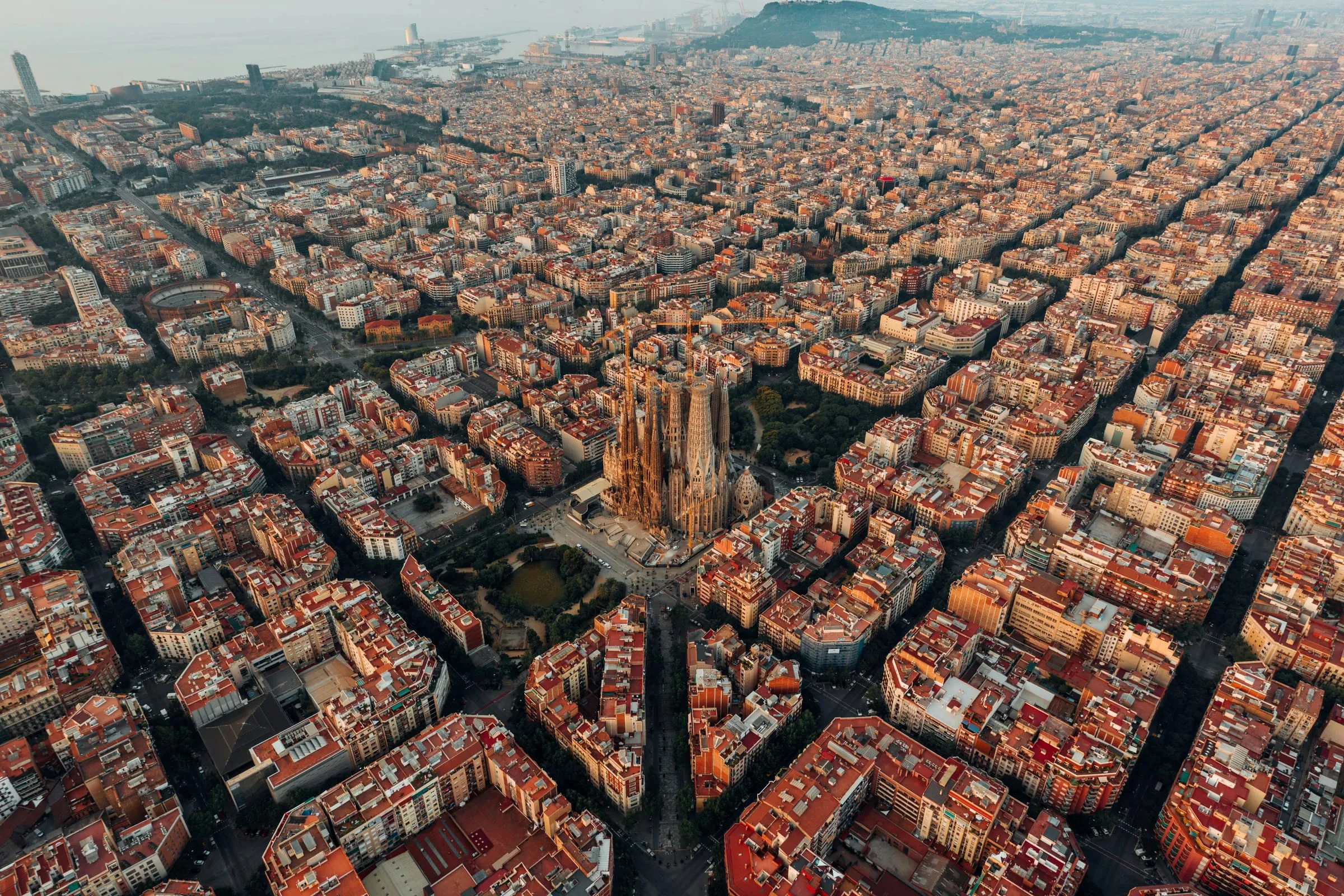
Barcelona is the city that makes you revise your opinion of cities. It has the architecture — Gaudí is only here, there is no Gaudí anywhere else — the food, the beach, and a nightlife that starts at midnight and makes no apologies for it. What Barcelona also has, and what most travelers miss on a first visit, is a profound sense of its own identity. This is Catalonia before it is Spain. The language on the street signs is Catalan, not Spanish. The culture is Catalan. The politics are Catalan and complicated in ways that make the city more interesting, not less.
Most travelers who come to me about Barcelona are doing one of three things: building a Spain multi-city (Barcelona + Madrid, or Barcelona + Seville, or the whole arc), planning a Mediterranean sailing that starts or ends here (Virgin Voyages runs multiple Med routes through Barcelona), or treating it as a standalone city escape — four or five nights, architecture and beach and food and nothing else.
All three versions of this trip work. Here’s how I think about each.
At a Glance
| Best time to visit | April–June and September–October — temperate, manageable crowds, the city in its natural rhythm. July–August bring heat (average high 78°F/25°C), significant humidity, and peak tourist volume; the city empties of locals in August as they flee to the coast. November–March is quiet and mild by northern European standards, and deeply local in feel. |
| How long to stay | Four nights minimum for a real first visit — enough to anchor in one neighborhood, do the architecture without sprinting, eat properly, and still have an unscheduled afternoon. Three nights works if this is a pre- or post-cruise stay. Five to six nights is the slow-travel version. |
| How to get there | Fly into El Prat (BCN), 7 miles south of the city. The Aerobus (about €6 one-way) runs directly to Plaça Catalunya in 30 minutes. Taxi runs about €35. From Madrid, the high-speed AVE (2.5 hours) is better than flying. From Seville, 5.5 hours by train. From Lisbon, fly or take the overnight train. |
| Currency / language | Euro. Catalan is the first language — don’t refer to it as a dialect; it is a distinct language from Spanish, and Catalans notice. “Gràcies” (thank you) and “bon dia” (good morning) earn genuine goodwill. Most tourist-facing staff speak English well. |
| One thing most guides won’t tell you | Dinner before 9 p.m. marks you as a tourist. Locals sit down at 9:30 or 10:00 p.m. — and the restaurants that matter feel this. The rhythm is: lunch at 2:00 p.m. (the main meal, often a three-course menu del dia), a vermouth or a tapa around 6:30 p.m., dinner at 9:30. Follow the rhythm and you’ll eat better, at less crowded restaurants, for less money. |
Why I Send Travelers Here
Because Barcelona is one of a handful of cities where the built environment is itself the primary attraction — not as historical artifact but as living, breathing, still-under-construction vision. Structural completion came in February 2026 with the Tower of Jesus Christ topped out at 172.5 meters — the church is now architecturally complete. Finishing work on the Glory Façade and surrounding chapels continues into the mid-2030s. Gaudí died in 1926 and his buildings are still being built. That fact alone changes how you stand in front of them.
The other reason I send travelers here is the depth of the city’s architectural movement more broadly. What most first-time visitors don’t realize is that Gaudí was one of three major architects working simultaneously on Passeig de Gràcia in the Eixample — Domènech i Montaner and Puig i Cadafalch were equally serious figures, and you can stand in front of all three buildings on the same block (the Manzana de la Discordia, or Block of Discord) and watch their competing visions argue with each other in stone.
And I send travelers here because of the food — specifically, because Catalan food is not what most visitors expect. It’s not tapas (those are Andalusian). It’s pa amb tomàquet — thick country bread rubbed with tomato and drenched in olive oil, topped with Iberian ham or aged cheese or anchovies. It’s salt cod prepared three different ways on the same menu. It’s the fideua, which is paella made with pasta instead of rice and somehow better. It’s the restaurant where the chef is using what was at the market that morning, every morning, and the menu changes accordingly.
Where I’d Anchor
The neighborhood you choose shapes the entire trip. Three neighborhoods cover almost any traveler’s version of Barcelona:
Eixample (the design-forward choice) The 19th-century grid expansion — Passeig de Gràcia as its spine, Modernista architecture on every other corner, the Gaixample woven through the middle. The most walkable base for the architecture-focused trip and the best restaurant density in the city. My default recommendation for most travelers.
Barri Gòtic and El Born (the atmospheric choice) The Gothic Quarter is the oldest part of the city — a warren of medieval streets originally built over the Roman settlement, now full of bars, restaurants, and historic buildings. El Born adjoins it to the east, with the Museu Picasso, Santa Maria del Mar, and an eclectic mix of designer shops and serious wine bars. Noisier at night than Eixample, but deeply atmospheric for first-time visitors who want to feel the city’s age.
Barceloneta and the Waterfront (the beach choice) The former fishermen’s district at the edge of the old port — grid streets, fresh seafood, proximity to the Mediterranean. Right for travelers whose Barcelona is the water. Less central for the architecture circuit.
For the luxury design anchor on Passeig de Gràcia, Mandarin Oriental Barcelona is where I start. A converted 1950s bank building designed by Patricia Urquiola, with 120 rooms built around a luminous interior atrium, two-Michelin-starred dining (Moments, by Carme Ruscalleda and Raül Balam), and a spa with a 12-metre lap pool and rooftop pool that’s among the best in the city. Location is precisely equidistant between Casa Batlló and La Pedrera — you can walk to both in five minutes. On my rate at the property, the amenity layer is calibrated to your stay; the specifics get walked through on the discovery call.
For the grand historic hotel, El Palace Barcelona is the landmark address — opened in 1919 as Barcelona’s original Ritz and still carrying that weight. Michelin-starred Amar Barcelona (chef Rafa Zafra, whose background runs through El Bulli and Ferran Adrià) anchors the dining, and the 1,500 m² rooftop garden with pool offers the best panoramic views from the Passeig de Gràcia including a direct sightline to the Sagrada Família. The hotel’s Les Clefs d’Or concierge team is the largest in Barcelona — which matters when you want something the normal path can’t get. On my rate at the property, the amenity layer is calibrated to your stay; the specifics get walked through on the discovery call.
For the Gothic Quarter anchor, Hotel Neri (Relais & Châteaux, 22 rooms) is the intimate choice — a medieval palace from the 12th century on Carrer de Sant Sever, steps from the Cathedral, with the Gothic labyrinth unfolding in every direction outside the door. This is the hotel for travelers whose Barcelona is El Born, Santa Maria del Mar, and long dinners in medieval streets. On my rate at the property, the amenity layer comes with the stay; the specifics get walked through on the discovery call.
For the beachfront choice, Hotel Arts Barcelona (Ritz-Carlton) anchors the Port Olímpic end of the seafront — Europe’s only true urban resort, with direct beach access, lush landscaped gardens, an infinity pool, and a culinary program that runs two-Michelin-star territory. Works for travelers who want the architecture circuit in the mornings and Mediterranean recovery in the afternoons. On my rate at the property, the amenity layer comes with the stay; the specifics get walked through on the discovery call.
Want to book Barcelona? Start a discovery call — I’ll match you with the hotel and neighborhood that fit.
What I’d Do With Four Days
Day One — Arrival and Eixample Orientation
Afternoon arrival. Check in. Walk Passeig de Gràcia from Plaça Catalunya to the Block of Discord — not as a sightseeing march but as an orientation exercise. Stand in front of Casa Batlló (No. 43, Gaudí — the bone-facade building with the dragon-scale roof) and then La Pedrera / Casa Milà (No. 261, also Gaudí — the wave-stone apartment building with the forest of chimneys on top). Don’t go in today. Just see the exteriors and understand the scale of what you’re dealing with. Vermouth at around 6:30 p.m. — Bodega Marín in Gràcia is the right choice, a century-old bodega where locals and visitors drink house vermouth with the same unselfconsciousness. Dinner at 9:30. Early bed.
Day Two — Gaudí Day
Morning: La Pedrera interior first — the report says it right: La Pedrera gives a better sense of Gaudí’s overall vision than the Sagrada Família does. The loft (Espai Gaudí) and the rooftop with its warrior-chimney sculptures are the anchor of the visit. Plan two hours minimum. Afternoon: Sagrada Família with a pre-booked timed-entry ticket and tower access — the Nativity Tower (left facade, Gaudí’s own work) is the one worth the climb. The interior in the afternoon light, columns branching like a stone forest, requires time to process. Evening: walk or metro to Park Güell for the late-afternoon views — the terrace with Gaudí’s serpentine mosaic bench is the postcard but the wooded paths above are quieter and worth exploring. Dinner in Gràcia, which wraps around the park’s base.
Day Three — Old City and the Water
Morning: Barri Gòtic — find La Seu cathedral (the Gothic one, built 1298–1448, not the Sagrada Família; the cloister with its garden and geese is the hidden room most visitors rush past), then follow the medieval streets toward Via Laietana. Cross into El Born and spend an hour in Santa Maria del Mar — built 1329 to 1384, and considered by many to be the most beautiful church in the city. Its interior is austere and perfect in a way that the ornate Sagrada Família isn’t, and worth the quiet. Museu Picasso (same neighborhood, book ahead) if the art is the priority. Lunch: Cal Pep on Plaça de les Olles — seafood tapas, open kitchen, theatrical atmosphere, and the best argument for why Barcelona’s version of this form is distinct from anything else in Spain. Afternoon: walk to Barceloneta for two hours at the Mediterranean. Late afternoon: wine at La Vinya del Senyor, a bar directly opposite Santa Maria del Mar with more than 100 wines and cavas by the glass. Dinner.
Day Four — Slow Morning, Montjuïc, Depart
Morning: La Boqueria at opening (before 10 a.m., before the tourist wave makes movement difficult) — it’s the oldest and most alive of Barcelona’s 40 markets, and the Pinotxo bar inside is the right place for a standing breakfast of coffee and whatever is available that morning. Or: skip La Boqueria entirely and go to Mercat de Santa Caterina in El Born, which functions as a real neighborhood market rather than a destination. Midday: Montjuïc — the hill southwest of the city with the Museu Nacional d’Art de Catalunya (the collection of Romanesque murals rescued from Pyrenean mountain churches is one of the great museum experiences in Spain) and the Fundació Joan Miró. The panoramic views over the city and coastline from the esplanade in front of the MNAC are among the best in Barcelona. Evening flight, or extend.
Specific Things I’d Tell You About
Book Sagrada Família well in advance. Same-day tickets don’t exist in high season. Tower access (Nativity Tower or Passion Tower — Nativity is the right choice, it was the one Gaudí built himself) requires a separate ticket from the base entry. Morning or early afternoon entry for the best light in the nave.
La Pedrera is not a secondary Gaudí site — it’s an argument for the visit. The official name is Casa Milà; La Pedrera (“the Quarry”) is the nickname, a reference to its stone facade. The rooftop sculptures — warrior chimneys, spiraling vents — look like something that landed here from a different planet. It’s also one of the few Gaudí buildings where you can see the interior logic of his structural thinking, not just the decorative surface.
The Block of Discord (Manzana de la Discordia) is free to walk past and worth fifteen minutes. Three rival Modernista architects, three adjacent buildings on Passeig de Gràcia. On the corner, Domènech i Montaner’s Casa Lleó Morera. A few doors up, Puig i Cadafalch’s Casa Amatller. Next door, Gaudí’s Casa Batlló. The contrast is the entire point — see all three, then decide which vision of the same movement you’d live in.
Catalan food has its own logic and it’s different from what you expect. The thing to order first is pa amb tomàquet — bread rubbed with tomato and olive oil, the Catalan equivalent of butter on bread, available everywhere and underrated by most tourists who think it sounds too simple. The local version of paella is fideua, made with pasta, and it’s usually better than the paella in tourist-facing restaurants. Traditional Catalan cuisine is protein-forward with rich sauces, and dessert means crema catalana — the cinnamon-citrus custard that is the actual origin of what the French later called crème brûlée.
The vermouth hour is worth participating in. Between 1:00 and 3:00 p.m., and again around 6:00–7:00 p.m., Barcelona bars fill with locals drinking house vermouth with an olive and an orange slice and eating whatever the bar is putting out. This is not performative; it’s structural to the city’s rhythm. Find a bar with locals at the counter, order “un vermut,” and have the best forty-five minutes of your trip for about three euros.
La Vinya del Senyor in El Born is a genuine wine bar. Opposite Santa Maria del Mar, more than 100 wines and cavas by the glass, with Iberian ham and aged Catalan cheese. This is the right stop between the afternoon sightseeing and dinner.
What I’d Skip
Dinner before 8:30 p.m. The restaurants filling at 7:30 are filling with tourists. The ones filling at 10:00 are filling with locals. The food is the same; the atmosphere is completely different. Adjust your schedule by one day and you’ll eat better for the rest of the trip.
Any restaurant on Las Ramblas. Without exception. The boulevard itself is worth one walk — from Plaça Catalunya down to the Columbus statue at the port, to understand the city’s central spine — but the restaurants on it are optimized for tourist turnover. Walk one block in either direction and the quality-to-price ratio improves immediately.
La Boqueria after 10 a.m. The market itself is real — the oldest and most alive of the city’s 40 food markets — but the stalls nearest Las Ramblas are performance, not produce. Go at opening if you go. Otherwise Mercat de Santa Caterina (El Born) or Mercat de l’Abaceria (Gràcia) operate as actual neighborhood markets throughout the day.
The hop-on-hop-off bus. Barcelona is a walkable city with an excellent metro. The bus routes hit the viewpoints without putting you in the neighborhoods. Walking Passeig de Gràcia, El Born, and the Barri Gòtic gives you the actual city in a way a double-decker bus does not.
El Raval after dark, alone. The neighborhood has genuine character and some of the city’s best ethnically diverse restaurants. But sections of it, particularly around Las Ramblas end, are still what the locals call the Barri Xino — historically rough, still occasionally dicey late at night. Fine in the day, fine in groups at night, and worth knowing about before you wander.
Las Ramblas for your wallet. The pickpocketing in Barcelona is real and professionalized. Las Ramblas, the area around Sagrada Família, the metro, and busy terrace cafes are the main corridors. Front pocket, phone in hand, bag worn across the body. The city is otherwise safe to walk at any hour.
For LGBTQ+ Travelers
Barcelona is among Europe’s most genuinely welcoming cities for LGBTQ+ travel — not welcoming in the performative-campaign sense, but structurally, historically, and practically. The Gaixample (contraction of “gay” and “Eixample”) occupies a substantial stretch of the Eixample grid around Carrer del Consell de Cent and Carrer de Muntaner — bars, restaurants, a community bookshop, queer-owned businesses that operate year-round as a neighborhood, not only as a nightlife destination.
Platja de la Mar Bella, north of the Vila Olímpica, is the city’s designated LGBTQ+ beach — clothing-optional at the northern end, accessible by metro (Selva de Mar stop). Sala Apolo in Poble Sec (Nou de la Rambla 111) and various Gaixample clubs are the consistent nightlife anchors. Barcelona Pride runs late June to early July and is among Spain’s largest — centered in the Gaixample and drawing from across the country.
Sitges, 40 minutes south by train, deserves its own mention. A beach town with a historically rooted queer community, its own Pride, a Bears Week, and a Carnival that’s among the best in southern Europe. Worth a day trip from Barcelona or a standalone overnight.
For Mediterranean Sailors
Barcelona is one of Virgin Voyages’ primary Mediterranean embarkation and disembarkation ports — the starting point for Western Med itineraries (Barcelona to Rome, Barcelona to Athens) and the endpoint for Eastern Med loops. The cruise terminal is in Port Vell, the old port at the foot of Las Ramblas, extremely close to the city center.
If you’re sailing out of or into Barcelona, I build in at least two nights pre-cruise and one night post-cruise to do the city any justice. Two nights pre-cruise minimum means: arrive, recover from the flight, see the Sagrada Família and La Pedrera properly the next day, eat dinner like a local, and board the ship without feeling like you rushed. The best Virgin Voyages routes through Barcelona pair the modernista architecture and Gothic Quarter pre-cruise with Amalfi, Sicily, and Greece on the sailing — you start in the city that defines Mediterranean design and end in the landscapes that gave the sea its name.
For Iberia Multi-City Travelers
Barcelona and Seville are the two-city Iberian itinerary that works — different enough in character (Catalan modernisme versus Andalusian baroque; Mediterranean versus Atlantic; Catalan identity versus Spanish identity) to feel like two countries in one trip, which they arguably are. High-speed rail connects them via Madrid.
The full arc: Barcelona 4 nights →︎ high-speed AVE to Madrid 2 nights (Prado, Retiro Park, a day trip to Toledo) →︎ high-speed AVE to Seville 3–4 nights (Alcázar, the Cathedral, flamenco in the Barrio Santa Cruz). Fly home from Seville or Madrid. That’s a 10–11 night itinerary and exactly the right length.
Lisbon is the natural addition on the far western end — fly Seville to Lisbon, or take the overnight train — but at that point you’re in two-week territory, which is the right length for Iberia done properly.
Plan Barcelona With Me
Whether you’re building the Iberia multi-city, anchoring a Mediterranean sailing, or coming for the architecture and the beach alone — I know how to put this trip together. The discovery call is 30 minutes, no fee, and it’s where Barcelona goes from a vague plan to an actual itinerary.
Book Your Free Discovery Call →︎
Last updated: May 2026. The permanent things — the architecture, the food culture, the Gaixample, the beach — don’t change. What shifts is Sagrada Família ticketing, top-tier hotel availability, and the restaurant scene, which moves fast. I keep this current.
Plan this trip with me.
A 30-minute discovery call is where it starts. No fee, no pressure.
Book a Discovery Call