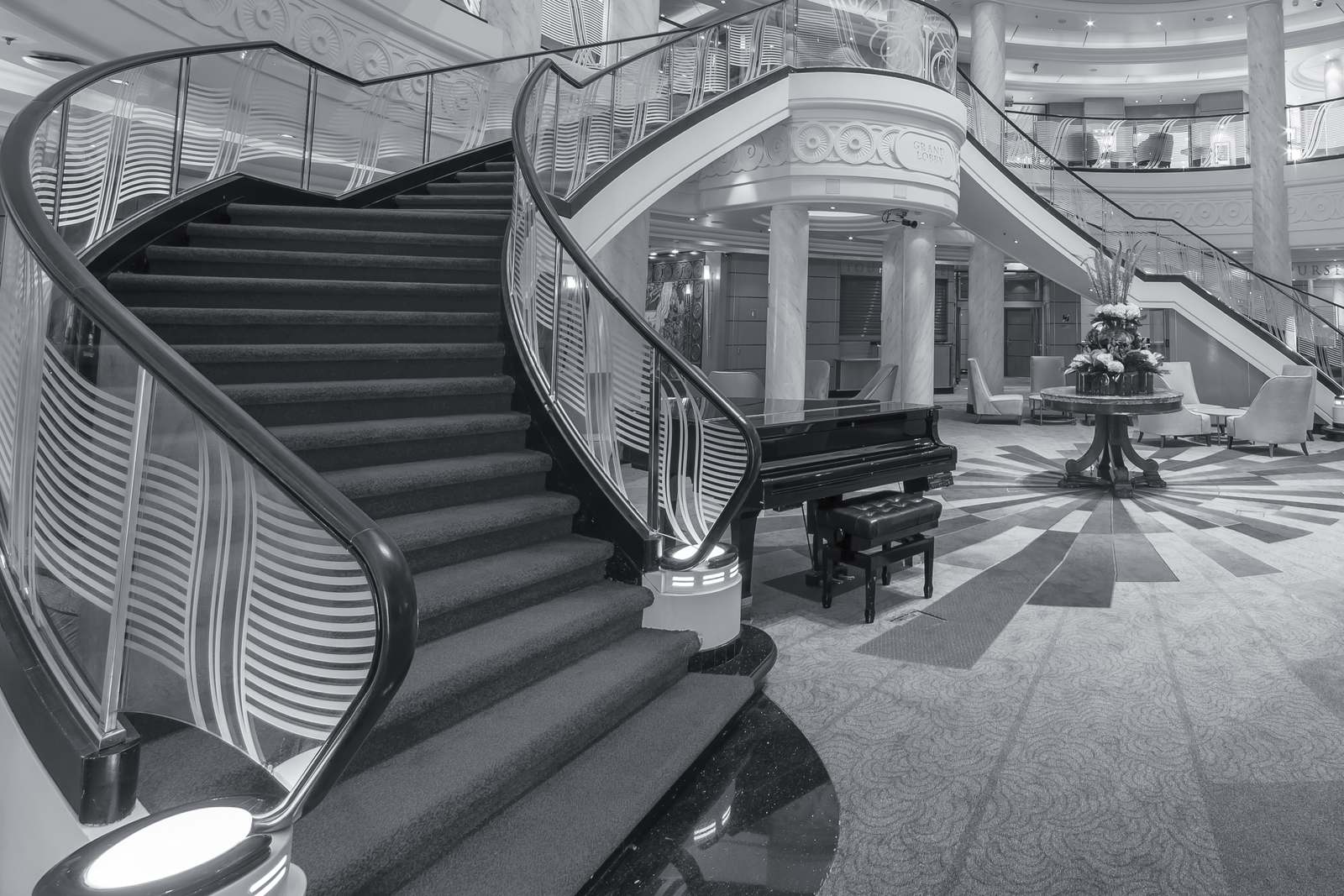
People come to this ship from one of two directions.
Either they’ve always wanted to do it. It’s a bucket-list line that’s been sitting there for twenty years, usually attached to a milestone. Or they’ve never thought of it at all, and the idea lands as a small revelation. Wait, you can still sail to Europe? On a schedule? Instead of flying?
Either way, they arrive at the same question. A week on a ship to cover a distance a plane does in seven hours. Is it worth it?
Here’s what I actually tell them.
The short version
A Queen Mary 2 crossing is worth it for a specific kind of traveler. For them the journey is the point, and a week with nowhere to be sounds like a gift rather than a sentence. If a great trip means waking up somewhere new every morning, this isn’t your voyage. There are no ports. If what you want is seven nights of good food, real conversation, a book finally finished and an arrival that doesn’t wreck you, it’s one of the best weeks you can buy.
You pay for it in three currencies: time, arrival and occasion. What you won’t get is speed or scenery. The view is the Atlantic, all the way across. Knowing that going in is most of the decision.
What it actually is
Queen Mary 2 is an ocean liner, not a cruise ship. That sounds like brand vocabulary until you understand the difference. A cruise ship is built to hop between ports in calm water. A liner is built to cross an ocean in any season, and she is the only one still doing it on a schedule, between Brooklyn and Southampton. Cunard calls her the world’s only true ocean liner, and it’s a fair claim.
The standard crossing is seven nights: you board in one country, spend six full days at open sea, and step off in the other. There are no port stops, excursions or tender lines, and no be back on board by four. The ship is the destination, and so is the ocean under her.
It’s also transportation, and people forget that. You end up on the other side of the Atlantic. So the real question is rarely “a week on a ship, or not?” It’s “how do I want to get to Europe, or home from it?”
What you’re really buying
Time. Six sea days is a lot of unscheduled life. My husband Chase took watercolor classes every morning, something he’d never done before. I read everything I’d been meaning to read for six months. There are Cunard Insights talks, Afternoon Tea in the Queens Room, a library Cunard calls the largest at sea, and live music in every bar. You can fill the days or waste them beautifully, and both are the right answer.
Arrival. This is the part people don’t expect. For most of the year New York and the UK are five hours apart, and the ship takes them one at a time. The clocks move an hour on five of the seven days. So you step off in England, or in New York, already on local time, without the jet lag. And there’s no airport: no security line, no checked-bag limit, no six-in-the-morning immigration queue at Heathrow. When Chase and I flew home from London afterwards, it landed somewhere between comedy and vertigo. I wrote at the time: next time, I’ll sail back.
Occasion. Evenings on this ship feel like evenings. There are Gala Evenings with a theme, and ours were Black and White and a Masquerade. Dinner comes in a dining room that makes you sit up a little straighter. A cocktail in the Chart Room was never more than a short walk away. If you’re marking something, like a honeymoon, an anniversary or a round-number birthday, the ship does a lot of the celebrating for you.
The four decisions that actually shape the crossing
1. Direction. Eastbound, from New York to Southampton, the clocks go forward, so five of the days are 23 hours long, and you arrive in England ready to start a European trip. That’s the direction Chase and I sailed. Westbound, from Southampton to New York, the clocks go back, and five of the days are 25 hours long. It’s the gentler direction, and the kindest way I know to come home from a long European trip. If you’re pairing the crossing with time in Europe, sail one way and fly the other. Which way you sail depends on whether the crossing opens your trip or closes it.
2. Season. Chase and I crossed in January, and the Atlantic in January is grey: rain most days, snow on the promenade, a steady swell under the hull. Inside, the ship was warm and completely unbothered. I loved it, but it’s a particular taste. Summer crossings have long light and usually kinder water. They’re also the weeks Cunard charges most for, which matters more than people expect (more on cost below).
3. Stateroom tier. This is the real money decision, and it’s really a choice between two different voyages on the same ship.
- Britannia is the main fare class: inside, oceanview and balcony staterooms, all dining in the Britannia Restaurant. It’s where most guests sail, and it is not a compromise. I booked us an inside stateroom on purpose. It’s my habit on a first sailing: understand the entry level, then know what the upgrade actually buys. On a ship this full of places to be, the room is mostly for sleeping. We slept beautifully.
- Britannia Club adds a balcony stateroom and its own smaller restaurant, with a dedicated table and flexible dining times.
- Cunard’s Grill Suites, the Princess Grill and Queens Grill Suites, are a different register entirely: a much larger suite, one of the Grill Suites Restaurants, a private lounge and terrace, concierge service, and in Queens Grill a butler.
Every tier shares the same public rooms, the same Afternoon Tea and the same Atlantic. If you’re weighing the jump, Cunard’s Grill Suites lays out what each tier buys you, including when the honest answer is to stay in Britannia and spend the difference ashore.
4. The other side. A crossing is one leg of a trip, not the whole trip, and the planning lives at each end. That means a hotel night before boarding, because you don’t want a flight delay between you and a ship that sails on time. It means somewhere to land after: a night in Southampton, which is more interesting than its reputation, or the train to London. And it means a one-way flight in the other direction, unless you sail both ways. That’s where an advisor earns their keep, and it’s where the crossing either feels effortless or doesn’t.
What it costs (and how to read the number)
Here’s a real snapshot rather than a brochure “from” price. In September 2026 I pulled a July 2028 eastbound crossing out of Cunard’s own booking system: seven nights, New York to Southampton. Per person, two sharing, with taxes and fees included:
- Inside: about US$1,700
- Oceanview: about US$2,150
- Balcony: roughly US$2,350–$3,250, depending on position
- Britannia Club: around US$3,700
- Princess Grill Suites: from about US$6,300
- Queens Grill Suites: from about US$7,900, and well past US$20,000 for the largest
Specialty restaurants and drinks are extra in Britannia. On that sailing, gratuities were extra too: US$17 per person per night. As of Cunard’s 2026 materials, a Grill Suite fare includes the hotel and dining service charges and a drinks package, which closes some of the gap between the tiers.
The season moves the number. High summer, when schools are out, is Cunard’s peak window. A spring crossing on the same ship came in a few hundred dollars a head lower. Fares move constantly, so I confirm the exact number for your dates before anything is quoted, and nothing is held until a deposit is placed.
Here’s how I read it honestly. Measured as transport, a crossing will never beat a flight on speed. But it often costs less than a business-class ticket across the same ocean, and for that money you get a stateroom, three meals a day, Afternoon Tea, entertainment every night and six days of your life back. If those things matter to you, it’s good value. If they don’t, no amount of Atlantic makes the math work, and I’d rather tell you that than sell you a week you’ll quietly regret.
Who it’s for — and who it isn’t
It’s for you if:
- You’d rather arrive than get there. Seven nights of nowhere to be sounds restorative, not boring.
- You’re marking something: a honeymoon or milestone, a retirement, a birthday with a zero in it. The crossing makes a beautiful opening or closing chapter to a European trip.
- You like to dress for dinner at least once in a while, and you’d enjoy a room full of people who’ve done the same.
- You hate long-haul flying: the jet lag, the baggage limits, the airport at the far end.
- You’re bringing the dog. Queen Mary 2 has kennels for dogs and cats on the transatlantic crossings, and it’s the reason some guests sail at all.
- You want company. Guests come from all over the world, and the crossing is social in a way resort weeks aren’t. On ours, the LGBTQ+ gathering in the Commodore Club was standing room only, and our table grew every night.
It’s not for you if:
- You want ports. There are none, and that’s the product.
- Sea days make you restless. Six in a row is the whole voyage.
- You want it casual every night. There are casual venues, and nobody makes you dress up, but the ship’s evenings lean toward occasion, and you’ll enjoy it more if you lean in.
- Budget is the deciding factor. At the entry tier it’s better value than people think, but it’s still a considered splurge, and it should feel like one.
Or should you look at something else?
Two honest forks before you book.
If what’s pulling at you is a week at sea with Cunard, but you want to wake up somewhere new, the crossing is the wrong voyage and the right company. Cunard’s other Queens sail itineraries with ports all over the world. If it’s a long, slow sea voyage you’re after, and the romance of the Atlantic matters less, a repositioning voyage can give you the sea days on a different route. And if you want the week at sea without the formality, Virgin Voyages does something entirely different, and does it well.
The real question underneath “is it worth it?” is usually “what do I want this week to feel like?” That’s the conversation I like having first, because the right answer depends on the trip you’re actually taking.
What I’d do
For a first crossing, I’d pick the direction by where it sits in the trip. Eastbound to open a European journey, westbound to close one. I’d start in Britannia unless you’re celebrating something that deserves a Grill Suite. And I’d build a real night at each end, so the crossing is the heart of the trip and not an errand between two airports. If you want to know what the week actually feels like, from the rolls at The Verandah to the Titanic’s coordinates read out over the PA, I wrote about my own crossing here. If the crossing puts you in a reading mood, The Reading Route has a book or two for the voyage.
And if you’d rather not cross on your own, there’s a Queen Mary 2 group crossing forming: the same Atlantic, in good company.
Wondering whether the crossing fits the trip you’re actually taking? Let’s talk it through. No pressure, just a conversation about direction, season and what you want the week to feel like.
Plan your trip with me.
A 30-minute discovery call is where it starts. No fee, no pressure.
Book a Discovery Call