Why I Keep Recommending the Sea of Cortez
Every winter, a certain type of client asks me the same question: I want warmth, I want to be outside, I’ve done the Caribbean beaches and the Cancún resorts and I want something that actually surprises me. What do I tell them?
I tell them Baja.
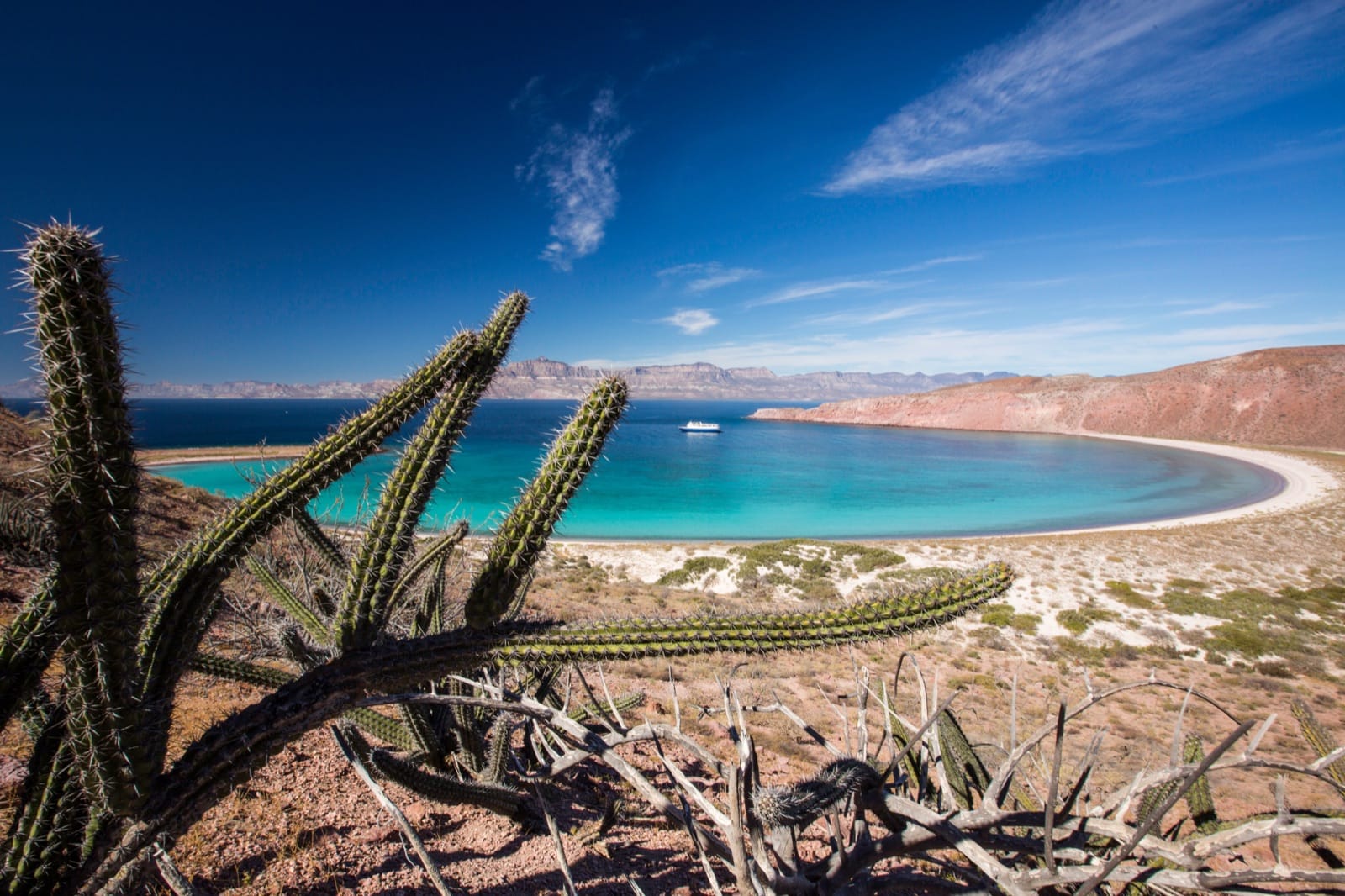
Specifically, I tell them the Sea of Cortez on a small ship — calm winter water on the leeward side of the peninsula, sea lion colonies that come to you, dolphins running alongside the skiff, anchorages at islands most travelers have never heard of, and a desert landscape meeting the water that the Caribbean cannot offer. Jacques Cousteau called this body of water “the aquarium of the world.” He wasn’t being poetic. He was describing what you actually see.
What the Sea of Cortez Actually Is
The Baja California Peninsula extends 775 miles south from the U.S. border. On the west, open Pacific. On the east, the Sea of Cortez — a UNESCO World Heritage site that functions as one of the world’s most productive marine ecosystems because of a specific combination: warm shallow water, nutrient upwelling from deep Pacific trenches, and isolation that has allowed species diversity to compound over millennia.
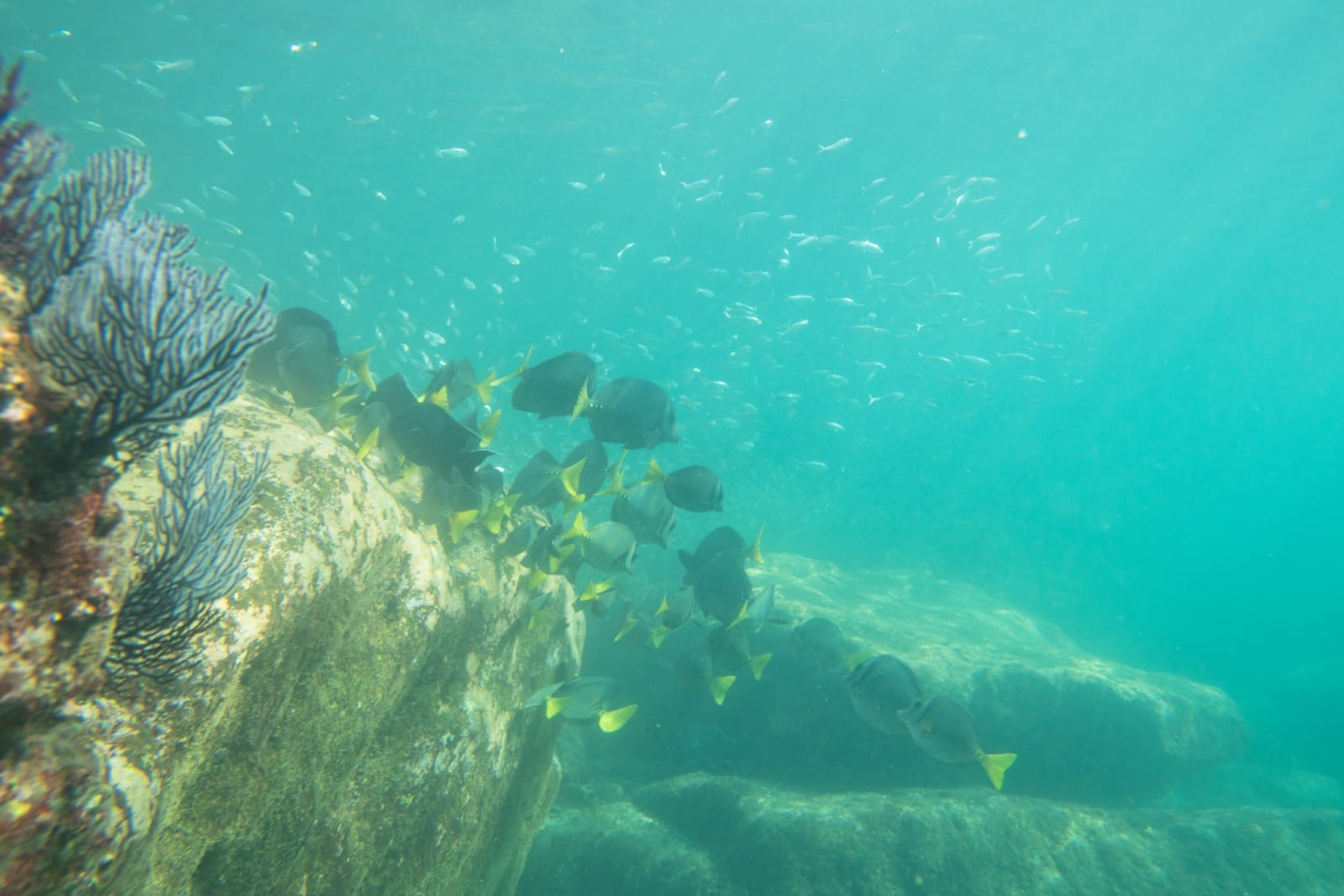
The Sea of Cortez holds more than 900 species of marine fish, fin whales, blue whales, humpbacks, and gray whales in the winter calving season. Hammerhead schools, manta rays, dolphins running in pods large enough that you stop counting. The sea lion colony at Los Islotes — small rocky islets just off Isla Espíritu Santo — is established enough that juveniles come directly to snorkelers out of curiosity rather than fear.
This level of marine density does not exist on a day trip from a Los Cabos resort. It requires being out there — in the zone, in the water, on a small ship that can anchor in protected coves and spend actual time in places the day-tour boats visit for 45 minutes and leave.
What You Actually Do Out There
The week unfolds around two distinct kinds of moments: the marine encounters and the anchorages. The expedition team sequences everything around actual conditions rather than a set script — that flexibility is the product.
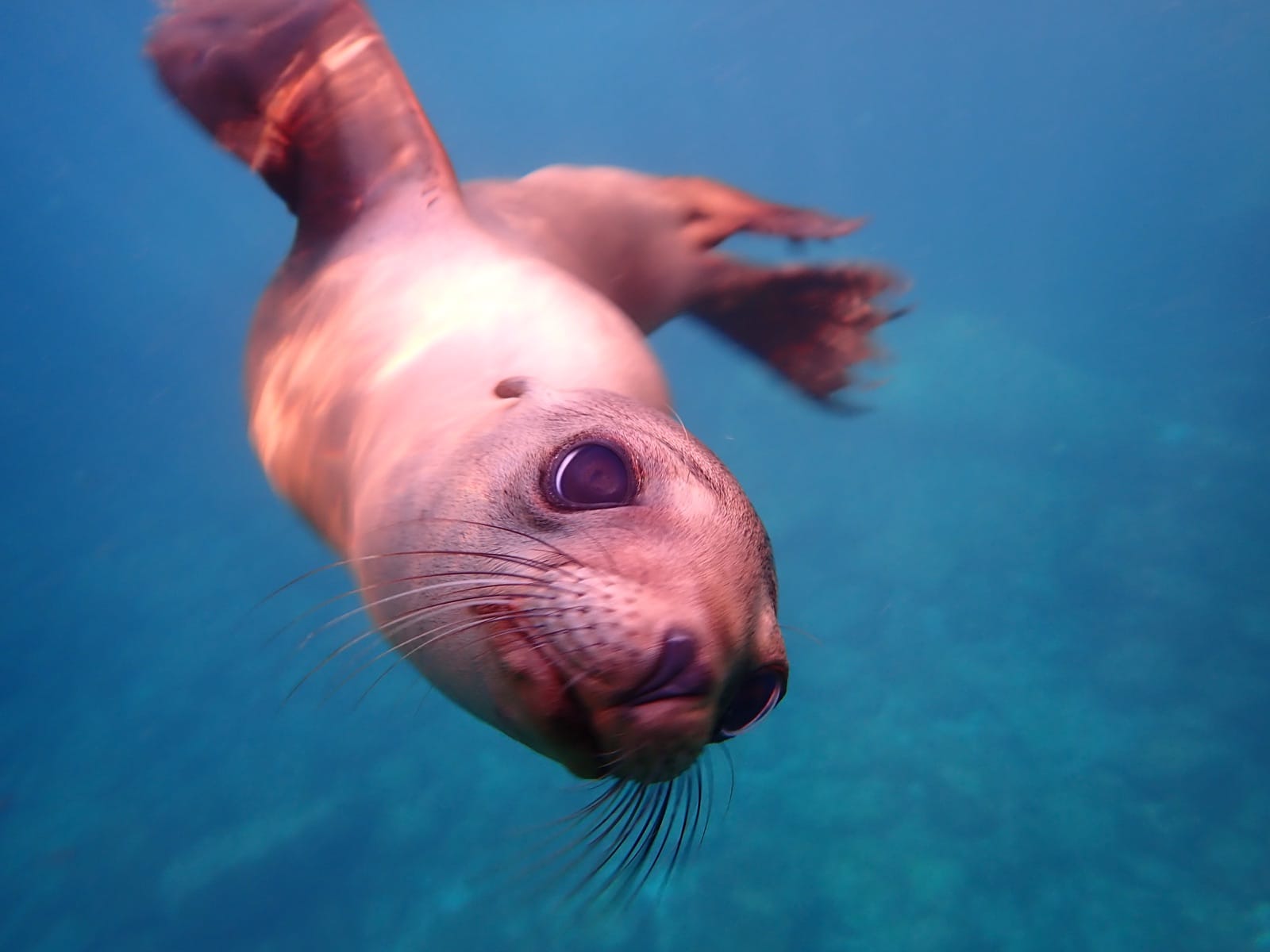
Sea lions at Los Islotes are the encounter that lands hardest. The juveniles treat snorkelers as an entertainment option — barreling toward you and peeling away, surfacing to stare from two feet, genuinely curious in a way that changes how you think about wildlife. The rookery is loud and chaotic and unmistakably theirs. You’re a guest in it.
Dolphins appear from the skiff most days at some point — pods running alongside the boat, riding the bow wave, occasionally putting on the kind of display that everyone on board stops talking for. It’s not booked or scheduled. It’s just what happens out there.
Snorkeling the open water and the protected coves turns up everything from sergeant majors and parrotfish to spotted eagle rays to the occasional turtle. The gear and wetsuits are included; the naturalist team knows the right spots and times. You can do the full week of snorkeling or none of it — both are real options.
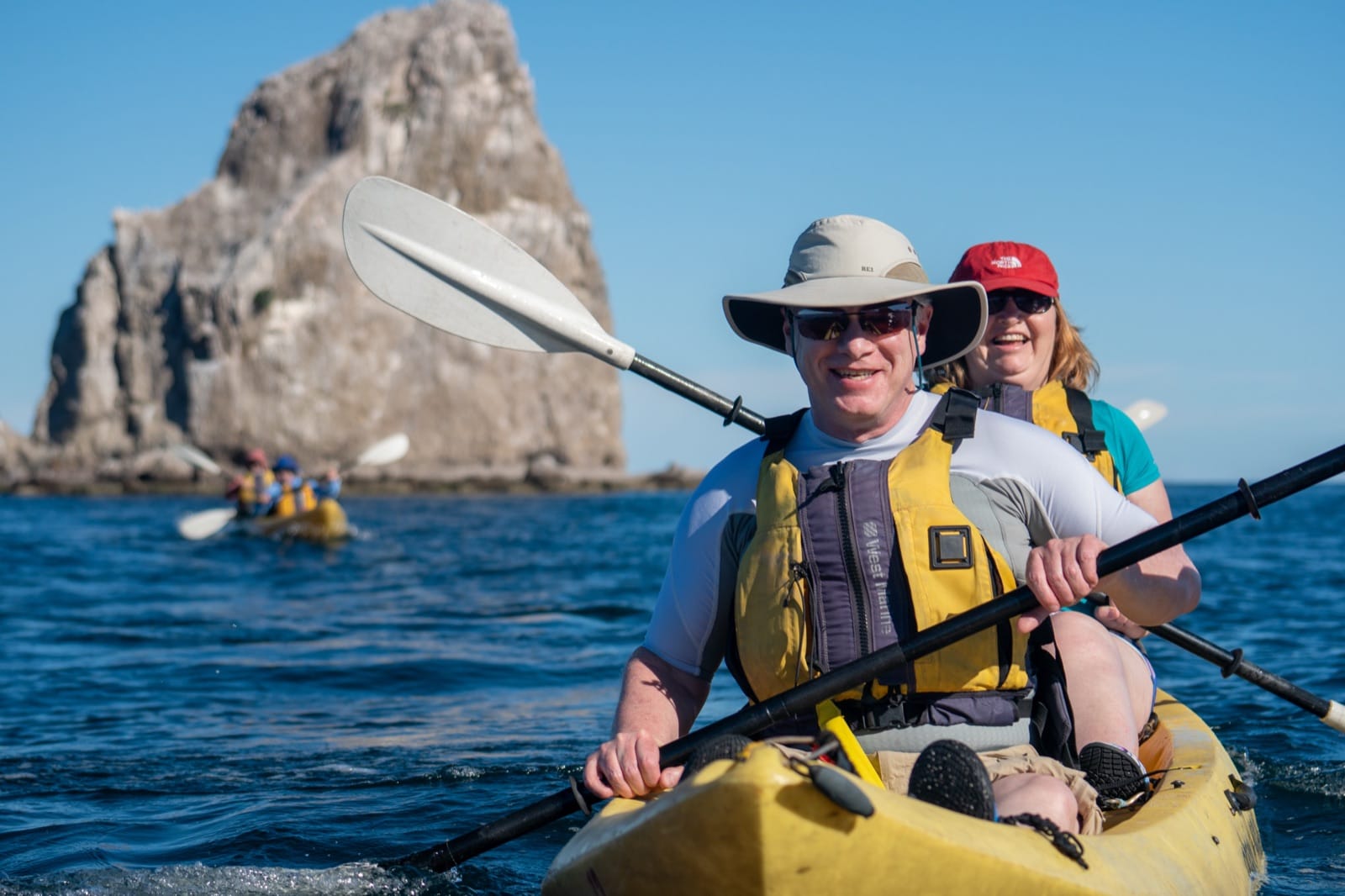
Bahía Agua Verde is one of the signature anchorages — a remote village tucked into a desert bay on the Baja peninsula side, fronted by sand and backed by cliffs. You can hike up into the ridge above the bay, kayak the inner waters, or just walk the village. Burros graze on the road in. It’s the kind of place no day-tour reaches.
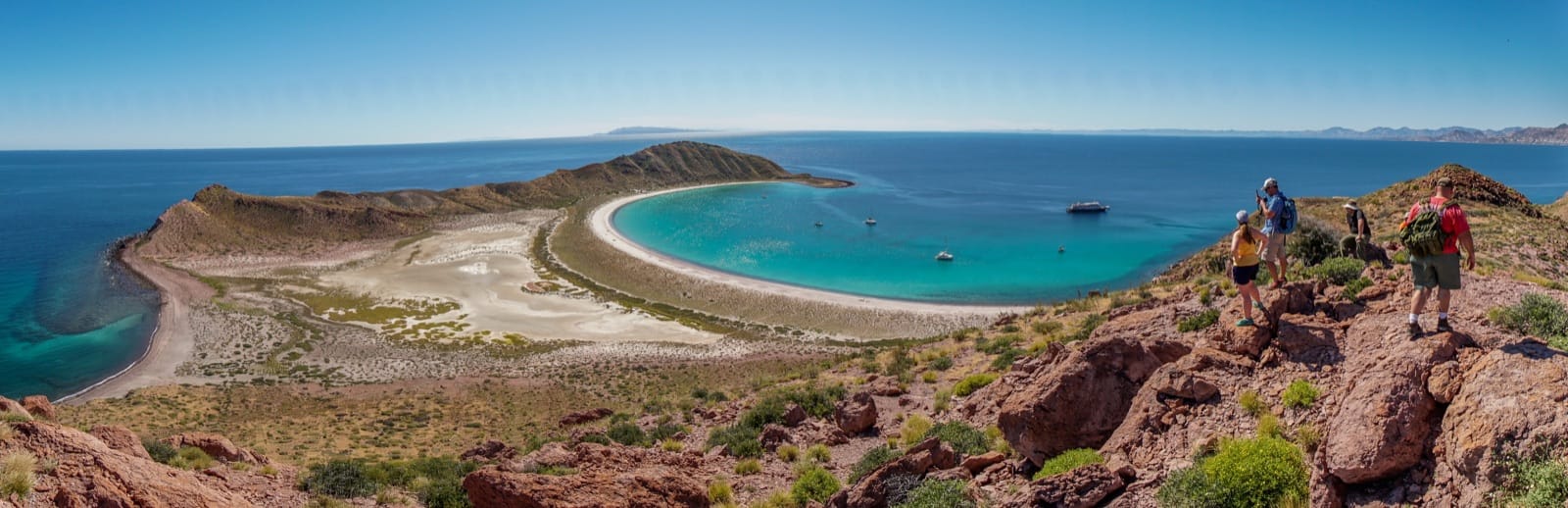
Isla San Francisco is the other anchorage worth naming — a small horseshoe-shaped island with a saltflat-rimmed inner bay, a panoramic ridge walk that earns its top-of-the-hour photo, and water clear enough to see fish from the skiff. Most clients describe this one when they’re trying to explain the trip after they’re home.
The Operator Question
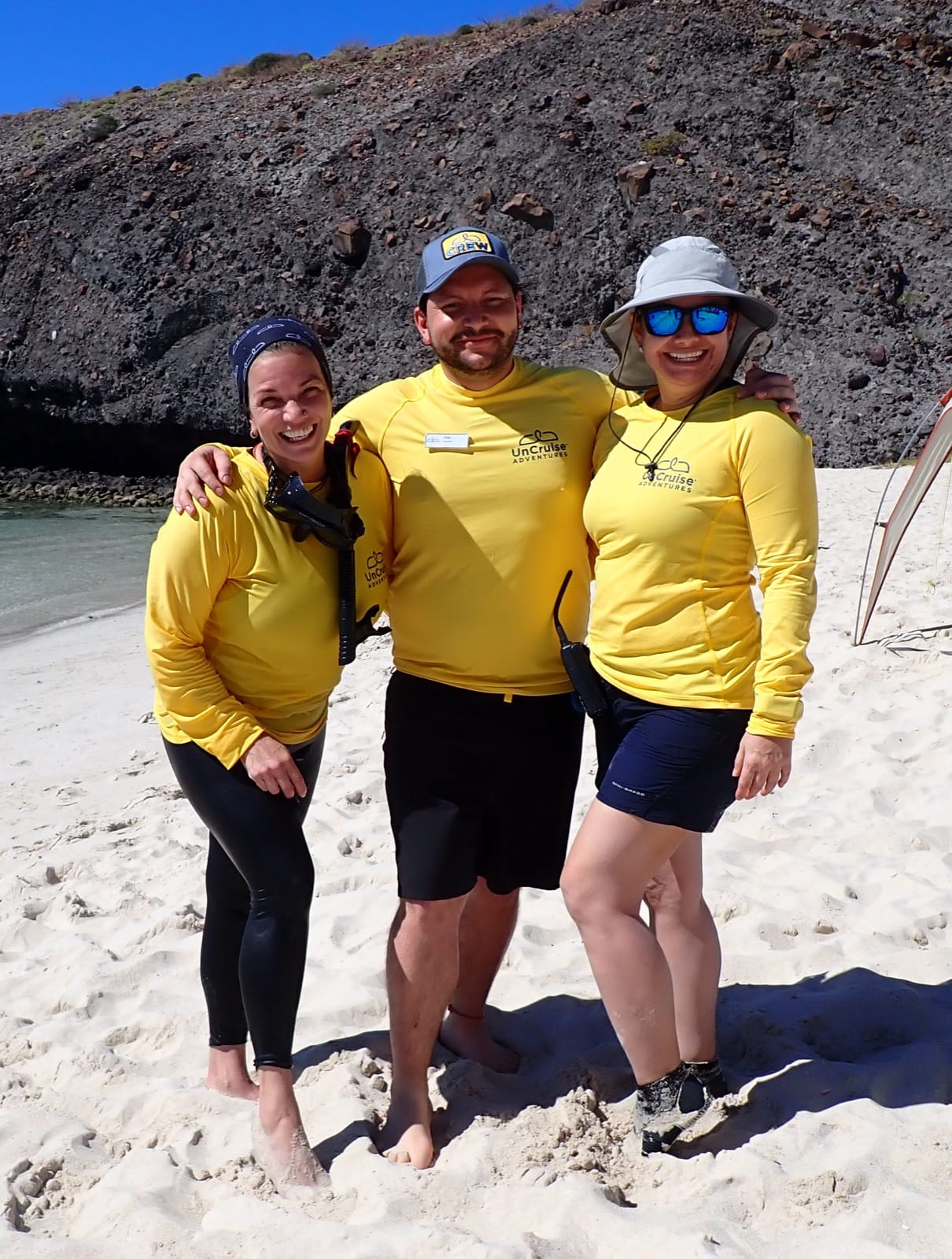
UnCruise Adventures runs the Baja itinerary aboard Safari Voyager (66 guests), a U.S.-flagged small ship that has been doing this route for 30 years. This is not a new product trying to find its footing — the expedition team knows the rookery timing at Los Islotes, the gray whale lagoon windows at Bahía Magdalena, the anchorage at Bahía Agua Verde, and the overnight coves day-tour boats never access. UnCruise’s founder, Captain Dan Blanchard, personally sails select Baja departures — rare access I flag for clients who care about that kind of thing.
Everything is included: all meals, all beverages (including alcohol), all excursions, gear, and wetsuit rental. The captain can change course when a whale appears or a dolphin pod runs the bow wave. No fixed port schedule to maintain. That flexibility is the product.
UnCruise turns the Wi-Fi off when you’re inside national park boundaries or remote wildlife zones — deliberately, as a feature. Their sustainability frame is Leave No Trace, Monterey Bay Aquarium Seafood Watch certified, sea-to-plate sourcing. None of this is performative. It shows up in the way the trip is run.
The Adults-Only Baja sailings are worth knowing about specifically — select winter departures designated for guests without children, with a quieter atmosphere and a focus on the expedition experience rather than family programming. For clients who want the wilderness without the summer-camp energy, ask me about these specifically.
Who This Trip Is For
This is a trip for someone who has been somewhere beautiful and come back feeling like they witnessed something, not just saw it. Someone who’s done the all-inclusive and found themselves noticing it looked the same at every resort. Someone who wants Mexico without the package-tour frame around it.
It is not the right trip for someone who needs a pool, a spa service day, and a hotel buffet breakfast. I’ll plan that trip gladly too — it just isn’t this.
The price is $4,500–$6,500 per person for 7 to 10 nights, all-inclusive. Against a Cabo resort at a comparable price point, factor in what the excursions would actually cost booked à la carte: whale-watching boat tours run $150–$300 per trip; snorkeling excursions are separate; sea lion swims are separate; the alcohol bill alone closes much of the gap. The comparison changes quickly when you add it up honestly.
The Winter Logic
The reason I recommend Baja as the winter warmth alternative to the Caribbean isn’t just marine life. It’s that the Sea of Cortez is calm in winter. The Baja peninsula blocks the Pacific swell. The water temperature is manageable with a wetsuit. The desert landscape above the waterline — red and ochre cliffs, cacti growing directly from rock faces, the silence of somewhere genuinely remote — creates a visual contrast the Caribbean doesn’t offer.
And the Milky Way at anchor in the Cortez, 50 miles from the nearest significant light source, is a visual that people describe when they’re trying to explain the trip to someone who wasn’t there and keeps not quite landing it.
That’s usually how I know a trip worked.
Erik is a Certified UnCruise Adventurist (since February 2024) with a direct working relationship to Julie Quarry, UnCruise’s Director of Outside Sales. He recommends the Sea of Cortez itinerary on Safari Voyager as one of the strongest small-ship product propositions in Mexico, based on the Adventurist certification program, BDM relationship, and ongoing research — updated May 2026.
Plan your trip with me.
A 30-minute discovery call is where it starts. No fee, no pressure.
Book a Discovery Call