There’s a moment on the slow Sephardic arc through Spain when the history stops being something you read on a plaque and becomes something you’re standing inside. For most families it happens in Toledo, in a room the size of a chapel, under a ceiling of white horseshoe arches, and it lands differently on every generation in the room at once. The grandmother goes quiet. The teenager, who has been half-present all week, finally looks up. That threshold — three generations stepping into the same room for their own reasons — is the trip. Everything else is the route that earns it.
This is the deep cut of a single paragraph in how I plan Jewish heritage travel: the one about Sephardic Iberia. It’s here because Spain is where the word Sepharad comes from, and because the arc through it is one of the most rewarding — and most misplanned — heritage trips in Europe. Misplanned, it’s a churn of synagogue-churches and gift shops in the August heat. Planned well, it’s a thread you follow north from the golden age, through the rupture, to a ritual bath hidden under a Catalan street that almost no tour bus ever finds.
You do not have to be Sephardic for this to be your trip. Some of the families I plan it for carry the surname and the story. Others are Ashkenazi and simply want to stand in the older half of the history. Some are interfaith couples, one partner walking the other through a heritage they’re still growing into. The arc holds all of them. What it asks for in return is a little patience and the right pacing — which is most of the work, and the reason it’s worth doing with someone who knows the room.
The Thread Starts in Córdoba
Córdoba is where you feel what was lost, because Córdoba is where the height was.
In the tenth century this was the capital of al-Andalus and one of the great cities of the world — a center of medicine, philosophy, poetry, and mathematics at a time when most of Europe had none of those things at scale. The Jewish community flourished inside that flowering; the period gets called the Golden Age of Jewish culture in Spain for a reason. I’d gently steer you away from the postcard version, though. You’ll hear the word convivencia — the idea of Muslims, Christians, and Jews living in seamless harmony — and it’s a beautiful idea that historians have spent decades complicating. The golden age was real, and so were the periods of pressure and violence that punctuated it. The honest version is more interesting than the fairy tale: a genuine height of Jewish intellectual life, achieved inside a world that was never simply tolerant.
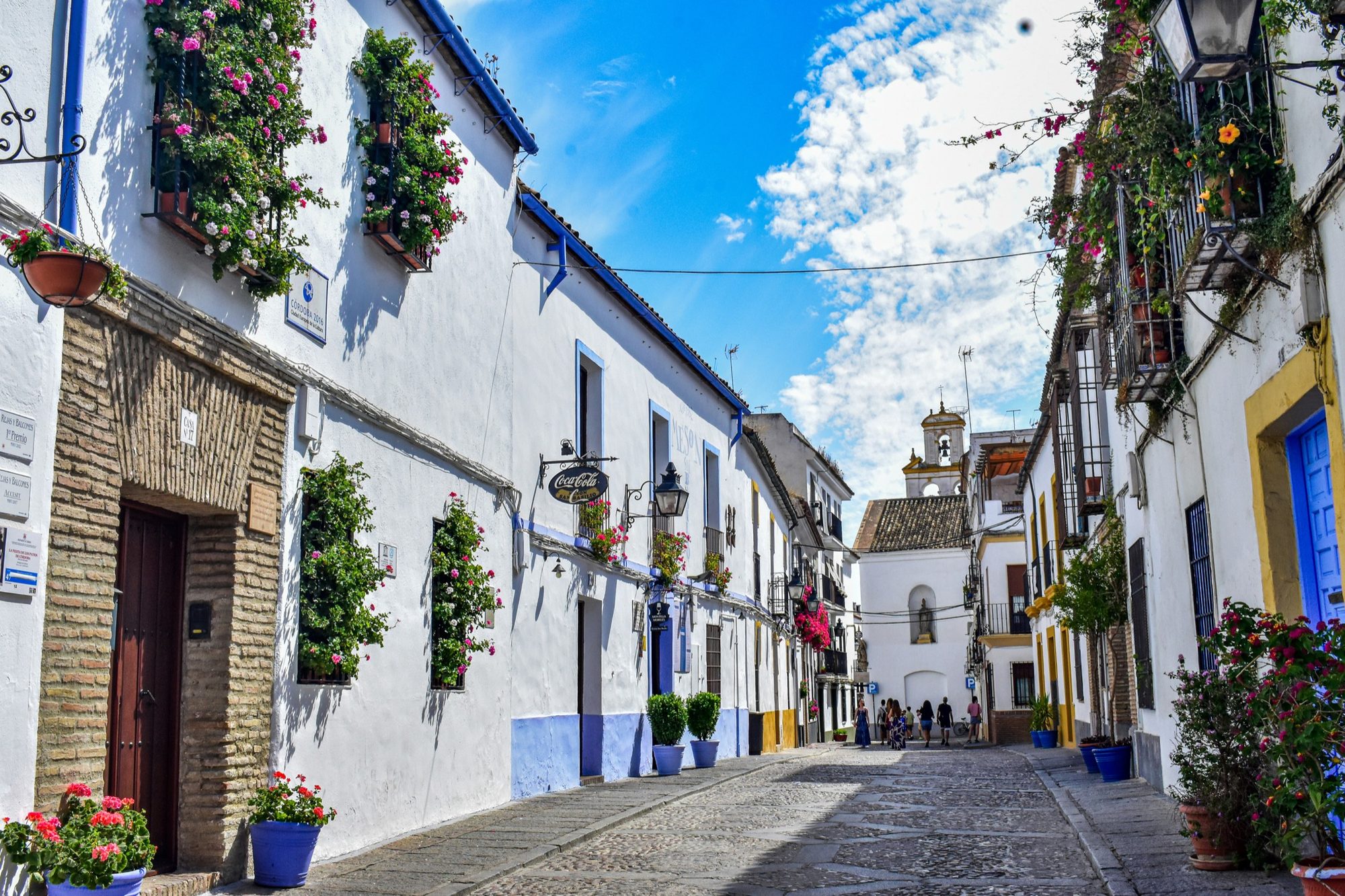
The quarter itself — the Judería — is a dense weave of whitewashed lanes northwest of the great mosque-cathedral, and it rewards wandering more than checklisting. Two things anchor it. The first is the Synagogue of Córdoba, a small Mudéjar prayer room built around 1315, one of only three medieval synagogues still standing in all of Spain and the only one in Andalusia. It is tiny, and that intimacy is the point; you stand where a community stood, in a room they built, seven hundred years ago. The second is the bronze statue of Maimonides in the Plaza de Tiberíades, worn shiny at the foot where visitors touch it for luck. Moses ben Maimon — Rambam — was born in Córdoba in 1138 and became one of the towering Jewish minds of the Middle Ages, physician and philosopher both. He didn’t die here; the plaza is named for Tiberias, in the Galilee, where he’s buried. That geography is its own quiet lesson about this whole history: it rarely stayed in one place.
Nearby, the Casa de Sefarad on Calle Judíos gives you the connective tissue — a small private museum on Sephardic memory, Ladino, the diaspora, the women, the music. It’s the kind of place a good guide uses to slow the day down rather than speed it up.
Seville: Atmosphere and Memory
Seville is where the thread nearly snaps, and where you have to plan against the guidebook’s promises.
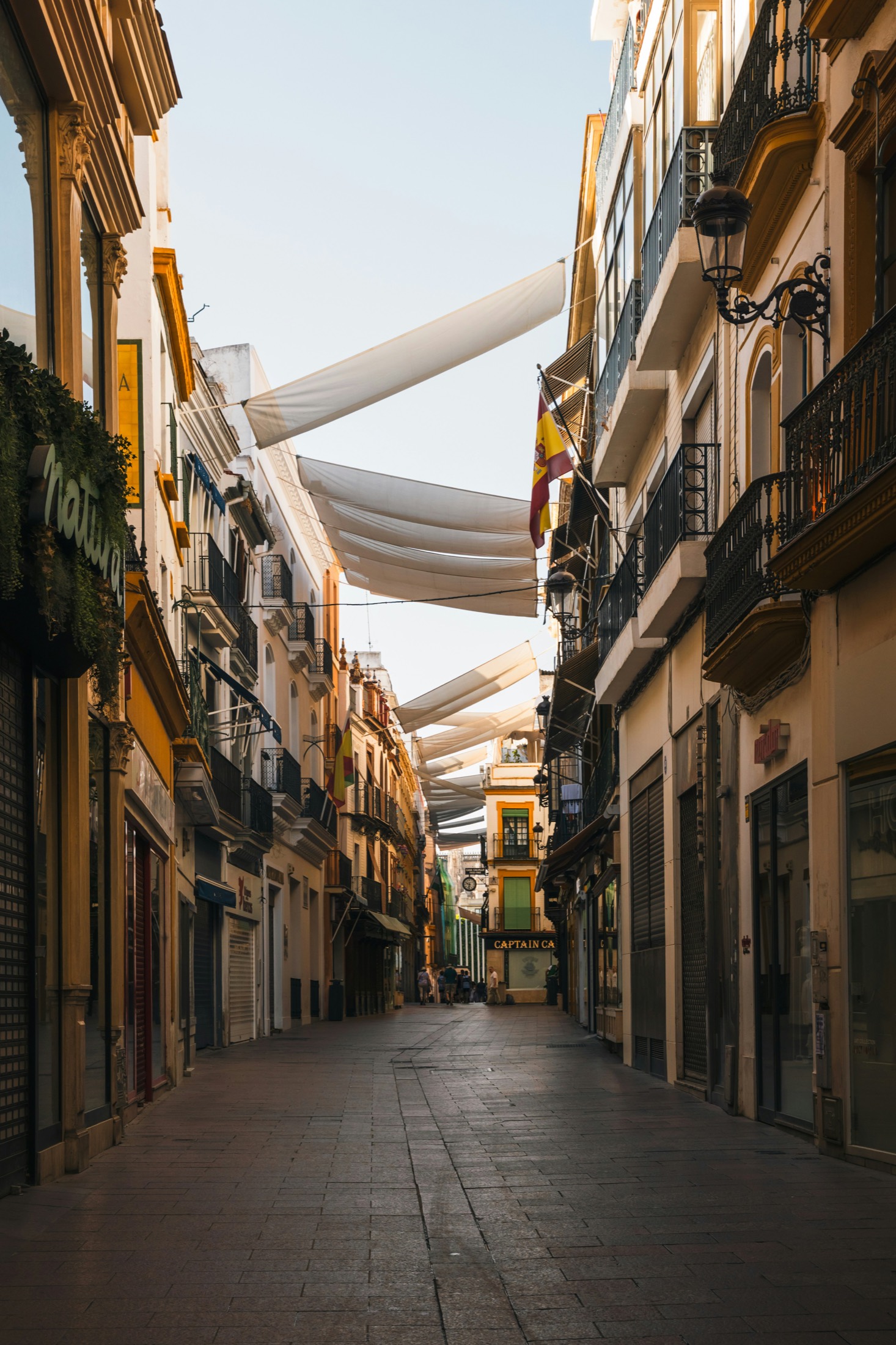
After the Christian reconquest of the city in the mid-thirteenth century, Seville’s Jewish quarter grew into one of the largest in Iberia, second only to Toledo. Today that quarter is the Barrio de Santa Cruz — the postcard neighborhood pressed up against the walls of the Alcázar, all orange trees and impossibly narrow lanes. It is genuinely beautiful. It is also, for our purposes, mostly memory. There is no working medieval synagogue to walk into here the way there is in Toledo or Córdoba. What Seville offers is the shape of the thing — the street plan, the names, a few churches that were once synagogues — and the story of what happened to it.
That story matters, and I don’t skip it. In the summer of 1391, anti-Jewish riots broke out in Seville and, within months, spread across the peninsula — dozens of towns, mass killings, and forced conversions on a scale that changed the trajectory of Jewish life in Spain. The chronicles put the dead in Seville alone in the thousands; the figures are estimates, and I frame them that way, but the rupture is not in doubt. Seville’s Judería never really recovered, and 1391 is the fuse that runs, a century later, to 1492. To walk Santa Cruz without knowing that is to walk a pretty neighborhood. To walk it knowing it is to understand why the golden age has an ending.
One planning honesty here: a Jewish-interpretation center that older guidebooks and even some tourism pages still list appears to have closed. I don’t build a day around a museum I can’t confirm is open — so in Seville the work is a good guide, the right pacing, and the story, not a ticketed exhibit. That’s a feature, not a gap. Seville is the atmosphere stop on this arc, and it plays best that way: a slow morning in the quarter, the history told well, and the rest of the city — which is one of the most joyful in Spain — left room to breathe.
Toledo: Where Two Synagogues Still Stand
If Córdoba is the height and Seville is the rupture, Toledo is the survival.
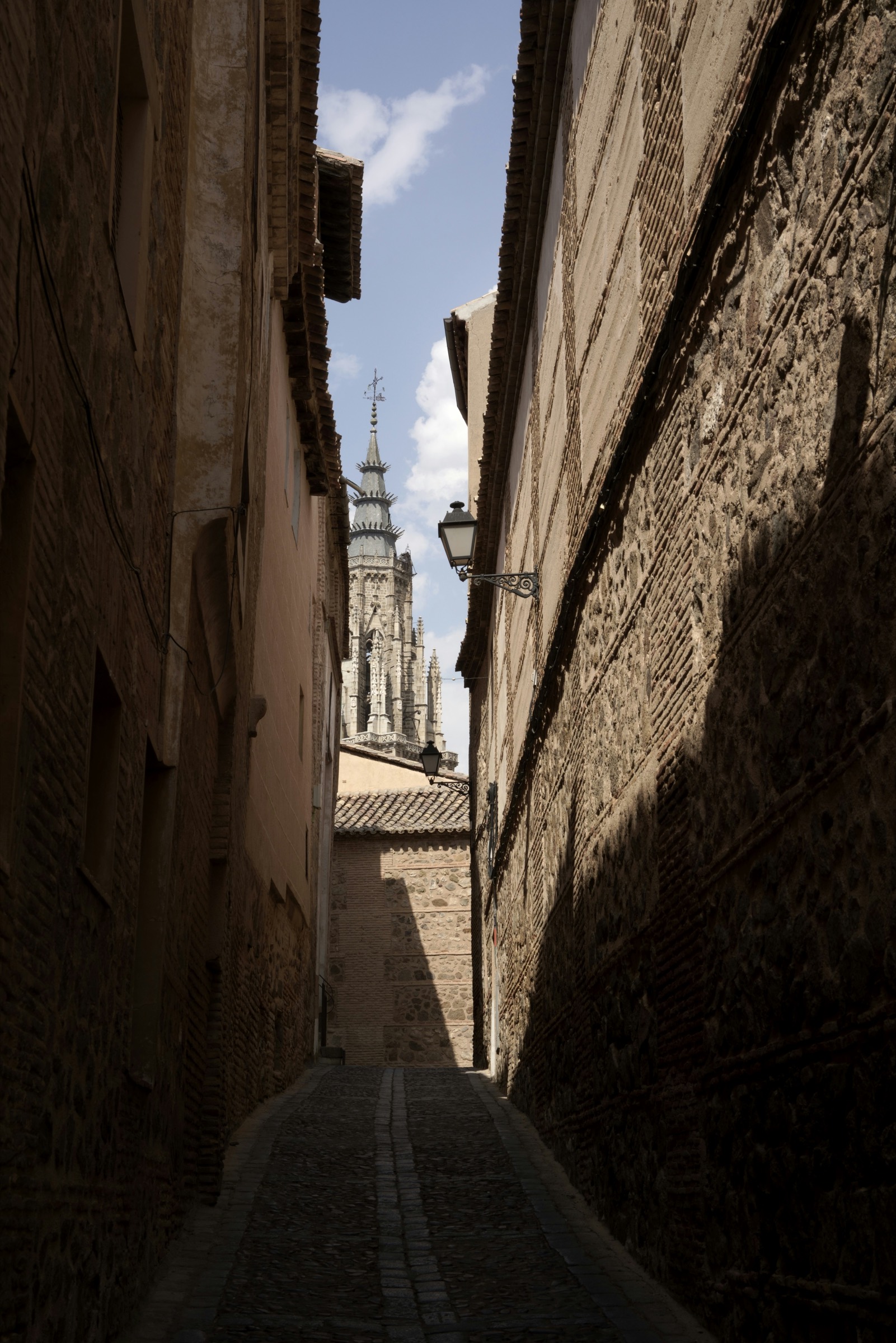
The old city climbs a granite hill above a loop of the Tagus, and the Judería occupies its southwestern shoulder — a quiet warren away from the main square, marked underfoot since 2012 by hundreds of small blue tiles set into the pavement, each carrying the Hebrew word chai, “life.” Two medieval synagogues survive inside it, which makes Toledo almost unique in Europe.
The first is Santa María la Blanca, built around 1180 as a synagogue — commissioned by the Jewish community, raised by Muslim craftsmen, under a Christian king. That sentence is the whole of medieval Spain in one building. Inside is the image people carry home from this trip: a forest of white octagonal pillars carrying tier upon tier of horseshoe arches, whitewashed and luminous, more like a grove than a room. It was taken as a church in the early fifteenth century, in the long aftermath of 1391, and it has been a monument rather than a working place of worship ever since.
The second is the Sinagoga del Tránsito, built in the 1350s by Samuel ha-Levi Abulafia, treasurer to King Pedro I of Castile — a richer, more ornate space, its prayer hall banded with polychrome stucco and Hebrew inscription running the length of the walls. Today it houses the Museo Sefardí, Spain’s national Sephardic museum. This is the room where the trip tends to land on people. It is where I’d spend the unhurried hour.
A word on Toledo’s rhythm, because it’s the hinge of the whole arc: it’s an easy run from Madrid, which is where the kosher-and-comfort infrastructure actually lives (more on that below), and it makes a natural anchor day rather than a rushed day-trip. The city empties out in the late afternoon when the tour coaches leave. That’s when the Judería is best. Plan to be there for it.
North to Catalonia: Girona’s Call and the Bath Under Besalú
Most Sephardic-Spain itineraries stop at the Andalusian-Castilian triangle. The ones I love keep going north, to Catalonia, where two of the most affecting sites on the whole thread are the least trafficked.
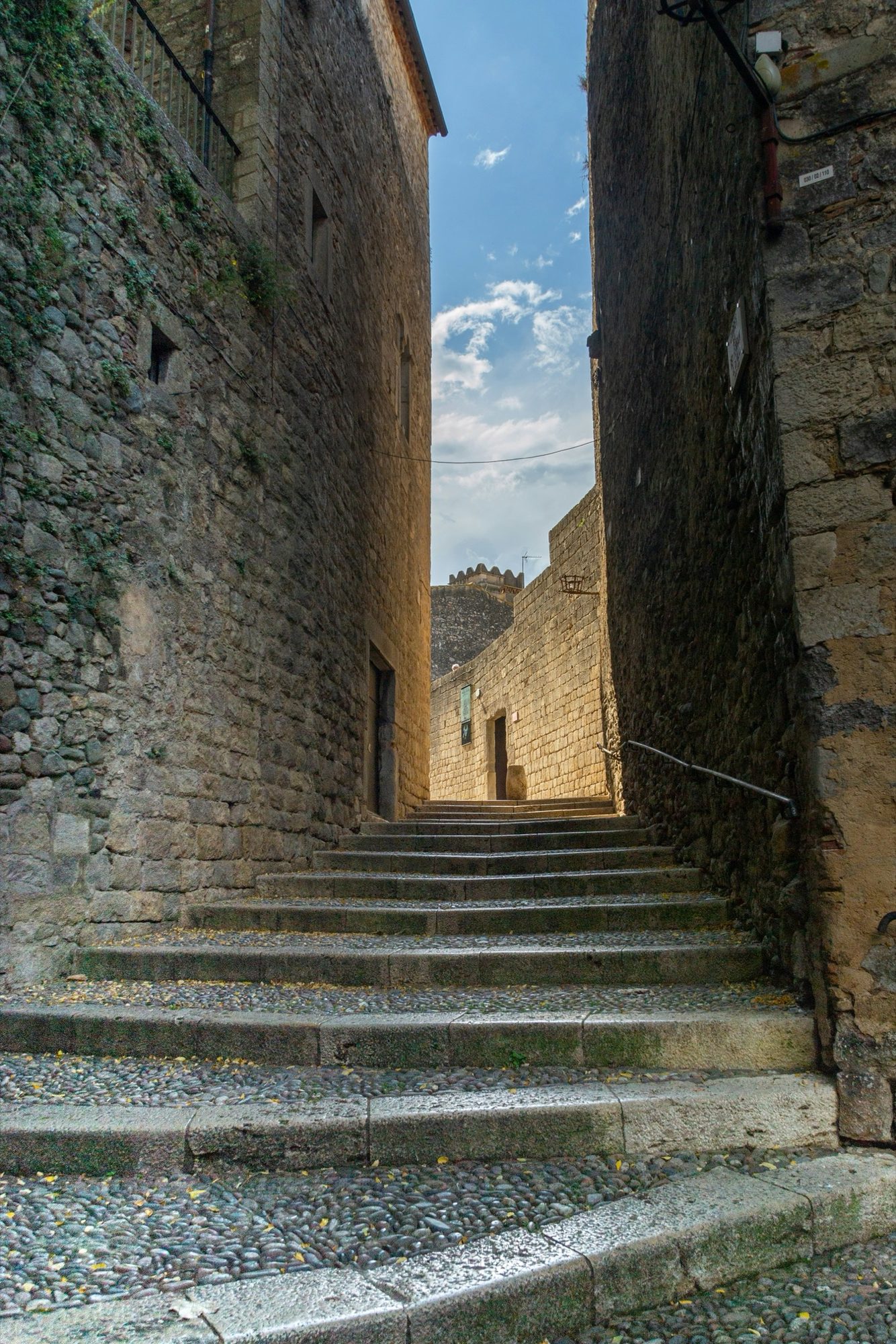
Girona holds what many consider the best-preserved medieval Jewish quarter in Europe — the Call, a near-vertical warren of stone stairs, shadowed alleys, and hidden courtyards climbing off the Carrer de la Força. Jewish presence here is documented back to the ninth century, and the quarter was lived-in right up to the 1492 expulsion. At its heart, on the site of the city’s last synagogue, is the Museu d’Història dels Jueus — the Museum of Jewish History — and, within it, an institute named for Nahmanides, the Ramban, born in Girona around 1194. Girona was a renowned center of Kabbalah in the thirteenth century; you can feel why in the Call’s geometry, which seems designed for the study of hidden things.
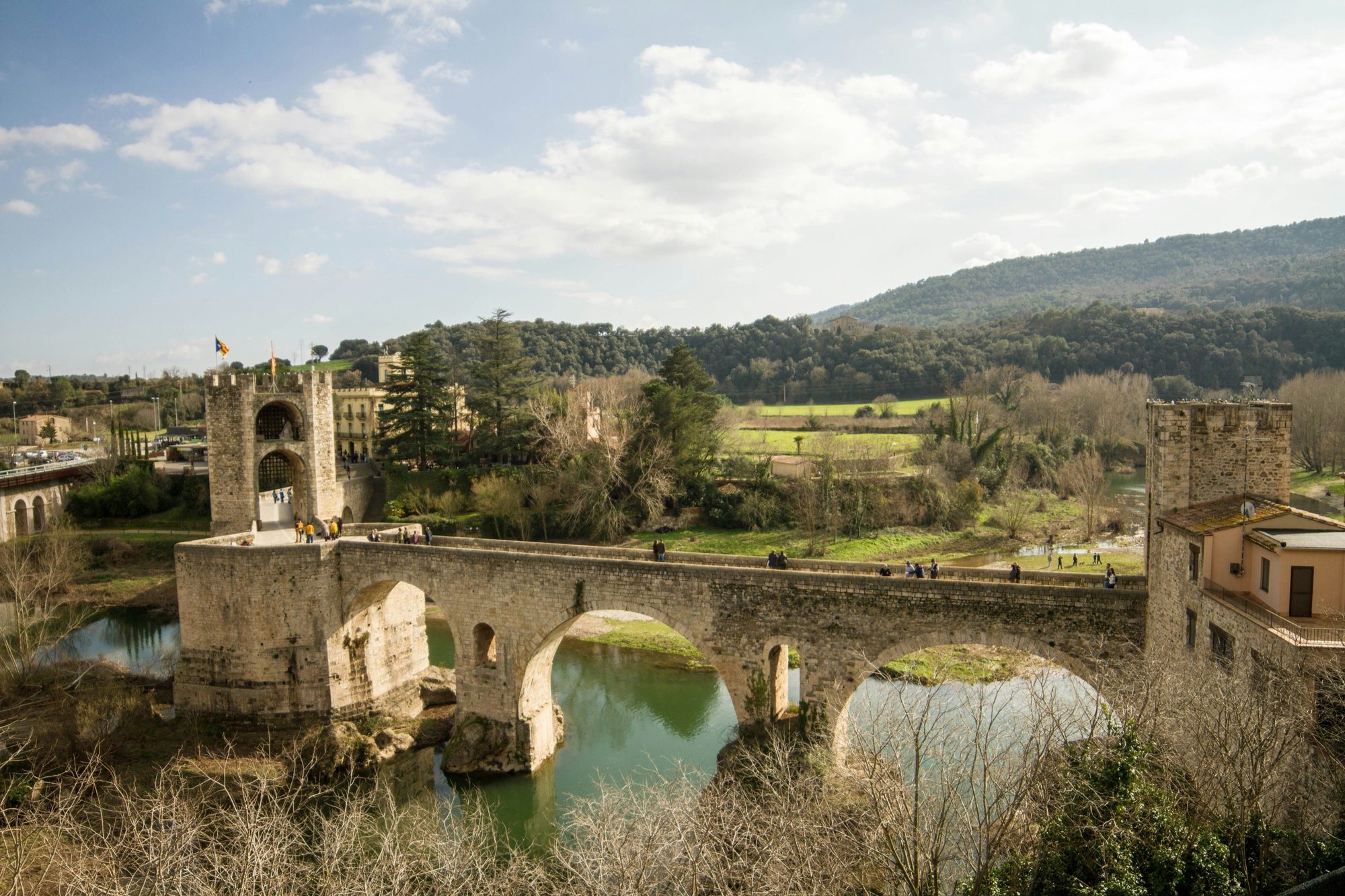
Then there’s the piece almost nobody plans, and the one people talk about afterward. In the small medieval town of Besalú, reached across a fortified Romanesque bridge over the Fluvià, a flight of stone steps descends below street level to a mikveh — a Jewish ritual bath from the late twelfth century, fed by spring water, one of only a handful of medieval mikva’ot surviving anywhere in Europe. It was found by accident in 1964. It is kept locked, and you visit it by arrangement through the town — which is exactly why it’s never crowded, and why standing in that cool, silent, thousand-year-old chamber is the kind of moment a whole trip gets organized around. (One honest note for the record: Girona and Besalú sit in the Catalan heritage framework, not the Andalusian Red de Juderías network that ties together Córdoba, Toledo, Segovia, and — newly, in 2026 — Seville. It’s a footnote, but I’d rather you have it right.)
Córdoba →︎ Seville →︎ Toledo →︎ Girona →︎ Besalú is the thread at full length. Few families do all five in one trip, and none should rush them. Which brings me to the part of this that actually determines whether the trip works.
The Part That Actually Determines Whether It Works
The sites are the easy part. The planning truths below are what separate a trip that lands from a beautiful slog.
Kosher lives in Madrid and Barcelona, not in the heritage cities. This is the single most important thing to know before you go. Córdoba, Toledo, Seville, Girona, and Besalú are extraordinarily rich in history and essentially bare of active kosher infrastructure — no kosher restaurants, no Chabad houses, in most cases no functioning Jewish community at all. The living Jewish life, and the kosher dining, sits in Madrid and Barcelona (with the Costa del Sol around Marbella as a third hub). So for a kosher-keeping or observant family, the arc gets anchored deliberately: kosher meals and a Chabad or community connection in the big cities, and the heritage towns planned as history-rich, self-catered stops. That’s not a compromise — it’s just the real map, and knowing it up front is the difference between an easy trip and a hungry one. Where you land on the spectrum — fully kosher, kosher-leaning, one Shabbat dinner, or not a factor — is a conversation we have early, because it shapes the whole route.
Shabbat and the Monday problem. Spanish state museums, including Toledo’s Sephardic Museum, tend to close on Mondays, and the Córdoba synagogue does too. An observant traveler resting on Saturday can get pinched from both ends — Saturday out for Shabbat, Monday out for closures. The fix is simple once you see it: route the ticketed heritage sites for Tuesday through Friday, keep Saturday for rest, and give Monday to the things that never close — the open-air quarters of Santa Cruz, Girona’s Call, and Besalú’s streets are yours to walk any day of the week.
Pacing for the people actually in the room. This is a multigenerational arc more often than not, and it lives or dies on stamina, not itinerary density. Toledo’s hills and Girona’s stairs are real; the August heat in Córdoba and Seville is real. The trip that works builds in the long lunch, the empty afternoon, the second night in a city instead of a checklist sprint through it. The threshold moments — the family stepping into El Tránsito together — need the day around them to be unhurried enough that they can actually happen.
On the ground, it’s the operator. What separates this from a heritage package isn’t the destinations; it’s who walks you through them. A guide in Toledo or Girona who knows when to linger at the threshold and when the eleven-year-old is done, who can open the door in Besalú, who tells the 1391 story with weight and not melodrama — that’s the whole game. I don’t have a Tuesday-tour desk. What I have is a bench I’m building the way I build every region: operators vetted through the trade and through colleagues whose judgment I trust, several of them relationships I’m cultivating directly as the trips for them come together. If I haven’t personally stood beside a particular guide in Córdoba yet, I know the people who have, and I won’t put your family with anyone I can’t stand behind.
A Note on Citizenship, and on Why This Trip Matters Now
A practical footnote people ask about: for a few years Spain offered a path to citizenship for the descendants of Jews it expelled in 1492. It was a genuine act of return, and it’s worth knowing it happened — but the application window has closed, so the trip is now about the heritage, not a passport. I mention it because it points at what the arc is really about: a country reckoning, however imperfectly, with what it did, and families choosing to show up in these places on purpose.
That showing-up is not a small thing in 2026. Standing in the synagogue in Córdoba, descending the steps to the bath in Besalú, taking the family photograph at the threshold in Toledo — with intention, with the story told honestly, three generations at once — is its own quiet kind of continuity. The thread was cut here once. Following it, deliberately, is a way of refusing to let that be the end of the sentence.
If that’s the trip you’re turning over — a slow Sephardic arc, planned with depth and paced for the people you’re bringing — I’d love to talk about it.
Common questions
Do I have to be Sephardic — or Jewish — for this trip?
No. The arc is built for families with the surname and the story, for Ashkenazi travelers who want to stand in the older half of the history, and for interfaith couples where one partner is walking the other through a heritage they’re still growing into. The route adapts to the lens you bring it. There’s no version that’s “not connected enough” to belong on it.
How much of this can we realistically do in one trip?
The full thread — Córdoba, Seville, Toledo, Girona, Besalú — runs across two ends of the country, and doing all five well takes time and a slower pace than most people expect. Many families do the Andalusian-Castilian triangle (Córdoba, Seville, Toledo) on one trip and save Catalonia for another, or anchor in Madrid and Barcelona and reach out from there. The right answer depends on who’s traveling and how much stamina the group has. That’s the first thing we’d sort out.
We keep kosher. Is this trip even possible?
Yes — with the right map. The active kosher infrastructure in Spain is in Madrid and Barcelona (and the Costa del Sol), not in the heritage cities, which have deep history but little to no kosher dining today. So the trip gets anchored around the big cities for kosher meals and a community connection, with the heritage towns planned as self-catered day stops. Fully kosher, kosher-leaning, or a single Shabbat dinner — we set the level early, because it shapes the route.
Discovery calls are thirty minutes, free, and the only thing they commit you to is finding out whether we’re the right fit.
— Erik
Plan your trip with me.
A 30-minute discovery call is where it starts. No fee, no pressure.
Book a Discovery Call