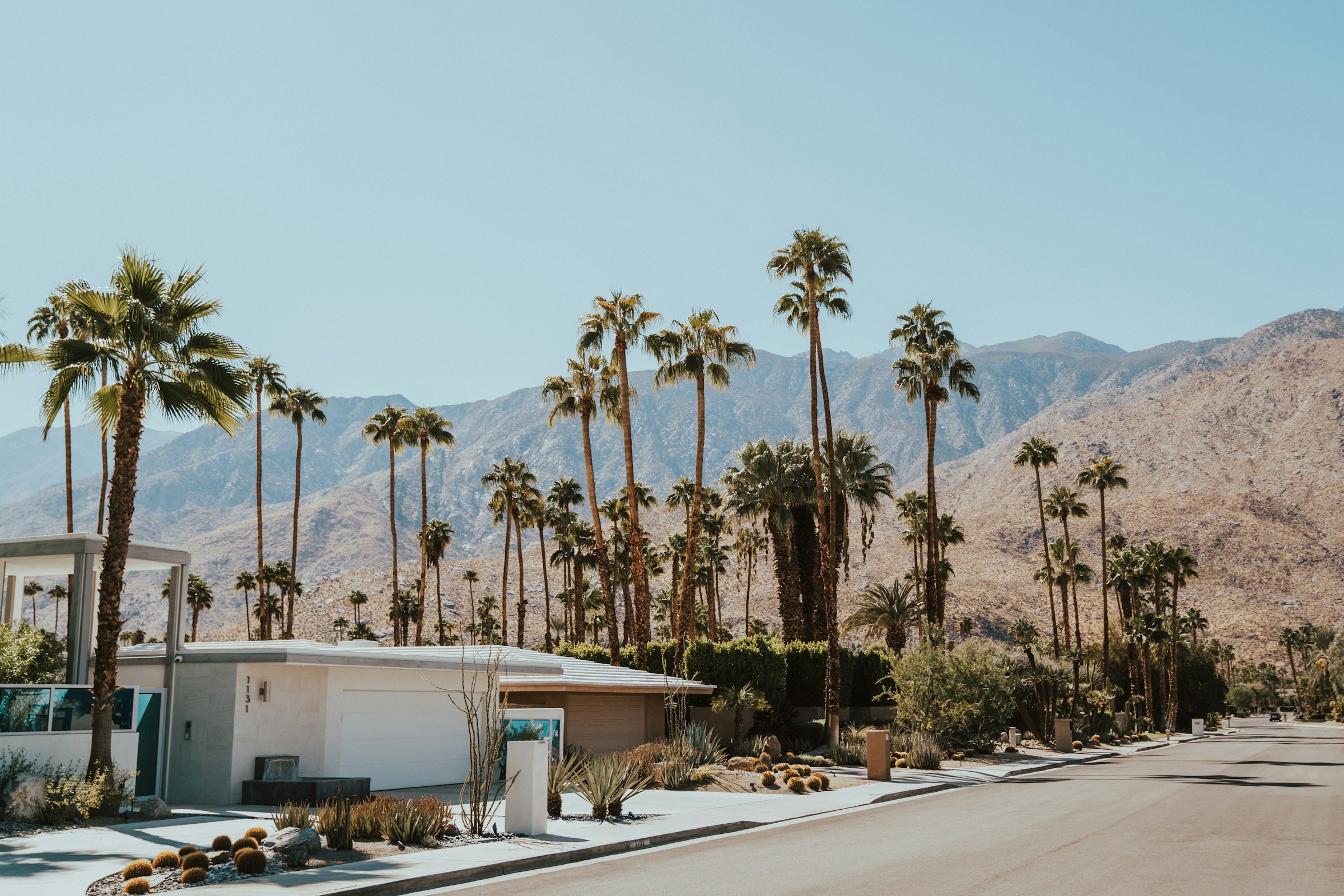
Palm Springs is a weekend destination in the truest sense — it’s not built for the week-long stay, it’s built for the long weekend where people arrive Friday afternoon, enjoy the pool and the spa and the restaurants, and depart Sunday evening rested and restored. This is the gift and the constraint. The infrastructure assumes that’s your rhythm. The hotels, the restaurants, the nightlife, the culture — everything is optimized for the Thursday-through-Sunday escape. The town fills on weekends, empties on weekdays, and the whole point is that you arrive with the intention to do very little and have that intention completely honored.
Most clients ask about Palm Springs in one of three frames: as a couples’ spa weekend or honeymoon, as a long-weekend celebration or friend gathering, or as a Coachella Valley multi-stop where Palm Springs is the anchor and you add Anza-Borrego or Joshua Tree on the day trips. The couples’ spa weekend is the most straightforward. The friend gathering requires understanding the nightlife and bar rhythm. The multi-stop requires a different itinerary structure and usually more days.
Here’s how I think about it.
At a Glance
| Best time to visit | October–April is the high season when the desert is perfect: warm days, cool nights, clear light, all the restaurants and spas fully operational. June–September is hot (105–115°F daytime), many restaurants close, but prices drop significantly if heat doesn’t bother you. Skip September (the hottest before the shift). |
| How long to stay | Three to four days is the right window — arrive Friday afternoon, depart Sunday evening. Five days works if you’re doing a quiet trip; six or more days and you’ve left the weekend rhythm and entered “stay at a resort” mode, which is different. |
| How to get there | Most travelers fly into Los Angeles (LAX) and drive 2–2.5 hours to Palm Springs, or fly into Ontario Airport (ONT, shorter drive). Some fly directly to Palm Springs International (PSP). Rental car is nearly essential; the town is car-dependent. |
| Currency / language | US dollars, English. Standard Southern California courtesy. |
| One thing most guides won’t tell you | Palm Springs has distinct neighborhoods with different vibes: Downtown / Village (walkable, restaurants, nightlife), the Resort Strip (chain hotels and spas, car-dependent, impersonal), the Mid-Century neighborhoods (beautiful architecture, quieter, you drive between activities). Where you anchor and how you spend your time are closely linked. |
Why I Send Travelers Here
Because Palm Springs delivers the long-weekend escape perfectly without pretense or overcomplexity. Because the mid-century architecture is genuine and worth understanding. Because the spa and wellness culture is serious — this isn’t a superficial “relax” destination, it’s a destination built around actual restoration. Because the pool culture is real and unironic. Because the food and dining scene is genuinely good and not just resort mediocrity. Because the nightlife and bar scene is substantial without demanding performance.
I send couples here for spa weekends, anniversaries, and honeymoons because the rhythm of the trip is naturally slow, because there’s enough to do (or not do) without feeling pressured, and because two days in a spa and two days exploring the architecture and neighborhoods feels genuinely restorative. I send friend groups here because the combination of pool time, restaurant quality, and nightlife creates a trip where people reconnect. I send celebration groups here because the town accommodates gathering without feeling staged.
Every recommendation below comes from understanding what Palm Springs actually does — which neighborhoods work for which travelers, which hotels deliver, and how to pace a long weekend so it actually works rather than feels like another rushed trip.
Palm Springs is also one of the great queer havens in America. Since the 1970s the Warm Sands neighborhood has been home to the men’s resorts; downtown, the blocks of Arenas Road are now the desert’s densest run of gay bars. That history is part of why the town feels the way it does — unhurried, unbothered, welcoming without making a production of it. It’s always a safe bet for same-sex couples and friend groups: one of the few places where “come as you are” is just the ambient temperature.
Where I’d Anchor
A quick word on how I book these. Some of these properties carry a consortium amenity layer — a breakfast, a resort credit, a room-category bump — that I calibrate to your dates on the call. Others I book directly, without that layer. Palm Springs runs heavily on independent and boutique hotels, so more of them fall in the second bucket than in a big-resort destination — and I’ll always tell you plainly which is which. The pick comes first. The perk, when it applies, is a bonus, not the reason.
Three neighborhood anchors define most Palm Springs stays:
Downtown / The Village. The commercial heart, walkable restaurants and galleries, nightlife concentrated here, the energy is contemporary-casual. If you want to walk to dinner and experience neighborhood life, this is where you anchor. Trade-off: it’s touristy and busy on weekends, you’re away from the resort pools.
The Mid-Century Neighborhoods (East and North). The heart of the architectural heritage, quieter, more residential-feeling, beautiful homes and hotels. You need a car to move between activities, but the aesthetic is extraordinary. Better if your trip is about the architecture and the pool more than nightlife.
The Resort Strip (South). Chain hotels, larger properties, resort amenities, car-dependent. Less interesting aesthetically, but easy if all you want is a hotel with a spa and a pool.
Parker Palm Springs (Village-edge luxury). The design-world anchor — a Jonathan Adler interior, the Palm Springs Yacht Club spa, three pools, lemonade stands and a pétanque court on landscaped grounds at the edge of the Village. It’s playful without trying too hard, and it’s the one I reach for when the trip is as much about the hotel as the town. (Its restaurants Norma’s and mister parker’s take a seasonal break in late summer — worth knowing if you’re booking August into early September.)
L’Horizon Resort & Spa (the design-lover’s romance). My first call for a couple who wants adults-only quiet and real architecture. A 1952 compound by the desert-modernist architect William F. Cody — once a private hideaway for Hollywood — restored by designer Steve Hermann into an intimate cluster of bungalows around an infinity pool, with SO•PA, one of the desert’s most acclaimed dinners, on site. Grown-up, hushed, and genuinely beautiful. Adults only, 21 and up.
The Colony Palms (boutique, with pedigree). A 1936 property in the heart of the Village with a colorful speakeasy-and-gambling past, reborn through a Steve Hermann renovation into an adults-only boutique — the iconic pool, poolside dining at The Colony Club, a wellness spa, a lot of character in a small footprint. It shares a designer’s hand with L’Horizon (both are Hermann’s), so if you like one aesthetic you’ll likely like the other — this is the walkable-downtown version of it.
Korakia Pensione (the quiet hideaway). For romance over scene. A 1924 Moroccan-Mediterranean villa compound built by a Scottish painter — two saltwater pools, secret gardens, courtyard films at night, no televisions by design. Regularly called one of the most romantic hotels in the country, and it earns it. Adults only.
Santiago Resort (the classic gay Palm Springs). If what you’re picturing is the Palm Springs — all-day pool culture and a walk to the Arenas Road bars — this is the pick. Santiago is the town’s premier gay men’s resort: adults-only, clothing-optional, breakfast and poolside lunch included, a near-perfect guest rating, and one of the biggest pools of any gay resort in town. It’s a specific experience and an exceptional one for the right traveler; I’ll be straight about the fit on the call.
La Quinta Resort & Club (the desert-resort institution). When you want sprawl and full-resort amenities over walkable-downtown, the 1926 institution — individual casitas, pools throughout the grounds, a serious spa — is the move. Honest note: it’s out in La Quinta, about a half-hour southeast, so this is a settle-in-and-stay choice, not a walk-to-dinner one.
Two of these — Parker and La Quinta — take all ages; L’Horizon, Colony Palms, Korakia, and Santiago are adults-only.
Want one of these stays? Start a discovery call — I’ll walk through the neighborhoods, the aesthetic fit, the spa and dining options, and confirm what applies to your dates and priorities. And the welcome detail at arrival — perhaps a spa treatment reserved, or a note arranging your first dinner — is how I make sure your weekend feels intentional.
What I’d Do With a Long Weekend
Day One — Arrival and Pool Time
Arrive Friday afternoon. Check in. Swim if there’s time before sunset. Relax by the pool. This is not a hiking day. This is a settling-in day.
Dinner Friday is the evening you go out. Norma’s if you’re at Parker (excellent and convenient), or a reservation somewhere in Downtown (make this in advance). Workshop Kitchen & Bar (seasonal, California-forward), Il Pastaio (Italian, reliable), or somewhere you’ve researched. Not a casual dinner; this is the meal you look forward to.
Early night if you’re tired, or drinks after if the energy calls.
Day Two — The Architecture and The Spa
Morning: sleep in. Late breakfast at your hotel or at a Downtown café.
Mid-morning or noon: Kaufmann House tour (the famous Richard Neutra mid-century masterpiece, timed tours available, worth the booking). Or a self-guided architectural walk through the mid-century neighborhoods if you don’t want the formal tour. The architecture here is genuinely beautiful and worth understanding.
Lunch casual somewhere in the neighborhoods or back at your hotel.
Afternoon: spa time. This is the point of Palm Springs. Book a treatment in advance — massage, facial, whatever appeals. Full afternoon or just a few hours. The whole rhythm of the weekend shifts to relaxation mode.
Evening: casual dinner (hotel restaurant, or somewhere low-key). Early night because the spa has given you permission to rest.
Day Three — Another Pool Day and One More Dinner
Morning: breakfast, another swim, reading by the pool. The rhythm is completely slow now.
Late lunch: somewhere casual. Elote (seasonal, Mexican-inspired, good), Three Thirty Three Café (casual, local), or your hotel.
Afternoon: more pool, more rest, or a final architectural detail if you missed something yesterday.
This is the evening you go out if you want nightlife, or keep it quiet if you don’t. The Hawk (rooftop bar, Coachella-adjacent energy), Bootleggers (craft cocktails, more refined), or the Arenas Road bars downtown — Hunters, Streetbar, Chill Bar — the heart of the gay nightlife district. Or dinner somewhere Downtown and back to the hotel early. The choice is yours; the town accommodates both.
Day Four — The Departure
Sleep in. Final breakfast. Pool time if you have it before checkout. Drive to the airport or drive back to LA with a clear head.
Specific Things I’d Tell You About
The Kaufmann House is worth seeing once. Richard Neutra, 1946, the desert itself integrated into the house design. It’s the masterpiece of mid-century Palm Springs architecture. The timed tours fill in advance on weekends. Book it during the planning call if you want to go.
The architectural walks are worth doing. The mid-century neighborhood around Racquet Club Drive, the area near the Flamingo Hotel — these streets are a museum of 1950s residential design. Drive or walk slowly. It rewards looking.
The spa culture is the point. Don’t skip this thinking you’ll do it later. Book your treatment in advance. Give yourself permission to spend half a day doing nothing but being restored. This is the gift of Palm Springs.
Downtown is where the restaurant and bar energy is. If you want to walk to dinner or have drinks after, anchor Downtown or within walking distance. If you anchor further out, you’re driving everywhere.
The pool is unironic. This is the Midwest’s vision of paradise — the pool, the sunshine, the peace, the beauty of existing near water in the desert. Lean into it. Swim. Sit by the pool. Read. This is not lazy; this is the point.
Book dinner reservations in advance for Friday and Saturday nights. The good restaurants fill on weekends. A phone call during the planning conversation secures your table. Walking in hoping to find something on Friday night is not a strategy that works.
What I’d Skip
Trying to do too much. If you’re using your long weekend to hike the San Jacinto Mountains, tour the Living Desert, visit Joshua Tree, and also relax at the spa and have nice dinners, you’re planning wrong. Pick the theme of your weekend and stick to it.
The spring break and Coachella festival weekends. If you hate crowds and young party energy, avoid Palm Springs during Coachella season (April) and spring break weeks. The whole character of the town shifts. Same town, entirely different experience.
Driving during peak-traffic hours. If you’re driving from LA, arrive early Friday (before the exodus from LA traffic) or very late. Sunday afternoon return is gridlocked; leave very early Sunday morning or stay through Sunday night.
Expecting nightlife beyond what the town is. Palm Springs has bars and a scene, but it’s not a party destination like Las Vegas. If you’re looking for that energy, go to Vegas. Palm Springs is about rest with the option of a good dinner and a drink.
For Spa Weekends and Couples
Palm Springs was made for spa weekends and couples’ trips — whether that’s a honeymoon for two grooms, a milestone anniversary, or a quiet reset for two. The infrastructure is perfect, the rhythm is built in, and the experience is completely designed for relaxation.
A good long weekend for two: arrive, settle in, one nice dinner Friday, spa time Saturday afternoon, one more dinner Saturday or just relax, final pool time Sunday, departure. Minimal activity, maximum restoration. This is the gift.
For Friend Groups and Celebrations
A long weekend for friends or a milestone celebration needs a different rhythm. Pool time together, one or two nice group dinners, maybe a shared spa treatment or activity, but mostly the time is about being together without needing to perform.
A friend group in Palm Springs is the trip where nobody’s in a rush, everyone’s fed well, and you remember why you wanted this time together.
For Multi-Stop Coachella Valley Trips
If you’re planning Joshua Tree, Anza-Borrego, and Palm Springs together, build five to seven days minimum. Two nights Palm Springs, day trip to Joshua Tree, day trip to Anza-Borrego, return to Palm Springs for rest and dinner. This structure works; trying to do it in three days just creates stress.
Plan Palm Springs With Me
If you’re thinking about Palm Springs as a spa weekend, a couples’ getaway, a friend gathering, or the anchor of a Coachella Valley multi-stop — that’s exactly the kind of planning I do. A 30-minute discovery call is where it starts. No fee, no pressure. Just the desert, the architecture, and what you actually want from four days of long-weekend time.
Book Your Free Discovery Call →︎
Last updated: August 2026. I keep this guide current. If a restaurant changes, a hotel renovates, a spa shuts down, or the neighborhood rhythm shifts, the page changes. Palm Springs changes. The work doesn’t stop when the guide goes live.
Plan this trip with me.
A 30-minute discovery call is where it starts. No fee, no pressure.
Book a Discovery Call