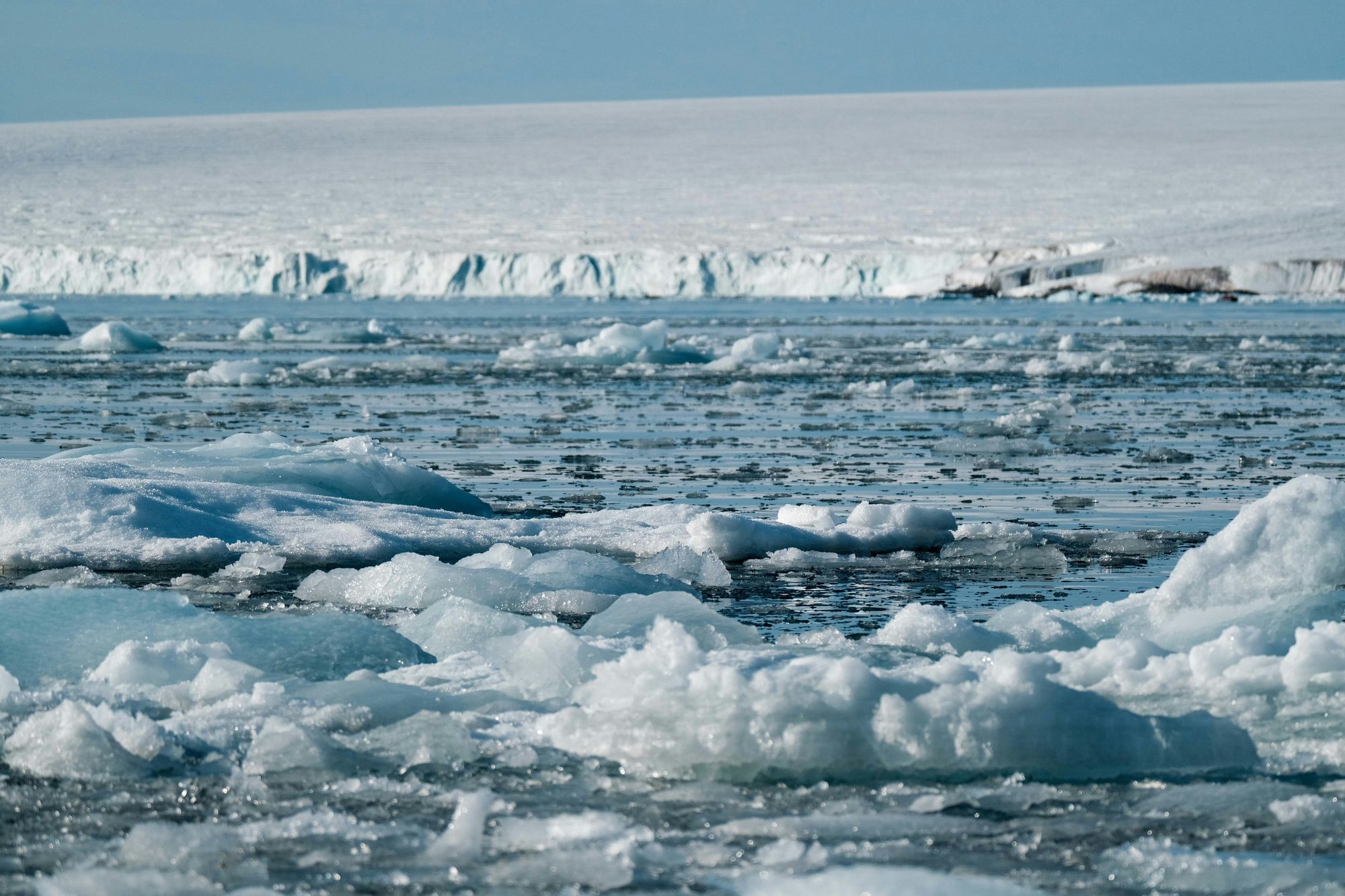
Svalbard is the High Arctic you can actually reach — a Norwegian archipelago at 78° north where the wilderness still outvotes everything. Fly to Longyearbyen, step onto a small ice-class ship, and within hours you’re among blue glaciers, seabird cliffs, and pack ice where the polar bear isn’t a maybe but the whole reason the route bends where it does. Getting there runs you through Oslo and the northernmost town on earth — both worth a beat of their own.
At a Glance
| Best time to go | Roughly May–September. Late spring brings fast ice and pristine snow; the June–August midnight sun is peak wildlife and the best pack-ice access; September trades light for autumn color and fewer ships. |
| How long you need | A week to ten days on a Spitsbergen circumnavigation or north-coast expedition, plus a night or two in Longyearbyen and a stop in Oslo. |
| How you get there | Fly to Longyearbyen (LYR) via Oslo or Tromsø — the embarkation point for nearly every expedition. |
| Pair it with | Oslo on the way through; Tromsø and the northern lights if you’re traveling the shoulder season. |
| The rule up here | Outside the settlements you go ashore with armed expedition guides; it’s polar-bear country, and the ships that do it well treat that as standard, not adventure theater. |
What It Actually Is
The trip follows the ice and the animals, not a fixed port list. A strong itinerary aims to round the top of Spitsbergen when the pack allows — that edge is where the bears hunt — and works the fjords for walrus haul-outs, glacier fronts calving into the sea, beluga, Arctic fox, and the great seabird cliffs. The midnight sun means there’s no real night in midsummer, so landings and zodiac cruises run whenever the wildlife appears. It is, reliably, the most concentrated big-wildlife expedition in the Arctic.
Before & After: Oslo and the Edge of the Map
You’ll route through Oslo, and it’s grown into one of the most quietly rewarding capitals in Europe — the waterfront Munch museum and the sail-shaped Opera House you can walk up the roof of, the Vigeland sculpture park, the Viking-ship and Fram polar-exploration museums, and a harbor that’s turned into a design-forward food scene. I’d base you at The Thief on Tjuvholmen, an art-filled hotel on the water in the middle of it. Longyearbyen itself, where you embark, is worth a night on either side: the northernmost real town on earth, an old coal-mining outpost ringed by glaciers, home to the Global Seed Vault and a surprisingly good little restaurant scene at the top of the world. If you’re traveling the shoulder season, Tromsø — the Arctic Cathedral, dog-sledding, and the northern lights — slots neatly onto the front.
The Specialized Field
Like all polar travel, Svalbard rewards the operators who specialize in it — the ones with the ice class, the zodiac fleet, and the expedition team who can read the pack. The bench I’d match you to includes names like Ponant, Silversea, Seabourn, National Geographic–Lindblad, Quark, Hurtigruten’s HX, and A&K — each a different ship, season window, and style. There’s no “best” ship for Svalbard, only the right one for your dates and the way you want to travel.
Svalbard is one of the polar shapes inside expedition cruises, part of the Rivers & Small Ships collection. If the High Arctic is the trip in your head, this is where we start mapping it.
Plan this trip with me.
A 30-minute discovery call is where it starts. No fee, no pressure.
Book a Discovery Call