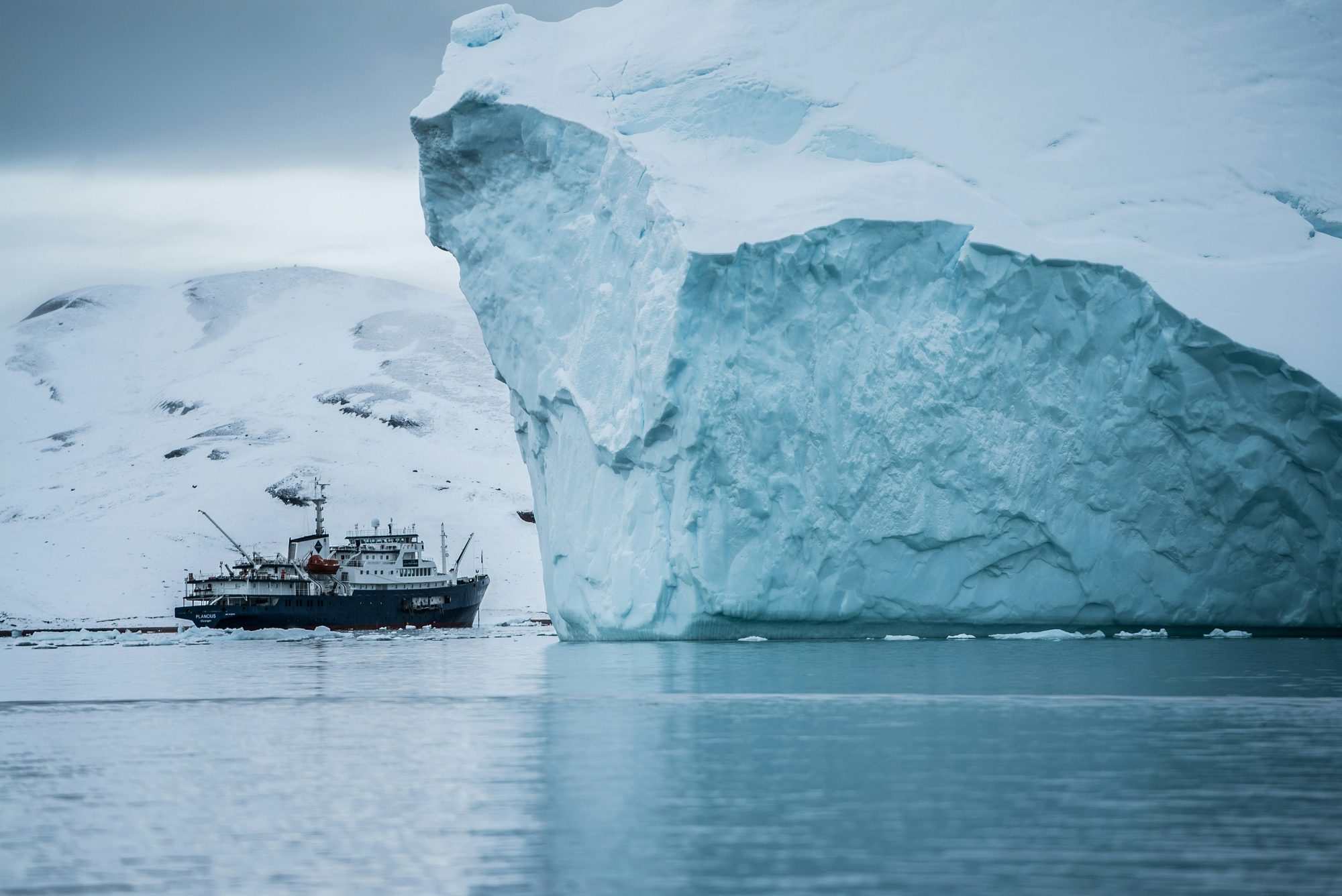
The Northwest Passage is less a place than a route — the sea lane through the Canadian Arctic that explorers died looking for, open now only a few weeks a year and only to a handful of ships built for the ice. It strings together Greenland’s coast, the High Arctic archipelago, Franklin’s ghosts, and Inuit communities at the top of the world. It’s among the rarest expeditions on offer, and the most history-soaked — and it usually begins with a few days in Reykjavik or Copenhagen on the way to the ice.
At a Glance
| Best time to go | August–September, the brief window when summer sea ice retreats enough to let ships through. It’s the entire season; there is no shoulder. |
| How long you need | Two to three weeks. Most itineraries run between Greenland and the Canadian Arctic; a full ocean-to-ocean transit through to Alaska is longer, rarer, and entirely at the ice’s mercy. |
| How you get there | Expeditions typically charter-fly you to a Greenland or Canadian Arctic gateway — Kangerlussuaq, Nuuk, or a community like Resolute — to embark. There’s no driving to this one. |
| Pair it with | Reykjavik or Copenhagen on the way, and Greenland’s Ilulissat if your routing allows — the icefjord alone is worth the detour. |
| Why so few ships | The route demands a high ice class, deep polar experience, and the flexibility to turn back when the ice says no. The ships that do it are few and book a year or two out. |
What It Actually Is
This is the expedition where the route itself is the story. Days move between Inuit communities — Pond Inlet, Gjoa Haven, Cambridge Bay — zodiac landings on Beechey Island where Franklin’s men are buried, the cliffs and fjords of Baffin and Devon Islands, and wildlife few people ever see: polar bears, narwhal, muskox, bowhead whales. Weather and ice rewrite the plan constantly, and a good expedition team treats that as the point, not a problem. You come for the history and the remoteness, and you leave having been somewhere almost no one goes.
Before & After: The Way In
Because the Passage is reached over the top of the Atlantic, the gateways are some of the most appealing in the north. Reykjavik is the classic front door — the Reykjavik EDITION on the old harbor, the Blue Lagoon, the Golden Circle’s geysers and waterfalls a day-trip away. Copenhagen is the other (Greenland is still Danish territory): I’d base you at the Hotel d’Angleterre on Kongens Nytorv or the Nimb at Tivoli, with Nyhavn, the New Nordic food scene, and the cleanest design in Europe at the door. And Greenland itself rewards anyone who can fold in a few days — Ilulissat and its UNESCO icefjord, where the glacier calves the icebergs that drift down the whole coast, is one of the great sights of the Arctic, and Nuuk is your window into living Inuit culture before the expedition ever sails.
The Specialized Field
A Northwest Passage transit is the deep end of polar travel, and the operators who run it are a short, specialized list. The bench I’d match you to includes names like Ponant, Silversea, National Geographic–Lindblad, Quark, Hurtigruten’s HX, and A&K — each a different ship, route, and degree of ambition, from a Greenland-and-Baffin loop to a full transit. There’s no “best” here, only the right ship, route, and year for the trip you want.
The Northwest Passage is the farthest reach of expedition cruises, part of the Rivers & Small Ships collection. When the top of the map is calling, that’s where we begin — and we begin early, because these book out.
Plan this trip with me.
A 30-minute discovery call is where it starts. No fee, no pressure.
Book a Discovery Call