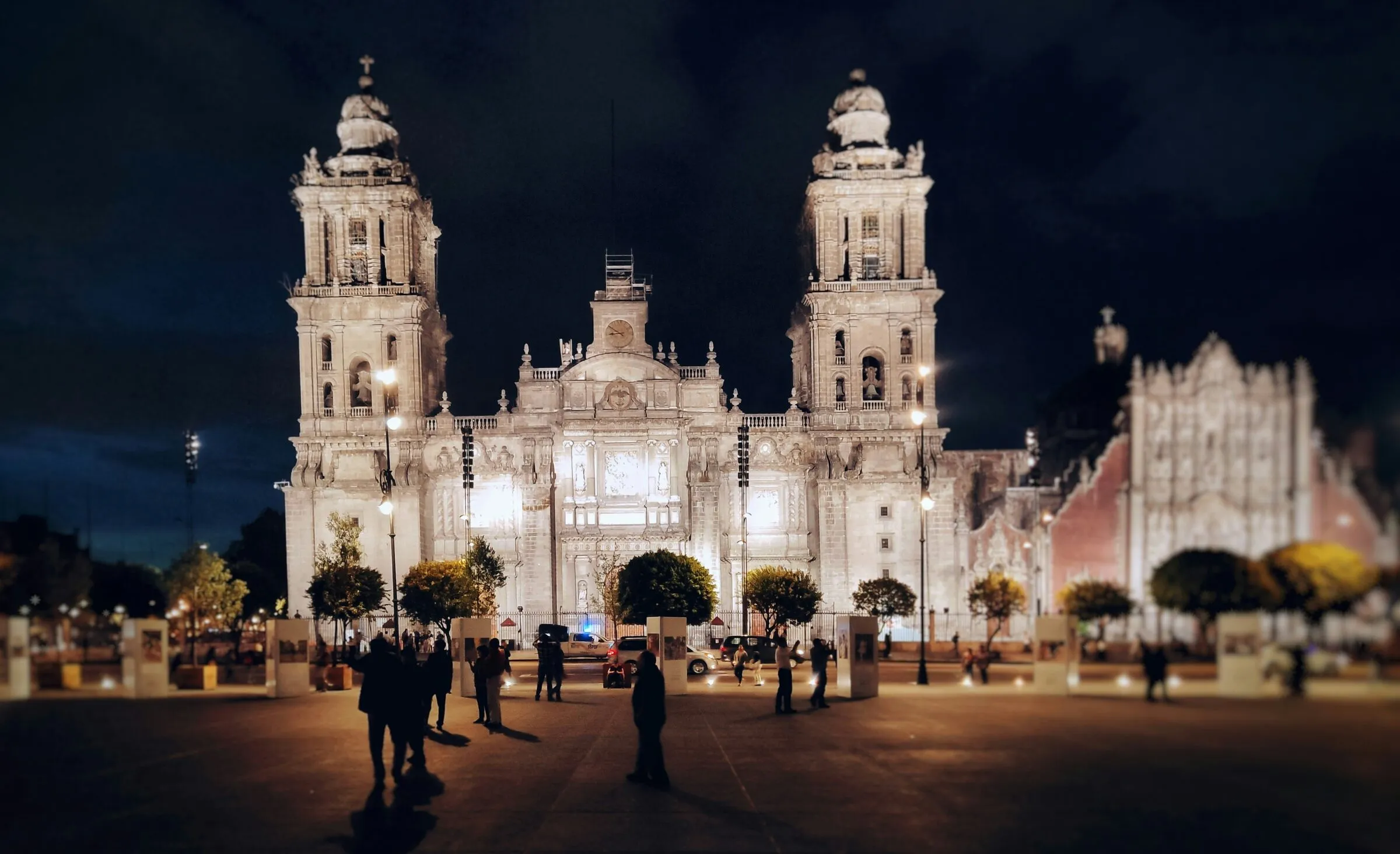
Mexico City is the Latin American city that confounds first-time visitors because it doesn’t fit the expected narrative. It’s not small enough to feel intimate, not sprawling enough to feel impossible, and it contains within itself enough cultural density — art museums, pre-Columbian archaeology, design-forward dining, neighborhood character — to occupy a traveler for a week without repeating a single thing. The brochure version is real: the Palacio de Bellas Artes, Frida’s Blue House, the Templo Mayor, the street food. But the better Mexico City lives in the neighborhoods — Roma Norte with its café culture and bookshops, Condesa with its art-deco architecture and couples retreating into corner restaurants, Polanco where the money is but the design is thoughtful enough to feel alive rather than sterile.
Most clients come to me asking about Mexico City in one of three frames: as the anchor for a celebration group (bachelorette, birthday, milestone gathering), as the cultural-deep trip where food and art are the story, or as the half-stop on a Mexico sweep (Mexico City →︎ Oaxaca →︎ Yucatan). Which one you’re doing shapes how I build it. The city punishes rushing and rewards depth. Most American travelers arrive expecting Mexico to be smaller than it is, and spend the whole trip disappointed until they realize the problem was the itinerary, not the place.
Here’s how I think about it.
At a Glance
| Best time to visit | October–November and March–April. Spring brings warm days and manageable crowds; fall is post-rainy season, crisp mornings, clear light. Skip June–August (rainy season, high heat and humidity), skip December–January (crowded with holiday travelers). |
| How long to stay | Three full days minimum for the headline sights and neighborhoods; four to five days if you want to actually inhabit it. A week if you’re using Mexico City as a base for the cultural deep. |
| How to get there | Mexico City International Airport (MEX) is one of the largest hubs in Latin America with direct flights from most US gateways. Benito Juárez Airport is 5 miles from the city center; Uber or airport transfer runs 30–45 minutes depending on traffic. |
| Currency / language | Mexican peso. Spanish is official; English is widely spoken in hotels, restaurants, and tourist-facing areas. Hola, gracias, por favor, and ¿cuánto cuesta? are the bare minimum and earn genuine warmth. |
| One thing most guides won’t tell you | Mexico City sits at 2,250 meters altitude — high enough that first-time visitors often feel the elevation on the first day. Drink water, avoid heavy exertion day one, and give yourself 24 hours to acclimatize before intense activity. Beyond altitude: neighborhoods are NOT close to each other the way European cities are. Condesa is not a short walk from Polanco. Roma Norte is not a five-minute taxi from the Zócalo. The city is bigger than its reputation suggests, and travel time between neighborhoods eats the day faster than you’d expect. Plan geography carefully, or hire a driver for the day. |
Why I Send Travelers Here
Because Mexico City is one of the few capitals in the Western Hemisphere that rewards slowness and has the infrastructure to support travelers who want culture instead of guidebook hits. Because the food alone — from the street tacos at a market corner to the contemporary plates at Cosme or Pujol — justifies the trip. Because Day of the Dead transforms the entire city into something that can’t be performed for tourists; it’s genuinely alive. Because the art scene is not a pale copy of New York — it’s its own animal, with Mexican artists, Mexican galleries, a Mexican audience, and nothing borrowed about it.
I send couples here for long weekends that are about lingering in a neighborhood café, walking through the Palacio de Bellas Artes, and finding one excellent dinner. I send celebration groups here for bachelorette weekends, milestone birthdays, and cultural-deep trips where the whole city becomes the itinerary. I send travelers who want to understand Mexico at a deeper level than the tourist route allows.
Mexico City is a city I’m protective of on behalf of my clients. The standard guidebook itinerary — Zócalo, Templo Mayor, Blue House, back to the hotel — sees about forty percent of why the city matters. A bad Mexico City trip (too many sites, rushed neighborhoods, tourist-level restaurants) is easy to plan. The right Mexico City trip — rooted in neighborhood rhythm, built around real food, anchored in the art and culture that makes this city essential — requires a point of view. Every recommendation below comes through that lens: what the city actually does, which neighborhoods reward your time, which experiences are worth arranging in advance versus which ones unfold better as discovery.
Where I’d Anchor
Four neighborhood anchors cover almost any Mexico City visit:
Polanco. The luxury tier. Upscale, quiet, tree-lined streets, design-forward hotels, excellent dining. It’s removed from the hubbub of Centro, which is the trade-off. You need a taxi to get to most sights. It’s more expensive. But the neighborhood itself — walk-able shops, galleries, restaurants — is one of the best-designed areas in the city.
Roma Norte. The sweet spot. Walkable to the Museo Tamayo and the Museo de Arte Moderno, lined with independent cafés, bookshops, design shops, the kind of neighborhood where you actually want to spend time between activities. Good hotels in the mid-to-luxury tier. The balance of character and access.
Condesa. Art-deco residential neighborhood with a different vibe than Roma — quieter, more residential-feeling, the kind of place you go if you want to live in Mexico City for three days rather than tour it. Excellent small hotels. Good restaurants. Less “points of interest,” more “walk around and discover.”
Centro (Historic Center). The Zócalo, the Palacio Nacional, the Templo Mayor, the Cathedral. This is the headline stuff. Stay here if it’s your first trip and you want walking access to the must-sees. Trade-off: it’s the most touristy, the noisiest, and the least neighborhood-like. I usually recommend it only if you have limited time.
For the Polanco flagship luxury stay, Four Seasons Mexico City sits on Paseo de la Reforma with views of Chapultepec Castle. Two hundred suites (many of them overlooking the park), the Megatsu Restaurant (contemporary Japanese-Mexican fusion, excellent), the KINU Spa with a full Guerlain program, and the hotel relationship I maintain here means the amenity layer is meaningful and doesn’t book direct. Room categories, dates, and what applies to your stay is the discovery-call conversation — a few of the touches land best as check-in surprises rather than advance line items.
For the Roma Norte cultural-rooted stay, St. Regis Mexico City on Paseo de la Reforma (at the Polanco-Roma border) sits within walking distance of the Museo Tamayo and a neighborhood full of galleries and cafés. The Remède Spa, the Albarino restaurant (contemporary Spanish-Mexican), and a more boutique-feeling service layer than the Four Seasons. On my rate at the property, the amenity calibration works the same way — it’s built on dates, room category, and what’s active for your stay, not a fixed package.
For the stay-and-live-here option, Hotel Boutique Casapalacio in Roma Norte (formerly a 1930s residential palace, now a twenty-two-room design hotel) puts you in the heart of the neighborhood where you actually want to be. Smaller, more characterful, local-feeling. On my rate at the property, the amenities adjust to your dates and stay length.
Want one of these stays? Start a discovery call — I’ll check availability, walk through the suite categories and neighborhoods, and confirm what applies to your dates. And a welcome detail at check-in — a note from me, or a reservation I’ve arranged — is part of how these stays actually feel.
What I’d Do With Three or Four Days
Day One — The Zócalo, the Templo Mayor, and the Reality Check
Start at the Zócalo — one of the world’s largest central plazas, ringed by the Metropolitan Cathedral and the Palacio Nacional (murals by Diego Rivera). Walk the periphery first. The cathedral is massive and worth an hour inside. The Palacio Nacional is generally open for self-guided walks of the Rivera murals; check hours before you go.
Then to the Templo Mayor across the plaza — the Aztec temple ruins, the museum, the archaeology. This is the best museum experience in Mexico City for understanding pre-Columbian history. Allow two hours.
Walk back through Centro toward Barrio Antiguo (the old quarter north of the Zócalo) if you have stamina, or head to Mercado de la Lagunilla if you want street lunch and market atmosphere.
Then leave Centro. This is the moment most first-time visitors miss. They stay downtown, eat tourist food, and think that’s Mexico City. Instead: Uber to Roma Norte or Condesa for dinner. Find a neighborhood restaurant. Eat real food. Sleep somewhere with a view of the actual city, not the Zócalo.
Day Two — The Frida Kahlo Museum and the Cultural Deep
Morning in Coyoacán for the Frida Kahlo Museum (Casa Azul). Pre-book timed entry; it’s popular and lines are long. Allow two hours. The house is extraordinary. The art is extraordinary. Allow the experience to breathe.
Lunch at Cenador Público in Coyoacán (contemporary Mexican cuisine, excellent). Walk the Plaza Principal afterward — colonial architecture, local café culture, what Mexico City was before it became a capital.
Afternoon: depending on your energy, either head to the Museo de Arte Moderno (excellent Mexican modern art, often overlooked) or the Museo Tamayo (contemporary art, smaller, more intimate). Or skip the museums and walk Condesa — the neighborhood itself is the art form.
Dinner in Roma Norte — this is the neighborhood where you want to eat. Restaurants here are serious about food but not about ceremony.
Day Three — Palacio de Bellas Artes and the Polanco Shift
Morning at the Palacio de Bellas Artes — the art-deco masterpiece, the Rivera murals, the building itself is the experience. Allow two hours minimum.
Walk south to the Museo de Arte Moderno if you skipped it yesterday, or head directly to Polanco for the shift-in-energy lunch.
Polanco is a neighborhood for walking and eating. Café de Tacuba for more casual contemporary Mexican. Or spend the afternoon wandering the galleries around Museo Tamayo — the art scene here is serious.
Dinner is the night you go upscale. Cosme (contemporary Mexican, excellent wine list, one of the best reservations in the city) or Pujol (haute-casual Mexican, ingredient-forward, reservation essential and needs booking weeks in advance).
Day Four — The Floating Gardens and the Lake
If you have four days: Xochimilco (the floating gardens, the canals, the history). This is a full morning. Hire a private boat rather than joining a group tour; the group experience is touristy and crowded. A private launch, a small crew, an hour on the water — this is the Xochimilco that actually exists.
Afternoon back to wherever you’re anchored — rest, explore, or hit one more neighborhood you haven’t spent time in.
Specific Things I’d Tell You About
The Day of the Dead season (late October through early November) is not a tourist event. The city transforms for Día de Muertos. If your dates align, this is the moment to be here. The ofrendas (altars) in museums and homes, the flowers in the markets, the whole city’s relationship to mortality and memory — you can’t perform this for tourists because it’s genuine. Experience it like you’d experience any profound cultural moment: with respect, with presence, with willingness to observe rather than consume. Book months in advance if you’re coming for this.
The street food is not a novelty. The tacos from a cart in a market, the elotes (corn), the fresh juices, the tamales — this is where Mexico City eats. Guidebooks make it sound risky or adventurous; it’s actually the most reliable, best food in the city. Go to markets like Mercado de la Lagunilla or Mercado 20 de Noviembre and eat where the locals eat.
Book Pujol, Cosme, and Contramar in advance. These are the top-tier dining experiences in the city and the reservation calendar fills months ahead. If you want one of these dinners, I can help you secure it during the planning call.
The metro is fast, accessible, and not as chaotic as its reputation. Day passes are cheap. Download the app. It’s the most efficient way to move around the city. But plan your day by neighborhood to minimize transfers, or hire a driver for the day if you have multiple neighborhoods to hit.
The muralism is not just the Diego Rivera murals. Walk the neighborhoods and you’ll see excellent contemporary street art — carefully curated, licensed, and alive. It’s part of why Roma and Condesa feel vibrant.
If you’re here for a celebration (bachelorette, birthday, milestone), build in structured time and unstructured time. A good celebration itinerary has one or two organized experiences (a food market tour, a mural walk-and-talk, a mezcal tasting) and the rest is neighborhood time, restaurant time, friend time. The city is good at supporting groups without overscheduling them.
What I’d Skip
The Museo Nacional de Antropología. It’s the most famous museum in the city and often the most crowded. If you’re serious about pre-Columbian archaeology, the Templo Mayor museum is better. The Anthropology Museum is worth seeing on a second Mexico City trip, not the first one.
The Floating Gardens tourist boat experience. The private-boat version is worth doing. The group-boat carnival of tourists is not. Same location, entirely different experience.
Eating in Centro. Almost every restaurant in the Centro historic quarter exists primarily for tourists. The food is mediocre and the prices are inflated. Walk three blocks out of Centro into any other neighborhood and you’ll eat better for less money.
The Paseo de la Reforma tourist walks. The avenue is famous and photogenic, but you don’t need a guided tour. Walk it on your own or skip it entirely and spend the time in the neighborhoods.
For Celebration Travelers
Whether you’re planning a bachelorette weekend, a birthday milestone, or a friends’ gathering, Mexico City is an excellent anchor. The infrastructure is there, the neighborhoods are fun, and the experience is substantial enough that you’re not just partying — you’re in a real city.
The long weekend (Thursday–Sunday) is the right window. Friday and Saturday afternoons are for the neighborhood exploration and the good restaurants. Friday and Saturday nights are for the bar scene (Condesa and Roma have excellent nightlife), clubs if that’s your energy, or quieter gatherings with your group.
The Zona Rosa (just south of Polanco) has the high-energy bar and nightclub scene. It’s LGBTQ-friendly and popular, but it’s also exactly what it appears to be — cosmopolitan, visible, fun. Roma Norte has a different energy — more artsy, more intimate, quieter bars where you can actually talk.
A good celebration itinerary in Mexico City includes: one structured group experience (a food tour, a tequila or mezcal tasting, a gallery walk), one excellent group dinner (book it in advance), and the rest is neighborhood time, bar time, and the rhythm that groups actually want when they’re together.
For Cultural Travelers
Mexico City rewards deep time. If you have four, five, or six days, build the itinerary around themes rather than checklist sites.
A food-focused trip might anchor the Mercado de la Lagunilla for breakfast, a cookbook-study walk through the markets, one or two restaurant experiences at the tier that matches your appetite (street food through casual to haute-casual to fine dining), and neighborhood restaurants where you eat what appeals rather than what’s famous.
An art-focused trip might be: the Frida Kahlo Museum, the Palacio de Bellas Artes, the Museo Tamayo, the Museo de Arte Moderno, and the galleries in Roma and Condesa. The contemporary art scene in Mexico City is genuinely excellent. You don’t have to do the tourist museums at all if your interest is contemporary work.
A design and architecture trip might focus on the art-deco of Condesa, the modernist buildings scattered through the city (there are excellent architecture walks available), and the design shops in Roma and Polanco.
All of these require four to six days to feel like you’re actually engaging with the theme rather than rushing through a list.
Plan Mexico City With Me
If you’re thinking about Mexico City as a celebration anchor, a cultural-deep visit, or the opening act of a larger Mexico sweep — that’s exactly the kind of planning I do. A 30-minute discovery call is where it starts. No fee, no pressure. Just the neighborhoods, your timeline, and what you actually want to experience when you step out of the hotel.
Book Your Free Discovery Call →︎
Last updated: April 2026. I keep this guide current. If a neighborhood changes, a restaurant closes, a museum shifts hours, or a festival moves, the page changes. Mexico City changes. The work doesn’t stop when the guide goes live.
Plan this trip with me.
A 30-minute discovery call is where it starts. No fee, no pressure.
Book a Discovery Call