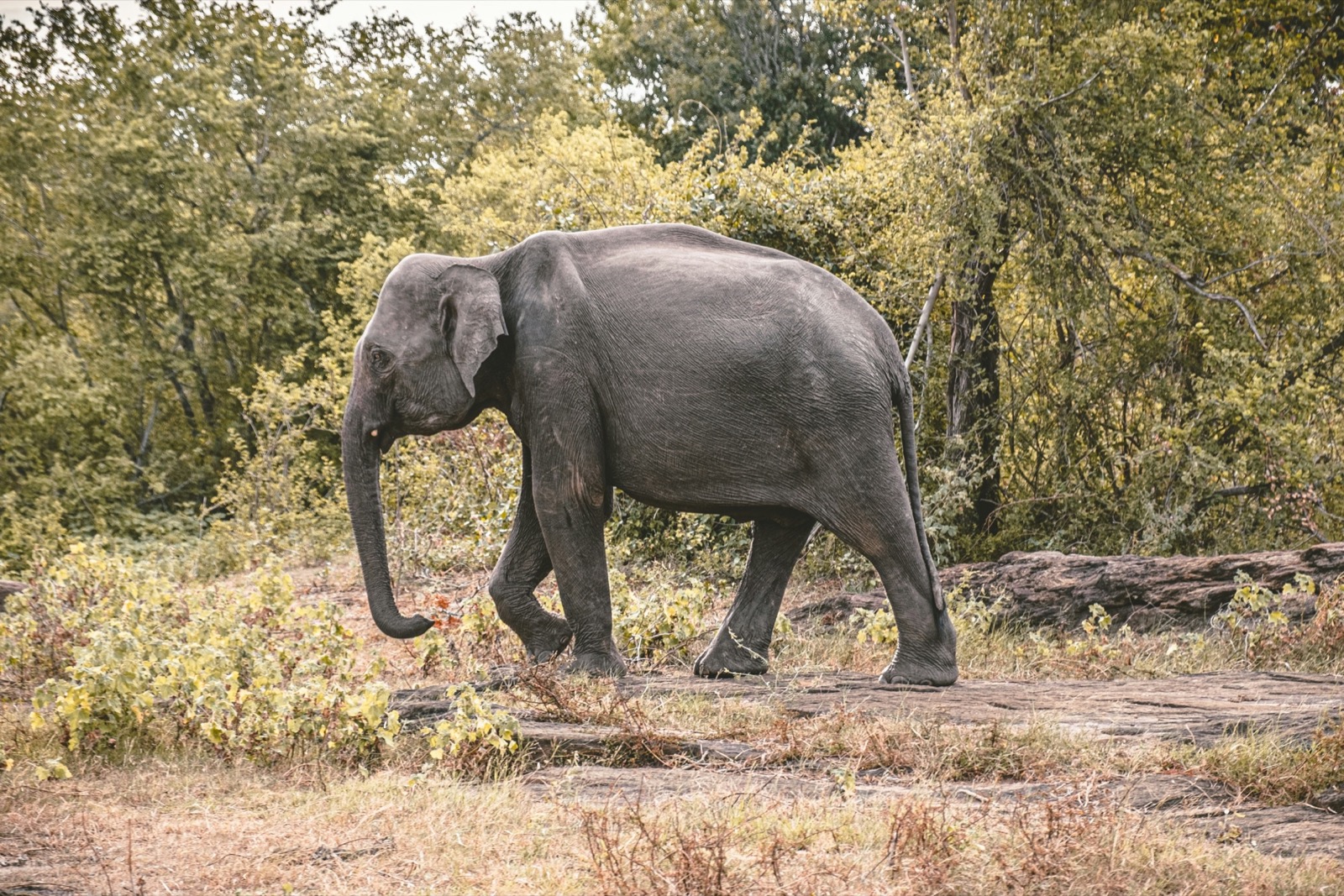
The Golden Triangle is the version of northern Thailand for travelers who want the north to feel like wilderness rather than a city. Where Chiang Mai is craft and temples and a walkable old town, the Golden Triangle — the far north, where Thailand, Laos, and Myanmar meet across the Mekong — is rivers and jungle and hill country, and at its center, one of the most celebrated ethical elephant experiences in the world. It’s the wild alternative for the northern leg of a Thailand trip.
Done well, it’s two or three nights of genuine remove: mornings with rescued elephants and the mahouts who care for them, the surreal contemporary temples of Chiang Rai (the dazzling all-white Wat Rong Khun and the cobalt Wat Rong Suea Ten), tea plantations terraced into the hills, hill-tribe country, and the meeting-of-three-countries view across the Mekong at Sop Ruak. Done poorly, it’s a long drive for an opium-museum gift shop and a riding camp — the version that misses everything the region actually offers.
Most travelers come to me about the Golden Triangle as the wilder option for the northern stop on a Thailand trip — chosen instead of, or in addition to, Chiang Mai — and almost always because of the elephant camp, which is the gravitational center of the region and, for many travelers, the single most memorable experience of the whole trip.
Here’s how I think about it.
At a Glance
| Best time to visit | November to February — cool, dry, and clear, the same window as the rest of the north. As with Chiang Mai, avoid the late-February-to-April burning season, when agricultural smoke fills the northern valleys. The Mekong and the hills are at their green best in the cool months. |
| How long to stay | Two nights for the elephant camp plus a Chiang Rai temple day; three if you want the tea country, the hill villages, and the river properly. The elephant camp is the centerpiece — build at least one full immersion around it. |
| How to get there | Fly into Chiang Rai (CEI) — a short hop from Bangkok or a quick connection from Chiang Mai (CNX). From Chiang Rai it’s about an hour by road north to the Golden Triangle proper (Chiang Saen / Sop Ruak), where the elephant camp and the river meet. A driver-guide handles the transfers. |
| Getting around | This is guide-and-driver country — distances between the temples, the tea hills, the elephant camp, and the river are real, the roads are rural, and the experiences are better with someone who knows them. You won’t be self-navigating here, and that’s by design. |
| One thing most guides won’t tell you | The “Golden Triangle” name is opium history, not a beach. This was the heart of the 20th-century opium trade — the meeting point of three countries’ borders — and that history is real (the Hall of Opium museum tells it well). But the modern region is about elephants, tea, temples, and the river, and the opium-tourism kitsch is the least interesting thing here. Come for the elephants and the Mekong; skip the gift-shop version of the history. |
Why I Send Travelers Here
Because the Golden Triangle delivers the wildest, most remote version of northern Thailand — and because of the elephants. The region’s centerpiece is an ethical elephant camp built around the rescue-and-care model: you learn to be a mahout for a morning, walk with the elephants through the forest, feed and bathe them, and understand the conservation work that funds their care. It’s done the right way, it’s genuinely moving, and it’s the kind of experience travelers describe as the highlight of a two-week trip. Around it: Chiang Rai’s astonishing contemporary temples — Wat Rong Khun, the all-white temple that’s one of the most photographed buildings in Thailand, and Wat Rong Suea Ten, the cobalt-blue one — plus tea plantations terraced into the hills, hill-tribe communities, and the Mekong river at the three-country meeting point.
I send travelers here as the wilderness north of a Thailand trip — the alternative to Chiang Mai’s city-craft version — and especially for travelers for whom the elephant experience is a bucket-list item.
This is the most ground-partner-dependent region in my Thailand planning. The elephant camp must be the ethical one, booked correctly; the temples and tea country want a guide who can drive the distances and explain what you’re seeing; the hill-tribe visits must be done respectfully, with the right introductions, not as a human-zoo bus stop. As across the country, my role is matchmaker — my shaping and sequencing, executed through a vetted in-country team. For the full-service traveler, A&K Thailand (with an office in Chiang Rai) is the operator I’d route you to; the bench below runs the same itinerary with deep local guides at a more accessible tier. Choosing the right elephant camp and the right private day is exactly the editorial work that earns the trip.
A honeymoon couple I planned spent a private day up here threading the White Temple and the tea plantations with their own guide, and called it one of the quiet highlights of the trip — the kind of unhurried, just-the-two-of-you day the region does beautifully when it’s planned rather than bussed.
Where I’d Anchor
Two patterns, depending on what the trip wants:
The elephant camp itself (Chiang Saen / the river). The reason most travelers come — a resort built around the ethical elephant experience, on the Ruak and Mekong rivers at the three-country meeting point. The centerpiece pick, where the elephants and the river are your front door.
Chiang Rai town (riverside). The provincial capital — base here for the temples and tea country, with Lanna-style riverside hotels and an easy reach to the surreal-temple circuit. The pick for a temple-and-culture focus without the full elephant-camp immersion.
For the elephant-camp experience, Anantara Golden Triangle Elephant Camp & Resort is the call — a hillside lodge above the Ruak and Mekong rivers at Chiang Saen, built around the resident elephant herd and its conservation foundation, with mahout-for-a-day programs, jungle walks with the elephants, and views across into Laos and Myanmar. It’s the region’s signature stay and the reason the Golden Triangle lands on so many itineraries. On my rate at the property, the amenity layer is real and doesn’t book direct — calibrated to your dates, room category, and length of stay, with the specifics walked through on the discovery call.
For the ultra-private tented register, the Four Seasons Tented Camp in the same hills is the all-inclusive luxury-safari-style option (a handful of tents, its own elephant program). And in Chiang Rai town, Lanna-style riverside hotels make the temple-and-tea base. Where a property is one I hold a rate or relationship with, the amenity layer and personal touches come with it; where it isn’t, I’m still the one matching you to the right room and booking it well — we sort the specifics on the call.
Want help choosing? Start a discovery call — I’ll walk through the elephant-camp-vs-town trade-off, pull live availability, and confirm which amenities apply to your dates.
Where I’d Anchor for a Honeymoon
For honeymooners, the elephant camp is the romantic move — a remote hillside lodge, the elephants at dawn, the Mekong below, the sense of being at the literal edge of the country. It’s an unusual, memorable honeymoon middle, and it pairs naturally with the island finale where the long, emotional stay belongs. Two nights here is plenty; the experience is intense and complete. Matching it to your honeymoon’s rhythm is the discovery-call conversation.
What I’d Do With Two Days
The Golden Triangle rhythm is built around the elephant camp and the road — one full day with the elephants, one day for the temples, tea, and the river.
Day One — The Elephants
The full elephant immersion. At the ethical camp, the morning starts with the mahouts and the resident herd — learning the basics of elephant care, walking with them through the forest, feeding and (depending on the program) bathing them, and understanding the rescue-and-conservation work that underpins it all. This is the experience the region is built around, and it deserves the unhurried full morning. Afternoon at the lodge — the spa, the river views, the quiet of being genuinely remote.
Day Two — Temples, Tea, and the River
A circuit of Chiang Rai’s surreal temples: Wat Rong Khun (the White Temple — a contemporary art-temple by artist Chalermchai Kositpipat, all mirrored-white plaster and unexpected modern detail, one of Thailand’s most striking sights), Wat Rong Suea Ten (the Blue Temple — cobalt and gold, vivid and recent), and, if there’s time, Baan Dam (the Black House — the late artist Thawan Duchanee’s dark, provocative compound). These are contemporary works, not ancient ruins, and they’re extraordinary.
Then up into the tea country — plantations terraced into the hills, where you can taste and walk the rows — and on to the Golden Triangle viewpoint at Sop Ruak, where the Ruak meets the Mekong and Thailand, Laos, and Myanmar all touch. A boat on the Mekong here puts you between the three countries. The Hall of Opium museum nearby tells the region’s real history well, for those who want it.
With a third day: deeper into the hill country and tribal communities (done respectfully, with the right guide), or a longer stretch on the river.
Specific Things I’d Tell You About
The elephant camp must be the ethical one. This is the whole reason to come, and the difference between a rescue-and-care sanctuary and a riding-and-show camp is everything. The good operations are conservation-funded, no-riding (or riding-free observation), and genuinely moving; the bad ones are welfare problems. Choosing correctly is exactly what the ground partner and I get right.
The White Temple is contemporary art, not an ancient ruin. Wat Rong Khun was begun in 1997 by a Thai artist and is still being built. Knowing that changes how you see it — the mirrored white plaster, the modern-culture details hidden in the murals, the deliberate strangeness. It’s one of the most distinctive things in Thailand precisely because it’s not a museum piece.
“Golden Triangle” is opium history. The name comes from the 20th-century opium trade at this three-border meeting point. The Hall of Opium museum tells it seriously and well; the trinket-and-photo “opium tourism” around it is skippable. Come for the elephants, the temples, the tea, and the river.
This is guide-and-driver country. The distances are real and the experiences are spread out. A private driver-guide isn’t a luxury here — it’s how the region is meant to be done, and it’s where the ground partner earns its keep.
Avoid the burning season (late Feb–April). Same as Chiang Mai — northern agricultural smoke degrades the air and the views. Plan for the cool, clear November-to-February window.
What I’d Skip
Elephant riding and elephant shows. Only the ethical observation-and-care camp. The riding-and-circus operations are a hard no.
Opium-tourism kitsch. The serious museum, yes; the gift-shop-and-photo version of the history, no.
Exploitative hill-tribe “village” tours. The bus-in, photograph the “long-neck women,” buy a trinket, leave version is a human zoo. If you want to understand the hill cultures, it’s done respectfully with the right guide and a genuine visit — or not at all.
The burning season. Late February through April — plan around it.
Trying to do the Golden Triangle as a day trip from Chiang Mai. It’s too far for a satisfying day trip and the elephant camp deserves an overnight. If you want the region, give it two nights; if you can’t, do Chiang Mai properly instead.
For Thailand Multi-Region Travelers
The Golden Triangle is the wilderness option for the northern leg of the Thailand arc — Bangkok first, the north second, an island last. The key choice: Chiang Mai or the Golden Triangle? Chiang Mai is the craft-and-temple city; the Golden Triangle is the river-and-elephant wilderness. On a fourteen-night trip you can do both (Chiang Mai, then up to the Golden Triangle, then south to the beach); on a standard ten-night arc, you pick one — and if the elephant experience is the dream, the Golden Triangle is the answer.
If you want me to design the full Thailand trip — Bangkok, the northern stop, the island finale, and the coast that matches your dates — start a discovery call.
For Honeymooners
The Golden Triangle is an unusual, memorable honeymoon middle — the remote hillside elephant lodge, the herd at dawn, the Mekong below, a private day threading the White Temple and the tea hills. It’s two nights of genuine remove before the trip builds toward the island crescendo where the long, emotional stay belongs.
The honeymoon morning here is the elephants; the afternoon is the river and the temples; the register is wild and intimate. Start a discovery call.
Plan the Golden Triangle With Me
If you’re thinking about the Golden Triangle as the wild north of a Thailand trip, an elephant-led bucket-list experience, or part of a longer northern week — that’s exactly the kind of planning I do. A 30-minute discovery call is where it starts. No fee, no pressure. Just the wild north, your timeline, and the version of the Golden Triangle that’s about elephants and rivers and surreal temples — done the right way, with the right camp.
Book Your Free Discovery Call →︎
Last updated: May 2026. I keep this guide current. If a camp I recommend slips, a property changes hands, or access to a site shifts, the page changes. Travel changes. The work doesn’t stop when the page goes live.
Plan this trip with me.
A 30-minute discovery call is where it starts. No fee, no pressure.
Book a Discovery Call