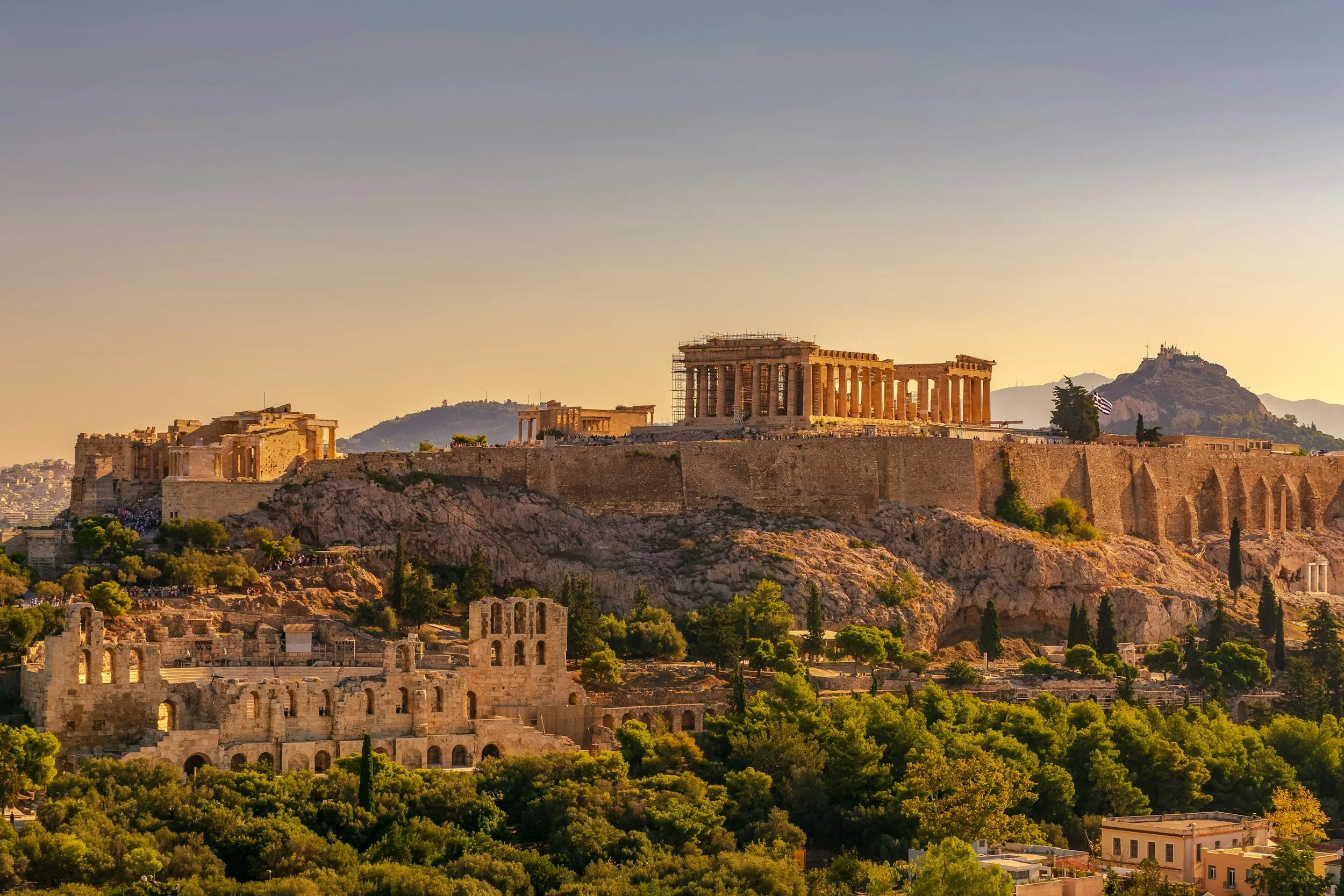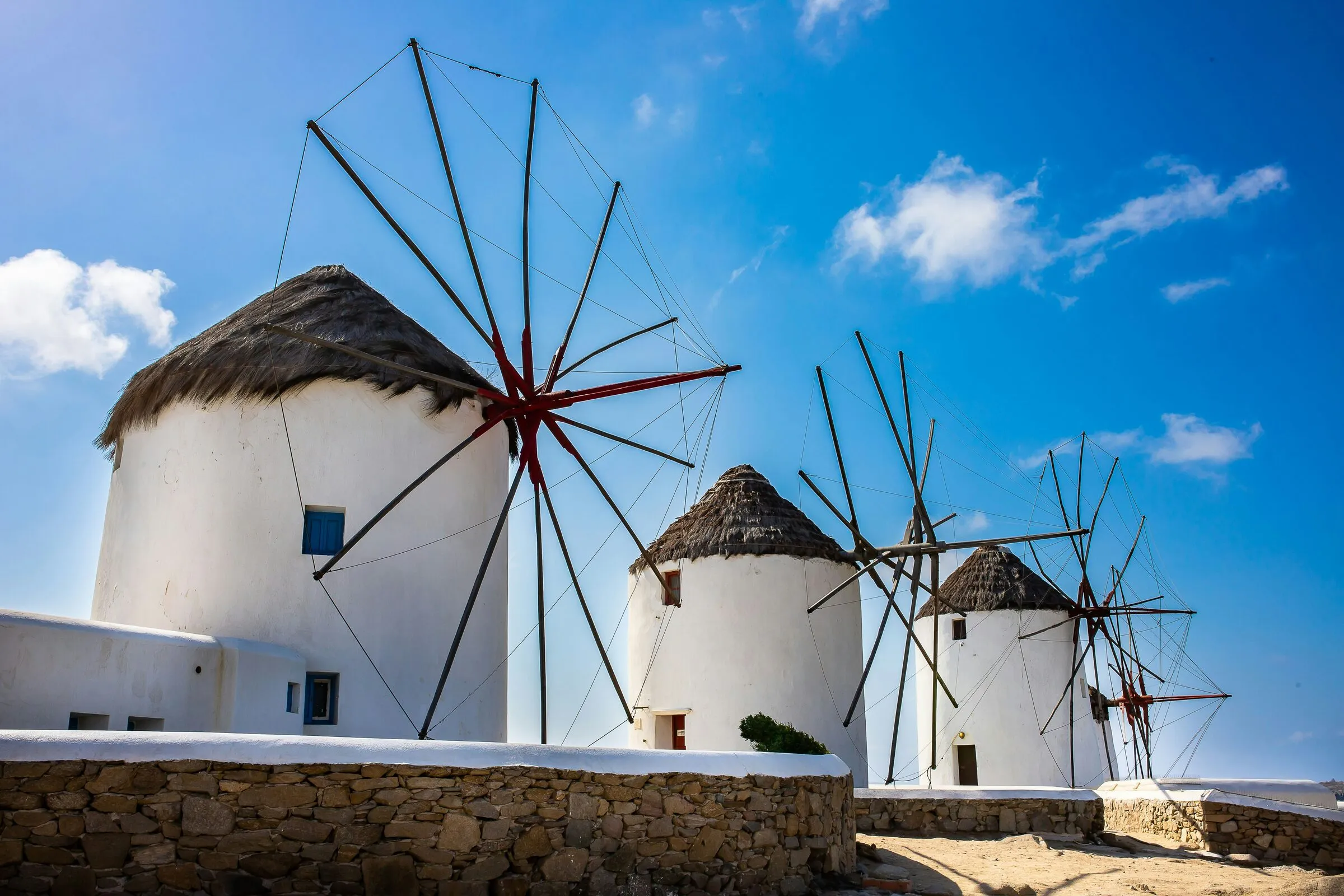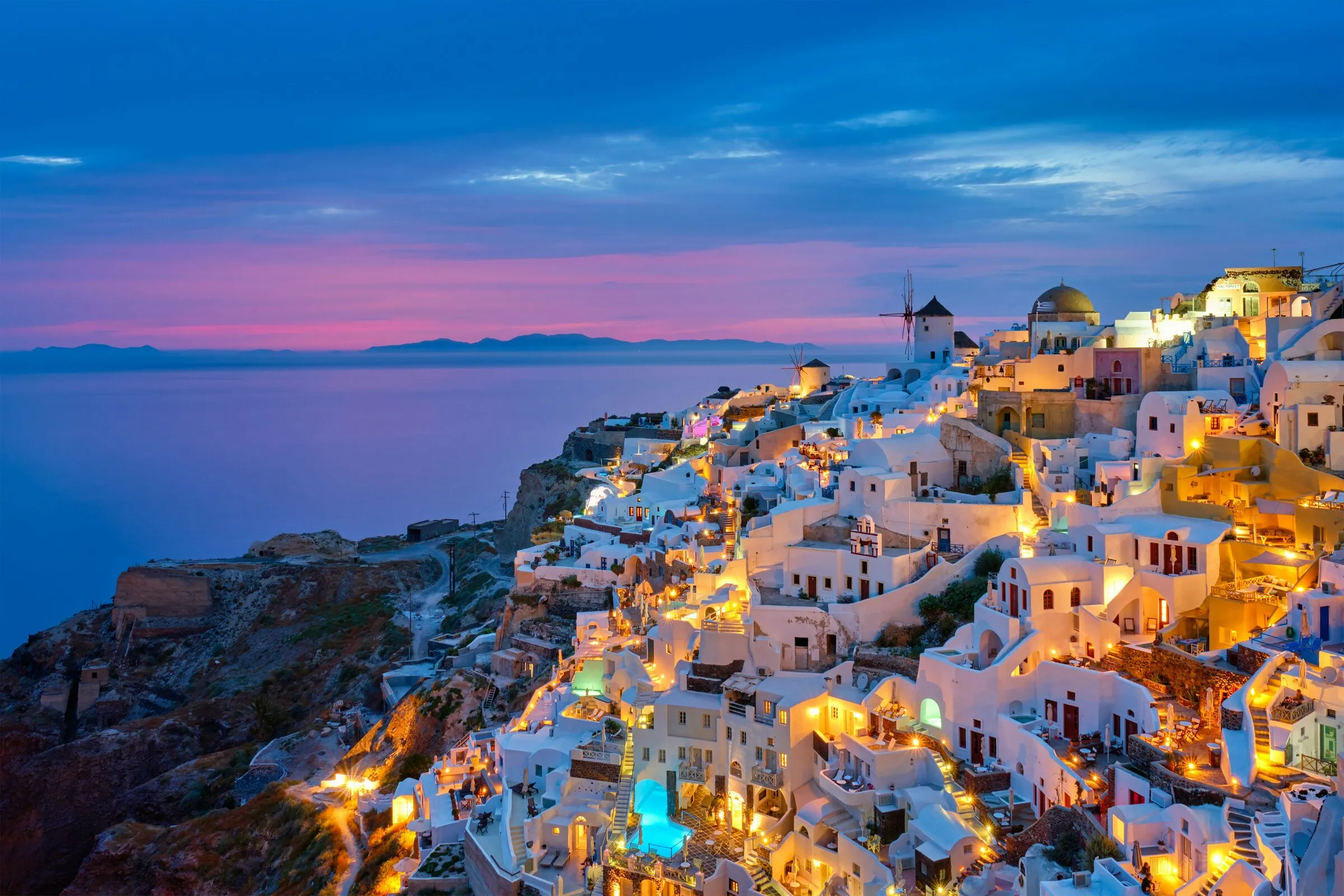
Greece is the trip most travelers think they’re taking and the trip they actually want, and the gap between the two is the whole reason to plan it carefully. The postcard version is three days of Santorini sunsets bolted onto a layover in Athens — fly into the capital, see the Acropolis before lunch, get to the island, fight for a caldera-rail table at golden hour, fly home. It photographs beautifully. It also misses the country almost entirely.
Here’s the framing that changes everything: Greece is not one destination. It’s a mainland gateway and an archipelago, and they run at completely different speeds. Athens is dense, ancient, argued-over, alive past midnight — a city that rewards a couple of well-shaped days and sets up everything after it. The islands are slow on purpose: ferry time, long lunches, an afternoon that disappears into the water. Plan them as if they’re the same trip and you’ll feel rushed in both. Plan them in the right order — the city first, then the islands, with the pace loosening as you go — and the whole thing finally breathes.
Most clients come to me asking about Greece in one of four shapes: as a first-time mainland-and-islands sweep (Athens for two or three nights, then one or two islands, eight to twelve days total), as a Greek-isles cruise out of Piraeus (the small-ship and large-ship math is very different, and worth a conversation before you book), as a slow honeymoon that uses Athens as the awe-and-intensity night and an island as the decompression, or as a second-visit deeper cut into islands most travelers skip — the Cyclades beyond the famous two, the Dodecanese, the Ionian.
Each one earns a different shape. Every single version benefits from the same core principle: the city earns the trip; the islands keep it. Go in that order, and don’t overstay Athens.
Here’s how I think about it.
At a Glance
| Best time to visit | Late April–early June and mid-September–October. Warm without the August furnace, the light on both the Acropolis and the caldera is golden, and the ferries and crowds ease off. Avoid mid-July through August — peak heat, peak prices, and the meltemi (the strong northerly summer wind) that can cancel the fast ferries in the Cyclades for a day at a time. |
| How long to stay | A first sweep wants eight to twelve days: Athens two or three nights, then one island for four-plus or two islands at three-plus each. Less than a week forces a choice between the city and the islands — and you want both. |
| Getting there & around | Athens International (ATH) is the entry point; Piraeus is the ferry hub ten kilometers south. To the islands you choose your speed: a 40–50 minute domestic flight, or a high-speed ferry (Piraeus to Santorini runs about five hours; island-to-island hops in the Cyclades run one to three). Book island ferries ahead in summer — the fast boats sell out. |
| Currency / language | Euro. Greek is the language; English is widely spoken anywhere tourists go. Yassas (hello) and efharisto (thank you) carry you a long way. |
| One thing most guides won’t tell you | Greek dinner starts late — 9, 10, even 11 p.m. Sit down at 7 and you’ll have the room to yourself and a kitchen that isn’t running yet. Use the early evening for a sunset and a drink; eat when the Greeks do. |
Why I Send Travelers Here
Because Greece, planned correctly, is two of the best trips in Europe stitched into one — the oldest argument in Western civilization and the cleanest light on the Mediterranean, back to back. Athens is where it starts: the city that, given a real evening and an early morning at the rocks instead of a hurried half-day, becomes the memory that frames everything after it. Then the water takes over.
I send travelers here as a first Athens →︎ islands sweep, the structure that defines a first Greek trip. I send couples for honeymoons that want the city’s intensity for a night or two and an island’s slowness for the rest. I send the rare second-time traveler past the famous two islands entirely, into the quieter Cyclades and the Dodecanese where the village rhythm is the whole point. And I send Greek-isles cruisers — the ones for whom the right answer is a ship — into the conversation about which ship, because a 100-guest small ship anchoring in the Santorini caldera and a 3,000-passenger megaship docking at the port below it are not the same trip in any way that matters.
The islands are not interchangeable, and that’s the part the postcard flattens. Santorini is the dramatic one — the caldera, the sunset everyone has seen, genuinely worth it when you plan around the cruise-ship hours instead of into them. Mykonos is the social one — the beach clubs, the late nights, the most cosmopolitan island in the Aegean. Beyond them, every island is its own argument: Naxos and Paros for village life and real beaches, Milos for the moonscape coves, Crete for a whole second country’s worth of mountains and history, the car-free quiet of Hydra a short hydrofoil from Athens. Picking the right two or three for the traveler in front of me — and pacing them so the trip moves without thrashing — is the work.
Every recommendation across these guides comes through the same lens: which islands fit which traveler, how the days split between the city and the water, when to fly versus when the ferry deck is part of the experience, and which version of the famous islands is worth it versus which is tourist tax in a whitewashed alley.
The Greek-Isles Sweep
The mistake is treating the islands as a checklist to clear. The fix is to move in a rhythm: a few nights on one island, long enough that it stops feeling like a stop, then a ferry or a short flight to the next, with the packing kept light because you’ll be moving. A clean first-timer’s shape is Athens for two or three nights, Santorini for three or four, then Mykonos or a quieter Cycladic island for three or four more — Santorini for the drama, the second island for the exhale. The order matters: lead with the caldera while you’re fresh for it, finish somewhere slower.
Ferries are the connective tissue, and they reward a little planning. The high-speed boats between the Cyclades run frequently in summer and sell out in advance; the slower car ferries are cheaper, steadier in wind, and a genuinely pleasant way to watch the islands arrive. When the meltemi is blowing hard in July and August, the fast boats are the first thing cancelled — one more reason the shoulder seasons plan more reliably.
For Greek-Isles Cruisers
If a ship is the right answer — and for a lot of travelers it is — the only question that matters is which one. A small ship (under 100 guests) anchors where the big ships can’t, gets you into the Santorini caldera on its own schedule, and reaches islands the megaships skip entirely. A large cruise line delivers the famous names at a price the small ships can’t match, with the trade-off of port days you share with several thousand other people. Both are valid. Which one fits depends on the traveler, the budget, and how much the sailing itself is part of the point. That’s the conversation to have before you book, not after.
For Honeymooners
Greece is one of the easiest honeymoons in Europe to get almost right and one of the most rewarding to get fully right. The version that works uses Athens as the awe night — dinner with the lit Acropolis half a kilometer away, one or two nights, then out — and an island as the long exhale: four or five nights somewhere with a caldera-edge room or a quiet beach, where the only obligation is the sunset. Santorini is the marquee choice and earns it; pairing it with a slower second island is how you keep the honeymoon from becoming a photo shoot. If you want me to design the full arc — the city night, the island stretch, the ferry-versus-flight calls, the rooms worth the splurge — that’s exactly the kind of planning I do.
What I’d Skip
Trying to “do” five islands in ten days. The ferry math eats the trip and you end up knowing none of them. Two islands done properly beats five rushed, every time.
Santorini in the cruise-ship window. Midday in high summer, Oia and Fira belong to the day-trippers off the megaships. Plan your caldera time for early morning and the hour after the ships pull out, and the island is a different place.
The 7 p.m. dinner reservation. You’ll eat alone in an empty room. Greece eats late, and the food and the night are both better for it.
Athens as an afterthought. The single most over-skipped city in the Mediterranean. Give it a real evening and one early morning at the Acropolis and it earns its place in the trip instead of stealing two days from the islands.