What a canal barge is — and what it isn't
A canal barge is not a small river cruise ship. River ships are 120- to 200-guest hotels on the water; they run between cities; they keep to a schedule and the schedule keeps to the river. A canal barge is something different: 6 to 12 guests aboard, the boat working at walking pace through canals that the river-cruise lines cannot enter, a crew of four or five who know your names by the second meal, and a daily routine that has more in common with a chartered yacht than a cruise. The pace is slower than walking. The countryside is at touchable distance. You can step off in the morning and bicycle the towpath ahead to meet the boat at the next lock; you can ride a bike to a village market and be back in time for lunch on deck.
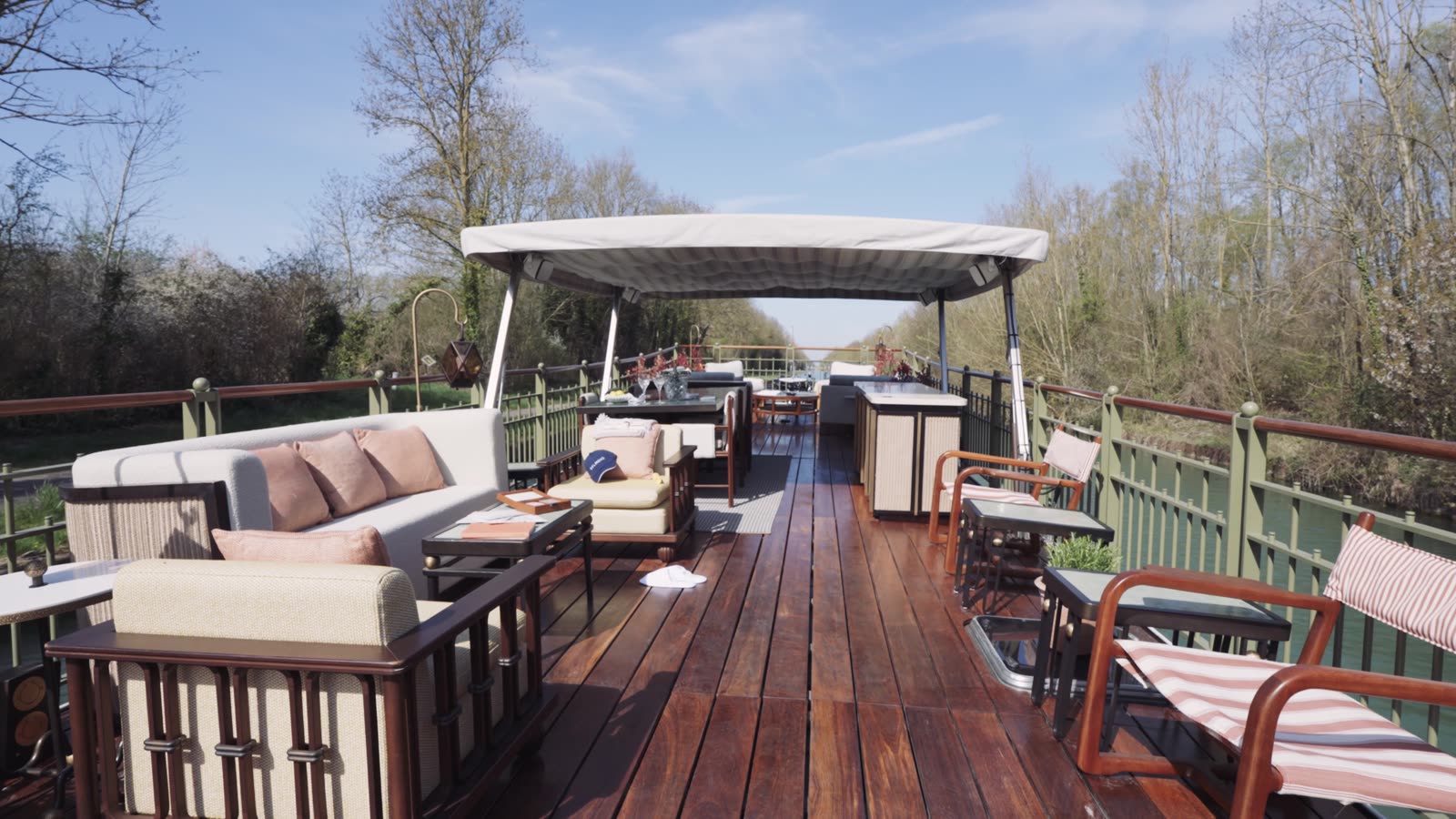
Belmond Afloat in France — the brand's canal-barge collection — runs six boats distributed across the country's most rewarded canal corridors: Burgundy (the heart of the operation), Provence, Champagne, and the Loire. Each barge has its own character — the smaller four-cabin boats book as a private group of six; the larger six-cabin boats take twelve and book commonly as a family or friends-group charter. The cabins are real cabins, with full bathrooms; the upper deck is the dining room and the lounge and the place you'll spend half the trip. The kitchen runs on local sourcing — the morning's bread from the canal-side baker, the wine from the vineyard the boat is moored against.
The argument I would make in a discovery call is structural. A Belmond barge is the answer for a small group who want a river-cruise rhythm without the river-cruise scale — for a friends-of-six birthday charter, for a multi-generational family who want a boat to themselves, for a couple celebrating a quiet anniversary in the Burgundy wine corridor at a pace nothing else in cruising can match.
The fleet
Six barges across four regions. Each is a different shape of trip — wine country, lavender country, vineyards of the chalk hills, or the châteaux of the Loire.
Burgundy — the operation's heart.
The largest concentration of the Belmond canal fleet works the Burgundy canals — the Canal de Bourgogne, the Canal du Nivernais — through the wine villages of the Côte d'Or, past Beaune and the great estates of the Côte de Nuits. Burgundy is where the canal-barge format and the destination match each other most cleanly; the trip is wine country at canal pace, with the producers in walking distance from the boat. The version most charter clients want.
Provence — Canal du Midi country.
The southern French corridor — plane-tree-lined canals, Provençal villages, the markets and the produce that have been the food of southern France since the Romans dug the original water network. The Provence barge is the late-spring and early-fall charter; the heat in midsummer keeps the boat moored more than moving, so the calendar matters.
Champagne — among the chalk hills.
The Champagne barge works the small canal network around Épernay and the Marne, with visits to the producers and the Champagne cellars built into the program. Smaller circuit, narrower window, but for the right client the right week.
The Loire — château country at canal pace.
The Loire's canal corridor doesn't run alongside the river itself but the network of smaller waterways through the same landscape. The châteaux are the side excursions; the barge is the base. The right answer for travelers who have done the Loire by car and want to slow it down significantly.
The booking shape — why charter is the default
Belmond's barges accept individual cabin bookings on some sailings, but the booking shape the format is designed for is whole-boat charter. A six-cabin barge takes twelve guests; that is a friends-group, a multi-generational family, a small wedding party, a milestone birthday at scale. The economics of the charter shape are unusual — the per-cabin price on a charter is roughly the same as on an individual booking, but you get the boat to yourselves, the menu to your preferences, the route to your interests, the wine list to your group's drinking pace. The kitchen will go off-menu for the group's allergies, dietary preferences, or that one cousin who only eats pasta. The crew will start the day at the hour your group wants to start; the boat will moor for the night where the group wants to wake up.
That flexibility is what makes the charter the version I would book for a milestone trip. The shared-cabin model works fine for a couple who don't want to fly to the boat with a private group, but the full benefit of the format only unlocks when the boat is yours.