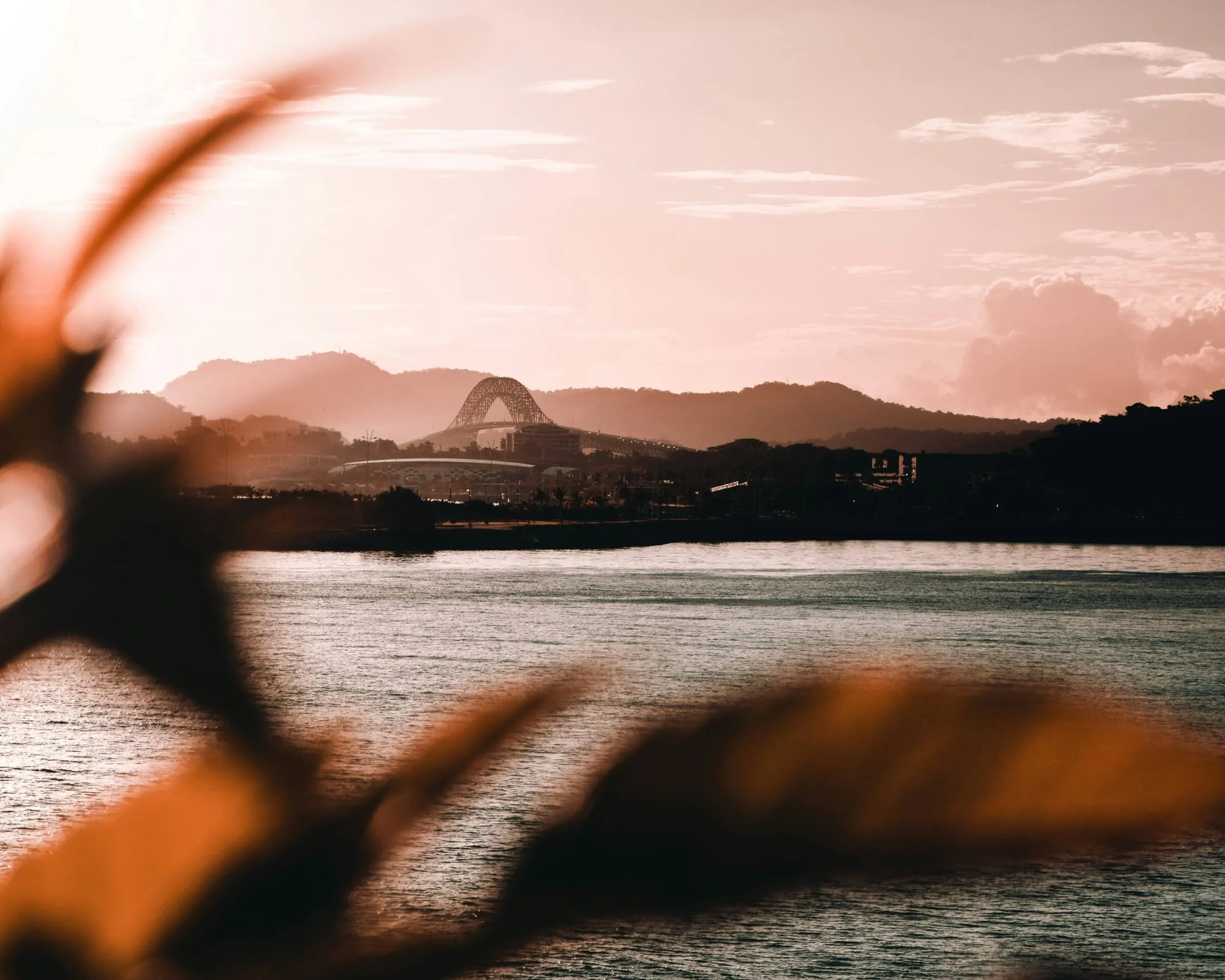
The Slow Route: 16 Days Crossing the Panama Canal
There’s a reason I booked myself on a 16-day Princess cruise to the Panama Canal, alone, with no meetings scheduled and no content deadlines. It wasn’t for the destination list or the port towns, though those mattered. It was because some things in this business — and in life — demand the slow route.
The Panama Canal isn’t a marvel you tick off and move forward. It’s something you witness from the deck of a ship, coffee in hand at sunrise, watching the engineering that moved the world rewire itself in real time. I needed to feel that, not just know it.
I’d recommended this crossing to clients before I’d ever taken it myself. That’s a strange position to be in, and I’m honest with myself about the difference between research and experience. So when the right sailing came up — the itinerary, the timing, the excuse — I stopped looking for reasons to wait and booked it.
Why the Panama Canal, and Why a Ship
There are faster ways to cross between the Atlantic and Pacific. Planes exist. But the canal was built for ships, and it makes the most sense experienced from one. You need to be on the water, inside the locks, watching the chamber walls rise around you, to understand what this engineering accomplishment actually means at human scale.
I’d also been honest with clients for years about why a 16-day itinerary feels intimidating and then feels exactly right. The first few days at sea are an adjustment — your body learns to trust the rhythm of the ocean, your mind learns to release the noise of ordinary life. By day four, you stop checking your watch. By day eight, you’re reading three books and eating well and having conversations with strangers at dinner that go somewhere real. The length isn’t the point of the trip. It’s the condition that makes the trip possible.
My family’s connection to Panama runs deeper than I usually let on. I’ve kept it quiet partly out of an instinct toward privacy and partly because it changes the emotional register of the story — this wasn’t only a research trip. It was a pilgrimage dressed as a vacation. There’s a specific quality of feeling that comes from arriving at a place that has meaning in your own history, standing on the deck at the Pacific entrance of the canal in the golden early light, and letting it be significant. That distinction — between witnessing and simply seeing — is what I now try to give clients.
The Days Before the Canal
The ports leading south from the Caribbean feel like the thesis statement for slow travel. The light in Costa Rica is different — golden, thick, specific in a way that photographs but doesn’t fully translate. The food in Limón tastes like it grows there and nowhere else. I spent an afternoon in a small restaurant eating rice and beans and talking to a woman who’d worked in tourism for thirty years. She told me about the canal not as a landmark but as a lifeline — economic, logistical, historical. That conversation wouldn’t have happened on a fly-in, fly-out itinerary.
This is what I find myself telling clients who worry about port days feeling thin: the ship is always there. You can return when you want. And when you have the freedom to stay a little longer in one spot — to wander off the excursion path, to find the restaurant that isn’t on the list, to have the conversation with the person who’s watched a thousand cruise groups march through their town — the port stops start to breathe differently.
The Transit Itself
The day of the canal transit, I woke before dawn. Half the ship was already on deck.
The locks work with an almost surgical precision — massive metal gates that rise and lower with the ship suspended between them like a chess piece being moved. Water flows in, fills the chamber, lifts the ship to the next level. It’s repetitive and hypnotic and utterly impossible to witness without understanding why humans built this, why it mattered then and why it matters now. An engineering marvel doesn’t get less marvelous when you see it yourself. If anything, the scale of it reads differently than the photographs: bigger in person, and somehow more human — because you can see the men and women working the lines, maintaining the mechanisms, standing at the edges of locks that are barely wider than the ship.
The transit takes eight to ten hours across all three sets of locks. You have time to contemplate. The canal crosses the Continental Divide at 85 feet above sea level — the ship was lifted to that height by nothing but water. No pumps. Just gravity working in reverse, directed by a system of valves and chambers engineered more than a century ago and still, with modifications, running as designed.
I stood for most of it. I thought about infrastructure. I thought about ambition. I thought about the people who built this and the people who maintain it and the ships that have passed through since it opened in 1914 and the fact that I was on one of them.
At the Pacific end, there’s a moment when the final lock opens and you move into open water and the ocean spreads out ahead of the bow and the scale of what you’ve just traveled through settles in fully. I stayed on deck a long time after that.
What This Changes About How I Recommend It
I’d been giving the right advice before the trip. The Panama Canal crossing is genuinely good for first-time cruisers who are nervous about long ocean segments — the itinerary is port-heavy enough that open-water days don’t overwhelm, and the canal transit itself gives the trip a specific destination and narrative arc that pure Caribbean loops sometimes lack. It’s good for history-minded travelers and engineering-curious travelers and people who need a reason to take two weeks off. I knew all of that.
What changed is the detail. Now when I describe the morning of the transit, I can describe my morning — the light, the other passengers gathering on the deck before sunrise, the stillness as the first lock chamber closed around the hull. I can tell you what it sounds like when the water starts to rise. I can tell you which side of the ship to stand on and when. I can tell you that the mule locomotives — small electric engines that guide ships through the locks on parallel rail tracks — move at a pace that seems almost casual given what they’re doing.
That’s the difference between a well-researched recommendation and an experienced one. I try to earn the second kind whenever I can.
If the slow route through the Panama Canal is calling to you — if you’re ready to spend real time moving through water and witnessing something genuinely extraordinary — let’s talk. I’ll help you find the right ship, the right cabin, and the right frame of mind. Because this journey asks something of you, and it gives back considerably more.
Book your free discovery call →︎
Plan your trip with me.
A 30-minute discovery call is where it starts. No fee, no pressure.
Book a Discovery Call