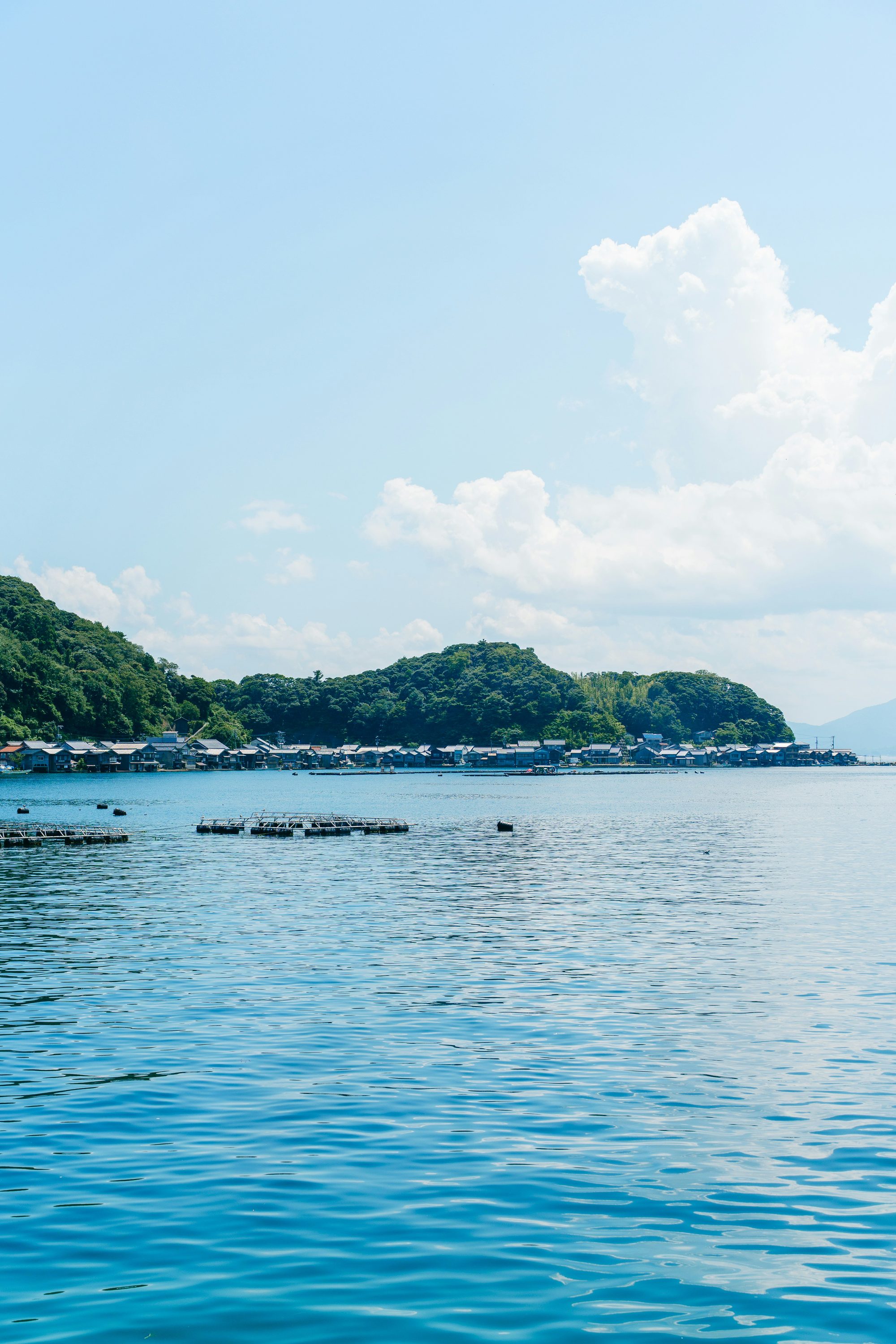
Japan’s Inland Sea — the Seto Inland Sea, Setouchi — is the calm water cradled between Honshu, Shikoku, and Kyushu, scattered with some three thousand islands and almost none of the noise people expect from Japan. It’s where the country goes quiet: art islands, temple-stepped harbor towns, citrus groves, and a light on the water that architects and painters keep moving here to chase. It’s rarely a trip on its own — it’s the unexpected, slowed-down middle of a Japan that opens in Tokyo and Kyoto.
At a Glance
| Best time to go | Spring (late March–April for cherry blossom) and autumn (October–November for color and clear air). The Inland Sea’s climate is famously mild and dry. |
| How long you need | Four to six days in the Inland Sea itself, inside a wider ten-to-fourteen-day Japan trip. |
| How to get there | Fold it into a Tokyo–Kyoto route; Okayama and Hiroshima are the mainland gateways, with ferries out to the islands. |
| Pair it with | Tokyo and Kyoto on either side, Hiroshima and Miyajima to the west — the Inland Sea is the calm hinge between them. |
| How I plan it | On the ground through a Japan destination partner — the art-island timing, the right ryokan, the ferries and private transfers handled locally, not booked blind from a screen. |
The Islands
Naoshima is the one that put Setouchi on the map — Tadao Ando’s concrete museums set into the hillsides, the Chichū galleries lit only by the sun, Yayoi Kusama’s yellow pumpkin on the pier. Teshima and Inujima carry the art deeper and quieter. Onomichi is the mainland counterweight: a hillside of temples and cats, and the launch point for the Shimanami Kaidō, the cycling route that island-hops across six bridges to Shikoku — one of the great rides anywhere. Around them the working Inland Sea goes on: fishing harbors, citrus terraces, ryokan with the bath looking out at the water.
Before & After: Where I’d Base You
A Japan trip that holds the Inland Sea usually opens in Tokyo and winds down in Kyoto, and the hotels there are where I’d anchor the splurge. In Tokyo I’d look at the Aman Tokyo, the Mandarin Oriental, the Palace Hotel, or the Park Hyatt depending on the mood you want; in Kyoto, the Aman Kyoto or the Ritz-Carlton, Kyoto on the Kamogawa; an overnight in Osaka at the Conrad if the routing calls for it. On the islands themselves, the stay is the experience — the Benesse House on Naoshima, a waterside ryokan in Setouchi — and that’s exactly the piece I arrange on the ground rather than from a booking engine.
To the west, Hiroshima and the floating Miyajima torii are the cultural counterweight to the art islands — the Peace Memorial is one of the most moving afternoons in Japan, and Miyajima at high tide is the postcard that earns it. Most Inland Sea trips touch both.
Anchored on the Ground
Japan rewards a planner who works with the country, not against it — which is why I anchor an Inland Sea trip through a destination partner on the ground rather than building it piece by piece from afar. The art-island calendar, the ryokan worth the splurge, the difference between the right ferry and a wasted afternoon: that’s local knowledge, and it’s what turns Setouchi from a logistics puzzle into the quietest, most surprising stretch of a Japan trip.
For travelers who want the water itself, a handful of small ships thread the Inland Sea on Japan circumnavigations — a different way in, matched to the right guest. Either way it sits alongside the small-ship cruises shapes in the Rivers & Small Ships collection.
Plan this trip with me.
A 30-minute discovery call is where it starts. No fee, no pressure.
Book a Discovery Call