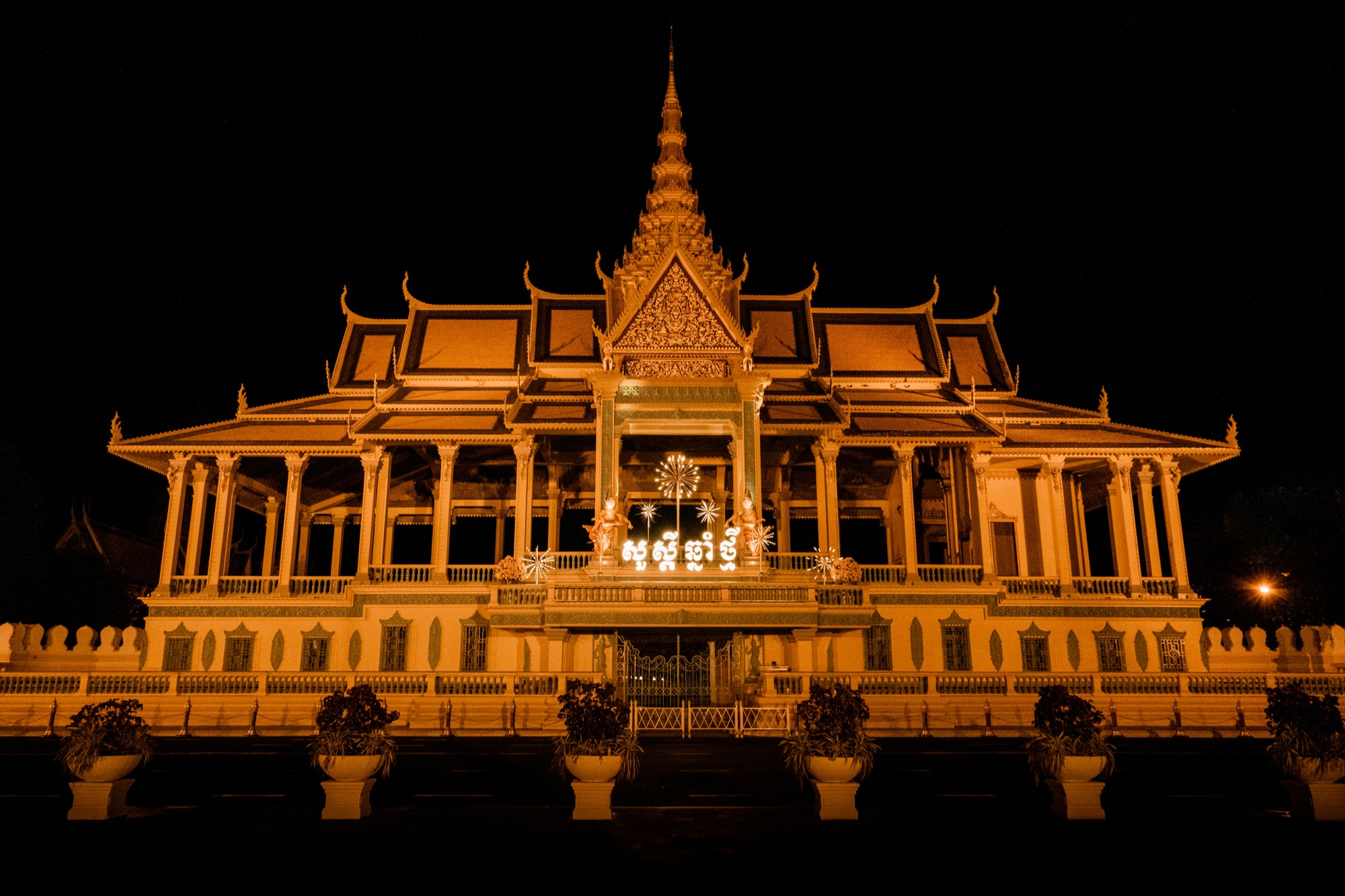
Phnom Penh is the Cambodian capital — a riverside city of French-colonial boulevards, golden palace spires, and a history that demands to be reckoned with. On an Indochina trip, it plays one of two roles: a one- or two-night stop between Saigon and Angkor, or — more naturally — the midpoint of a Mekong river cruise sailing up from Vietnam to Cambodia. Either way, it’s a stop with a particular weight to it: the Royal Palace and the riverfront on one hand, and the essential, sobering history of the Khmer Rouge years on the other.
Done well, Phnom Penh is a short, meaningful stop — the Royal Palace and the National Museum, the riverside where the Mekong and Tonle Sap meet, the French-colonial architecture, and the genocide history (the Tuol Sleng / S-21 museum and the Choeung Ek Killing Fields) handled with the seriousness and the guide it deserves. Done poorly, it’s either skipped entirely — missing a key part of understanding Cambodia — or rushed in a way that doesn’t do the history justice.
Most travelers come to me about Phnom Penh as the midpoint of an Indochina trip — a night or two between Vietnam and Siem Reap, often as a stop on a Mekong cruise.
Here’s how I think about it.
At a Glance
| Best time to visit | November to February — Cambodia’s cool, dry season and the prime window (the same calendar as Siem Reap). March–May is very hot; June–October is the wet season. |
| How long to stay | One or two nights. One covers the Royal Palace, the riverfront, and the essential history; two allows a slower pace. It’s a meaningful stop, not a long stay — the depth is in the history, not the duration. |
| How to get there | Phnom Penh International (PNH) — short flights from Saigon, Siem Reap, and Bangkok. Or arrive by Mekong river cruise — Phnom Penh is the natural midpoint on the Saigon-to-Siem Reap river route. |
| Getting around | The riverfront and the palace area are walkable; tuk-tuks and Grab cover the rest. A guide is the right call for the history sites. |
| One thing most guides won’t tell you | The Khmer Rouge history is essential and devastating — give it the morning, the guide, and the space it deserves. Tuol Sleng (the S-21 prison) and the Choeung Ek Killing Fields are not sights to tick off between the palace and lunch; they are among the most affecting places you will visit anywhere. Do them with a knowledgeable guide, in the morning, and don’t schedule something light immediately after. Understanding this history is part of understanding Cambodia. |
Why I Send Travelers Here
Because Phnom Penh is where the modern history of Cambodia becomes legible — and because it’s the natural hinge of an Indochina trip. The city has real elegance: the Royal Palace and the Silver Pagoda with their golden spires, the excellent National Museum of Khmer art, the French-colonial architecture, the Art-Deco Central Market, and the riverfront promenade where the Mekong and the Tonle Sap meet. And it has the essential, sobering counterweight: the Tuol Sleng Genocide Museum (S-21) and the Choeung Ek Killing Fields, which tell the story of the Khmer Rouge years with a directness that stays with you. A trip that includes Cambodia is incomplete without this reckoning, and Phnom Penh is where it happens.
I send travelers here as the midpoint of an Indochina trip — a meaningful night or two between Saigon and Angkor, often on a Mekong cruise.
The history sites in particular are ground-partner territory — a knowledgeable, sensitive guide is the difference between a rushed visit and a genuine reckoning. As across the trip, my role is matchmaker — my shaping executed through the in-country team, with A&K the operator I’d route the full-service traveler to. The editorial work is making this short stop land with the weight and the care it deserves.
Where I’d Anchor
Most travelers base near the riverfront or the palace, the walkable, central heart of the city.
The headline hotels are the Raffles Hotel Le Royal (the grand 1929 colonial landmark, restored, with gardens, a storied bar, and old-world Indochina elegance) and Rosewood Phnom Penh (the sleek modern tower with a celebrated sky bar and city-and-river views). Both are descriptive picks rather than on-my-rate properties — so where they’re the right fit, I’m the one matching you to the room and booking it well; the amenity-rate layer that comes with my Siem Reap and Vietnam on-rate properties doesn’t apply here. We sort the specifics on the call. (On a Mekong cruise, of course, the ship is your bed and Phnom Penh is a day stop.)
Want help choosing? Start a discovery call — I’ll walk through the options and book the right one well.
What I’d Do With a Night or Two
The Phnom Penh rhythm is the history with care in the morning, the palace and the river in the afternoon.
Day One — The History, the Palace, and the River
Morning — the Khmer Rouge history, with a guide. The Tuol Sleng Genocide Museum (S-21) — the former school turned prison — and the Choeung Ek Killing Fields outside the city. This is among the most affecting half-days of any trip; do it first, with a knowledgeable guide, and leave space afterward.
Afternoon — the elegant city. The Royal Palace and the Silver Pagoda (the golden-spired complex, the palace’s ceremonial heart), and the National Museum of Khmer sculpture next door — a fitting counterpoint of beauty and history. Then the riverfront at golden hour, where the Mekong and Tonle Sap meet, and a sky-bar or riverside dinner. With a second day: the Central Market, the colonial-architecture quarter, Wat Phnom, or a slower riverside pace.
Specific Things I’d Tell You About
Give the genocide history the morning, the guide, and the space. Tuol Sleng and Choeung Ek are devastating and essential. Do them with a sensitive guide, early, and don’t schedule something light right after. This is the heart of why Phnom Penh matters.
The palace and the museum are the elegant counterweight. After the history, the Royal Palace, the Silver Pagoda, and the National Museum’s Khmer art restore the city’s beauty and depth. The contrast is the point.
Phnom Penh is the Mekong-cruise midpoint. On a river cruise from Saigon to Siem Reap, the capital is the natural midway stop — the most graceful way to include it.
One or two nights is right. The stop’s value is in the history and the palace, not the duration. A night or two does it; this isn’t a long stay.
Dress respectfully for the palace and the sites. Shoulders and knees covered at the Royal Palace and as respect at the history sites.
What I’d Skip
Rushing the Khmer Rouge history. The one thing not to do quickly. Give it the morning and the guide.
Skipping Phnom Penh entirely on an Indochina trip. It’s tempting to fly straight Saigon-to-Siem Reap, but the capital’s history is a key part of understanding Cambodia. A night is worth it.
Over-staying. Equally, it’s a one-or-two-night stop, not a base. Give it its due and move on to Angkor.
Scheduling something frivolous right after the Killing Fields. Leave space to process. The afternoon palace-and-river is the right gentle counterweight; a party isn’t.
For Indochina Travelers
Phnom Penh is the hinge of an Indochina trip — the meaningful midpoint between Saigon and Angkor. Fly the short hops, or — the graceful way — let a Mekong river cruise carry you up from Vietnam through the capital to Siem Reap. A night or two here, the history and the palace, and it runs on Cambodia’s November–February dry season.
If you want me to design the full Vietnam-and-Cambodia trip — the Vietnam spine, the Mekong connection, Phnom Penh, and the Angkor capstone — start a discovery call.
A Note for Honeymooners
Phnom Penh is a meaningful, sobering stop rather than a romantic node — so on an Indochina honeymoon, I plan it as a short, substantive pause (often a Mekong-cruise day) between the cities and the Angkor wonder, with the relaxed, romantic crescendo reserved for the Vietnam beach coast. The history is part of traveling thoughtfully together; the romance lands elsewhere on the trip.
If you want me to design the full Indochina honeymoon, start a discovery call.
Plan Phnom Penh With Me
If you’re thinking about Phnom Penh as the meaningful midpoint of an Indochina trip — the palace, the riverfront, and the essential history handled with care — that’s exactly the kind of planning I do. A 30-minute discovery call is where it starts. No fee, no pressure. Just the capital, your trip shape, and the right way to give it the weight it deserves on the way to Angkor.
Book Your Free Discovery Call →︎
Last updated: May 2026. I keep this guide current. If a hotel I recommend slips, an operator changes hands, or access to a site shifts, the page changes. Travel changes. The work doesn’t stop when the page goes live.
Plan this trip with me.
A 30-minute discovery call is where it starts. No fee, no pressure.
Book a Discovery Call