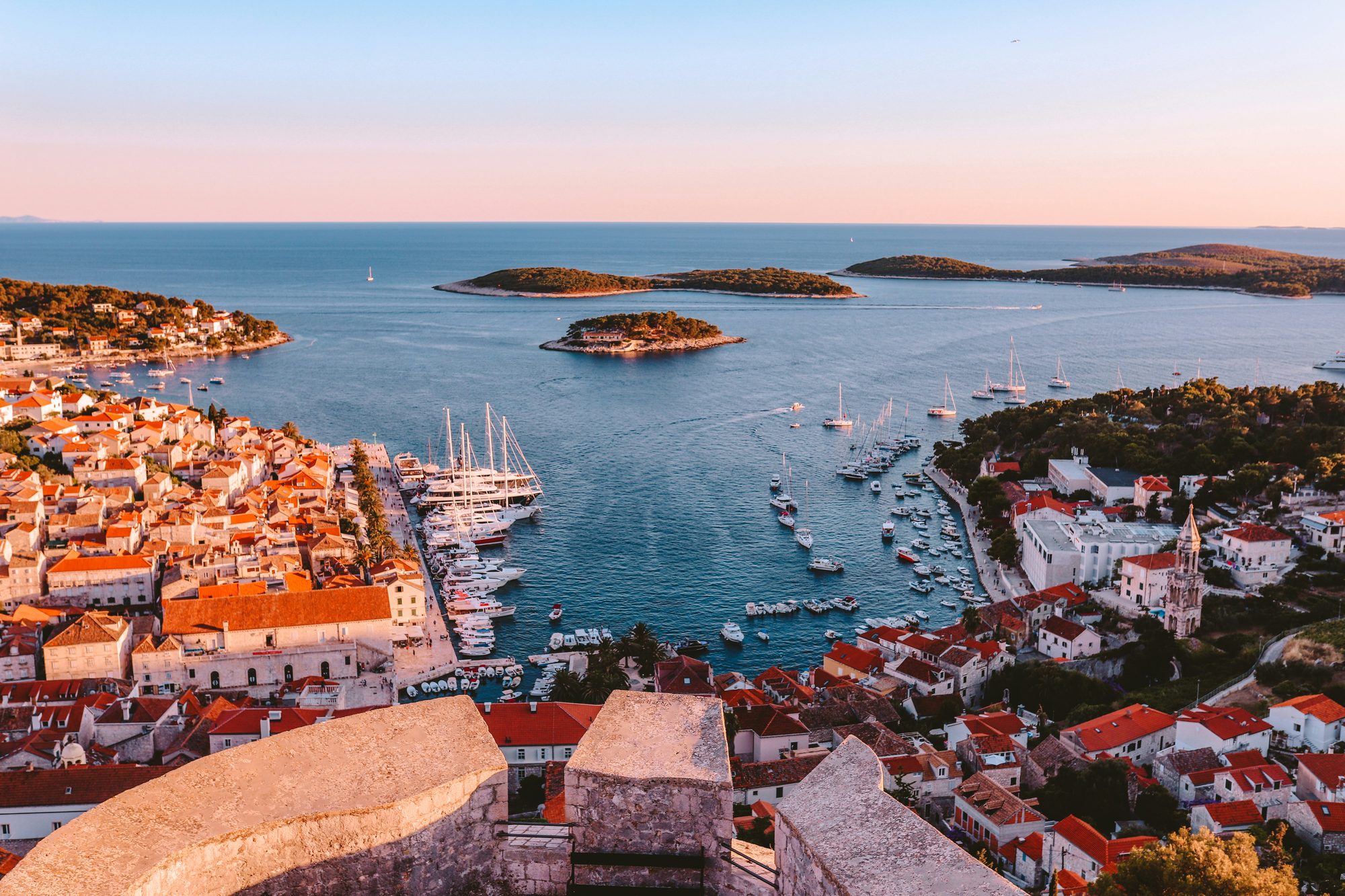
The Dalmatian coast is the stretch of Adriatic the small ships were practically built for — a long run of walled towns, vineyard islands, and coves you can only reach from the water. Croatia’s coastline carries more than a thousand islands, and the difference between seeing it from a coach and seeing it from a deck is the difference between visiting Dalmatia and actually being in it. But the coast is only half the trip: the cities that bookend it, and the wine roads and old towns just inland, are what turn a sailing into a real Croatia.
At a Glance
| Best time to go | May–June and September–October — warm water, the towns alive but not overrun, the summer winds gentler. July and August are glorious and crowded. |
| How long you need | Seven nights on the water coast-to-coast, plus two or three on land at each end — call it ten to twelve days for the whole arc. |
| How to get there | Fly into Split (SPU) or Dubrovnik (DBV); most small-ship and yacht itineraries begin and end at one or the other. |
| Pair it with | A few nights in Dubrovnik or Split on either end — and the Bay of Kotor in Montenegro, the Pelješac wine road, or Istria’s hill towns if you want to widen it. |
| Why a small ship | The harbors that matter — Hvar town, Korčula, the Pakleni islets, a Kornati cove — are where the big ships can’t go and the small ones tie up for the night. |
Where I’d Anchor
Split is the living one — Diocletian’s palace isn’t a monument you visit, it’s a quarter you walk through, cafés in the cellars and laundry strung over the colonnades. Hvar is the see-and-be-seen island: lavender, limestone, a harbor that fills with masts by evening. Korčula is the quieter, denser pleasure — a fortified town on a thumb of land, Marco Polo’s claimed birthplace, Pošip wine from the hills behind it. Dubrovnik earns its hype when you time it around the day-trip ships: walk the walls early, and let the small ship pull you out before the crowds land. And the Kornati archipelago — eighty-odd bare stone islands with almost nothing on them — is the stretch most travelers never plan and remember most.
Before & After: Where I’d Base You
The sailing is the spine; the land days are where I’d build the rest of the trip. In Dubrovnik I’d put you inside or just above the old town — the Hotel Excelsior and Villa Dubrovnik both look straight across to the walls, and Sun Gardens up the coast is the easy choice with kids or a group. In Split, base near Diocletian’s Palace so the city is a walk, not a transfer. On Hvar, the Maslina Resort outside Stari Grad is the quiet, design-led alternative to the party harbor. These are properties where I can usually layer in a little something — a breakfast, an upgrade, a credit — on top of the room.
Just inland, the trip widens fast: Plitvice Lakes’ boardwalks and waterfalls a few hours from Split, the Pelješac and Korčula wine roads (Dingač, Pošip) for an afternoon that turns into a day, the walled Montenegrin Bay of Kotor an easy run south of Dubrovnik, and Istria — Rovinj, truffles, Roman Pula — as a northern bookend with a completely different, almost Venetian accent.
The Ships Built for It
This is a coast where the vessel is the decision. The bench I’d match you to runs from tall-ship sailers and yacht-style ships to the small luxury lines that slip into the harbors the megaships anchor outside of — SeaDream, Sea Cloud, Star Clippers, Windstar, Seabourn, Silversea, and Ponant each fit a different traveler and a different week. Which one is right depends on the harbor you want to wake up in and who’s aboard — that’s the conversation, not the brochure.
The Dalmatian coast is one of the shapes inside small-ship cruises, part of the wider Rivers & Small Ships collection. If a quiet Adriatic harbor at anchor is the trip you’re picturing, that’s where we start.
Plan this trip with me.
A 30-minute discovery call is where it starts. No fee, no pressure.
Book a Discovery Call