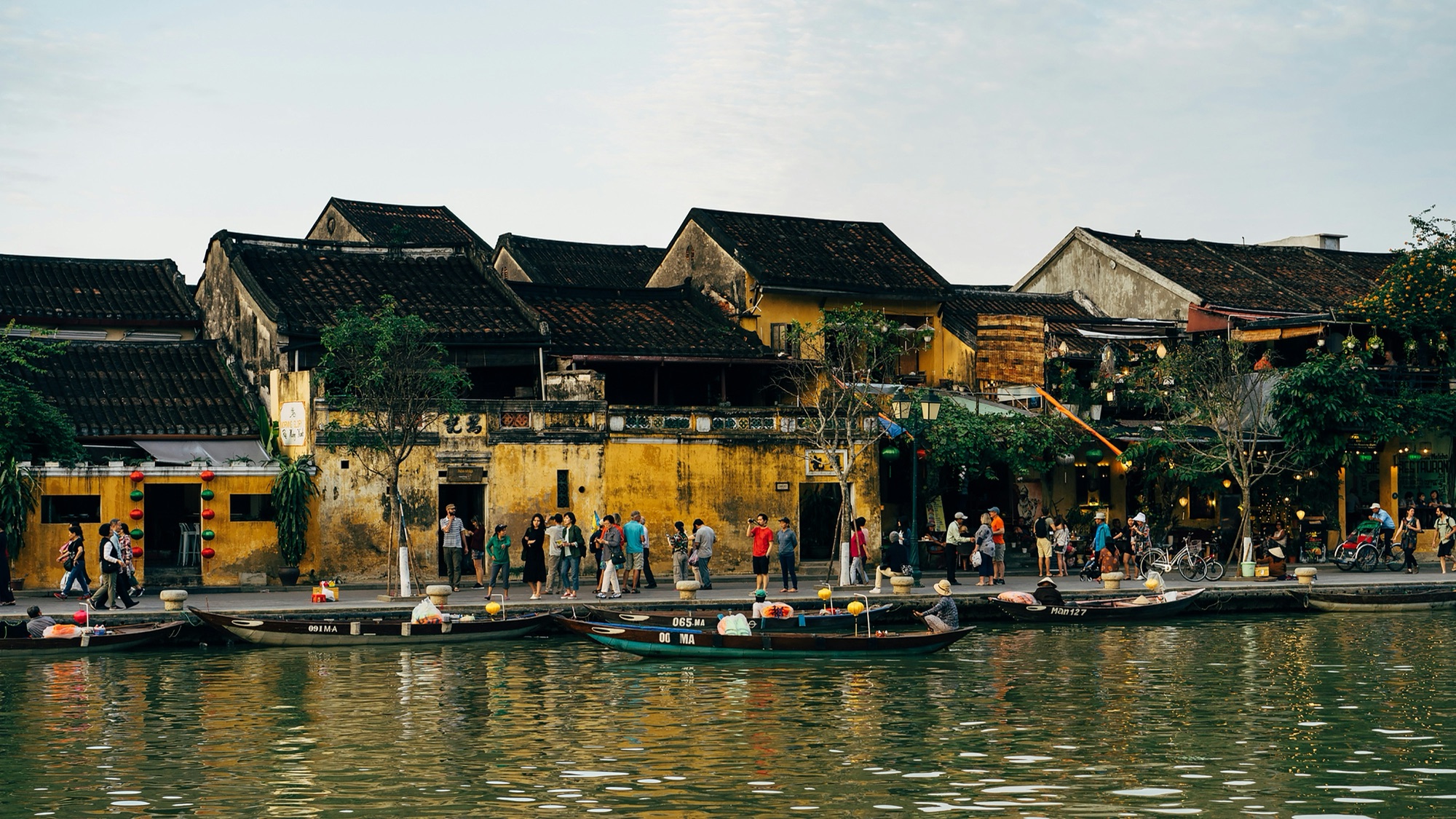
Central Vietnam is the cultural-and-coastal heart of the country — three distinct places within an hour of each other that together make the richest stretch of a north-to-south trip. There’s Hue, the old imperial capital, with its moated citadel and the royal tombs scattered along the Perfume River; Da Nang, the beach city and regional gateway, with its long sweep of sand and the Marble Mountains; and Hoi An, the lantern-lit UNESCO old town, with its riverside glow, its famous tailors, and its own beach a bicycle-ride away. Most travelers anchor in or near Hoi An and reach out to the other two.
Done well, central Vietnam is four or five nights of imperial history, lantern-lit evenings, beach afternoons, and the small pleasures — a custom-tailored suit, a bowl of cao lầu, a sampan on the Perfume River. Done poorly, it’s a rushed day in Hoi An’s old town fighting the tour crowds, or — worse — a trip booked in October that arrives to find Hoi An’s streets under floodwater.
The timing here matters more than almost anywhere in Vietnam: central Vietnam is best February to August and has a serious wet-and-typhoon season September to December, with Hoi An’s low-lying old town genuinely flooding some years in October and November. The country page covers the three-climate logic; this is the region where it bites hardest.
Most travelers come to me about central Vietnam as the cultural-and-coastal middle of a Vietnam trip — four or five nights after Hanoi and Halong, before Saigon and the south.
Here’s how I think about it.
At a Glance
| Best time to visit | February to August — central Vietnam’s dry, warm, beach-friendly window (genuinely hot May–August). September to December is the wet season, and October–November is the typhoon-and-flood window — Hoi An’s old town floods some years. This is the most timing-sensitive region in the country; the dates set the route. |
| How long to stay | Four nights is the right length for Hue, Hoi An’s old town, and a beach day; five if you want the Hue royal tombs unhurried, the Hoi An tailoring (which takes fittings), and proper beach time. |
| How to get there | Da Nang (DAD) is the gateway — a short domestic flight from Hanoi or Saigon. Hue is about 2–2.5 hours north of Da Nang (the coastal Hai Van Pass drive is spectacular); Hoi An is 45 minutes south of Da Nang. Many trips fly into Da Nang, do Hue as an overnight or a long day, and base near Hoi An. |
| Getting around | A driver-guide is the easy way to connect Hue, Da Nang, and Hoi An and to reach the royal tombs and the Marble Mountains; Hoi An’s old town is walkable and best by bicycle. This is more ground-partner territory than the cities. |
| One thing most guides won’t tell you | Hoi An’s old town empties beautifully in the early morning and after the day-trippers leave. Midday it’s a crush; at 7 a.m. and again after dark — when the silk lanterns light up and reflect on the Thu Bon River — it’s magic. Stay nearby (not on a day trip), and experience the old town at dawn and at night, not at noon. |
Why I Send Travelers Here
Because central Vietnam packs more variety into a small radius than anywhere else in the country — imperial history, a UNESCO old town, and a real beach, all within an hour. Hue was the seat of the Nguyen dynasty, and its Imperial City (a moated citadel enclosing the Forbidden Purple City), its royal tombs along the Perfume River (Tu Duc, Minh Mang, the extravagant Khai Dinh), and its distinctive imperial cuisine make it the historical anchor. Hoi An is the jewel — a perfectly-preserved 15th-to-19th-century trading port, its lantern-hung streets and Japanese Covered Bridge glowing over the river at night, its tailors able to make you a custom wardrobe in days, its own cuisine (cao lầu, white-rose dumplings) found nowhere else. And Da Nang brings the beach — the long sweep of My Khe, the Marble Mountains, and the airport that ties it all together.
I send travelers here as the cultural-and-coastal middle of a Vietnam trip (the dominant structure), and for travelers who want a culture-plus-beach base that rewards four or five unhurried nights.
The region is genuinely ground-partner territory — the Hue imperial sites and royal tombs want a guide who can explain the Nguyen history, the Hai Van Pass drive and the transfers want a driver, and the right base among Hue, the Da Nang–Hoi An beach strip, and the old town wants matching to how you travel. As across the country, my role is matchmaker — my shaping executed through the in-country team, with A&K the operator I’d route the full-service traveler to. The editorial work — which base, how to split the nights, the tailoring and the tombs and the beach in the right rhythm — is mine.
Where I’d Anchor
Three patterns, and many trips combine them:
Hue (the Perfume River). The imperial-history base — the citadel, the royal tombs, the river. The pick for the historical opening to the central stretch, usually an overnight or two before moving south to Hoi An.
The Da Nang–Hoi An beach strip. The long coast between the two cities, where the beach resorts sit — the pick for a beach-forward base with Hoi An’s old town a short drive away.
In or beside Hoi An’s old town. Boutique hotels and riverside properties within walking or cycling distance of the lanterns. The pick for travelers who want the old town as their front door, dawn and dusk.
For the Hue imperial base, Azerai La Residence, Hue is the call — the restored 1930s art-deco mansion of the former French governor, set on the Perfume River with a saltwater pool and a genuine sense of period and place. On my rate at the property, the amenity layer is real and doesn’t book direct — calibrated to your dates, room category, and length of stay, with the specifics on the discovery call.
For the beach strip, the headline names are the Four Seasons Resort The Nam Hai, Hoi An (the iconic villa-and-pool resort on the beach between Da Nang and Hoi An — one of the most celebrated resorts in Vietnam) and the InterContinental Danang Sun Peninsula Resort (Bill Bensley’s dramatic, tiered hillside resort on the Son Tra peninsula). And in and around Hoi An, a deep bench of boutique and resort properties (Anantara Hoi An on the riverside among them) covers the old-town-adjacent stays. Where a property is one I hold a rate or relationship with, the amenity layer and personal touches come with it; where it isn’t — and several of these top names are descriptive rather than on-my-rate — I’m still the one matching you to the right room and booking it well. We sort the specifics on the call.
Want help choosing? Start a discovery call — I’ll walk through the Hue / beach-strip / old-town trade-offs, pull live availability, and confirm which amenities apply to your dates.
Where I’d Anchor for a Honeymoon
For honeymooners, central Vietnam is one of the most romantic stretches of a Vietnam trip, and the choice is mostly beach-villa versus old-town-character:
A beach-strip villa (The Nam Hai or similar) — the private-pool-villa honeymoon: sand, a plunge pool, and Hoi An’s lanterns a short drive away for the evenings. The pick if the stay should be a beach retreat.
A Hoi An boutique — the old-town-romance choice: the lantern-lit streets and the river at your door, dinner among the glow, a bicycle to the beach by day. The pick if you want to live in the most romantic town in Vietnam.
Central Vietnam often holds the longest, most emotional stay of a Vietnam honeymoon — the beach-villa-and-lanterns combination is hard to beat. Matching it to your honeymoon’s rhythm is the discovery-call conversation.
What I’d Do With Four Days
The central rhythm threads three places — imperial Hue, lantern-lit Hoi An, and a beach-and-mountains day from Da Nang.
Day One — Imperial Hue
The Imperial City in the morning — the moated citadel, the restored palaces and gates, the Forbidden Purple City — best with a guide who brings the Nguyen-dynasty history alive. Lunch on Hue’s distinctive imperial cuisine. Afternoon on the Perfume River to the royal tombs — the romantic, lake-set tomb of Tu Duc and the wildly ornate, European-influenced tomb of Khai Dinh are the two standouts — and the riverside Thien Mu Pagoda. A sampan stretch on the river closes the day. (Hue is an overnight, or a long day from a Da Nang base via the spectacular Hai Van Pass.)
Day Two — Hoi An Old Town
Hoi An at its best: the old town in the early morning before the crowds, the Japanese Covered Bridge, the assembly halls and merchant houses, the riverside. This is the day for the tailoring — get measured early so there’s time for fittings over the next two days (a custom suit, dress, or shoes, made in 24–48 hours). Lunch on cao lầu. Afternoon at leisure, then the magic: the old town after dark, when the silk lanterns light up and reflect on the Thu Bon River, the lantern boats drift, and the town glows. Dinner riverside.
Day Three — Da Nang: Beach and Marble Mountains
A beach morning on My Khe, then the Marble Mountains (the cluster of limestone-and-marble hills riddled with caves and shrines, with views over the coast). The dramatic Dragon Bridge and Da Nang’s riverside for the evening — or back to Hoi An for another lantern-lit night. (The much-photographed Golden Bridge at Ba Na Hills — the giant stone hands — is a fun half-day if you want it, but it’s a built-for-Instagram theme-park experience; manage expectations.)
Day Four — Tailoring Pickup, Beach, and Slow Hoi An
Final tailoring fittings and pickup, a beach afternoon, and a last lantern-lit evening in Hoi An. With a fifth day: the Hue royal tombs unhurried, a Hoi An cooking class or a lantern-making workshop, or simply more beach.
Specific Things I’d Tell You About
The October–November flood season is the real risk. Hoi An’s low-lying old town genuinely floods some years in the wet season — streets become canals, boats replace bicycles. It’s the most timing-sensitive region in Vietnam. Plan central Vietnam for February–August; if your dates fall in the wet window, I’ll tell you honestly and we’ll weight the trip elsewhere.
Hoi An is dawn-and-dusk, never noon. The old town is a crush midday and magic at 7 a.m. and after the lanterns light at dusk. Stay nearby, not on a day trip, and experience it at the right hours.
The tailoring takes fittings — start early. Hoi An’s custom tailoring is a genuine pleasure (a made-to-measure wardrobe in 24–48 hours), but it needs a first fitting on arrival and pickups before you leave. Build it in on day one; don’t leave it to the last afternoon.
The Hai Van Pass drive is worth doing. The coastal mountain pass between Hue and Da Nang (of Top Gear fame) is one of Vietnam’s great drives — do the Hue–Da Nang transfer by road, not the tunnel, on a clear day.
The Golden Bridge is a theme park, not a temple. The giant-stone-hands bridge at Ba Na Hills is genuinely striking in photos and genuinely a crowded, French-village-replica mountain theme park in person. Fine for a fun half-day with the right expectations; not the soul of central Vietnam.
What I’d Skip
The wet-and-flood season (Oct–Nov), if you can. The one timing rule that actually disrupts trips here. February–August is the window.
Hoi An at midday. Dawn and dusk are the old town; noon is the tour-bus crush. Time it right.
Treating the Golden Bridge as a highlight. A fun photo stop, not a reason to come. Don’t build the central days around it.
A Hoi An day trip from Da Nang. You miss the dawn and the lantern-lit night — the two best versions of the town. Stay near it.
Leaving the tailoring to the last afternoon. No time for fittings. Start it on arrival.
For Vietnam Multi-Region Travelers
Central Vietnam is the cultural-and-coastal middle of the Vietnam arc — Hanoi and Halong first, then four or five nights here, then Saigon and the Mekong or beach. Fly into Da Nang, thread Hue and Hoi An, and continue south. It runs on the central season (February–August), the most timing-sensitive stretch of the country.
If you want me to design the full Vietnam (or Vietnam-and-Cambodia) trip — the northern start, the central middle, the south, and the finale — start a discovery call.
For Honeymooners
Central Vietnam often holds the most romantic stretch of a Vietnam honeymoon — a beach-strip pool villa or a Hoi An boutique, the lantern-lit old town at night, the Perfume River and the imperial tombs, a custom-tailored something to take home. Anchor on the beach strip for a private-villa retreat or in Hoi An for old-town romance; build in the tailoring, a lantern-lit dinner, and a beach day or two.
The honeymoon evening here is Hoi An after dark — the lanterns, the river, the glow — followed by a slow dinner riverside. The setup does the work. If you want me to design the full Vietnam honeymoon, start a discovery call.
Plan Central Vietnam With Me
If you’re thinking about central Vietnam — imperial Hue, lantern-lit Hoi An, and the Da Nang beach — as the cultural-and-coastal middle of a Vietnam trip, that’s exactly the kind of planning I do. A 30-minute discovery call is where it starts. No fee, no pressure. We confirm your dates first (because the central coast is the country’s most timing-sensitive region), then build the stretch: the right base, the tombs and the tailoring and the lanterns in the right rhythm.
Book Your Free Discovery Call →︎
Last updated: May 2026. I keep this guide current. If a hotel I recommend slips, a restaurant changes hands, or access to a site shifts, the page changes. Travel changes. The work doesn’t stop when the page goes live.
Plan this trip with me.
A 30-minute discovery call is where it starts. No fee, no pressure.
Book a Discovery Call