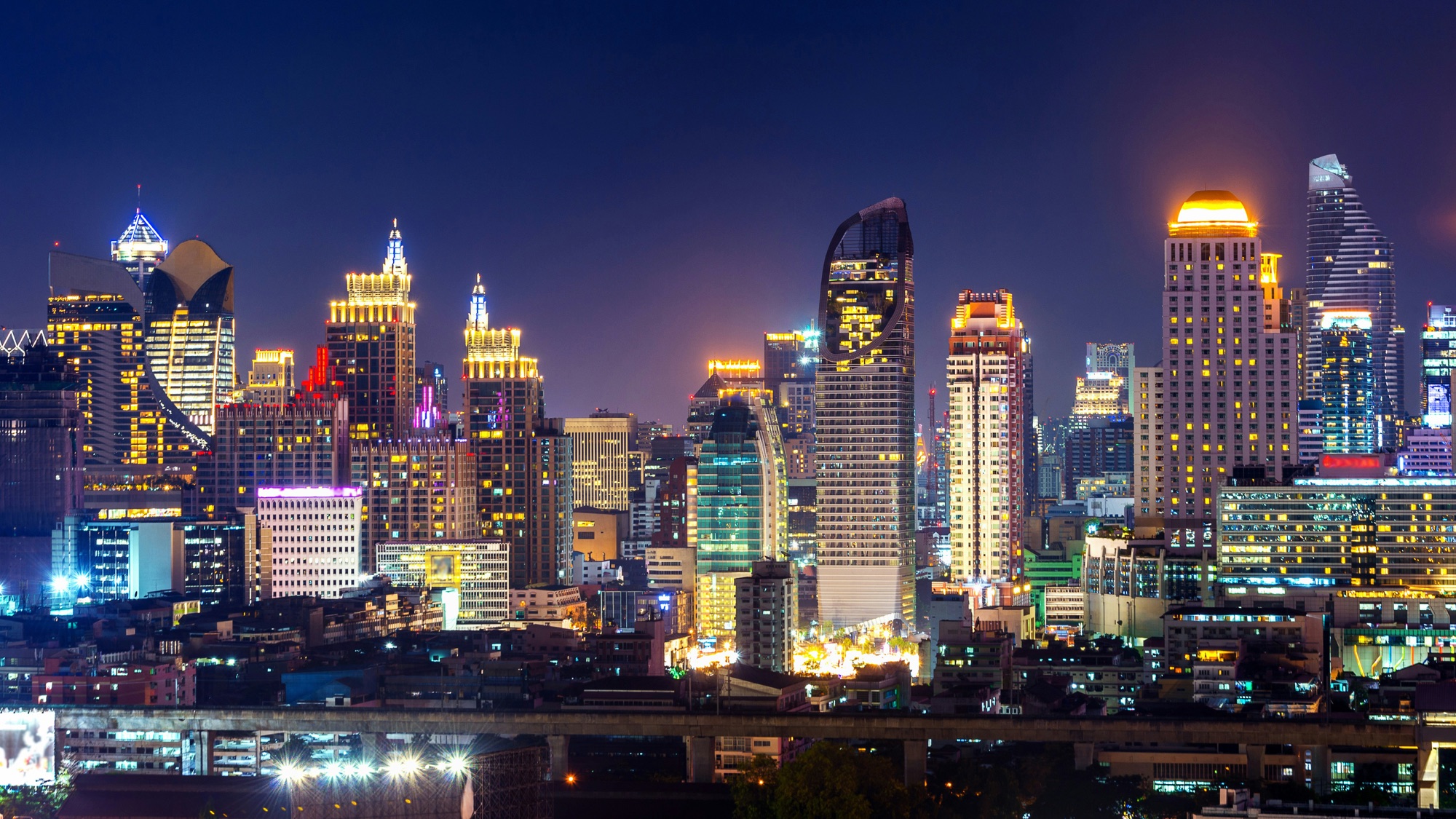
Bangkok is the city travelers brace for and then love — the one whose reputation is heat and traffic and chaos, and whose reality is a sophisticated, gloriously edible, surprisingly navigable capital that happens to have the best street food on the planet. It’s where I start almost every Thailand trip, and the reason is counterintuitive: Bangkok rewards the wired, wide-eyed energy of arrival. You land jet-lagged and overstimulated, and a city that is itself overstimulating in the best way is exactly the right first act — temples on the river at dawn, a rooftop bar at dusk, a bowl of boat noodles in between.
Done well, Bangkok is three or four nights of high-contrast pleasure: the serene gold-and-glass temples of the old royal island, then the neon and night markets; the Chao Phraya river as your scenic highway; a meal at a Michelin street-food stall and another forty floors up. Done poorly, it’s one night “to break up the flights,” half of it lost to traffic, the city reduced to the view from a taxi.
Here’s the thing I tell every traveler about Bangkok, and it shapes how I plan it: this is the part of Thailand I plan with a lighter hand. Bangkok is genuinely English-friendly, the trains glide over the traffic, the river boats are a joy, and an independent-minded traveler does beautifully here with great hotels, a few key reservations, and a fixer or two for the things worth doing right. The deep ground-support work — the private guides, the elephant logistics, the boat days — earns its keep in the north and the islands, not here. So this guide is opinionated about where to stay, what to eat, and what to skip — and relaxed about the rest, because the rest is the fun of a city that’s easy to be loose in.
At a Glance
| Best time to visit | November to February is Bangkok’s cool, dry season — “cool” being relative (highs in the 80s–90s°F) but a real break from the rest of the year’s heat and humidity. March to May is the hot season (genuinely brutal — high 90s to 100s). June to October is the rainy season — dramatic afternoon downpours that usually pass, rarely a trip-killer in the city but worth planning around. For a Thailand trip, Bangkok timing usually follows your island coast’s window. |
| How long to stay | Three nights is the right length; four if you want a day trip (Ayutthaya, the Amphawa floating market) or simply a slower pace. One night is the common mistake — it turns a great city into an airport with traffic. |
| How to get there | Suvarnabhumi (BKK) is the main international gateway and the hub for the region; Don Mueang (DMK) handles many budget and domestic flights. From BKK, the Airport Rail Link and metered taxis both reach the center; from there, domestic hops to Chiang Mai, Phuket, Krabi, and Koh Samui are an hour or so. |
| Getting around | The BTS Skytrain and MRT subway are the secret to Bangkok — air-conditioned, cheap, and they glide right over the famous traffic. The Chao Phraya river boats turn the riverside temples into a scenic commute. Use trains and boats for the spine of the day; take taxis or tuk-tuks (agree the fare first) for the gaps. Avoid relying on cars in rush hour. |
| One thing most guides won’t tell you | Go to the major temples at opening (8 a.m.) and you’ll have beaten both the heat and the tour buses. The Grand Palace and Wat Pho by mid-morning are crowded and punishing; at 8 a.m. they’re calm and photogenic and bearable. Pair an early temple morning with a midday hotel-pool break and an evening that starts at dusk — the city is best enjoyed around the heat, not through it. |
Why I Send Travelers Here
Because Bangkok, planned right, is one of the great city experiences in Asia — and because it’s the correct opening to a Thailand trip in a way that’s easy to underrate. The temples are world-class: Wat Phra Kaew and the Grand Palace (the dazzling royal complex housing the Emerald Buddha), Wat Pho (the enormous reclining Buddha and the home of traditional Thai massage), and Wat Arun (the Temple of Dawn, its porcelain-studded spire rising from the river’s west bank). The food is, by a wide margin, some of the best street eating on earth — Bangkok has Michelin-recognized street stalls, and that’s not a gimmick. And the city’s hotel scene runs from genuine legends to design-forward boutiques in a way few cities match.
I send travelers here as the front of a Thailand trip — the dominant structure, three or four nights before the north and the islands, while arrival energy is high — and occasionally as a standalone long-weekend stopover on the way to or from elsewhere in Asia.
As I said up top, Bangkok is the lighter-touch city in my Thailand planning. The country-level matchmaker structure — my strategy executed through a vetted in-country ground partner, with A&K Thailand the operator I’d route the full-service traveler to — still stands, and the ground team handles the seamless transfers and any private guiding you want. But Bangkok itself is where a good hotel, a few reservations I’ll make for you, and the city’s own navigability do most of the work. The editorial value here is in the choices — the right neighborhood, the right hotel, the meals worth booking, and the half-day that’s worth a guide. The rest you get to wander.
Where I’d Anchor
Where you stay in Bangkok shapes the whole trip, because the city’s character changes completely by neighborhood. Three patterns cover almost everyone:
Riverside (the Chao Phraya). The grand, romantic Bangkok — the legendary hotels sit here, on the river, with longtail boats and temple spires for a view and the water as your front door. The pick for a first trip, a honeymoon, or anyone who wants the iconic Bangkok. Slightly removed from the nightlife and shopping, but the hotels run their own river shuttles and the BTS connects at Saphan Taksin.
Sukhumvit. Modern Bangkok — the dense, energetic spine of shopping, restaurants, rooftop bars, and nightlife, threaded by the BTS. The pick for a livelier, more urban stay, with everything walkable-to-train-able and a different hotel at every station.
Sathorn / Silom / Lumpini. The polished business-and-park district — quieter, central, close to Lumpini Park’s morning calm and well-placed between the river and Sukhumvit. The pick for a refined, well-located base that splits the difference.
For the riverside grande-dame experience — and one of the most storied hotels in Asia — the legends are The Mandarin Oriental (on the Chao Phraya since 1876, the Authors’ Wing, a service reputation that’s a benchmark for the whole industry) and The Peninsula (the soaring W-shaped tower on the quieter Thonburi bank, every room facing the river, the river shuttle gliding you across to the BTS). On my rate at either property, the amenity layer is real and doesn’t book direct — calibrated to your dates, room category, and length of stay, and the specifics get walked through on the discovery call.
For the polished central-district pick, The Sukhothai Bangkok is the call — the Sathorn modern-classic built around lotus ponds and Thai-pavilion architecture, serene in a way the city around it isn’t, with one of Bangkok’s best Thai restaurants on site. For the contemporary-luxury register, Park Hyatt Bangkok (atop the Central Embassy mall in Ploenchit, sleek and beautifully run) and The St. Regis Bangkok (on Rajadamri overlooking the Royal Bangkok Sports Club racecourse, with the signature butler service) are the picks; Anantara Siam (the hand-painted-mural grande dame near Ratchaprasong, a former Four Seasons with a beloved garden and afternoon tea) is the call for traditional Thai luxury with a sense of occasion; and Kimpton Maa-Lai (design-forward and lively, near Lumpini Park on Langsuan) for the stylish boutique-brand option. On my rate across these, the amenity layer is calibrated to your stay rather than itemized in advance — the specifics are the discovery-call conversation.
And then there’s the boutique pick I keep coming back to for the right traveler. Sala Rattanakosin is a small riverside hotel tucked into the old town beside Wat Pho, with a rooftop bar that looks directly across the Chao Phraya at Wat Arun — the Temple of Dawn lit up at night, close enough to feel like it’s yours. It’s the kind of intimate, characterful property you don’t find by Googling — the antithesis of a big-brand tower — and I place couples there when the trip wants warmth and a sense of place over polish and scale. It’s a boutique relationship pick rather than a points-and-amenities hotel, so the way I add value there is the personal layer: the right room for that Wat Arun view, a note waiting at check-in, the small touches that make a small hotel feel like it was expecting you.
Want one of these stays? Start a discovery call — I’ll pull live availability, walk through room categories, and confirm which amenities and current promotions apply to your dates. And the small extra at check-in — a welcome note from me, the kind of touch the standard amenity package doesn’t list — is part of how I deliver these stays.
Where I’d Anchor for a Honeymoon
For honeymooners, Bangkok is the glamorous opening act, and the choice is mostly riverside-versus-boutique:
The Mandarin Oriental or The Peninsula (riverside) — the iconic, grand, river-view honeymoon opening. Sunset on the river, a legendary spa, the kind of polish that makes the first nights of a honeymoon feel like an event. The pick if you want Bangkok to open on grandeur.
Sala Rattanakosin (old-town riverside boutique) — the intimate, characterful alternative, with the Wat Arun view from the rooftop and the warmth of a small property. The pick if you’d rather open on place and romance than scale.
Bangkok is the front of the trip, not the crescendo — so I usually keep it to three nights of glamour here and weight the longer, emotional stay toward the island finale. Pairing the right Bangkok opening to your honeymoon’s rhythm is the discovery-call conversation.
What I’d Do With Three Days
The Bangkok rhythm is built around the heat: temples and markets in the cool morning, the hotel pool or a long lunch at midday, the city coming alive again at dusk. Fight that rhythm and the city is punishing; ride it and it’s a pleasure.
Day One — The River and the Old Royal Island
Start early — be at the Grand Palace by 8 a.m., the moment it opens, before both the heat and the tour groups. Wat Phra Kaew and the Grand Palace — the dazzling royal complex, gold and mirrored glass and the revered Emerald Buddha — is the one unmissable temple, and it’s a different, calmer place at opening than it is by 10 a.m. (Dress code is enforced: shoulders and knees covered.) Allow 90 minutes.
Walk to Wat Pho next door — home of the enormous gold reclining Buddha (46 meters, soles inlaid with mother-of-pearl) and the country’s most famous traditional Thai massage school. Have the massage here, in the place that codified it; it’s the right midday reset. Allow an hour-plus.
Cross the river by the small ferry to Wat Arun — the Temple of Dawn, its porcelain-studded prang (spire) rising from the west bank. Climb the steep steps for the view back across the water. The light is best in late afternoon, but mid-morning works if you’re sequencing the old-town temples together.
Retreat from the midday heat — back to the hotel pool, or a long riverside lunch. In the evening, a rooftop bar at dusk (the city has a dozen great ones — Vertigo, Sky Bar, Octave) for the skyline-and-sunset moment, then dinner. If your hotel is riverside, the Wat Arun view lit up at night is the one to end on.
Day Two — Markets, Food, and Modern Bangkok
Morning at a market, chosen to your taste: the vast Chatuchak Weekend Market (15,000 stalls, only Sat–Sun, a genuine experience) if your dates land on a weekend; otherwise a floating-market half-day (Amphawa or Damnoen Saduak — I’ll steer you to the less-touristy option and the right early timing), or the flower market (Pak Khlong Talat) for the calmer, more local version.
This is the day for the cooking class, if you want one — and I usually recommend you do. The best versions start at a market with your teacher, then move to a kitchen for a hands-on half-day; it’s one of the most rewarding things you can do in Thailand, not a filler activity. (It was the standout of a recent honeymoon I planned — the kind of morning travelers still talk about years later.)
Afternoon and evening in modern Bangkok — the Sukhumvit or Siam shopping districts, Jim Thompson House (the silk magnate’s teak-house museum, a calm green oasis), and then the city’s real nighttime pleasure: street food, ideally in Chinatown (Yaowarat), where the stalls fire up after dark and some have earned Michelin recognition. Eat your way down the street. This is the meal you’ll remember.
Day Three — Slower Bangkok, or a Day Trip
Three options:
Ayutthaya. The ruined former capital, 90 minutes north — a UNESCO complex of crumbling temple towers and Buddha heads wrapped in tree roots. A half- or full-day trip (and a beautiful one to do by river cruise on the way back). The pick if you want history and a break from the city.
Slower Bangkok. A morning at Lumpini Park (locals doing tai chi at dawn, monitor lizards in the lake), a long lunch, a spa afternoon, and a final sunset on the river. The pick if you’ve earned a rest before the flight to the north or the islands.
A deeper food day. A guided street-food-and-neighborhoods tour — the version where a local fixer takes you to the stalls and dishes you’d never find alone. The pick for travelers for whom the food is the trip.
By day three, Bangkok has usually made you a convert.
Specific Things I’d Tell You About
The trains and river boats beat the traffic — use them. Bangkok’s reputation for gridlock is earned, but the BTS Skytrain, MRT subway, and Chao Phraya river boats sail right over and around it. Plan the spine of each day on rail and water, and the city becomes genuinely easy. This is the single biggest quality-of-life insight for Bangkok.
Go to temples at opening — 8 a.m. — for the heat and the crowds both. The Grand Palace and Wat Pho are crowded and punishing by mid-morning and serene at opening. One early temple morning, then the pool at midday, then the city at dusk: that’s the rhythm that works.
Temple dress codes are real and enforced. Shoulders and knees covered at the Grand Palace, Wat Phra Kaew, and the major wats — they will turn you away or make you cover up at the gate. Carry a light layer; it doubles as sun protection.
Bangkok’s street food is a destination, not a snack. The city has Michelin-listed street stalls, and Chinatown (Yaowarat) after dark is one of the great eating experiences anywhere. Come hungry, carry cash, and don’t fill up on hotel food. The cooking class is the way to take a piece of it home.
Agree the tuk-tuk fare before you get in — and treat the too-good-to-be-true “special tour” or gem-shop “deal” as the scam it is. The trains and metered taxis spare you most of this; tuk-tuks are a fun once-or-twice ride, not a transit strategy. A common scam is the driver who says a temple is “closed today” and offers to take you somewhere better — it isn’t closed.
Bangkok is the easy city — lean into that. This is where you can be loose, wander, follow a smell down a soi, change the plan. Save the tightly-orchestrated, guide-led days for the north and the boat days in the south; here, the city does the work.
What I’d Skip
One night in Bangkok “to break up the flights.” The worst way to do the city — give it three nights or treat it as a pure connection, but the one-night version wastes a genuinely great place.
The full tourist floating-market circus at the wrong hour. Damnoen Saduak by late morning is a packed, motorized photo op. If you want a floating market, the move is the early start (or Amphawa’s evening version) — and I’ll steer you to the better one.
Gem shops, “lucky Buddha” tours, and the tuk-tuk “special deal.” Classic Bangkok scams aimed squarely at tourists. The temple is not closed; the gem store is not a once-in-a-lifetime opportunity.
Patpong and the go-go-bar circuit, if that’s not the trip. Bangkok’s red-light districts are a known quantity and a mismatch for a honeymoon or a refined trip. Easy to avoid — just know they’re there.
Booking a car for a full day in the city. You’ll spend the day in traffic. Trains and boats for the spine, taxis for the gaps.
For Thailand Multi-Region Travelers
Bangkok is the front of the Thailand arc — city first, then the north, then an island. The right pacing is three or four nights here while arrival energy is high, then a one-hour flight to Chiang Mai or the Golden Triangle for the cultural north, then the longest stay on an island — Phuket in the dry Andaman season (November–April), Koh Samui in the Gulf’s summer window (June–September).
The crescendo is the point: Bangkok opens the trip on energy and glamour, the north slows it down, and the island closes it on rest. If you want me to design the full Thailand trip — the Bangkok front, the northern stop, the island finale, and the coast that matches your dates — start a discovery call.
For Honeymooners
Bangkok is the glamorous opening act of a Thailand honeymoon, not the crescendo — so I plan it as three nights of high-contrast pleasure: a riverside grande dame (Mandarin Oriental or The Peninsula) or the intimate Sala Rattanakosin with its Wat Arun view, an early temple morning, a cooking class, a rooftop sunset, and a Chinatown street-food night. Then the trip flies south or north and builds toward the island finale where the longest, most emotional stay belongs.
The honeymoon evening here, in my read, is the rooftop-bar sunset followed by a slow dinner with the river and the lit temple spires below — the city showing off before you leave it for the quiet of the islands. The setup does the work.
If you want me to design the full Thailand honeymoon — the Bangkok opening, the northern day, the island crescendo — start a discovery call.
Plan Bangkok With Me
If you’re thinking about Bangkok as the front of a Thailand trip, a honeymoon opening, or a long-weekend stopover on a longer Asia arc — that’s exactly the kind of planning I do. A 30-minute discovery call is where it starts. No fee, no pressure. Just the city, your timeline, and the version of Bangkok that opens a trip the right way — temples at dawn, the river as your highway, and a bowl of something extraordinary at a stall after dark.
Book Your Free Discovery Call →︎
Last updated: May 2026. I keep this guide current. If a hotel I recommend slips, a restaurant changes hands, or access to a site shifts, the page changes. Travel changes. The work doesn’t stop when the page goes live.
Plan this trip with me.
A 30-minute discovery call is where it starts. No fee, no pressure.
Book a Discovery Call